Hemp seeds may be small, but they have earned attention for a nutritional feature that is particularly valuable in plant-based eating: they contain all nine essential amino acids the human body needs to obtain from food.
These seeds come from Cannabis sativa, a plant species that includes varieties cultivated for food and industrial hemp. Food-grade hemp seeds are valued for their nutritional composition, not for intoxicating effects.
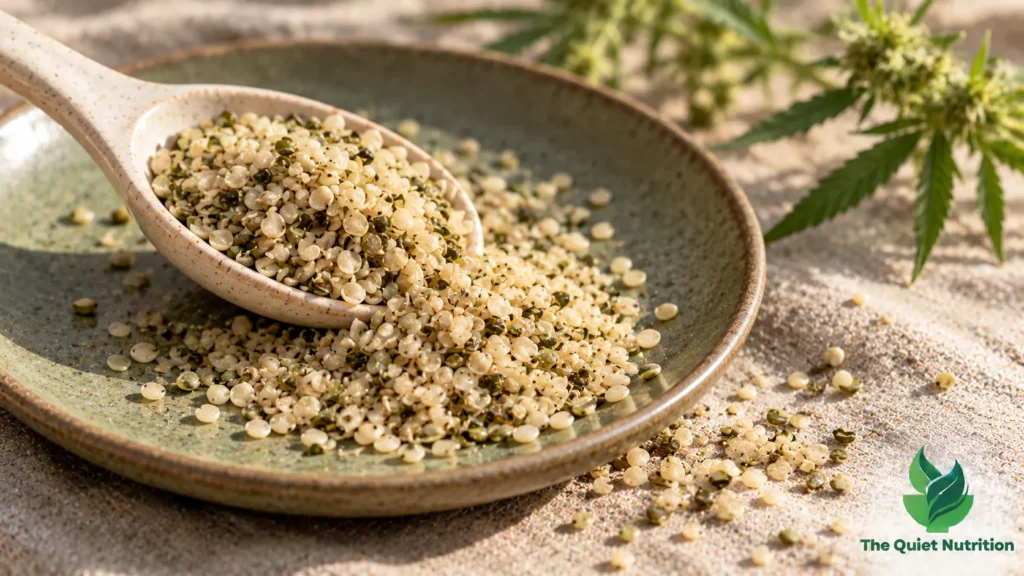
Often sold as hemp hearts when their hard outer shells have been removed, they have a mild, nutty flavour and a soft texture. They can be sprinkled over oatmeal, blended into smoothies, stirred into yogurt, or added to salads and grain bowls.
Their protein is only part of the story. Hemp seeds also provide unsaturated fats and minerals, making them a useful addition to a varied diet.
However, there is an important distinction between containing all nine essential amino acids and being one of the highest-quality protein sources available. Hemp seeds meet the definition of a complete protein, but the amount of each amino acid and how well the body digests the protein also matter.
Here is what makes hemp seeds nutritionally interesting—and how to use them sensibly.
1. They Contain All Nine Essential Amino Acids
The main reason hemp seeds are described as a complete protein source is that they contain all nine essential amino acids.
Amino acids are the building blocks the body uses to make proteins. These proteins help maintain muscles, repair tissues, produce enzymes, and support many other physiological functions.
The nine essential amino acids are:
- Histidine
- Isoleucine
- Leucine
- Lysine
- Methionine
- Phenylalanine
- Threonine
- Tryptophan
- Valine
They are called essential because the body cannot make enough of them to meet its needs, so they must come from the diet.
Hemp seed protein contains all nine, which makes it a useful option for people who want to diversify their protein sources without relying exclusively on animal foods.
But there is a nuance worth understanding. A complete protein does not necessarily provide every essential amino acid in ideal proportions. Hemp protein is relatively limited in lysine compared with some other protein sources, and studies evaluating its protein quality have found that this can affect its overall score.
In other words, hemp seeds qualify as a complete protein, but the term does not mean their protein is nutritionally identical to that of eggs, dairy, or soy.
2. They Offer a Convenient Amount of Plant Protein
Hemp hearts provide a meaningful amount of protein for a small serving.
Three tablespoons, roughly 30 grams depending on the product, typically supply around 9–10 grams of protein. Exact values vary by brand and preparation, so the nutrition label is the best guide for a particular product.
That makes hemp hearts a practical addition to meals that might otherwise contain relatively little protein. A spoonful over oatmeal, for example, contributes more than flavour and texture.
Protein supports the maintenance and repair of tissues, and it is particularly relevant to people who exercise regularly, older adults who want to preserve muscle, and anyone building a balanced plant-based diet.
Still, 10 grams of protein is a contribution rather than a complete day’s requirement. Most adults need protein from multiple foods throughout the day, and individual requirements vary with body size, age, activity, health, and other factors.
Hemp seeds can help fill that role without requiring a protein shake or a complicated recipe.
3. They Contain Protein-Rich Seed Proteins
Hemp seeds contain two major storage proteins: edestin and albumin.
These proteins are important because they account for much of the protein in hemp seeds and contribute to their nutritional and functional properties.
Edestin is a globular storage protein, while albumin is another protein fraction found in the seed. Researchers have studied hemp protein because of its amino acid composition, digestibility, and potential applications in plant-based foods.
The protein in hemp seeds is generally considered useful, but its nutritional quality depends on more than the names or quantities of the proteins present. What matters is how much essential amino acid the food provides and how effectively the body can digest and use it.
Processing also makes a difference. Hemp hearts, whole seeds, hemp flour, and concentrated hemp protein products do not necessarily have the same protein concentration or digestibility.
For everyday eating, the practical point is straightforward: hemp hearts are a convenient whole-food way to add plant protein, while concentrated hemp protein products may suit people who need a larger protein contribution in a smaller volume.
4. They Provide Unsaturated Fats Alongside Protein
Hemp seeds are not simply a protein food. They also contain substantial amounts of fat, much of it unsaturated.
Their fat profile includes linoleic acid, an essential omega-6 fatty acid, and alpha-linolenic acid (ALA), an omega-3 fatty acid. Both are essential fatty acids that the body needs to obtain through food.
These fats contribute energy and help maintain normal cell structure. ALA can also be converted in small amounts into the longer-chain omega-3 fatty acids EPA and DHA, although this conversion is limited and varies among individuals.
Hemp seeds therefore offer a useful combination: protein alongside essential fatty acids.
Their fat content also makes them energy-dense. That is not inherently a disadvantage, but it is worth remembering if you are adding several tablespoons to a meal that already contains nuts, oils, nut butter, or other calorie-rich ingredients.
The goal is not to avoid their fat. It is to appreciate it as part of the seed’s nutritional value and account for the overall meal.
5. They Supply Minerals That Support Normal Body Functions
Hemp seeds provide minerals including magnesium, phosphorus, iron, and zinc, although the amounts vary by product and serving size.
Magnesium participates in energy metabolism, muscle and nerve function, and protein synthesis. Phosphorus is needed for bones and teeth and is also involved in energy-related processes. Iron helps the body produce haemoglobin, which carries oxygen in the blood, while zinc contributes to immune function, wound healing, and normal cell processes.
These nutrients help make hemp seeds more than a single-purpose protein ingredient.
However, the amount of a mineral listed in a food’s nutrition profile is not always identical to the amount absorbed by the body. Plant foods contain compounds that can affect mineral availability, and the overall diet influences nutritional adequacy.
Hemp seeds can contribute to mineral intake, but they should not be treated as a guaranteed way to correct an iron, zinc, or magnesium deficiency. If a deficiency is suspected, appropriate testing and professional guidance may be needed.
6. Their Protein Quality Deserves a Closer Look
The term complete protein can sometimes create the impression that all complete proteins are equally effective. They are not.
Protein quality is influenced by at least two major factors: the essential amino acid profile and digestibility. The body needs essential amino acids in sufficient proportions, and those amino acids must be released and absorbed during digestion.
Research evaluating hemp seed products using the protein digestibility-corrected amino acid score, or PDCAAS, has found that hemp’s scores vary by product. In one study, lysine was the first limiting amino acid across the tested hemp products. Dehulling improved some measures of protein digestibility and protein quality.
That finding helps explain why hemp protein can contain all nine essential amino acids yet still score below some other protein sources on measures of protein quality.
It does not make hemp seeds a poor food. It means the word complete should not be confused with optimal in every respect.
For most people eating a varied diet, this is a manageable distinction. Other foods eaten throughout the day can contribute additional essential amino acids. Beans, lentils, soy foods, and other protein-rich foods can help broaden the amino acid profile of a plant-based diet.
If hemp seeds are your main protein source, it becomes more important to consider the overall balance of your meals rather than relying on the complete-protein label alone.
7. They Can Fit Easily Into Plant-Based Meals
One of hemp seeds’ biggest advantages is convenience. Hemp hearts require little preparation, have a mild flavour, and can be added to foods without changing the meal dramatically.
Here are some simple ways to use them:
- At breakfast: Sprinkle hemp hearts over oatmeal, yogurt, or whole-grain cereal.
- In smoothies: Blend them with fruit, milk or a fortified alternative, and other ingredients for a more substantial drink.
- In salads: Add them to leafy greens, roasted vegetables, beans, or grain bowls.
- On toast: Sprinkle hemp hearts over avocado toast or a savoury spread.
- In homemade dressings: Blend them into a creamy dressing with lemon juice, herbs, and water.
- In soups: Add them as a finishing topping or blend them into suitable soups.
- In snacks: Mix a measured portion with fruit or other ingredients for a convenient snack.
Hemp hearts have a soft texture, so they can be easier to incorporate into meals than some larger seeds. Whole hemp seeds with their shells have a different texture and may contribute more fibre, while shelled hemp hearts generally provide a higher proportion of protein and fat by weight.
8. They Are Useful, but They Do Not Replace a Balanced Diet
Hemp seeds can contribute protein, essential fatty acids, and minerals, but no single food provides everything the body needs.
They are relatively energy-dense, and their protein content is lower per gram than that of concentrated protein powders. People who need a high protein intake may need additional sources, depending on their dietary pattern and needs.
They also contain less lysine relative to some protein sources, so relying on hemp alone for nearly all dietary protein would not be an ideal strategy.
A varied plant-based diet can include hemp hearts alongside soy foods, beans, lentils, peas, whole grains, nuts, and other seeds. This approach supplies a broader mix of nutrients and makes it easier to meet protein needs over the course of the day.
It is also worth distinguishing hemp seeds intended for food from other hemp-derived products. Hemp seed oil, for example, is primarily a fat source and does not provide the same protein as the whole seed. Hemp protein powders are more concentrated, and their nutrient profiles depend on how they are manufactured.
Choosing the right product for the intended purpose is more useful than assuming every hemp product has the same benefits.
How Much Hemp Seed Should You Eat?
A practical starting point is around three tablespoons, or approximately 30 grams, of shelled hemp hearts. This is a common serving size, not a mandatory daily target.
That portion often supplies about 9–10 grams of protein, along with fat and minerals. Check the package label because the exact values vary.
You do not need to eat hemp seeds every day to benefit from their nutritional qualities. They can be rotated with other seeds, nuts, legumes, and protein-rich foods.
If you are trying to increase your protein intake, consider the protein supplied by the whole meal. Hemp hearts added to yogurt, oats, or a bean-based dish contribute to the total, but the rest of the meal still matters.
People with specific dietary restrictions or medical needs may benefit from individual guidance on protein quantity and source.
The Bottom Line
Hemp seeds are called a complete protein source because they contain all nine essential amino acids. Their appeal goes beyond that label: they also supply unsaturated fats, minerals, and a convenient way to add plant protein to everyday meals.
But complete does not mean nutritionally identical to every other protein source. Hemp protein is relatively low in lysine, and research shows that digestibility and processing affect its protein-quality measures.
For most people, the practical solution is simple. Enjoy hemp hearts as part of a varied diet, combine them with other protein-rich foods, and judge their value by the overall nutritional contribution rather than a single label.
They do not need to be the only protein on your plate to be useful. They simply offer another versatile, nutrient-rich option for building balanced meals.
Research sources
- Evaluating the Quality of Protein from Hemp Seed Products — Journal of Agricultural and Food Chemistry — amino acid profiles, protein digestibility, PDCAAS measurements, and lysine as the limiting amino acid in the tested products.
- The Seed of Industrial Hemp: Nutritional Quality and Potential Functionality for Human Health and Nutrition — review of hemp seed composition, essential amino acids, and protein quality.
- Processing, Nutrition, and Functionality of Hempseed Protein: A Review — overview of hemp protein composition, processing, and nutritional characteristics.
- Cleveland Clinic — 5 Health Benefits of Hemp Seeds — practical nutrition overview and common uses for hemp seeds.
- A Comprehensive Review on Hempseed Protein — review of hempseed protein quality, processing, digestibility, and limitations.

Aarti Solanki, B.Sc. (Food Science), is a food science writer passionate about making nutrition simple and evidence-based. She creates well-researched, easy-to-understand articles on healthy eating, food science, and nutrition, using information from trusted scientific and public health sources.