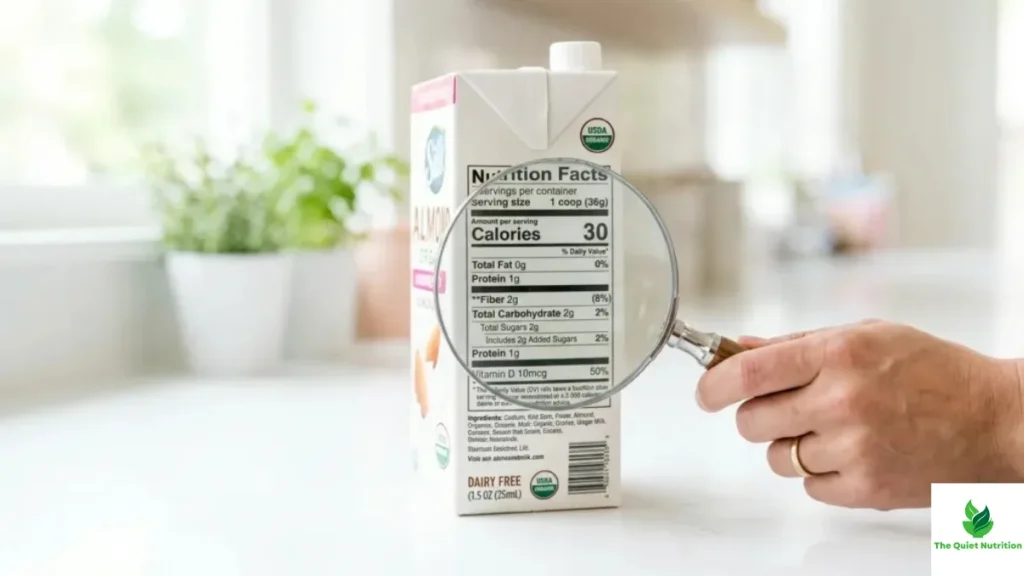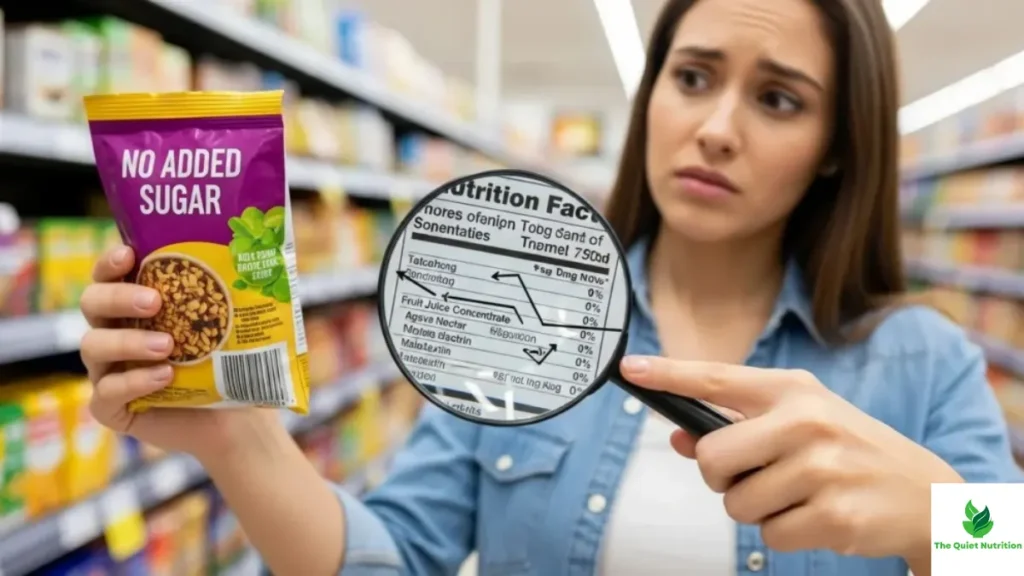
Every nutrition label carries a small column of percentages running down its side — 12% here, 35% there, 8% further down. They look precise. They look official. Most people glance at them, form a quick impression of whether a food is “good” or “bad,” and move on. Almost nobody stops to ask what that percentage is actually a percentage of — and that missing context is exactly where a genuinely useful tool starts quietly misleading people.
The Number That Anchors Everything Might Not Apply to You
Percent Daily Value, or %DV, tells you how much a nutrient in one serving contributes toward a full day’s recommended intake. The FDA states this plainly in the label’s own footnote: the percentage is based on a 2,000-calorie daily diet, used for general nutrition advice.
That single sentence is doing more work than it looks like. A 2,000-calorie reference point is a population-wide average, not a personalized target. Someone significantly more active, larger-framed, or simply eating to maintain a higher body weight might need considerably more than 2,000 calories a day — for competitive athletes, that reference becomes almost meaningless, since their actual caloric requirements can run dramatically higher. Someone smaller, older, or more sedentary might need meaningfully less. In either case, every %DV on every label they read is quietly calibrated to a number that may not reflect their own body’s actual requirements at all.
The FDA doesn’t hide this limitation — it’s stated directly in the label’s own language, calling the 2,000-calorie baseline “general nutrition advice” rather than a personalized figure. But footnotes are easy to skip, and the percentages themselves carry no visual signal that they’re built on an assumption that may or may not apply to the person reading them.
The Percentage Resets With Every Product’s Own Serving Size
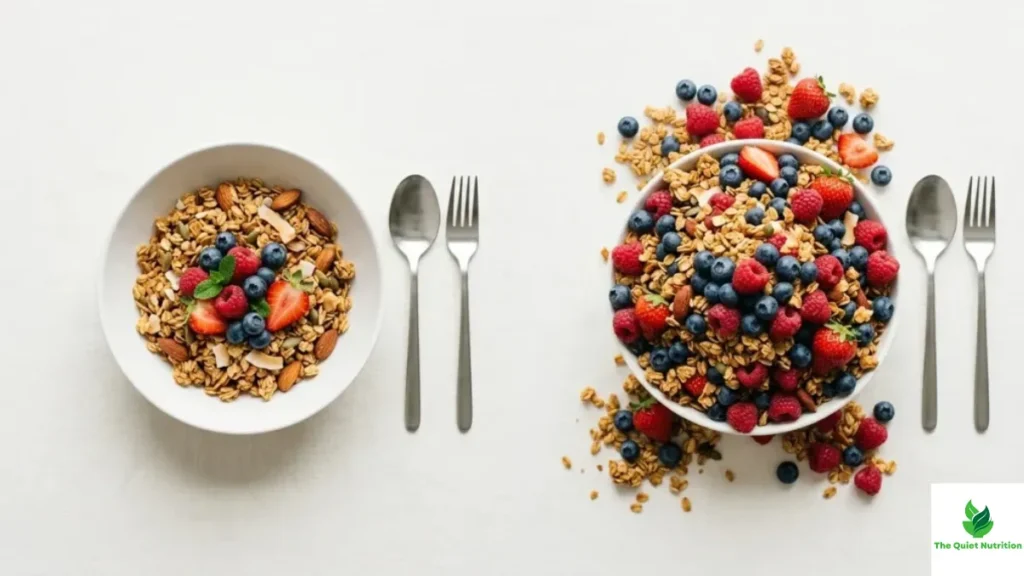
Here’s a second layer of confusion that’s easy to miss: %DV is calculated per serving, and serving sizes vary enormously between products, sometimes in ways that don’t match how people actually eat. A bag of chips might list a serving size far smaller than what most people would eat in one sitting. Someone glancing at a modest-looking 15% DV for sodium might not realize that finishing the whole bag — a completely normal amount to eat in one go — could mean consuming two or three times the number printed on the label.
This isn’t a hypothetical concern; it’s common enough that health writers covering the FDA’s own label redesign specifically flagged it, describing situations where someone finishes an entire bag only to realize afterward that their actual intake was double what the label implied at a glance. The %DV system is internally consistent — it’s doing accurate math — but that math resets with every product’s serving size, and serving sizes aren’t always calibrated to realistic single servings.
The Numbers Don’t Tell You Whether High or Low Is the Goal
There’s a third layer worth understanding: %DV treats every nutrient with the same neutral percentage format, whether that nutrient is one you want more of or one you’re actively trying to limit. A 25% DV for dietary fiber is a genuinely good thing — more fiber generally supports better health outcomes. A 25% DV for sodium or saturated fat is a very different kind of signal, one worth limiting rather than chasing.
The FDA does provide a general rule to help with this: 5% DV or less is considered low for a nutrient, and 20% DV or higher is considered high. That’s useful shorthand, but it requires the reader to already know which nutrients they should be seeking a “high” reading for (fiber, vitamin D, potassium, calcium) versus which ones a “high” reading should raise a flag on (sodium, saturated fat, added sugars) — context the percentage itself doesn’t supply. Without that background knowledge, a bigger number can look reassuring even when it represents exactly the opposite of what someone’s trying to achieve.
Percentages From Different Foods Don’t Simply Combine the Way People Assume
There’s also a subtler misunderstanding worth naming: %DV figures are meant to represent a single serving’s contribution toward a full day, not a running tally that behaves predictably as you eat multiple foods throughout the day. In principle, the FDA’s own guidance frames this as additive — eating a food with 10% of a nutrient’s daily value theoretically leaves 90% still available from the rest of your day’s food. In practice, most people don’t mentally track %DV cumulatively across every food they eat in a day, which means the “add it all up” logic the system is technically built around rarely gets used the way it was intended.
Why This Still Matters, Even With All These Caveats
None of this means %DV is useless — quite the opposite. Used correctly, it’s one of the most efficient tools available for comparing similar products side by side, provided the serving sizes match, and it gives a fast, standardized way to spot whether a food is genuinely high or low in a specific nutrient without doing manual math. The FDA specifically recommends using %DV for exactly this kind of side-by-side comparison between similar foods.
The real fix isn’t avoiding %DV — it’s reading it with the right context attached. Check the serving size against how much you’d actually eat. Remember the 2,000-calorie baseline is a population average, not a personal prescription. And keep in mind which nutrients you’re aiming to maximize versus minimize, since the percentage itself won’t tell you which direction is good news. The number isn’t wrong. It’s just quietly incomplete on its own, and it was always designed to be read alongside context most labels never spell out clearly enough.
Sources:
- U.S. FDA — Changes to the Nutrition Facts Label
- U.S. FDA — The Lows and Highs of Percent Daily Value on the Nutrition Facts Label
- U.S. FDA — Daily Value on the Nutrition and Supplement Facts Labels
- U.S. FDA — How to Understand and Use the Nutrition Facts Label

Aarti Solanki, B.Sc. (Food Science), is a food science writer passionate about making nutrition simple and evidence-based. She creates well-researched, easy-to-understand articles on healthy eating, food science, and nutrition, using information from trusted scientific and public health sources.