A protein bar with 20 grams of protein, 5 grams of fiber, and a nutrition panel that checks every box a health-conscious shopper is trained to look for. Good numbers, clean-looking claims, a package that reads like it belongs in a gym bag. And yet, flip it over and the ingredient list reveals a dozen isolates, gums, emulsifiers, and industrially processed components that never existed in that combined form until a factory assembled them. The nutrition panel isn’t lying. It’s just answering a completely different question than the one that actually matters here — and most food labels are built exactly the same way.
Nutrition Facts Were Never Designed to Measure Processing
Here’s the core disconnect: nutrition labels report macronutrients, vitamins, and minerals. They were never built to say anything about how a food was manufactured, how many industrial steps it went through, or how far it drifted from its original form. A food can hit impressive numbers for protein and fiber while still being assembled almost entirely from extracted, isolated, and reconstituted ingredients — and the nutrition panel will have nothing to say about that, because that’s simply not the question it’s designed to answer.
This gap is exactly why researchers developed a separate system specifically to address it. The NOVA classification, created by researchers at the University of São Paulo, sorts foods into four groups based purely on the extent and purpose of processing, completely independent of nutrient content. Group 1 covers foods in their natural or minimally altered state. Group 4 — ultra-processed foods — covers industrial formulations built from ingredients you wouldn’t typically find in a home kitchen: protein isolates, modified starches, emulsifiers, and other components extracted or synthesized through industrial processes rather than simply cooked or combined.
The Same Food Can Land in Wildly Different Categories Depending on One Ingredient
What makes this system genuinely useful is how it exposes distinctions nutrition labels miss entirely. Consider chickpeas: washing and cooking dried chickpeas at home counts as minimal processing. Canned chickpeas, ready to drain and eat, move up a category as a processed food. But commercially made hummus, built from the same chickpeas with a stabilizer like guar gum added, crosses into ultra-processed territory — despite chickpeas remaining the core ingredient throughout every version.
None of these three products would necessarily look dramatically different on a nutrition panel. Calories, protein, and fiber might land in a similar range across all three. But their processing pathways are genuinely different, and that difference carries real, independently studied health implications that the nutrition panel simply isn’t built to capture.
Research Increasingly Shows Processing Matters Independent of Nutrients
This wouldn’t matter much if processing level were just a stylistic detail. It isn’t. A UK study comparing food processing level against front-of-package nutrition scoring found that ultra-processed foods contained meaningfully more energy, fat, saturated fat, sugar, and salt than minimally processed foods — but crucially, the researchers concluded that nutritional quality and processing level appear to capture distinct, separate aspects of a food’s relationship to health, not simply overlapping versions of the same information.
Broader research syncs with this: higher intake of ultra-processed foods has been associated in multiple large studies with higher rates of obesity, increased type 2 diabetes risk, elevated cardiovascular risk, and higher all-cause mortality — associations that hold up even when accounting for the nutrient content of the foods involved. That’s the part worth sitting with: processing appears to carry health consequences that go beyond what a standard nutrition panel would predict, driven by factors researchers suspect include how energy-dense and hyperpalatable heavily processed formulations tend to be, encouraging people to eat more than they otherwise would.
Consumers Consistently Can’t Tell Which Category a Food Belongs To
This gap between what labels show and what actually matters isn’t lost on researchers studying consumer understanding. A survey exploring how well people actually understood the concept of “ultra-processed food” found that even in a population where the term has been in public use for close to a decade, comprehension remained genuinely inconsistent — despite the large majority of respondents claiming familiarity with the term itself.
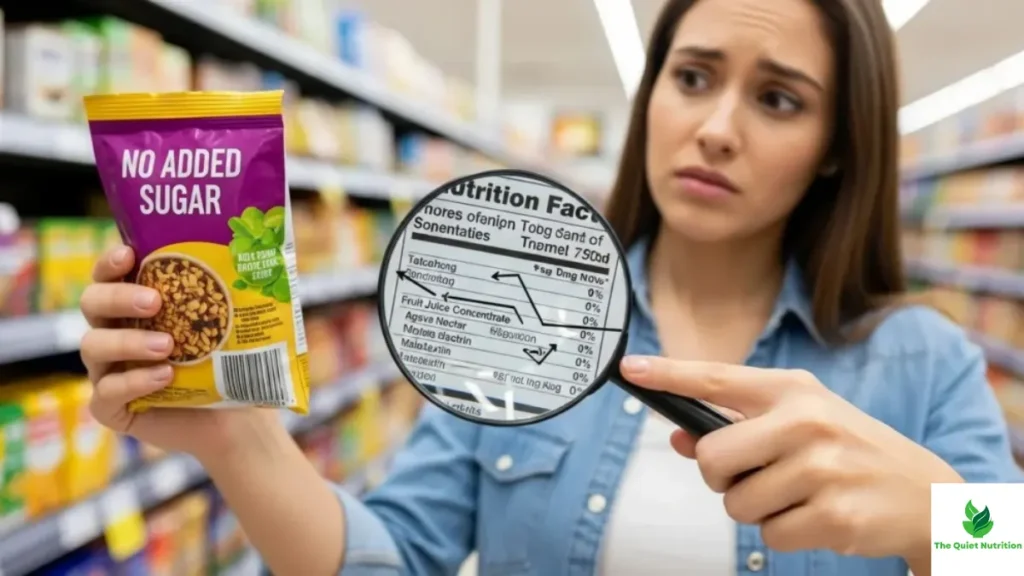
This tracks with a broader, well-documented pattern: consumers’ ability to accurately interpret nutrition information tends to be weak, particularly for foods like bread where processing distinctions are subtle and easy to miss. When the only information readily available is a nutrition panel and a scattering of front-of-package claims, people are left trying to judge processing level through information that was never designed to communicate it.
What Actually Signals Heavy Processing
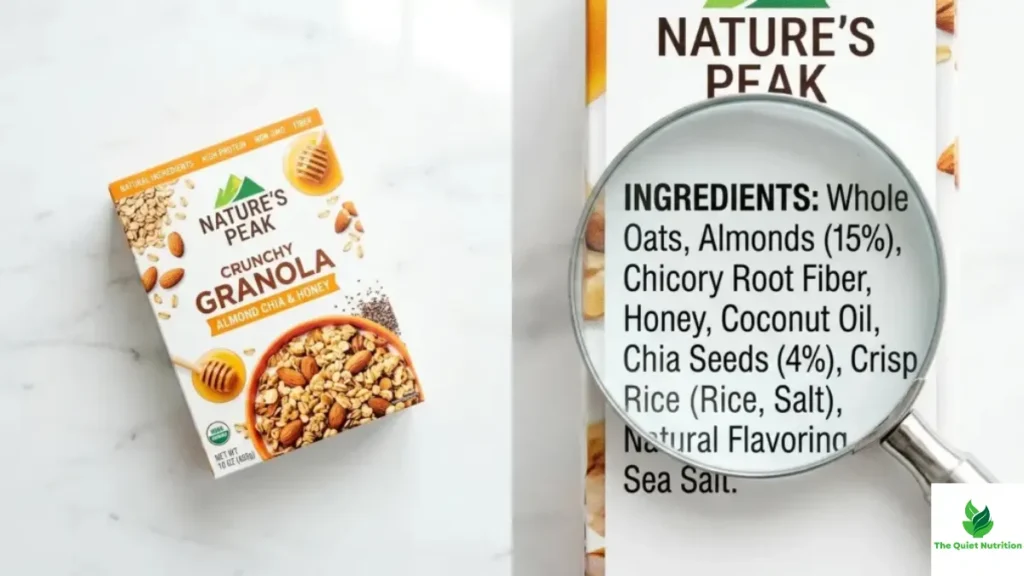
None of this means every packaged food is suspect or that convenience automatically equals harm — plenty of foods classified as more processed, like canned beans or plain frozen vegetables, remain nutritionally solid, practical staples. The distinction worth tracking is specifically ultra-processing: long ingredient lists dominated by extracted isolates, industrial additives, emulsifiers, and components with names unfamiliar from a home kitchen are the clearest signal, regardless of how favorable the nutrition panel numbers look above them.
The practical shift is using both tools together rather than either alone. The nutrition panel tells you what’s inside in terms of macronutrients and micronutrients. The ingredient list — read with an eye specifically toward how industrial or recognizable those ingredients are — tells you something the nutrition panel was never built to reveal: how far this food actually traveled from its original form before it reached the shelf.
Sources:
- Academy of Nutrition and Dietetics (EatRight) — Examining the NOVA Food Classification System and the Healthfulness of Ultra-Processed Foods
- NCBI/PMC — Nutrients or Processing? Food and Drink Items Based on Nutrient Content, NOVA Classification, and Front-of-Package Traffic Light Labelling
- NCBI/PMC — Consumers’ Understanding of Ultra-Processed Foods
- American Society for Nutrition — Using the NOVA Classification System to Identify and Estimate Intake of Ultraprocessed Foods

Aarti Solanki, B.Sc. (Food Science), is a food science writer passionate about making nutrition simple and evidence-based. She creates well-researched, easy-to-understand articles on healthy eating, food science, and nutrition, using information from trusted scientific and public health sources.

Pingback: Why Nutrition Panels Don’t Tell the Whole Truth — And What Food Labels Leave Out
Pingback: How Marketing Language Quietly Shapes Food Identity — And What You Think You’re Eating
Pingback: How Packaging Creates the Illusion of “Clean Ingredients” Without Full Disclosure