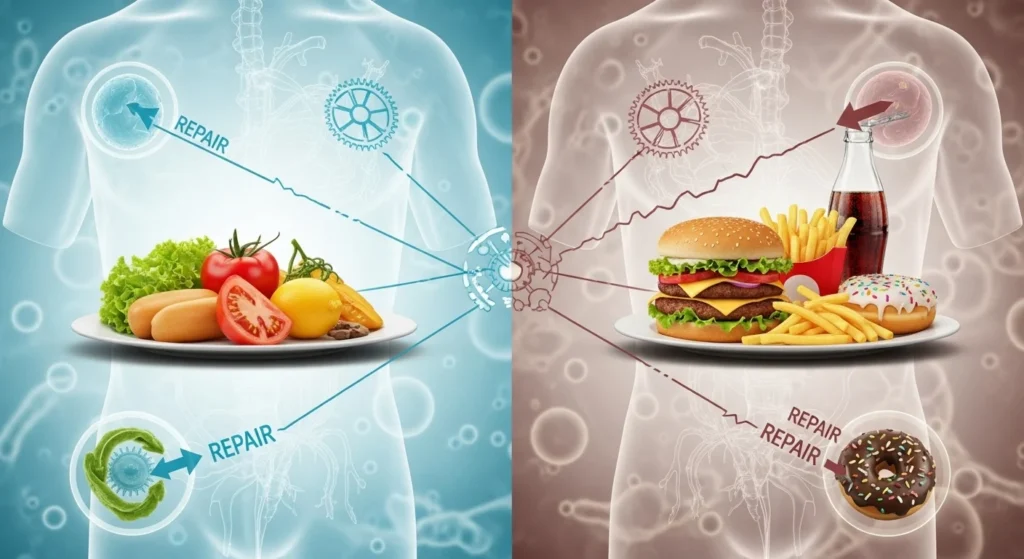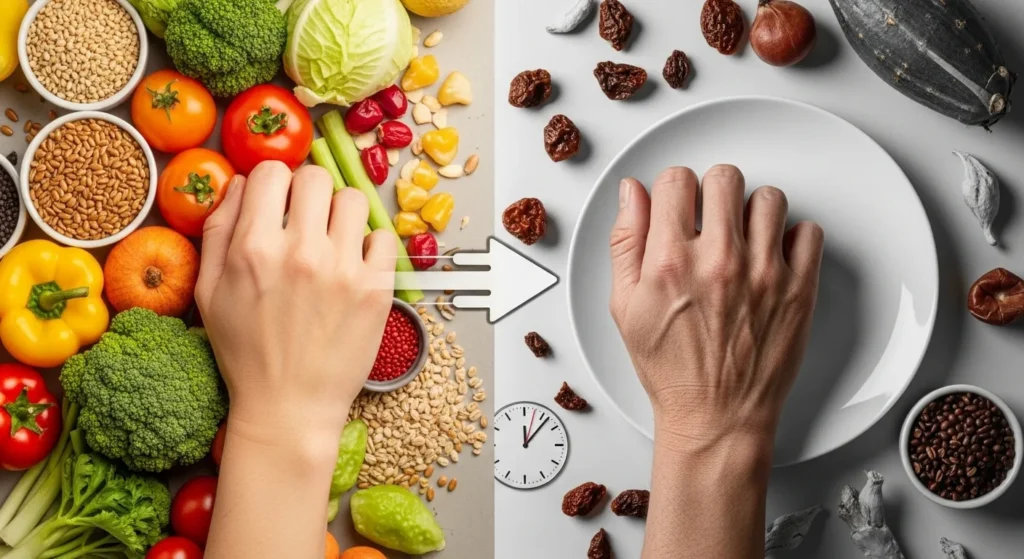
There’s a woman at my gym, easily in her sixties, who moves like someone twenty years younger and has for as long as I’ve known her. Last year she casually mentioned that her actual biological markers — the blood work her doctor sends her, cholesterol, inflammation levels, the works — read like someone in their forties. Her doctor apparently used the phrase “your body doesn’t know how old you are,” which sounds like a compliment until you realize the reverse is just as possible, and far more common. Some bodies age faster than the calendar says. The mechanism behind that gap has a name most people have never heard: nutritional stress.
It’s not dramatic. It doesn’t announce itself the way an injury does. It’s a slow, cumulative strain that builds when the body doesn’t get what it needs, consistently, over years — and it turns out to be one of the more powerful accelerants of aging that nobody’s really warned about.
Stress the Body Can’t See Coming
When people hear “stress,” they think emotional overwhelm, deadlines, bad news. Nutritional stress is different. It’s the physiological strain that accumulates when the body is chronically short on something it depends on — protein, specific micronutrients, stable blood sugar — even while calorie intake looks perfectly normal on paper. You can eat enough food and still be under nutritional stress, which is part of why it goes unnoticed for so long.
The body responds to this shortage the same way it responds to other chronic stressors: by elevating cortisol, redirecting resources toward short-term survival functions, and deprioritizing long-term maintenance. Cortisol, over time, breaks down muscle tissue, disrupts sleep, and interferes with the very repair processes that keep tissues and cells functioning well. It’s a system built for short emergencies, running instead on a low, constant hum for years.
Oxidative Stress: The Cellular Version
Underneath nutritional stress sits something more specific: oxidative stress, an imbalance between free radicals and the antioxidants that neutralize them. Free radicals are a normal byproduct of energy production, and the body handles them fine under typical conditions. But a diet low in antioxidant-rich foods — colorful vegetables, fruits, nuts — leaves fewer defenses available, and the free radicals start accumulating faster than they can be cleared.
This matters because oxidative stress is directly implicated in damage to DNA, proteins, and cell membranes, and that damage compounds. It’s linked to accelerated skin aging, reduced cognitive function over time, and a higher risk of the chronic diseases most associated with getting older. None of it shows up on a scale or in a mirror right away. It shows up as a slow erosion, measurable in blood markers years before it’s visible anywhere else.
Blood Sugar Instability Ages Faster Than People Expect
Repeated blood sugar spikes and crashes, from diets heavy in refined carbohydrates and light on protein or fiber, create a specific kind of chronic strain. Each spike triggers an insulin response; over years, cells can become less responsive to that insulin, a condition called insulin resistance that’s now understood to accelerate several aging-related processes at once, including the glycation of proteins mentioned earlier and increased systemic inflammation.
What’s notable is how ordinary the triggering pattern looks. A skipped breakfast followed by a carb-heavy lunch. A diet that’s technically low-fat and low-calorie but built almost entirely around processed grains. None of it looks reckless. It just quietly keeps blood sugar swinging in a range the body wasn’t designed to tolerate for decades at a stretch.
The Gap Between Calendar Age and Biological Age
Researchers increasingly distinguish between chronological age — the number on a birth certificate — and biological age, a composite marker based on inflammation levels, cellular markers, and metabolic function. The gap between the two appears to be substantially influenced by cumulative nutritional stress. Two people born the same year can have biological ages a decade or more apart, and diet quality, sustained over years rather than months, is one of the most consistent variables researchers point to when explaining that gap.
This is roughly what was happening with the woman at my gym, in reverse. Decades of steady protein intake, consistent vegetables, minimal processed food, and — by her own account — almost boring consistency had kept her nutritional stress low enough that her biological markers simply hadn’t caught up to her birth year.
Why This Reframing Matters
The useful part of understanding nutritional stress isn’t guilt about past choices. It’s recognizing that aging isn’t a fixed countdown running independently of daily life. It’s responsive, shaped continuously by whether the body is under quiet strain or reasonably well supported. The damage from nutritional stress accumulates silently, long before symptoms appear — which is exactly why it’s worth addressing before the blood work, or the mirror, eventually catches up.
Sources:
- National Institute on Aging — Nutrition and Healthy Eating as You Age: https://www.nia.nih.gov/health/healthy-eating-nutrition-and-diet
- Harvard T.H. Chan School of Public Health — Nutrition Source: https://www.hsph.harvard.edu/nutritionsource/
- National Institutes of Health — Office of Dietary Supplements: https://ods.od.nih.gov/
- Mayo Clinic — Insulin Resistance and Metabolic Health: https://www.mayoclinic.org/diseases-conditions/insulin-resistance
- World Health Organization — Healthy Diet Fact Sheet: https://www.who.int/news-room/fact-sheets/detail/healthy-diet

Aarti Solanki, B.Sc. (Food Science), is a food science writer passionate about making nutrition simple and evidence-based. She creates well-researched, easy-to-understand articles on healthy eating, food science, and nutrition, using information from trusted scientific and public health sources.