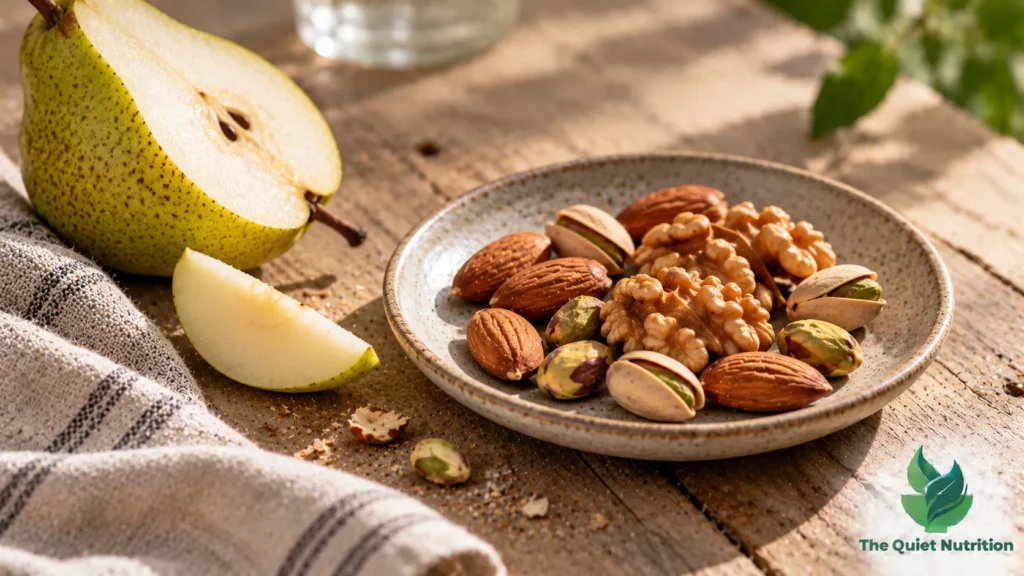
A small handful of nuts can be surprisingly satisfying. Almonds, walnuts, pistachios, cashews, and peanuts provide a combination of fat, protein, and varying amounts of fiber, making them more substantial than many snacks made mostly from refined carbohydrates.
That combination helps explain why nuts are often recommended between meals. They provide energy, contribute useful nutrients, and may help reduce hunger after eating. Their texture also encourages chewing, which can make them feel like a more substantial snack.
But there is a nuance worth understanding: feeling less hungry is not always the same as feeling physically full, and neither guarantees that you will eat less later. Research suggests that nuts can help regulate appetite in some circumstances, but their effects vary between people and studies.
So what makes nuts satisfying, and how can you include them in your diet without eating more calories than you intended?
1. They Combine Fat, Protein, and Fiber
One reason nuts can make a satisfying snack is their combination of macronutrients.
Most nuts contain substantial amounts of unsaturated fat, some protein, and varying quantities of fiber. Each contributes to the overall nutritional value of the snack, although their individual effects on hunger differ.
Fat provides concentrated energy. Protein supplies amino acids needed for tissue maintenance and repair, while fiber contributes to normal digestion and can influence how food moves through the digestive tract.
These nutrients also make nuts different from snacks that consist primarily of refined starch or added sugar. A small serving of almonds, for example, offers fat, protein, fiber, vitamin E, and minerals in a compact portion.
However, it would be too simplistic to say that fat, protein, and fiber automatically keep everyone full for a particular number of hours. Appetite depends on the size and composition of the entire meal, individual energy requirements, sleep, activity, and many other factors.
The practical advantage is that nuts offer more than energy alone. They can make a snack more nutritionally substantial without requiring complicated preparation.
2. Protein Can Contribute to Satisfaction After Eating
Protein is one of the nutrients involved in appetite regulation.
When you eat protein-containing foods, digestion and nutrient signalling trigger responses that help regulate hunger and food intake. These responses involve several hormones and communication pathways between the digestive system and the brain.
Nuts provide plant protein, although the amount varies by variety. Peanuts and almonds generally provide around 6–7 grams of protein per ounce, while other nuts supply different amounts.
That makes them useful as part of a protein-containing snack. For example, almonds paired with fruit provide a different nutritional combination from fruit alone. Peanut butter spread on whole-grain toast adds protein and fat to a carbohydrate-containing food.
Still, nuts are not exceptionally high in protein compared with foods such as Greek yogurt, eggs, tofu, or legumes when serving sizes and calories are considered. If protein intake is your main priority, nuts are best treated as one contributor rather than your only protein source.
Their benefit comes from the overall combination of nutrients, not from protein alone.
3. Their Fiber Adds to the Nutritional Value of a Snack
Nuts contain dietary fiber, although the amount varies considerably.
Fiber supports normal bowel function and contributes to the overall quality of a meal. Some types hold water, while others contribute bulk to stool. Certain fibers can also be fermented by gut microbes.
For appetite, fiber is often discussed because some fiber-rich foods increase the volume of a meal or influence digestion and nutrient absorption. However, fiber does not have the same effect in every food, and its impact on fullness depends on its type, quantity, and the rest of the meal.
Almonds and pistachios are useful examples of nuts that contribute both fiber and protein. A one-ounce serving of almonds supplies roughly 3–4 grams of fiber, while pistachios provide around 3 grams, depending on the product.
These amounts are meaningful, but nuts should not be your only source of fiber. Beans, lentils, whole grains, fruit, and vegetables can make major contributions to daily intake.
A more useful strategy is to combine nuts with other fiber-containing foods rather than expecting a small handful to replace a complete meal.
4. Chewing Whole Nuts May Influence How Satisfying They Feel
The physical structure of a food matters, not just its nutrient label.
Whole nuts require chewing, and their solid structure takes time to break down. This can make eating them a different experience from drinking a sweetened beverage or consuming a soft food that requires little chewing.
Chewing also takes time, which can influence the pace of eating. For some people, a slower snack may provide more opportunity to notice satisfaction before continuing to eat.
Whole nuts also have a complex structure in which some fat can remain trapped within plant cell walls during digestion. This means the body may not absorb every calorie listed on the nutrition label to the same extent as it would from certain more processed forms.
Research into the effects of nuts on energy balance suggests that the food’s structure, digestibility, and effects on appetite may help explain why regular nut consumption does not consistently produce the weight gain that their calorie content alone might predict.
However, it does not follow that whole nuts contain no absorbable calories or that chewing them guarantees greater fullness.
They remain an energy-dense food, and portion size still matters.
5. They May Help Reduce Hunger Between Meals
One of the most directly relevant questions is whether eating nuts actually reduces hunger later.
A systematic review and meta-analysis of 31 randomized clinical trials examined nut consumption in relation to energy intake, hunger, and fullness. The researchers found that nut consumption was associated with a modest reduction in reported hunger.
However, they did not find a significant overall effect on the sensation of fullness or body weight. The analysis also found that energy intake increased in some circumstances, particularly among participants with overweight or obesity.
This is an important distinction. Nuts may help some people feel less hungry, but they do not reliably guarantee that everyone will feel fuller or consume fewer calories later.
The evidence also comes from different nuts, serving sizes, and study designs. It should not be interpreted as proof that a specific handful of almonds or walnuts will always suppress appetite.
In everyday terms, nuts can be a practical snack when you are hungry between meals. Whether they reduce your subsequent food intake depends on your appetite, the rest of your diet, and how you use them.
6. Walnuts and Other Nuts Offer Different Nutritional Strengths
Although the main explanation for nuts’ satisfying qualities is their overall composition, individual varieties provide different amounts of protein, fiber, fat, and micronutrients.
Almonds offer protein, fiber, vitamin E, magnesium, and predominantly unsaturated fats. They are a useful everyday choice when you want a straightforward snack.
Peanuts provide relatively high amounts of protein for their serving size and are often an affordable option. Although botanically legumes rather than tree nuts, they are commonly eaten in the same way.
Pistachios provide protein, fiber, and several vitamins and minerals. Their shells can also slow the pace of eating for people who buy them in-shell.
Walnuts are notable for alpha-linolenic acid, a plant-based omega-3 fatty acid. They also supply protein and fiber, though their particular nutritional advantage differs from that of almonds or peanuts.
Cashews provide unsaturated fats, protein, copper, and magnesium, adding another nutrient profile to a varied mix.
No single nut has been established as the best choice for keeping everyone full longer. The most useful option is one you enjoy, can eat in a sensible portion, and can include as part of your overall diet.
7. Pairing Nuts With Other Foods Can Make a More Balanced Snack
Nuts are useful on their own, but pairing them with complementary foods can make a snack more varied.
Fruit provides carbohydrates, water, and fiber. Whole-grain foods contribute carbohydrates and additional fiber. Plain yogurt can supply protein, while oatmeal brings another source of whole-grain carbohydrate.
Combining these foods with nuts allows you to build a snack with a broader nutritional profile.
For example:
- Almonds with an apple: combines nuts’ fats and protein with fruit’s carbohydrates and fiber.
- Peanut butter on whole-grain toast: adds fat and protein to a carbohydrate-containing food.
- Pistachios with fruit: provides a convenient mix of nutrients and textures.
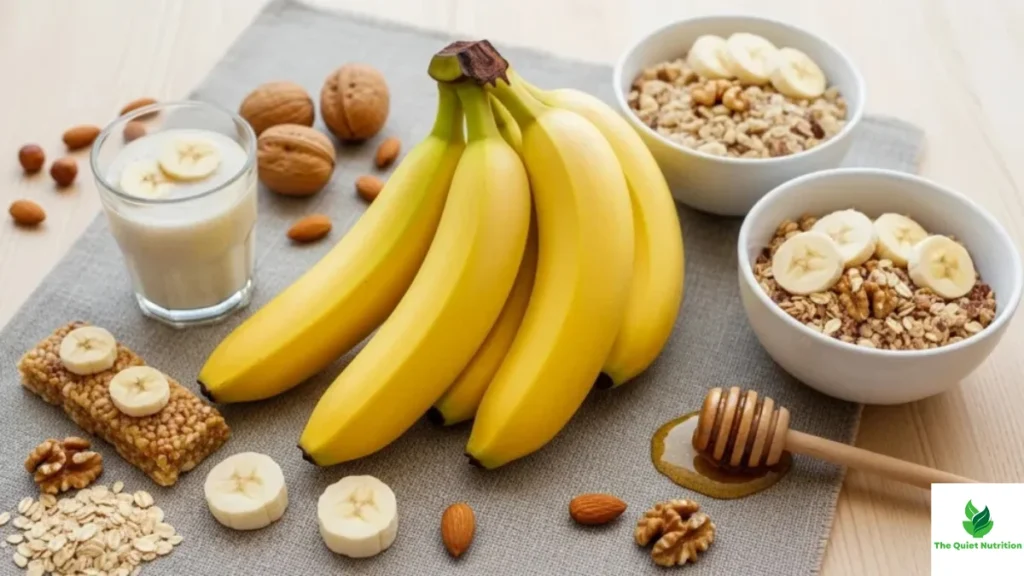
- Walnuts stirred into oatmeal: adds unsaturated fats and some protein to a whole-grain breakfast.
- Cashews with plain yogurt: combines nutrients from nuts with the protein in yogurt.
These combinations may be particularly convenient when a piece of fruit alone does not provide enough food for your appetite.
However, adding nuts to a snack also adds calories. The goal is to create a satisfying combination that suits your needs, not simply to combine as many calorie-dense ingredients as possible.
8. Nuts Can Fit Into a Weight-Conscious Diet
Because nuts are high in fat, they are sometimes avoided by people trying to manage their weight. But the relationship between nuts and body weight is more complex than their calorie content suggests.
Reviews of clinical trials and observational research generally do not find the expected increase in body weight from regular nut consumption. Proposed explanations include changes in appetite, compensation at later meals, the structure of whole nuts, and differences between labelled and metabolizable energy.
That does not mean calories are irrelevant. Eating large quantities of nuts in addition to your usual meals can still increase energy intake.
The distinction is between using nuts to improve a snack or meal and adding them without considering what else you eat.
For example, replacing a less nutritious snack with a measured serving of nuts may improve the quality of your diet. Eating several extra handfuls throughout the day may provide considerably more energy than you intended.
A small portion—around one ounce, or 28 grams—is a reasonable starting point for many adults. Your individual requirements and preferences may differ.
Nut butters can also fit into a balanced diet, but they may be easier to consume quickly than whole nuts. Measuring a portion can help you judge how much you are eating.
How to Use Nuts to Build a Satisfying Eating Routine
You do not need to follow a rigid schedule or eat nuts at a particular time to benefit from them.
Try using a small serving when you genuinely feel hungry between meals, or include nuts as part of a meal that would otherwise be low in protein, fiber, or unsaturated fats.
Choose mostly plain or dry-roasted varieties, and compare labels if you buy salted, sweetened, or heavily flavoured products. These additions can change the overall nutritional profile.
Variety is useful, but it is not essential to buy every type of nut. Almonds, peanuts, walnuts, pistachios, and cashews all offer different nutritional advantages.
If you have a peanut or tree-nut allergy, avoid the relevant foods and check labels carefully. Nut allergies can cause serious reactions, and mixed products can contain ingredients or traces of allergens.
Finally, pay attention to your own experience. A small serving may be sufficient for one person and inadequate for another, particularly after exercise or a long gap between meals. Nuts should complement your eating pattern rather than replace meals when you need more substantial nourishment.
The Bottom Line
Nuts can be satisfying because they combine energy, unsaturated fats, protein, and varying amounts of fiber in a compact food. Their solid structure also means they require chewing, and some of their energy may remain less accessible during digestion than the nutrition label alone suggests.
Research offers a useful qualification: nut consumption has been associated with modestly reduced hunger, but clinical trials have not consistently shown greater fullness or lower body weight overall.
The practical lesson is to choose a nut you enjoy, serve a sensible portion, and pair it with fruit, whole grains, or other foods when you need a more substantial snack.
Nuts are not a guaranteed appetite suppressant, and they do not have to be. Their real value is that they provide useful nutrients and can help make everyday eating more satisfying when they fit well into your diet.
Research sources
- Effect of Nuts on Energy Intake, Hunger, and Fullness — Systematic Review and Meta-analysis — 31 randomized clinical trials; found a modest reduction in reported hunger but no significant overall effect on fullness or body weight.
- Nuts, Energy Balance and Body Weight — Review — examines possible mechanisms involving nut structure, appetite, digestion, and energy availability.
- Harvard Health Publishing — How to Eat Nuts the Healthy Way — portion guidance and ways to incorporate nuts into meals and snacks.
- Harvard T.H. Chan School of Public Health — Almonds — almond nutrient profile and context for satiety and weight-management claims.
- A Review of the Effects of Nuts on Appetite, Food Intake, Metabolism, and Body Weight — review of potential explanations for how nuts may influence appetite and energy balance.

Aarti Solanki, B.Sc. (Food Science), is a food science writer passionate about making nutrition simple and evidence-based. She creates well-researched, easy-to-understand articles on healthy eating, food science, and nutrition, using information from trusted scientific and public health sources.