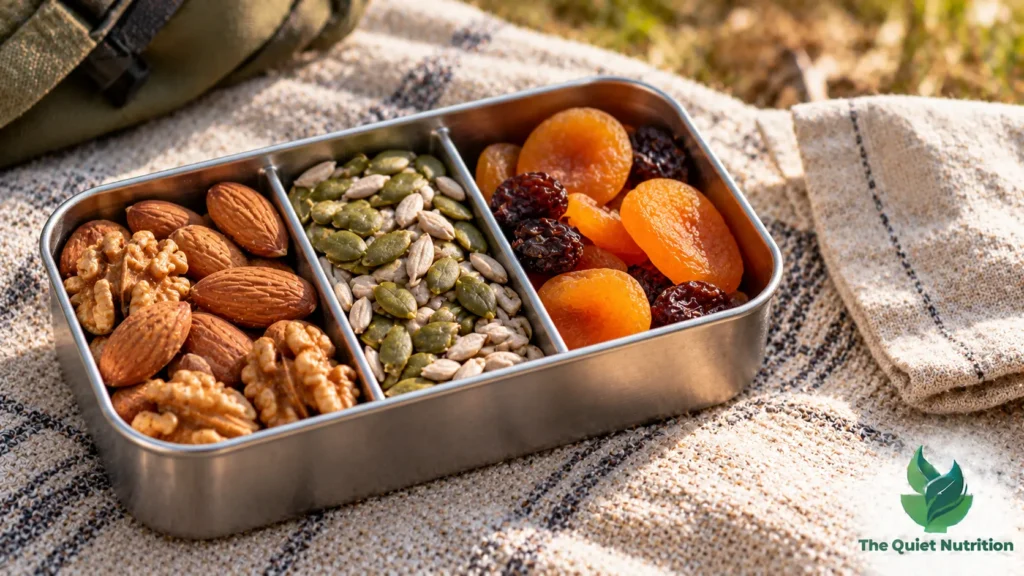
Trail mix has a straightforward appeal: it combines crunchy nuts, chewy dried fruit, and sometimes seeds or a little chocolate into a snack that is easy to carry and requires no preparation. It works on a hike, during a busy workday, on a road trip, or whenever you need something between meals.
But not every trail mix offers the same nutritional value. One blend may contain mostly almonds, pumpkin seeds, and unsweetened dried fruit. Another may be dominated by chocolate candies, sweetened fruit, salty nuts, and sugary clusters.
Both can be enjoyable, but their nutritional profiles can differ considerably.
The secret to eating trail mix smartly is not avoiding every sweet ingredient or searching for a supposedly perfect recipe. It is understanding how the ingredients work together, choosing proportions that suit your needs, and remembering that trail mix is a concentrated source of energy.
Here is how to build a more balanced mix, what its ingredients contribute, and how to enjoy it without overlooking portion size.
1. You Can Combine Several Nutrients in One Snack
One of trail mix’s main advantages is that it brings together foods with different nutritional strengths.
Nuts provide unsaturated fats, plant protein, and minerals. Seeds can contribute additional protein, fiber, and micronutrients. Dried fruit supplies carbohydrates and varying amounts of fiber, while whole-grain cereal can add another source of carbohydrates.
Instead of relying on a single ingredient, a thoughtfully prepared mix offers a combination of nutrients in a convenient form.
For example, almonds contribute vitamin E and magnesium, walnuts provide alpha-linolenic acid (ALA), a plant-based omega-3 fat, and pumpkin seeds supply minerals such as magnesium and zinc. Raisins and dried apricots add carbohydrates that the body can use for energy.
The exact nutritional profile depends on the ingredients and their proportions. A mix dominated by nuts will provide a different balance from one containing large amounts of dried fruit or chocolate.
The practical advantage is flexibility. You can choose ingredients to suit your preferences, energy needs, and budget without needing an elaborate recipe.
2. Nuts and Seeds Supply Unsaturated Fats and Plant Protein
Nuts and seeds are often the nutritional foundation of trail mix.
Almonds, peanuts, walnuts, pistachios, cashews, sunflower seeds, and pumpkin seeds contain varying amounts of protein, unsaturated fats, fiber, vitamins, and minerals.
Unsaturated fats provide energy and help the body absorb fat-soluble vitamins. Replacing some sources of saturated fat with unsaturated fats can also improve the overall quality of dietary fat.
Protein contributes to tissue maintenance and repair. Although trail mix is not necessarily a high-protein meal, nuts and seeds can make it a more substantial snack than a mixture composed mostly of sweets.
The variety matters, too. Different nuts and seeds provide different micronutrients, so combining several types can broaden the mix’s nutritional profile.
However, more ingredients do not automatically make a trail mix healthier. A product containing eight types of nuts, seeds, and dried fruit is not necessarily better than a simpler blend of peanuts, pumpkin seeds, and raisins.
What matters is the overall composition and portion size, not the number of ingredients listed on the packet.
3. Dried Fruit Adds Carbohydrates and Natural Sweetness
Dried fruit is a traditional trail mix ingredient for a good reason: it adds sweetness, texture, and carbohydrates without requiring refrigeration.
Raisins, dates, dried apricots, cranberries, and apple pieces can all work well. Dried fruit retains many of the nutrients found in fresh fruit, including some fiber, although the amounts vary with the fruit and processing.
There is an important difference between dried fruit with no added sugar and varieties sweetened during processing.
Some dried cranberries, for example, contain added sugar to balance their naturally tart taste. Other products may include syrups or sweetened coatings. Checking the ingredient list helps you understand what you are buying.
Even when no sugar has been added, dried fruit still contains naturally occurring sugars and concentrated energy because much of its water has been removed. That does not make it unhealthy, but it means a large handful can provide more carbohydrate and calories than expected.
A useful approach is to include enough dried fruit to make the mix enjoyable without allowing it to overwhelm the nuts and seeds.
You do not need to eliminate dried fruit. Choose the variety you like, compare labels, and pay attention to how much you use.
4. Choosing the Right Ingredients Makes a Difference
Building trail mix yourself gives you more control over its nutritional composition than purchasing a heavily flavoured blend.
Here is how the main ingredients compare.
| Ingredient | What it contributes | What to consider |
|---|---|---|
| Almonds | Unsaturated fats, protein, vitamin E | Energy-dense |
| Peanuts | Plant protein and unsaturated fats | Check for added salt or coatings |
| Walnuts | Unsaturated fats, including ALA | Can become rancid if stored poorly |
| Pumpkin seeds | Protein, fats, magnesium, zinc | Check added salt |
| Sunflower seeds | Vitamin E and unsaturated fats | Salted varieties may add sodium |
| Raisins | Carbohydrates and some fiber | Natural sugars are concentrated |
| Dried apricots | Carbohydrates, fiber, and minerals | Check serving size and added ingredients |
| Dried cranberries | Sweetness and some fiber | Many commercial varieties contain added sugar |
| Dark chocolate pieces | Flavour and enjoyment | Adds calories and may contain added sugar |
| Whole-grain cereal | Carbohydrates and potentially fiber | Choose options with limited added sugar |
There is no need to include every ingredient. A simple mix made from two nuts, one seed, and one dried fruit can be a perfectly reasonable snack.
The aim is to make each ingredient earn its place by contributing something you enjoy.
5. Trail Mix Can Be Useful When You Need Portable Energy
Trail mix is particularly convenient when you are away from home, travelling, or spending time outdoors.
Nuts and seeds are energy-dense, which means they provide a substantial amount of energy in a relatively small volume. Dried fruit adds carbohydrates, making the combination useful when you want a compact snack.
For someone hiking for several hours, this can be helpful because carrying bulky or perishable food may be inconvenient. A small container of trail mix can provide energy without needing refrigeration.
It can also work between meals during a busy day. However, a snack does not need to be eaten simply because it is available. Your hunger, activity level, and the timing of your next meal should guide the portion.
Trail mix is not a stimulant and does not guarantee sustained energy for a specific number of hours. If you regularly feel unusually tired, food alone may not address the cause.
For everyday use, think of trail mix as a practical food choice rather than a special performance product.
6. Portion Size Matters More Than Many People Realise
Trail mix looks harmless because it is dry, compact, and easy to eat. Yet its energy density means that a large handful can contain considerably more calories than expected.
An ounce, or approximately 28 grams, of a typical nut-based mix may provide around 150–200 calories, although the amount varies widely with the ingredients. A mix containing generous amounts of chocolate, sweetened fruit, or clusters may have a different nutritional profile.
It is particularly easy to underestimate a portion when eating directly from a large bag while working, watching television, or travelling.
A simple solution is to portion the mix into a small bowl or reusable container before eating. One-quarter cup is a common starting measure for many trail mixes, but volume varies with the size and shape of the ingredients. Weighing a serving once can help you understand what a typical portion looks like.
You do not need to treat this serving as a strict daily limit. Larger portions may make sense for someone undertaking prolonged physical activity, while a smaller serving may be sufficient for an ordinary afternoon snack.
The right amount depends on your overall energy needs and what else you eat during the day.
7. Candy and Chocolate Can Fit Without Dominating the Mix
One common mistake is assuming that trail mix must be completely free of chocolate to be nutritious.
A few pieces of dark chocolate or another ingredient you enjoy can make the mix more appealing. Enjoyment matters because a snack you genuinely like is often easier to incorporate into a realistic eating pattern.
The issue is proportion. If most of the packet consists of chocolate candies, sweetened clusters, and coated fruit, the blend will have a different nutritional profile from one built mainly around nuts, seeds, and dried fruit.
Added sugar is not automatically dangerous in every small serving, but frequent consumption of sugary foods can make it easier to exceed recommended amounts.
Rather than treating chocolate as forbidden, use it deliberately. Add a small quantity for flavour while allowing nuts, seeds, and fruit to remain the main ingredients.
This approach offers flexibility without pretending that all trail mixes are nutritionally equivalent.
8. A Homemade Mix Gives You More Control
Making trail mix at home is one of the simplest ways to customise the ingredients and portions.
It also allows you to adjust the recipe for different situations. A mix for a long hike may contain more carbohydrates, while an everyday desk snack might include a greater proportion of nuts and seeds.
Here is a simple starting recipe.
Everyday trail mix
- 1/2 cup almonds or peanuts
- 1/4 cup pumpkin seeds
- 1/4 cup unsweetened raisins or chopped dried apricots
- 2 tablespoons chopped walnuts
- 1–2 tablespoons dark chocolate pieces, optional
Combine the ingredients in a clean bowl and divide the finished mixture into portions that suit your needs. This makes several small servings rather than one large snack.
You can substitute other nuts or seeds according to preference. If you use salted nuts, avoid adding extra salt unless you specifically want it.
For travel or work, pack individual portions in clean, airtight containers. This makes the mix easy to carry and helps prevent repeated, unmeasured snacking from a large bag.
9. Packaged Trail Mix Deserves a Quick Label Check
Pre-made trail mix can be convenient, but the name alone does not tell you how nutritious it is.
Before purchasing a product, look at three things.
The ingredient list: Ideally, nuts and seeds should form a substantial part of the mixture. If sugar, chocolate candies, sweetened fruit, or sugary clusters dominate, the product may be closer to a confectionery-style snack.
Added sugar: Compare products, particularly when choosing dried cranberries, candied fruit, or flavoured nuts. A little added sugar does not automatically rule out a product, but it is useful to know how much is included.
Sodium: Salted nuts and seasoned ingredients can increase the sodium content. Unsalted or lightly salted options give you more control if you need to limit sodium.
It is also worth checking how many servings are in a packet. A small-looking package may contain multiple servings, so eating the entire bag can provide substantially more energy and sodium than you expected.
Trail mix can still be a convenient store-bought snack. Reading the label simply helps you choose a product that matches your preferences and nutritional priorities.
10. Be Mindful of Allergies and Storage
Trail mix often contains several types of nuts and seeds, which creates a practical consideration for anyone with a food allergy.
Peanuts and tree nuts can trigger serious allergic reactions. Seeds can also cause allergies in some people. Check ingredients and cross-contact warnings carefully, especially when buying a product made in a facility that handles multiple allergens.
Storage matters as well. Nuts and seeds contain fats that can deteriorate over time, particularly when exposed to heat, oxygen, and light. Dried fruit can also lose quality if stored improperly.
Keep homemade trail mix in a clean, airtight container in a cool, dry place, and follow package instructions for commercial products. If the mix develops an unusual smell, visible mould, or signs of moisture contamination, discard it.
These precautions help preserve the taste and quality of a snack you may keep on hand for several days.
The Bottom Line
The quiet benefits of eating trail mix smartly come from combining ingredients that contribute different nutrients in a convenient, enjoyable snack. Nuts and seeds provide unsaturated fats, protein, and minerals, while dried fruit adds carbohydrates and some fiber.
But trail mix is not automatically healthy simply because it contains nuts. Large portions, heavy salting, added sugar, and candy-dominated blends can change the nutritional picture.
Choose mostly nuts and seeds, add dried fruit according to your taste, and treat chocolate as an optional ingredient rather than the foundation of the mix. Portion it before eating, check packaged labels, and adapt the blend to your activity level and needs.
A smart trail mix does not have to be perfect or expensive. It simply needs to be a snack you enjoy, made from ingredients that fit your diet and eaten in a portion that makes sense for you.
Research sources
- Harvard T.H. Chan School of Public Health — The Science of Snacking — snack quality, portion awareness, and practical ways to choose satisfying snacks.
- Harvard T.H. Chan School of Public Health — Processed Foods — recommends homemade trail mix with nuts, seeds, and dried fruit as one snack option.
- Harvard T.H. Chan School of Public Health — Nuts for the Heart — nutritional strengths of nuts and why added sugar, sodium, and overall dietary context matter.
- Harvard T.H. Chan School of Public Health — Dried Fruit and Nuts — example of a trail-mix-style combination of dried fruit and nuts, with per-serving nutrition information.
- Food Network — Healthier Store-Bought Trail Mixes — practical label-checking tips for nuts, seeds, dried fruit, added sugar, sodium, and serving size.

Aarti Solanki, B.Sc. (Food Science), is a food science writer passionate about making nutrition simple and evidence-based. She creates well-researched, easy-to-understand articles on healthy eating, food science, and nutrition, using information from trusted scientific and public health sources.