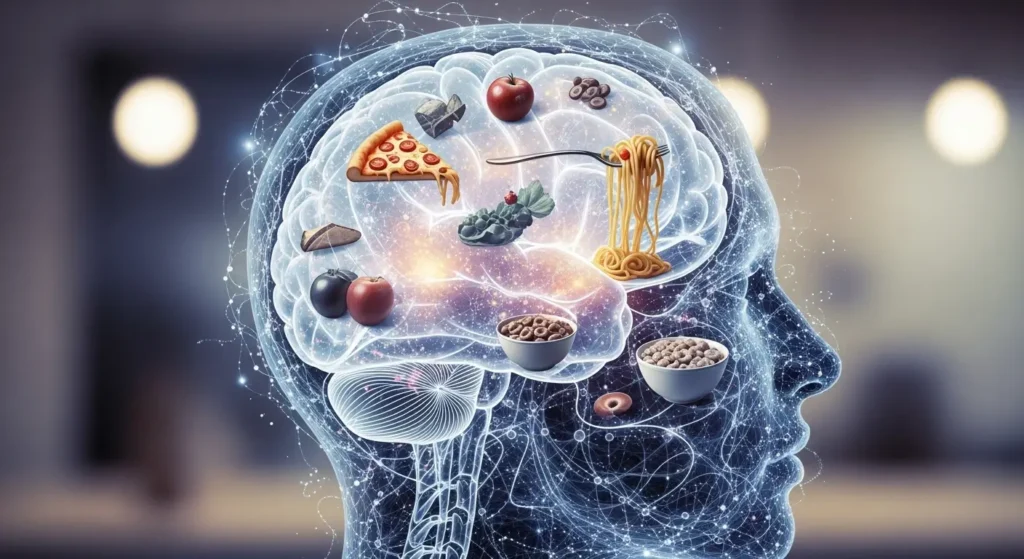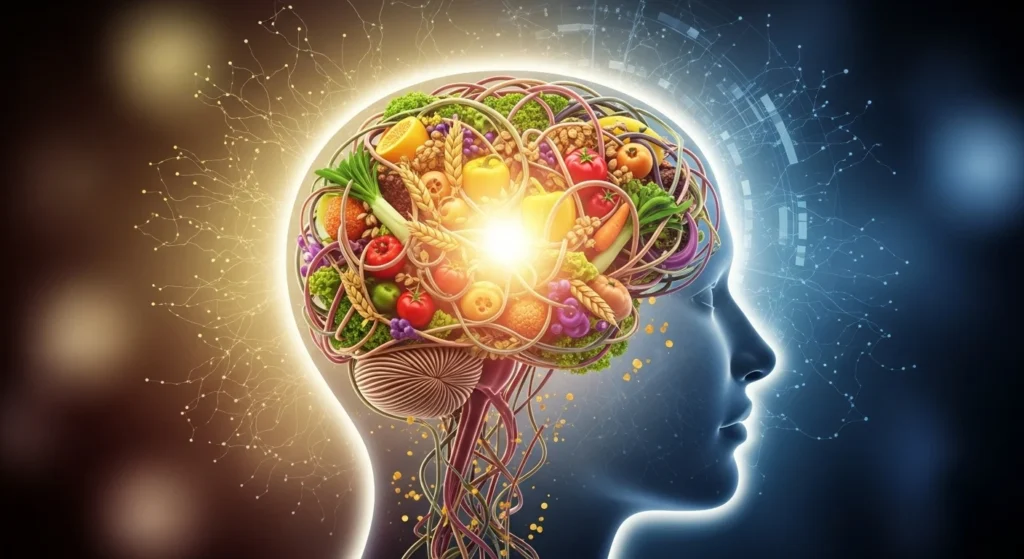
Your Brain Isn’t Just Fueled by Food — It’s Shaped by It
Most people think nutrition affects the brain in the moment.
Eat sugar… crash later.
Skip lunch… feel foggy.
Have a balanced meal… focus improves.
But the bigger truth is deeper:
Your brain becomes more efficient or less efficient based on your long-term eating patterns.
Not one meal.
Not one day.
But the repeated signals you send your brain across months and years.
Because the brain is not just an organ that consumes energy…
It is an organ that adapts.
It builds itself around what you repeatedly provide.
Let’s explore how.
What Does “Brain Efficiency” Actually Mean?
Brain efficiency isn’t about IQ.
It’s about how smoothly your brain can operate with minimal strain.
Efficient brains tend to have:
- faster processing speed
- better focus endurance
- more stable mood regulation
- stronger memory retrieval
- reduced cognitive fatigue
- calmer stress response
Brain efficiency is the difference between feeling:
- mentally sharp and steady
or - mentally drained and scattered
And one of the biggest drivers is nutritional consistency.
The Brain Is a High-Energy Organ With Low Tolerance for Instability
The brain is only about 2% of body weight…
Yet it uses roughly 20% of your resting energy.
That means the brain constantly demands fuel.
But it’s not just calories.
The brain depends on:
- stable glucose delivery
- healthy fats for cell membranes
- amino acids for neurotransmitters
- micronutrients for neural energy systems
When long-term eating patterns are unstable…
The brain becomes less efficient over time.
Long-Term Eating Patterns Create Brain Fuel Rhythms
The brain thrives on predictable energy.
Repeated eating habits teach the brain what to expect.
For example:
Consistent balanced meals lead to:
- smoother blood sugar curves
- calmer hunger signaling
- fewer energy crashes
- improved cognitive stamina
Chaotic eating patterns lead to:
- frequent glucose spikes
- stress hormone fluctuations
- inconsistent neurotransmitter supply
- more mental fatigue
Your brain efficiency is partly the result of how stable your fuel environment has been.
Real-Life Example: Two People, Same Diet Today, Different Brain Outcomes
Imagine two people eating the same meal today:
- protein
- vegetables
- whole grains
Person A feels energized and clear.
Person B still feels foggy and tired.
Why?
Because nutritional history matters.
Person B may have had years of:
- nutrient depletion
- ultra-processed reliance
- irregular meal timing
- chronic blood sugar swings
Brain efficiency is cumulative.
The brain reflects patterns, not moments.
Blood Sugar Patterns Train Cognitive Stability
Glucose is the brain’s primary fuel.
But long-term glucose instability reduces efficiency.
Frequent spikes and crashes can contribute to:
- slower thinking
- more cravings
- irritability
- reduced attention span
Stable eating patterns improve:
- insulin sensitivity
- glucose access
- mental energy consistency
The brain works best when fuel arrives steadily, not dramatically.
Key Nutrients That Build Long-Term Brain Efficiency
Eating patterns are not only about timing…
They’re about nutrient supply over years.
Important brain-supportive nutrients include:
- Omega-3 fatty acids (neuron membrane communication)
- B vitamins (energy metabolism in brain cells)
- Iron (oxygen delivery + dopamine function)
- Magnesium (calm nervous system signaling)
- Zinc (neurotransmitter regulation)
- Choline (memory and processing speed pathways)
Small long-term gaps can lead to subtle cognitive drag.
The brain is sensitive because it has high nutrient turnover.
Comparison Table: Brain-Efficient vs Brain-Draining Eating Patterns
| Long-Term Pattern | Brain Effect Over Time | Common Experience |
|---|---|---|
| Regular balanced meals | Stronger cognitive stamina | Clearer focus, steadier mood |
| Frequent ultra-processed intake | Increased inflammation + instability | Brain fog, cravings |
| Consistent omega-3 and healthy fats | Better neural communication | Faster processing |
| Chronic skipping meals | Stress-driven brain signaling | Anxiety, irritability |
| Fiber-rich plant diversity | Gut-brain support improves | Better emotional regulation |
The Gut-Brain Connection: Long-Term Diet Shapes Neurochemistry
Your gut isn’t just digestive.
It’s neurological.
The microbiome helps regulate:
- serotonin production
- inflammation signaling
- nutrient absorption
- stress response pathways
Long-term diets low in fiber reduce microbial diversity.
Long-term diets rich in whole plants strengthen it.
Gut health becomes brain health over time.
A more efficient brain often reflects a more supported gut environment.
Inflammation Is a Quiet Brain Efficiency Killer
Highly processed eating patterns can increase low-grade inflammation.
Chronic inflammation affects:
- neurotransmitter signaling
- cognitive speed
- mood stability
- memory formation
This isn’t about fear.
It’s about understanding the cumulative impact.
Anti-inflammatory patterns aren’t trendy…
They’re protective.
They support long-term mental clarity.
Hidden Tip: The Brain Adapts Slowly, But Deeply
The brain doesn’t respond instantly.
It remodels gradually.
That means:
- short-term diet changes feel subtle
- long-term patterns reshape resilience
- cognitive improvements compound quietly
Brain efficiency isn’t built through detox weeks.
It’s built through ordinary meals repeated consistently.
That’s why boring nutrition is powerful.
Common Mistakes That Reduce Long-Term Brain Efficiency
Mistakes to avoid:
- inconsistent eating schedules
- extreme dieting cycles
- low protein intake
- excessive refined sugar reliance
- ignoring hydration
- skipping micronutrient-rich foods
- thinking brain health is separate from food
The brain remembers what you repeatedly do.
Actionable Steps to Build Brain Efficiency Through Nutrition
Here’s how to support your brain long-term without overwhelm.
1. Prioritize Regular Meals With Protein
Protein supports neurotransmitter building.
Aim for protein at most meals.
2. Build Glucose Stability Into Your Plate
Include:
- fiber
- healthy fats
- slow carbs
- protein
This prevents crashes.
3. Add Omega-3 Sources Weekly
Examples:
- fatty fish
- chia seeds
- flax
- walnuts
4. Eat More Fiber Diversity Over Time
Don’t chase perfection.
Add one plant food at a time.
5. Hydrate Like It Matters (Because It Does)
Even mild dehydration slows cognitive speed.
Why This Matters Today (Evergreen Truth)
Modern life is mentally demanding:
- constant information
- multitasking
- high stress
- limited rest
Yet modern eating patterns often undermine brain efficiency:
- irregular meals
- ultra-processed convenience
- sugar-driven energy cycles
Many people assume brain fog is normal.
Often, it’s nutritional instability.
The brain thrives when food becomes steady support, not constant disruption.
Key Takeaways
- Long-term eating patterns shape brain efficiency more than single meals
- Stable blood sugar improves focus, mood, and processing speed
- Nutrients like omega-3s and B vitamins support neural communication
- Gut health and inflammation play major roles in cognitive clarity
- Brain efficiency is built slowly through consistent nourishment
FAQ: Eating Patterns and Brain Efficiency
1. Can long-term diet really affect how sharp my brain feels?
Yes. Repeated eating patterns shape glucose stability, nutrient supply, and inflammation over time.
2. How long does it take to improve brain efficiency through nutrition?
Many notice subtle improvements in weeks, but deeper cognitive resilience builds over months.
3. Is brain fog always a nutritional problem?
Not always, but nutrition is a common and overlooked contributor.
4. What foods support brain efficiency most?
Balanced meals with protein, fiber, healthy fats, omega-3s, and micronutrient-rich plants.
5. Do eating patterns matter more than occasional “healthy days”?
Yes. The brain responds to consistency, not occasional bursts of perfection.
Conclusion: Your Brain Becomes What You Repeatedly Feed It
The brain is not only fueled by food…
It is shaped by it.
Long-term eating patterns train your brain toward:
- steadier focus
- faster thinking
- better mood resilience
- stronger mental endurance
And the best part is:
You don’t need extreme change.
You need consistent nourishment repeated long enough to become internal stability.
Your brain efficiency is not built in dramatic moments…
It’s built in the quiet pattern of everyday meals.