Have you ever felt mentally exhausted… even when you hadn’t done much?
Your body feels fine.
Your sleep was okay.
But your brain feels slow, foggy, and drained.
That feeling isn’t weakness.
And it isn’t laziness.
It’s often a signal that your brain’s energy supply isn’t being supported properly by nutrition.
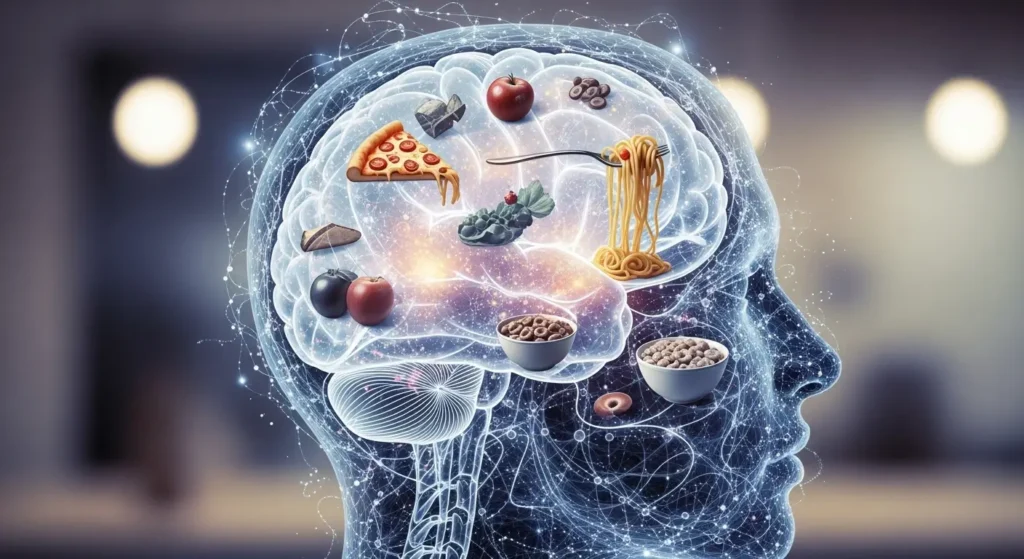
The brain is the most energy-demanding organ in your body.
Yet most people are never taught how nutrition actually fuels it.
Let’s change that.
Why Brain Energy Works Differently From Body Energy
Your brain is only about 2% of your body weight, yet it uses roughly 20% of your total daily energy.
This fact alone—widely cited in neuroscience and public health research supported by organizations like the World Health Organization—explains why mental fatigue appears long before physical exhaustion.
Unlike muscles, the brain:
- Can’t store large amounts of energy
- Needs a constant supply
- Is extremely sensitive to fluctuations
When nutrition fails to meet these demands, the brain notices first.
What “Brain Energy Availability” Actually Means
Brain energy availability isn’t about calories alone.
It’s about whether the brain can access, use, and stabilize energy efficiently.
That depends on:
- Blood glucose stability
- Micronutrient sufficiency
- Oxygen delivery
- Neurotransmitter production
Calories without support systems don’t equal usable brain energy.
This is why people can eat “enough” yet still feel mentally depleted.
The Brain’s Primary Fuel: More Than Just Glucose
Yes, glucose is the brain’s main energy source.
But the story is more nuanced.
Glucose Must Be:
- Delivered steadily
- Absorbed efficiently
- Regulated by hormones
Sharp spikes followed by crashes create temporary abundance followed by energy scarcity.
That’s when symptoms appear:
- Brain fog
- Irritability
- Poor concentration
- Decision fatigue
Nutrition shapes this entire cycle.
How Poor Nutrition Disrupts Brain Energy (Quietly)
Brain energy loss rarely announces itself loudly.
It shows up subtly.
Common Early Signs:
- Trouble focusing
- Slower thinking
- Emotional reactivity
- Reduced motivation
These are not personality flaws.
They’re energy management problems.
Real-Life Example: The “Afternoon Brain Crash”
You eat a carb-heavy lunch.
At first:
- You feel alert
- Mood lifts
- Energy rises
Then 90 minutes later:
- Focus drops
- Motivation disappears
- Mental effort feels heavy
What happened?
Blood glucose spiked, insulin surged, and energy availability dropped below baseline.
Your brain didn’t fail.
Its fuel supply did.
Nutrients That Directly Support Brain Energy
Calories start the process—but nutrients complete it.
Key Brain Energy Supporters:
- Protein → neurotransmitter building blocks
- B vitamins → energy metabolism
- Iron → oxygen delivery
- Magnesium → neuronal signaling
- Healthy fats → membrane function
Deficiencies don’t cause immediate collapse—but they slowly reduce efficiency.
Why Highly Processed Diets Drain Mental Energy
Highly processed foods often:
- Spike blood sugar quickly
- Lack supporting micronutrients
- Create rapid energy fluctuations
This forces the brain into a reactive state, constantly adjusting instead of performing.
Over time, mental stamina declines—even if calorie intake is high.
This is why “eating enough” doesn’t always mean “fueling well.”
Brain Energy vs Muscle Energy: A Crucial Difference
| Brain Energy | Muscle Energy |
|---|---|
| Continuous demand | On-demand use |
| Limited storage | Can store glycogen |
| Highly glucose-dependent | Uses multiple fuels |
| Sensitive to fluctuations | More resilient |
This explains why diet mistakes often show up as mental fatigue first, not physical weakness.
The Role of Meal Timing in Brain Energy
Your brain prefers predictability.
Long gaps between meals, inconsistent eating, or extreme restriction can reduce energy availability.
This doesn’t mean constant snacking.
It means:
- Regular fuel signals
- Stable nutrient intake
- Avoiding extreme swings
Consistency protects cognition.
Common Nutrition Mistakes That Hurt Brain Energy
Even well-meaning habits can backfire.
❌ Skipping Meals to “Push Through”
This often worsens focus and decision-making.
❌ Fear-Based Carb Avoidance
The brain still needs accessible glucose.
❌ Ignoring Micronutrients
Calories alone don’t run neurons.
❌ Relying on Caffeine as Fuel
Stimulation isn’t energy—it’s borrowed alertness.
How to Support Brain Energy With Nutrition (Practically)
You don’t need perfection.
You need alignment.
Actionable Steps:
- Pair carbohydrates with protein or fiber
- Eat regularly, not reactively
- Prioritize whole, nutrient-dense foods
- Notice mental clarity—not just fullness
- Adjust based on focus, not trends
These small shifts often restore mental energy surprisingly fast.
Hidden Tip: Brain Energy Affects Emotional Control
Low brain energy doesn’t just cause fog.
It reduces:
- Patience
- Emotional regulation
- Stress tolerance
This is why people feel “overwhelmed” when under-fueled.
The brain shifts into survival mode.
Nutrition helps it stay in thinking mode.
Why This Matters Today
Modern life demands constant cognitive output:
- Screens
- Decisions
- Information overload
Yet diets often prioritize:
- Appearance
- Restriction
- Convenience
Brain energy availability bridges this gap.
When the brain is fueled well:
- Focus improves
- Mood stabilizes
- Mental resilience increases
This isn’t about optimization.
It’s about sustainability.
Key Takeaways
- The brain uses a disproportionate amount of energy
- Brain energy availability depends on nutrition quality, not just calories
- Glucose stability matters more than glucose quantity
- Micronutrients are essential for efficient brain function
- Mental fatigue is often a fuel issue—not a personal failure
Frequently Asked Questions (FAQs)
1. Can diet really affect brain energy that much?
Yes. The brain is highly sensitive to fuel availability and nutrient balance.
2. Is brain fog always a nutrition issue?
Not always, but nutrition is a common and often overlooked contributor.
3. Do low-carb diets harm brain energy?
They can for some people, especially without proper adaptation and nutrient support.
4. Why does mental fatigue feel emotional?
Because low brain energy affects emotional regulation centers as well.
5. How quickly can nutrition changes improve focus?
Some people notice improvements within days, especially with better glucose stability.
Conclusion: Mental Energy Is Built at the Plate
Your brain doesn’t run on motivation.
It runs on availability.
When nutrition supports steady, accessible energy, clarity feels natural—not forced.
Mental fatigue stops feeling mysterious.
And focus becomes something you sustain, not chase.
Disclaimer: This article is for general educational purposes only and does not replace personalized nutrition or medical advice.



Pingback: Why Brain Fog Is Often a Fuel Issue, Not a Focus Problem (And How to Fix the Real Cause)
Pingback: Why the Brain Thrives on Predictable Nutrition (And Struggles When Food Is Uncertain)
Pingback: How Blood Sugar Stability Quietly Determines Your Mental Clarity, Focus, and Mood
Pingback: How Nutrition Powers the Body’s Repair System (And Why Healing Slows When Fuel Is Wrong)
Pingback: Why Energy Is Often the First System Affected — The Early Warning Signal Most People Ignore
Pingback: Why Your Memory Struggles Even When You’re Not Forgetful
Pingback: Why Your Mind Quits Long Before Your Body Does
Pingback: How Long-Term Eating Patterns Shape Brain Efficiency — The Quiet Nutrition Factor Behind Mental Clarity
Pingback: How Nutrition Affects Mental Processing Speed — The Hidden Fuel Behind a Faster Brain
Pingback: The Surprising Brain Benefits of Blueberries (What These Tiny Berries May Be Doing Inside Your Mind)
Pingback: Almonds Are a Daily Superfood — Here’s Why Your Body Loves Them
Pingback: Why Tart Cherries Are Becoming a Popular Natural Sleep Food