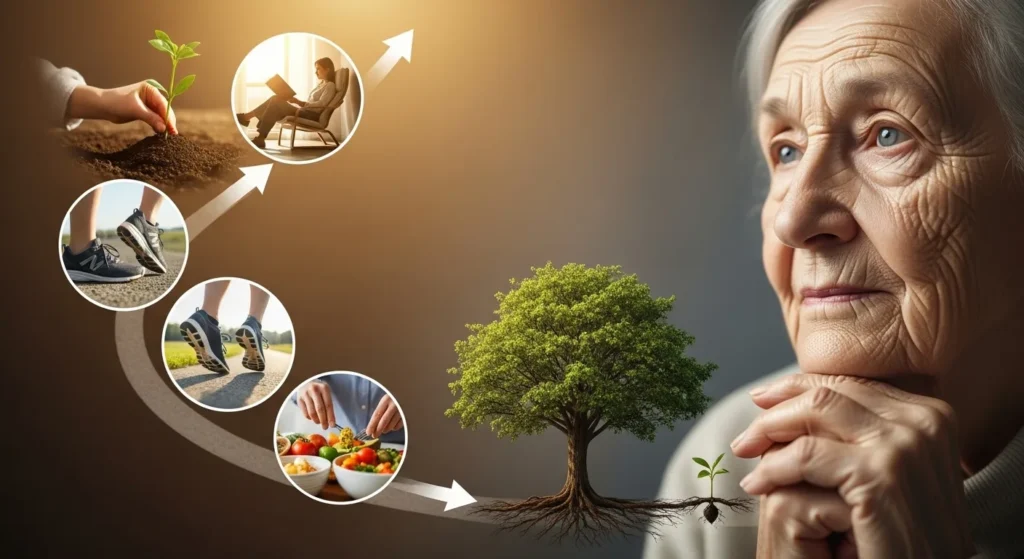
Aging Isn’t Just About Years — It’s About Energy
Most people think aging is inevitable.
Time passes.
Bodies slow down.
Strength fades.
But biology tells a more nuanced story.
Aging is not driven only by birthdays—it’s shaped by how well your body manages energy every single day. Not just calories in versus calories out, but how consistently your body receives enough fuel to repair, maintain, and adapt.
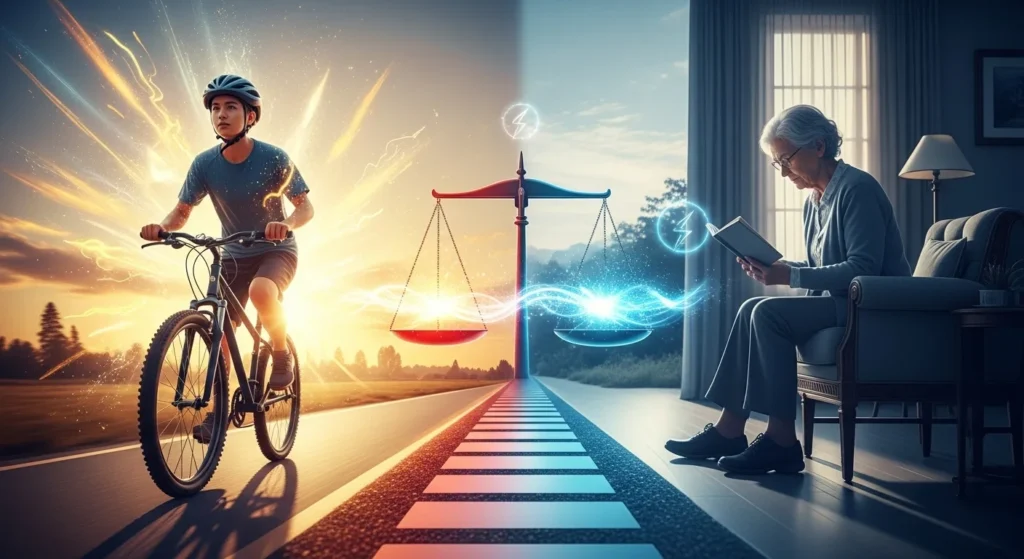
This is why two people of the same age can look, feel, and function decades apart.
The difference often begins with daily energy balance—a quiet factor that shapes aging long before wrinkles or weakness appear.
What “Energy Balance” Really Means (And What It Doesn’t)
Energy balance is often misunderstood.
It’s not about dieting.
It’s not about eating less.
It’s not about chasing a calorie number.
True energy balance means:
- Providing enough energy to support daily needs
- Avoiding chronic overfeeding and underfeeding
- Matching intake to activity, stress, and recovery demands
When energy balance is off—especially for long periods—the body adapts in ways that accelerate aging.
Why the Body Needs Energy to Age Well
Aging tissues don’t just break down—they require constant maintenance.
Energy supports:
- Muscle repair and preservation
- Bone remodeling
- Hormone production
- Immune function
- Brain metabolism
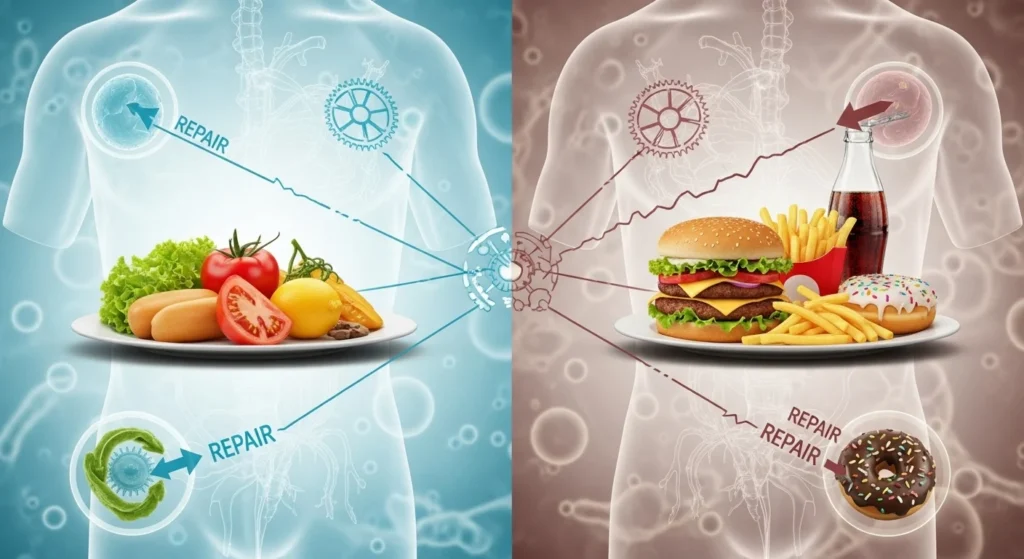
When energy intake is consistently too low, the body prioritizes survival over longevity.
When energy intake is consistently too high, repair systems become overwhelmed.
Either imbalance pushes the body toward faster biological aging.
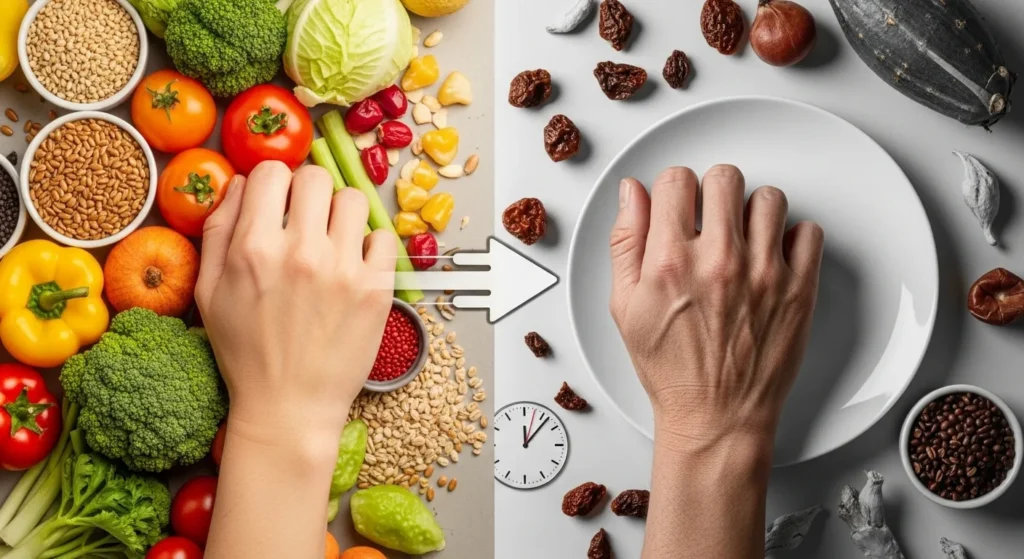
The Hidden Cost of Chronic Undereating
One of the most common aging accelerators is long-term energy deficiency.
This often comes from:
- Chronic dieting
- Skipping meals regularly
- Fear of carbohydrates or fats
- Eating “clean” but not enough
Over time, low energy intake leads to:
- Muscle loss (even in younger adults)
- Slower metabolism
- Hormonal disruption
- Reduced bone density
- Increased fatigue
These changes don’t happen suddenly—but they compound quietly.
Why Overeating Also Accelerates Aging
Excess energy creates a different problem.
Chronic overeating contributes to:
- Insulin resistance
- Inflammation
- Oxidative stress
- Metabolic inflexibility
The body spends more energy managing excess fuel than repairing tissues.
Aging accelerates not because of weight alone—but because metabolic systems stay under constant strain.
Energy Balance vs Extreme Dieting
| Approach | Extreme Dieting | Balanced Energy Intake |
|---|---|---|
| Focus | Restriction or excess | Stability |
| Hormonal impact | Disruptive | Supportive |
| Muscle preservation | Poor | Strong |
| Aging trajectory | Accelerated | Slower |
| Sustainability | Low | High |
Aging well requires stability—not extremes.
How Daily Energy Balance Affects Muscle and Strength
Muscle is one of the strongest predictors of healthy aging.
Yet muscle is highly sensitive to energy intake.
When energy is low:
- Muscle breakdown increases
- Recovery slows
- Strength declines
When energy is balanced:
- Muscle repair is supported
- Training adaptations improve
- Functional independence lasts longer
This is why strength loss is often nutritional—not just age-related.
Real-Life Example: Same Age, Different Energy Patterns
Consider two people in their 40s.
Person A
- Eats inconsistently
- Skips meals during busy days
- Diets frequently
Person B
- Eats regular meals
- Adjusts intake with activity
- Avoids chronic restriction
At 50:
- Person A feels weaker and fatigued
- Person B maintains strength and energy
The difference isn’t discipline—it’s energy availability.
Why Energy Balance Shapes Hormones as You Age
Hormones are energy-sensitive.
When intake is too low or erratic:
- Thyroid output may decrease
- Stress hormones rise
- Sex hormone production may decline
Balanced energy supports hormonal signaling that:
- Preserves muscle
- Supports bone health
- Regulates mood and sleep
Hormonal stability is a cornerstone of graceful aging.
Common Energy Balance Mistakes That Age the Body Faster
Avoid these long-term traps:
- Eating less to “stay young”
- Ignoring hunger signals
- Underfueling during stress or exercise
- Cutting carbs chronically
- Treating appetite as weakness
The body interprets prolonged energy shortage as a threat—not a health strategy.
Why This Matters Today (and Always Will)
Modern life makes energy imbalance easy:
- Busy schedules encourage skipped meals
- Diet culture rewards restriction
- Processed foods promote excess intake
Without awareness, people age faster—not because of time, but because of nutritional mismatch.
Energy balance protects resilience in a demanding world.
Actionable Steps to Support Healthy Energy Balance
You don’t need precision tracking.
Start with:
- Eating regular meals most days
- Adjusting intake based on activity and stress
- Avoiding long-term restriction cycles
- Supporting protein and carbohydrates together
- Listening to sustained fatigue as a signal—not a flaw
Consistency matters more than calculation.
The Quiet Truth About Aging Well
Aging isn’t about eating less forever.
It’s about feeding the body enough to:
- Repair daily wear
- Maintain structure
- Adapt to stress
Energy is not the enemy of aging—it’s the fuel for longevity.
Key Takeaways
- Aging is shaped by daily energy balance, not just time
- Chronic under- or overeating accelerates aging
- Stable energy intake supports muscle, hormones, and resilience
- Extreme diets undermine long-term health
- Consistency beats restriction for healthy aging
Frequently Asked Questions
1. Does eating less slow aging?
Not necessarily. Chronic under-eating often accelerates muscle loss and hormonal decline.
2. Can energy balance improve aging even later in life?
Yes. Supporting adequate energy intake improves function at any age.
3. Is energy balance the same as calorie counting?
No. It’s about meeting needs consistently, not tracking numbers.
4. How do I know if I’m underfueling?
Persistent fatigue, slow recovery, and strength loss are common signs.
5. Does exercise change energy needs as we age?
Yes. Activity increases energy requirements—especially for muscle maintenance.
Conclusion: Aging Well Is an Energy-Supported Process
Aging doesn’t happen overnight.
It’s shaped by thousands of ordinary days.
When the body receives steady, appropriate energy, it ages with strength, stability, and resilience.
And that quiet balance—maintained daily—may be one of the most powerful longevity tools we have.
Disclaimer: This article is for general educational purposes only and does not replace personalized medical or nutritional advice.