
What If Aging Isn’t What You Think It Is?
Most people believe aging means the body is breaking down.
That once you hit a certain age, things simply stop working.
But biology tells a very different story.
Aging is not your body failing.
It’s your body becoming less efficient.
The systems are still there.
They just don’t run as smoothly, as quickly, or as economically as before.
And here’s the powerful part:
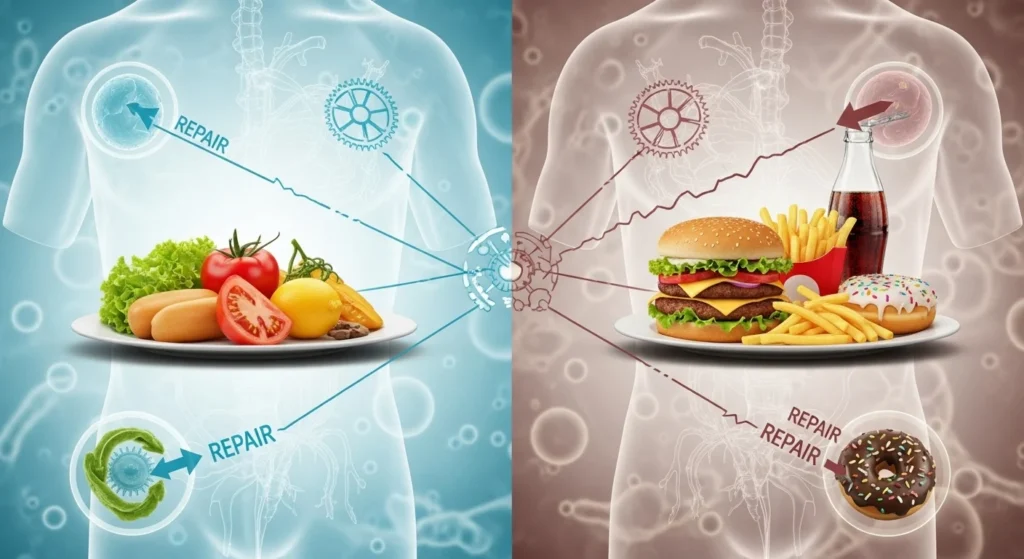
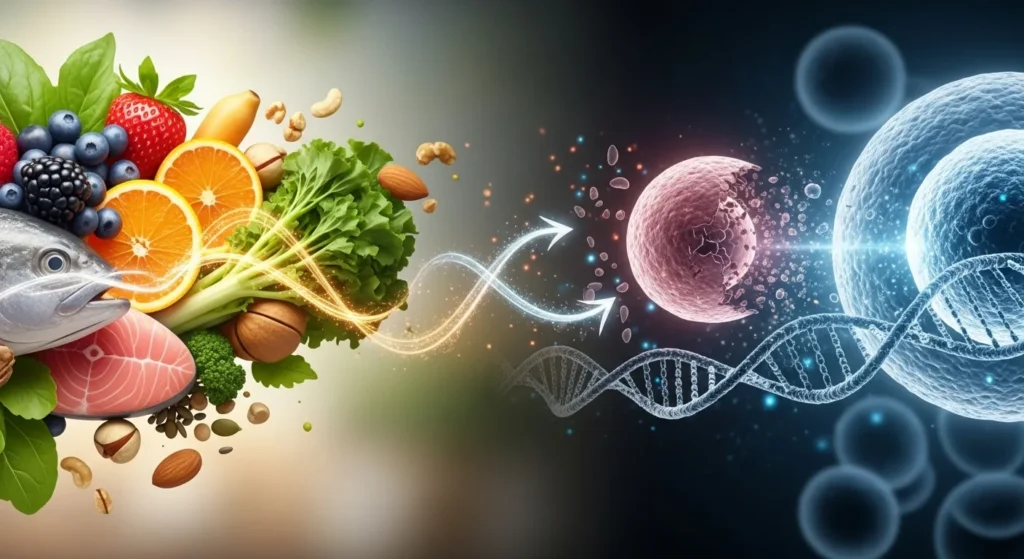
Efficiency is deeply influenced by nutrition.
Understanding this shift—from “failure” to “efficiency loss”—changes how we eat, supplement, move, and age.
It replaces fear with strategy.
And helplessness with control.
Aging Is a Gradual Drop in Efficiency, Not Sudden Damage
Your body doesn’t suddenly stop working at 40, 50, or 60.
Instead, tiny inefficiencies accumulate:
- Energy production becomes slower
- Repair systems respond less rapidly
- Nutrient absorption becomes less complete
- Inflammation lingers longer than it should
Think of it like an old smartphone.
It still works.
It still turns on.
But it drains faster, heats up more, and takes longer to respond.
That’s aging.
Why Efficiency Matters More Than Strength or Youth
Two people can be the same age and look completely different in health.
Why?
Because efficiency—not age—is the real driver.
Efficiency determines:
- How well cells convert food into energy
- How fast tissues repair after damage
- How effectively hormones communicate
- How quickly inflammation shuts off
Nutrition plays a role in every single one of these processes.
The Hidden Nutrition Shift That Happens With Age
As we age, three quiet changes occur:
- Digestion becomes less robust
- Lower stomach acid
- Reduced enzyme output
- Absorption becomes less efficient
- Especially for protein, B vitamins, magnesium, zinc
- Cellular uptake slows down
- Nutrients reach cells less effectively
This means many older adults are functionally undernourished—even while eating enough calories.
Why Eating “Enough” Isn’t Enough Anymore
Calorie intake may stay the same.
But nutrient delivery does not.
This leads to:
- Fatigue despite eating well
- Muscle loss despite protein intake
- Brain fog despite normal labs
It’s not deficiency.
It’s inefficiency.
Aging vs Failure: A Simple Comparison
| Aspect | Body Failure | Efficiency Loss |
|---|---|---|
| Systems | Stop working | Still function, slower |
| Cause | Damage | Reduced optimization |
| Reversibility | Limited | Highly improvable |
| Role of nutrition | Minimal | Critical |
| Outcome | Inevitable decline | Slowed, supported aging |
This distinction changes everything.
The Role of Mitochondria: Where Aging Begins Quietly
Mitochondria are your energy factories.
With age:
- They produce energy less efficiently
- They leak more oxidative stress
- They recover slower after strain
Nutrition directly supports mitochondrial efficiency through:
- Adequate protein
- Micronutrients (B vitamins, magnesium, iron)
- Anti-inflammatory compounds
You don’t “lose” mitochondria—you lose mitochondrial performance.
Why Muscle Loss Is an Efficiency Problem, Not Just Aging
Muscle doesn’t disappear because of age alone.
It declines because:
- Protein digestion weakens
- Muscle-building signals become less responsive
- Inflammation interferes with repair
This means older adults need:
- Higher protein quality
- Better distribution across meals
- Adequate energy intake
Not extreme diets.
Not restriction.
Precision.
Inflammation: The Efficiency Thief
Chronic low-grade inflammation is one of aging’s biggest accelerators.
It:
- Blocks nutrient signaling
- Disrupts insulin sensitivity
- Slows repair mechanisms
Nutrition that supports efficiency includes:
- Balanced omega fats
- Sufficient antioxidants from whole foods
- Avoiding chronic under-eating
Inflammation doesn’t mean damage.
It means signals are stuck “on.”
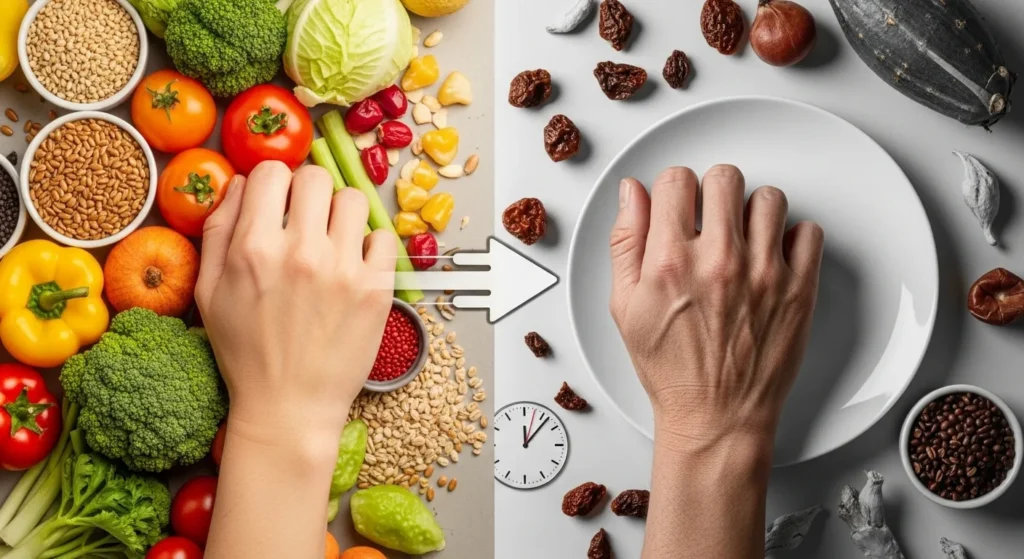
Why Weight Loss Diets Often Accelerate Aging
A common mistake:
Trying to eat less as the body becomes less efficient.
This creates:
- Muscle loss
- Hormonal disruption
- Lower metabolic resilience
Efficiency needs support, not starvation.
Practical Nutrition Shifts That Support Efficiency
You don’t need radical changes.
You need smarter ones:
- Prioritize protein quality over quantity
- Distribute nutrients evenly across the day
- Avoid long periods of under-fueling
- Support digestion first, not supplements first
- Eat for recovery, not restriction
These shifts protect systems that already exist.
Real-Life Example: Two People, Same Age
Person A:
- Eats enough calories but low protein
- Skips meals
- Chronic inflammation
Person B:
- Slightly higher protein
- Regular meals
- Balanced micronutrients
Same age.
Very different outcomes.
Not genetics.
Efficiency.
Mistakes That Quietly Speed Up Aging
Avoid these common traps:
- Assuming fatigue is “normal aging”
- Cutting calories too aggressively
- Ignoring digestion issues
- Relying on supplements without food foundations
- Chasing anti-aging fads instead of fundamentals
Why This Matters Today
People are living longer—but not efficiently.
The gap between lifespan and healthspan is widening.
Understanding aging as efficiency loss:
- Reduces fear
- Improves decision-making
- Encourages sustainable nutrition
- Prevents unnecessary decline
This knowledge is power.
Key Takeaways
- Aging is not failure—it’s reduced efficiency
- Nutrition strongly influences how fast efficiency declines
- Calorie intake matters less than nutrient delivery
- Muscle, energy, and cognition depend on efficiency
- Small nutrition changes can have outsized impact
Frequently Asked Questions
1. Can nutrition really slow aging?
Yes. Nutrition doesn’t stop aging, but it significantly slows efficiency loss.
2. Is aging reversible?
Not fully—but efficiency can improve at any age.
3. Do older adults need fewer calories?
Often no. They need better nutrient density, not severe restriction.
4. Is muscle loss inevitable with age?
No. With adequate protein and energy, muscle can be maintained.
5. Are supplements necessary for aging?
Only when food and digestion can’t meet needs—never as a first step.
Conclusion: Aging Is a Signal, Not a Sentence
Your body isn’t giving up.
It’s asking for better support.
When you stop seeing aging as decline and start seeing it as efficiency loss, everything changes—from how you eat to how you age.
And the most powerful interventions?
They’re quiet, consistent, and nutritional.
Disclaimer: This article is for educational purposes only and does not replace personalized medical or nutritional advice.





Pingback: What You Eat Today Quietly Shapes How You’ll Age Tomorrow
Pingback: How Nutritional Stress Speeds Up Aging Long Before You Notice