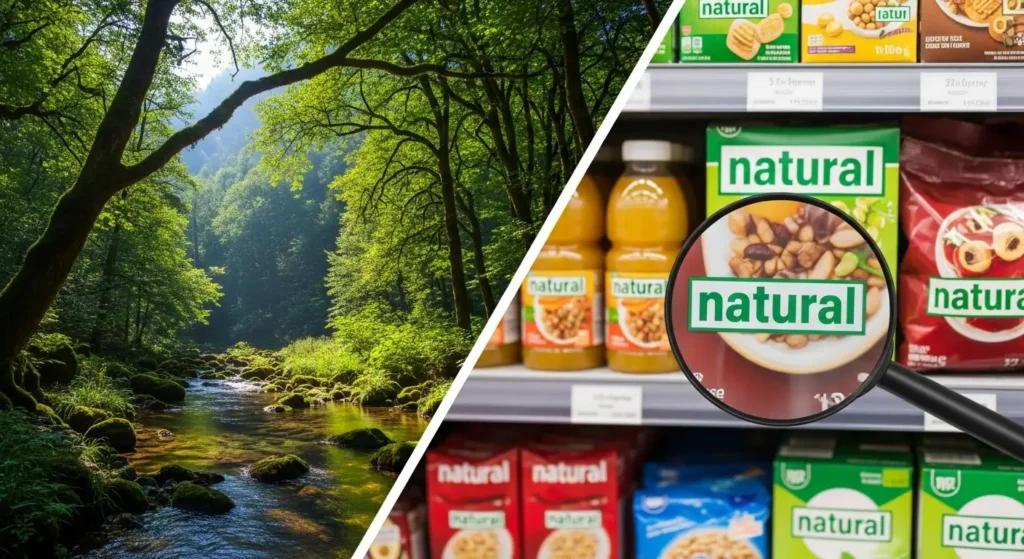
The Word That Instantly Feels Safe
You see it everywhere.
Natural.
On snacks.
On drinks.
On supplements.
On foods that look nothing like anything found in nature.
The word triggers something deep and automatic.
This must be better.
This must be safer.
This must be closer to real food.
But here’s the unsettling truth:
“Natural” has no single, clear, legally enforced definition in most food labeling.
And that vagueness isn’t an accident—it’s the reason the word is so powerful.
What People Think “Natural” Means
Ask ten people what “natural food” is, and you’ll hear variations of the same idea:
- No chemicals
- No artificial ingredients
- Minimally processed
- Straight from nature
- Something your grandparents would recognize
Emotionally, “natural” equals trust.
It feels like the opposite of processed, artificial, synthetic, or engineered.
But food labels don’t operate on feelings.
They operate on rules—and in this case, the rules are blurry.
What “Natural” Actually Means in Practice
In many regions, including the U.S., the word “natural” is loosely guided, not strictly defined.
Agencies like the FDA have historically stated that “natural” generally means nothing artificial or synthetic has been added that wouldn’t normally be expected in that food.
Notice the problem?
- “Generally”
- “Normally”
- “Expected”
Those words leave enormous room for interpretation.
There is no universal checklist.
No standardized enforcement.
No single authority defining it across all foods.
Why Regulators Avoid a Strict Definition
This surprises many people.
Why not just define “natural” clearly and be done with it?
Because doing so would:
- Exclude huge categories of foods
- Trigger legal challenges from manufacturers
- Require constant scientific updates
- Create enforcement complexity across supply chains
Organizations like the USDA and FDA have repeatedly acknowledged the difficulty of defining “natural” in a modern food system where processing exists on a spectrum.
So instead of clarity, we got flexibility.
Flexibility for Whom?
Flexibility benefits manufacturers far more than consumers.
Without a strict definition, “natural” can be applied to foods that are:
- Highly processed
- Made with refined ingredients
- Formulated in labs
- Far removed from their original source
As long as certain artificial additives are avoided, the label often stands.
This creates a situation where:
“Natural” describes what wasn’t added—not how the food was made.
A Simple Comparison That Reveals the Gap
| Term | Clearly Defined? | Regulated Standard | Consumer Assumption |
|---|---|---|---|
| Natural | ❌ No | Minimal guidance | Healthy, pure |
| Organic | ✅ Yes | Strict standards | Clean, regulated |
| Non-GMO | ✅ Yes | Specific criteria | Genetic clarity |
| Whole Food | ❌ No | Informal concept | Minimally processed |
| Clean Label | ❌ No | Marketing term | Better ingredients |
This table highlights the core issue:
“Natural” feels official—but functions more like a suggestion.
How Processing Complicates the Idea of “Natural”
Very few foods reach shelves without processing.
Even basic steps like:
- Pasteurization
- Fermentation
- Drying
- Grinding
- Extracting
Are technically forms of processing.
So where does “natural” stop?
Is fruit juice still natural after concentration?
Is plant oil natural after chemical extraction?
Is flavor natural if it originates from a plant but is refined in a lab?
Without a definition, the answer is often: yes.
“Natural Flavors”: The Most Confusing Phrase of All
One of the most misunderstood ingredients on labels is natural flavors.
Despite the friendly name, natural flavors can involve:
- Extensive processing
- Chemical solvents
- Highly refined compounds
The only requirement is that the original source came from something natural—plant, animal, or microbial.
To consumers, “natural flavors” sounds wholesome.
In reality, it tells you almost nothing about how the flavor was created.
Why the Word Still Works So Well
From a psychological standpoint, “natural” taps into something ancient.
Humans instinctively trust:
- Familiar
- Traditional
- Nature-associated cues
This is why the term performs so well in marketing.
It reduces decision fatigue.
It creates emotional comfort.
It bypasses detailed analysis.
And once trust is established, scrutiny drops.
Real-Life Example: The “Natural” Snack Trap
Imagine two snack bars:
- Bar A:
- Labeled “natural”
- Contains refined grains, natural flavors, sugar
- Bar B:
- No front label claims
- Contains oats, nuts, seeds
Most shoppers reach for Bar A—because the label speaks first.
Bar B requires reading.
Bar A requires belief.
Common Mistakes Consumers Make
These are some of the most frequent assumptions people make:
- Believing “natural” means unprocessed
- Assuming “natural” equals healthier
- Ignoring ingredient lists once the word appears
- Equating “natural” with regulatory approval
- Thinking “natural” guarantees safety
None of these are unreasonable.
They’re the intended outcome of a vague label.
How to Think More Clearly About “Natural”
You don’t need to reject the term entirely—you just need to downgrade its importance.
Here’s a practical framework:
1. Treat “Natural” as a Starting Point, Not a Verdict
It’s a signal to look closer, not stop looking.
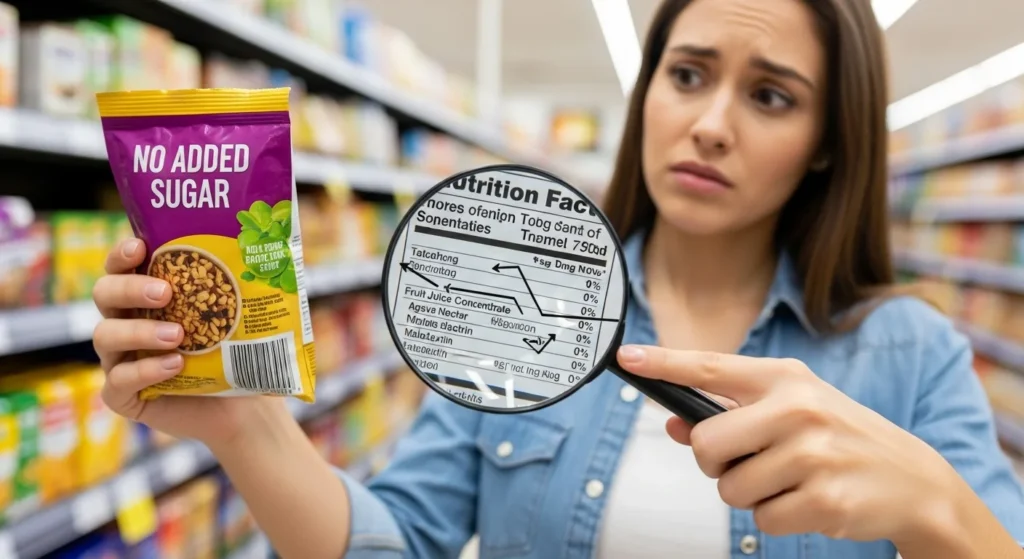
2. Read Ingredients, Not Just Claims
Shorter, recognizable ingredient lists often matter more.
3. Focus on Food Form
Whole, intact foods usually need fewer labels.
4. Ask One Simple Question
How far is this from its original source?
That question reveals more than any slogan.
Why This Matters Today
As consumers grow more health-conscious, marketing language evolves faster than regulation.
“Natural” fills a gap where clarity should exist.
Understanding its limitations helps you:
- Avoid false reassurance
- Make calmer food choices
- Reduce confusion and guilt
- Focus on substance over semantics
Knowledge doesn’t make shopping harder—it makes it quieter.
A Hidden Tip Most People Miss
Truly simple foods rarely need to announce their purity.
Fresh produce doesn’t say “natural.”
Plain grains don’t advertise it.
Unprocessed foods let their form speak.
The louder the claim, the more useful skepticism becomes.
Key Takeaways
- “Natural” has no single, enforceable definition
- The term is loosely guided, not strictly regulated
- Processing and sourcing blur the boundaries
- “Natural” influences emotion more than nutrition
- Ingredient lists reveal more than front labels
Frequently Asked Questions
1. Is “natural” the same as organic?
No. Organic follows strict certification standards; natural does not.
2. Are natural foods always healthier?
Not necessarily. Processing and composition matter more than labels.
3. Why don’t regulators ban the term?
Because defining it precisely across all foods is complex and legally challenging.
4. Should I ignore “natural” labels completely?
Not ignore—just don’t treat them as proof.
5. What matters more than “natural”?
Overall food quality, processing level, and ingredient transparency.
A Calm, Honest Conclusion
“Natural” feels like a promise—but it’s really a suggestion.
It reassures without explaining.
Comforting, but incomplete.
Once you understand that the word has no clear boundaries, you stop chasing labels and start choosing foods based on what actually matters.
And that shift—from trust in words to trust in understanding—is where clarity begins.
Disclaimer: This article is for general educational purposes and does not replace personalized medical or nutritional advice.

Pingback: How Food Labels Trigger Fear — And Why Smart Shoppers Still Fall for It