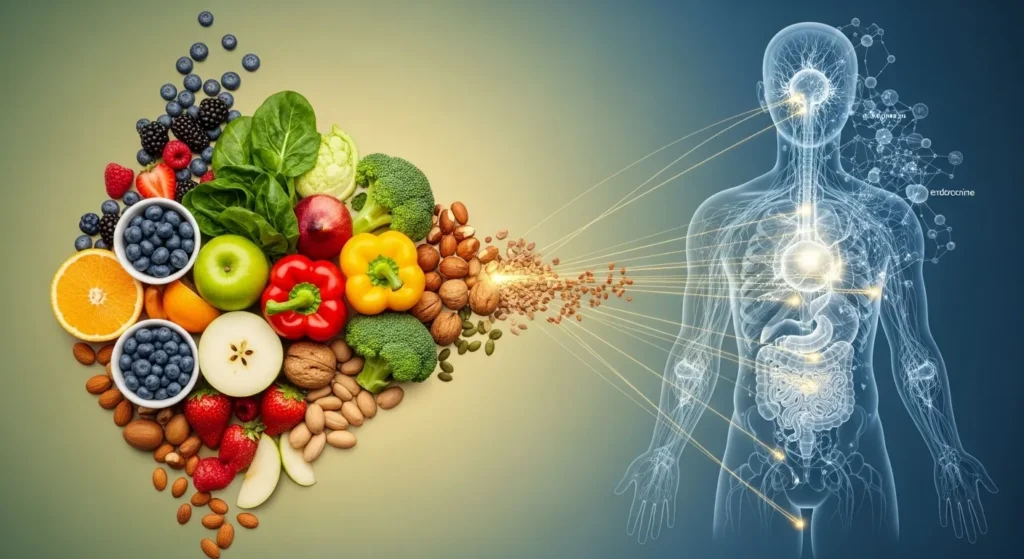
A Bite That Does More Than Feed You
You take a bite of food.
Before your stomach even starts digesting it, something remarkable happens.
Your brain is already reacting.
Hormones begin shifting.
Cells start preparing—either to store, burn, repair, or defend.
This happens before calories matter.
Most people think food is fuel.
Calories in, calories out.
But biologically, that’s not how the body experiences eating.
To your body, food is information first—a stream of chemical messages that tell it what kind of world you’re living in and how it should respond.
That single idea quietly explains:
- Why two diets with the same calories can produce opposite results
- Why ultra-processed foods disrupt hunger signals
- Why your energy, mood, and metabolism respond differently to the type of food—not just the amount
Once you see food this way, nutrition stops being confusing.
And your body’s reactions start making sense.
The Body Is a Decision-Making System, Not a Furnace
A furnace burns fuel.
Your body makes decisions.
Every cell in your body is constantly asking questions like:
- Is food scarce or abundant?
- Should we store energy or release it?
- Is this a time to repair tissue or conserve resources?
- Are we under threat—or safe?
Food helps answer those questions.
Different foods send different signals, regardless of calories.
For example:
- Sugar tells your body: energy is abundant—store excess
- Protein signals: repair and build
- Fiber signals: slow down digestion, stay balanced
- Certain fats signal: support hormones and cell membranes
Calories only describe energy quantity.
They don’t describe biological meaning.
Why Hormones Respond Before Digestion Finishes
The moment food hits your mouth, your body begins reacting.
Taste receptors on your tongue trigger:
- Insulin release
- Digestive enzyme preparation
- Gut hormone activation
This is called the cephalic phase response.
It means your body prepares for what it expects based on the type of food—not what it eventually receives.
That’s why:
- Artificial sweeteners can spike insulin without calories
- Highly refined foods trigger stronger hormonal reactions than whole foods
- Repeated exposure to sugary foods rewires hunger cues
Your body isn’t counting calories.
It’s reading patterns.
Food as a Biological Language
Think of food as a language your body understands fluently.
Each nutrient is like a word.
Each meal is a sentence.
Your overall diet becomes a long conversation.
Some messages are calming:
- “Energy is steady.”
- “Resources are reliable.”
- “You can repair and regulate.”
Others are stressful:
- “Sugar is flooding in.”
- “Nutrients are inconsistent.”
- “Store fat—this might not last.”
Your body doesn’t judge food morally.
It responds strategically.
Why Highly Processed Food Confuses the System
Ultra-processed foods are biologically loud but empty.
They send intense signals:
- Strong sweetness
- Rapid glucose spikes
- Fast digestion
But they lack the deeper informational cues:
- Fiber structure
- Micronutrients
- Natural digestion timing
This mismatch tells your body:
“Energy arrived fast, but it wasn’t complete.”
The result?
- Hunger returns quickly
- Insulin stays elevated
- Cravings intensify
- Satiety signals weaken
It’s not about willpower.
It’s about confused signaling.
Calories vs Information: A Simple Comparison
| Aspect | Calories View | Information View |
|---|---|---|
| Focus | Energy quantity | Biological signals |
| Hunger | Controlled by math | Controlled by hormones |
| Weight changes | Calories in/out | Metabolic response |
| Food quality | Less important | Critical |
| Body response | Passive | Adaptive and strategic |
This is why calorie-matched diets can produce wildly different outcomes.
Your body reacts to what food means, not just how much energy it contains.
The Gut: Where Food Becomes Instruction
Your gut isn’t just a digestion tube.
It’s a sensory organ.
Inside it:
- Specialized cells read nutrients
- Gut bacteria interpret fiber and compounds
- Hormones are released based on food structure
Fiber-rich foods tell your gut:
- “Slow digestion”
- “Feed beneficial bacteria”
- “Reduce inflammation”
Refined foods say:
- “Digest fast”
- “Minimal fermentation”
- “Short-term energy”
Over time, these messages shape:
- Immune function
- Mood regulation
- Metabolic health
This is why gut health changes when diet quality changes—even without calorie shifts.
Real-Life Example: Same Calories, Different Signals
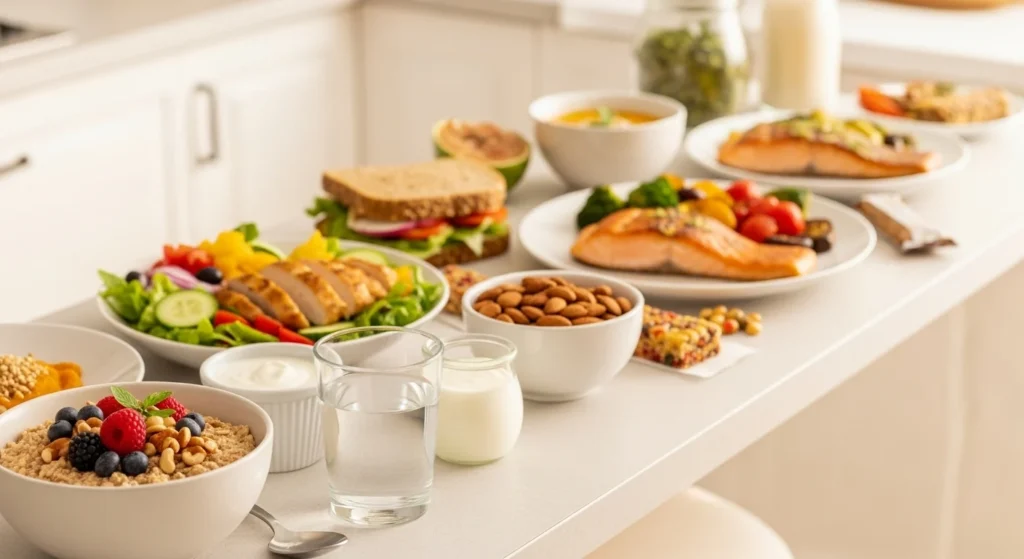
Consider two breakfasts with similar calories:
Option A
- White toast
- Sugary cereal
- Fruit juice
Option B
- Eggs
- Whole fruit
- Nuts or seeds
Calorie count? Similar.
But the body hears very different messages.
Option A signals:
- Rapid glucose entry
- Insulin spike
- Short satiety window
Option B signals:
- Stable energy
- Hormone balance
- Longer fullness
This difference happens before calorie math matters.
Common Mistakes People Make
1. Treating hunger as a math problem
Hunger is hormonal, not numerical.
2. Ignoring food structure
Liquid calories and refined foods bypass natural signals.
3. Assuming “low-calorie” means low-impact
Some low-calorie foods create massive insulin responses.
4. Eating for numbers instead of patterns
Your body learns from repeated signals, not single meals.
Why This Matters More Than Ever
Modern food environments overwhelm ancient biology.
Your body evolved to read:
- Seasonal availability
- Natural food structure
- Slow digestion cues
Today, it faces:
- Constant sugar exposure
- Engineered hyper-palatable foods
- Disrupted satiety signals
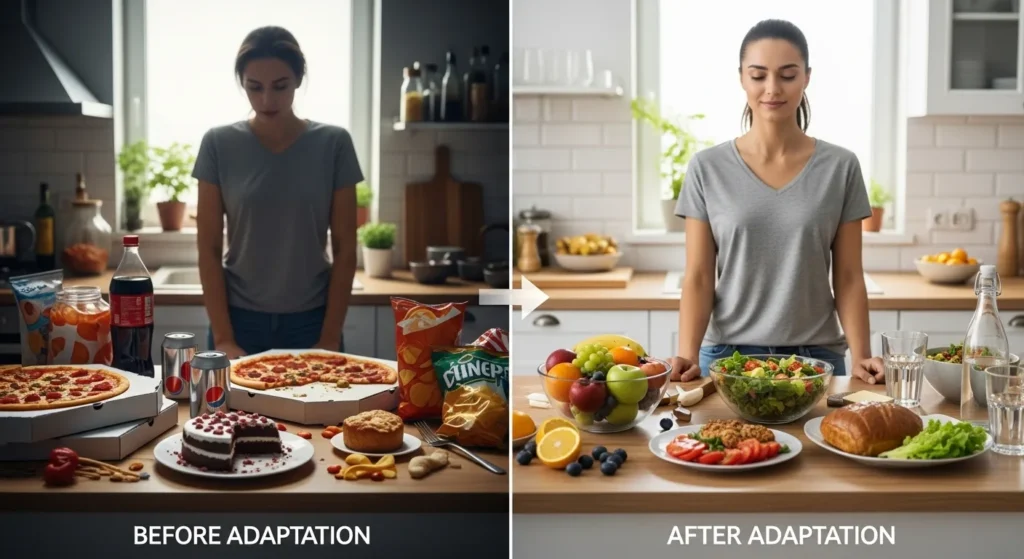
Understanding food as information restores balance.
It helps you:
- Eat intuitively without obsession
- Reduce cravings naturally
- Support metabolism without extreme rules
This isn’t a trend.
It’s biology catching up with modern eating.
Actionable Ways to Eat for Better Signals
You don’t need perfection.
You need clearer messages.
Try this:
- Combine carbs with protein or fat to slow signals
- Prioritize whole foods over engineered ones
- Eat foods that require chewing
- Include fiber in most meals
- Notice how different foods affect hunger timing
Your body responds quickly when signals improve.
Key Takeaways
- Your body treats food as biological information, not just fuel
- Hormones and signals respond before calories are counted
- Food quality shapes metabolism more than quantity alone
- Processed foods confuse natural signaling systems
- Eating for clearer signals improves hunger, energy, and balance
FAQs
1. Does this mean calories don’t matter at all?
Calories matter, but they come after biological signaling—not before it.
2. Why do some foods make me hungry faster?
They trigger rapid insulin and weak satiety signals.
3. Is this why whole foods feel more filling?
Yes. They send layered signals that promote fullness and balance.
4. Can this approach help with energy crashes?
Absolutely. Stable signals lead to stable energy.
5. Do individual responses vary?
Yes. Genetics, gut health, and habits influence how signals are read.
A Simple Way to Think About Food Again
Food isn’t just something you burn.
It’s something your body listens to.
Every meal is a message.
Every habit teaches your biology how to respond.
When you start eating for better information—not just fewer calories—your body stops fighting you.
And starts working with you.
Disclaimer: This article is for educational purposes only and does not replace personalized medical or nutritional advice.
Pingback: What “Balanced Nutrition” Actually Means Inside the Body — Why It’s Not What Most People Think
Pingback: How the Body Uses Food to Maintain Balance — The Quiet Intelligence Behind Every Meal
Pingback: Why Nutrition Is About Signals, Not Just Substances — How Food Actually Communicates With Your Body
Pingback: Why Aging Is About Maintenance, Not Decline — The Nutrition Truth That Changes How You Age
Pingback: How the Body Protects Balance Through Nutrition, Not Willpower
Pingback: Almonds Are a Daily Superfood — Here’s Why Your Body Loves Them