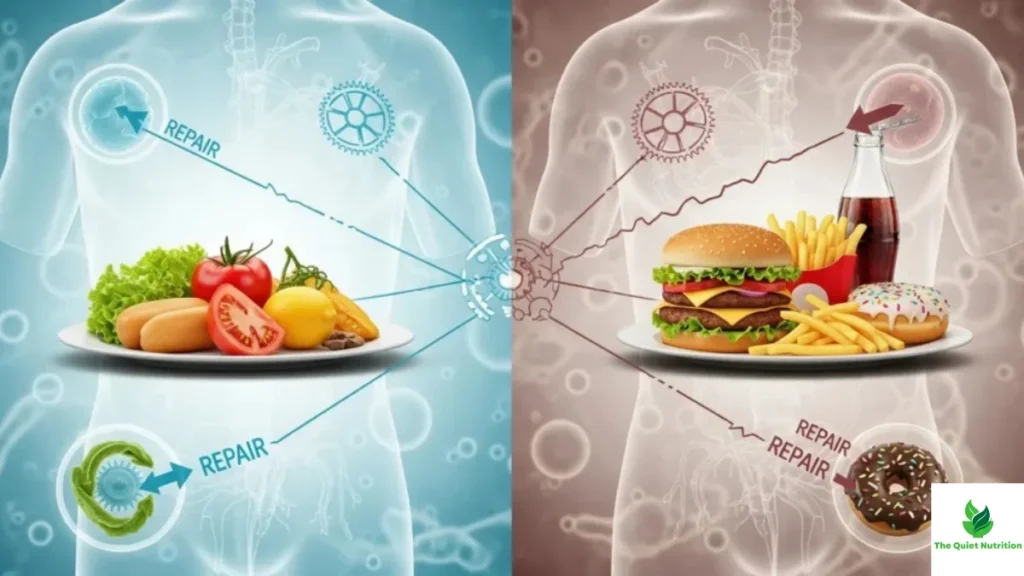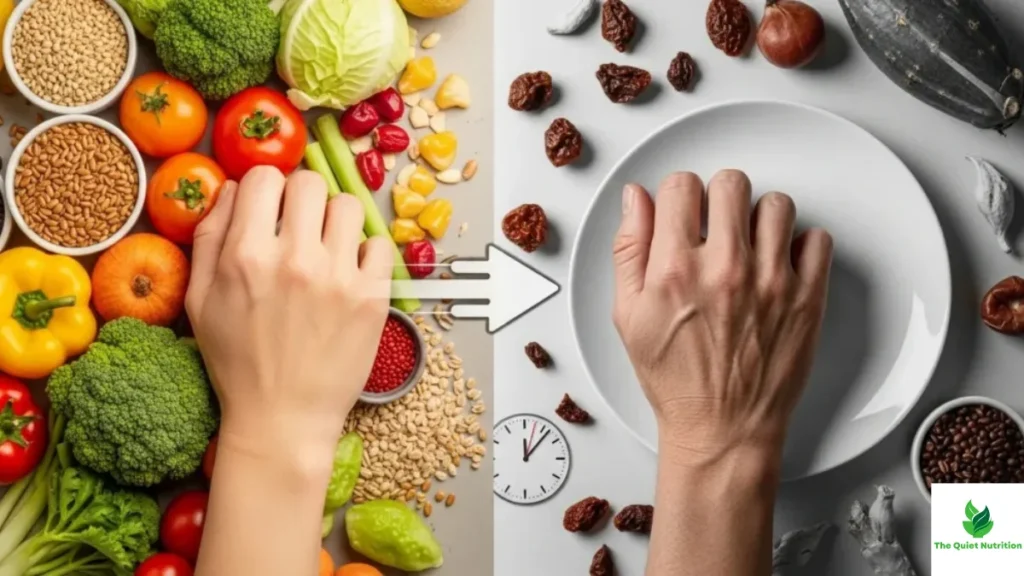
Two people reach their seventies eating roughly the same total number of calories over their lifetimes. One can still climb stairs without stopping, recovers from a bad flu in a week, and keeps a sharp memory. The other struggles with basic mobility, gets knocked down hard by minor illnesses, and shows early signs of cognitive decline. The difference usually isn’t a single dramatic health event. It’s decades of dietary pattern, quietly building — or eroding — a kind of physiological resilience that only becomes visible once real stress tests it.
Resilience Isn’t Something You Notice Building — Until You Need It
Resilience, in a biological sense, is your body’s capacity to absorb a stressor — illness, injury, inflammation, physical strain — and recover without lasting damage. It’s not a static trait. It’s built or depleted gradually, largely invisibly, through years of ordinary daily choices that don’t individually feel consequential.
The clearest evidence for this comes from a massive long-term study following over 100,000 people for up to 30 years through the Nurses’ Health Study and Health Professionals Follow-Up Study. Researchers tracked adherence to eight different healthy dietary patterns and measured outcomes not just in terms of disease avoidance, but in terms of genuine healthy aging — meaning good cognitive, physical, and mental function, along with survival to age 70 free of major chronic disease. Higher adherence to healthier dietary patterns in midlife was consistently associated with significantly greater odds of achieving that kind of full-function healthy aging three decades later. Diets emphasizing plant foods and healthy fats, while minimizing processed foods and red meat, showed the strongest associations across the board.
What’s notable here isn’t just that healthier eating correlated with less disease — it’s that it specifically correlated with maintained function: the physical and cognitive capacity to actually do things, not just the technical absence of a diagnosis.
The Resilience Shows Up as Extra Years of Functional Life
A separate large prospective study of over 100,000 participants found that healthier dietary patterns were associated with an 18 to 24% lower risk of death from any cause, translating into an estimated 1.5 to 3 additional years of life expectancy at age 45, depending on sex. Notably, this benefit held up regardless of whether participants carried genetic variants associated with longevity — suggesting the dietary effect wasn’t simply riding along with a genetic advantage some people already had, but operating as its own independent contributor to how well people aged.
Resilience Also Means Staying Physically Capable, Not Just Alive Longer
A cohort study tracking Chinese older adults over seven years specifically examined dietary diversity — how many different food groups people consistently ate — against physical function, measured through basic tasks like dressing, bathing, and moving around independently. The study found that people who maintained consistently high dietary diversity over the long term had a meaningfully lower risk of functional impairment compared to those with consistently low diversity. This is resilience in a very literal, practical sense: the capacity to keep doing ordinary physical tasks independently, which is exactly the kind of function that erodes quietly and then suddenly becomes the difference between independence and needing daily assistance.
One Mechanism Behind the Pattern: Long-Term Inflammation Control
Part of what may explain these decades-long effects is how sustained dietary patterns shape chronic, low-grade inflammation — a slow-burning process linked to a wide range of age-related conditions, from cardiovascular disease to cognitive decline. Research from the EPIC-Potsdam cohort, tracking biomarkers repeatedly over time in the same individuals, has examined how adherence to healthy and sustainable dietary patterns relates to long-term inflammatory markers, treating inflammation itself as a kind of running scorecard for how much cumulative metabolic stress someone’s body has been managing over years of dietary exposure.
This fits with a broader pattern researchers have identified across dietary and longevity research: it’s often not the specific quantity of any one nutrient that matters most, but the food sources and long-term patterns those nutrients come from — with the same total amount of fat, protein, or carbohydrate producing meaningfully different long-term outcomes depending on whether it consistently comes from whole, minimally processed sources or from more processed, less consistent dietary patterns over years.
Why This Kind of Resilience Can’t Be Built Quickly
The uncomfortable implication in all of this research is timing. Every one of these findings is built on decades of tracked exposure, not weeks or months. Resilience of this kind isn’t something a short-term health push can manufacture on demand — it appears to accumulate the way physical reserve or muscle mass does, through sustained pattern rather than isolated effort.
That’s also, in a sense, the reassuring part. None of the research suggests any single perfect diet or rigid set of rules is required — multiple different healthy dietary patterns, from Mediterranean-style to plant-forward approaches, showed similar protective associations. What mattered consistently across studies wasn’t dietary perfection. It was decades of reasonably consistent, whole-food-centered eating, absorbed so gradually into daily life that its real payoff doesn’t become visible until much later — at exactly the point when the difference between resilience and fragility starts to matter most.
Sources:
- Nature Medicine — Optimal Dietary Patterns for Healthy Aging
- Science Advances — Healthy Dietary Patterns, Longevity Genes, and Life Expectancy: A Prospective Cohort Study
- NCBI/PMC — Long-Term High Dietary Diversity Maintains Good Physical Function in Chinese Elderly
- Journal of Internal Medicine (Wiley) — Diet Strategies for Promoting Healthy Aging and Longevity: An Epidemiological Perspective

Aarti Solanki, B.Sc. (Food Science), is a food science writer passionate about making nutrition simple and evidence-based. She creates well-researched, easy-to-understand articles on healthy eating, food science, and nutrition, using information from trusted scientific and public health sources.