
Most people imagine health as something dramatic.
A diagnosis.
A wake-up call.
A sudden change.
But real health doesn’t change overnight.
Long-term health is built quietly—through thousands of small food decisions repeated day after day.
Not the occasional indulgence.
Not the perfect week.
But the ordinary, forgettable meals that make up most of life.
Those are the ones shaping your future.
Health Is a Pattern, Not a Moment
It’s easy to overestimate the impact of one meal and underestimate the impact of habits.
Your body responds less to:
- What you eat today
And more to: - What you eat most days
Long-term health reflects cumulative signals:
- Inflammation levels
- Blood sugar patterns
- Nutrient availability
- Repair efficiency
According to public health research frequently referenced by organizations like the World Health Organization, lifestyle patterns—especially diet—are among the strongest predictors of long-term health outcomes.
Health isn’t built during “special efforts.”
It’s built during routine.
Why Daily Choices Matter More Than Big Changes
Big changes get attention.
Daily choices create results.
A single healthy meal doesn’t fix health.
A single unhealthy meal doesn’t ruin it.
But repetition matters.
When certain foods appear daily, they:
- Set metabolic tone
- Shape gut health
- Influence hormone balance
- Affect inflammation
Over time, the body adapts to what it sees most often.
The Biology Behind Small, Repeated Food Decisions
Every time you eat, your body responds.
It:
- Releases hormones
- Activates enzymes
- Triggers immune signals
- Adjusts energy storage
These responses don’t reset at midnight.
They accumulate.
Daily food choices determine whether those signals trend toward:
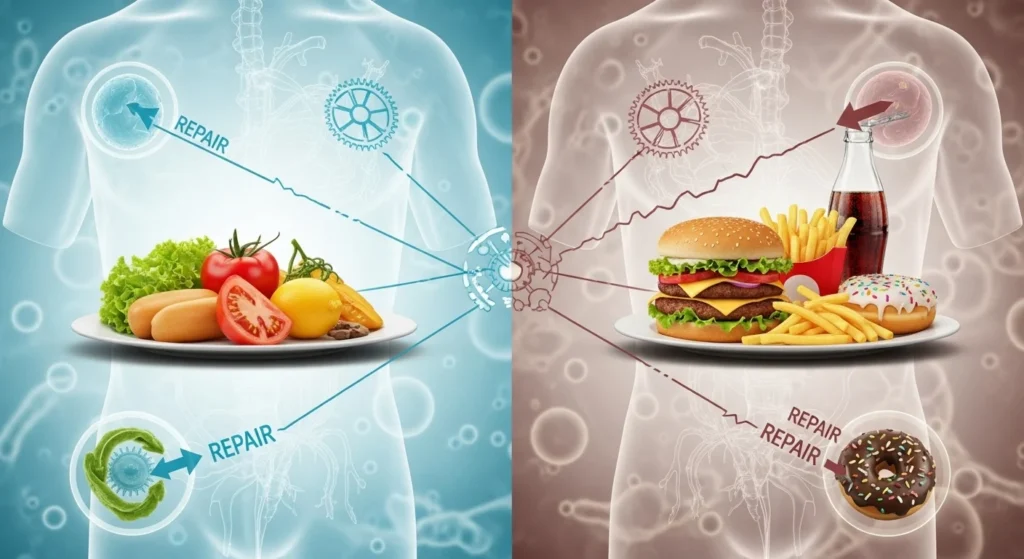
- Balance and repair
or - Stress and compensation
That trend defines long-term health.
Real-Life Example: The “Normal” Lunch Effect
Imagine two people.
Both eat lunch every day.
Person A usually eats:
- Whole foods
- Moderate portions
- Balanced meals
Person B usually eats:
- Refined carbs
- Sugary drinks
- Highly processed foods
Neither feels sick today.
But over years:
- One develops stable energy and resilience
- The other accumulates inflammation and fatigue
Health outcomes don’t diverge suddenly.
They drift apart quietly.
Blood Sugar Patterns and Long-Term Health
Daily blood sugar swings are one of the strongest drivers of long-term health.
Repeated spikes:
- Increase inflammation
- Stress blood vessels
- Promote insulin resistance
Stable patterns:
- Protect organs
- Support brain health
- Preserve metabolic flexibility
This isn’t about eliminating carbs.
It’s about how often—and how sharply—blood sugar rises and falls.
Inflammation: The Long-Term Consequence of Daily Eating
Chronic low-grade inflammation rarely causes immediate symptoms.
But over time, it:
- Damages tissues
- Accelerates aging
- Raises disease risk
Daily food choices influence inflammation more than almost anything else.
Highly processed, nutrient-poor foods push inflammation upward.
Whole, nutrient-dense foods help keep it in check.
The direction matters more than perfection.
Nutrient Density vs Calorie Quantity
Calories fuel the body.
Nutrients maintain it.
A diet can meet calorie needs and still leave the body undernourished.
Daily low nutrient intake:
- Slows repair
- Weakens immunity
- Accelerates wear
Over years, this shows up as:
- Reduced energy
- Slower recovery
- Increased vulnerability
Long-term health depends on nutrient density, not just energy intake.
Muscle, Metabolism, and Everyday Eating
Muscle isn’t built only in the gym.
It’s preserved—or lost—through daily nutrition.
Regular protein intake:
- Maintains muscle mass
- Supports metabolic health
- Protects independence with age
Low protein habits don’t cause immediate harm.
They quietly reduce resilience year by year.
Muscle loss is one of the strongest predictors of declining long-term health.
Daily Food Choices vs Occasional Treats
This distinction matters.
| Daily Habits | Occasional Choices |
|---|---|
| Shape metabolism | Minimal long-term impact |
| Influence inflammation | Usually temporary |
| Affect nutrient status | Rarely decisive |
| Build health trends | Momentary effects |
Your health future isn’t decided by celebrations.
It’s decided by routines.
Common Mistakes That Undermine Long-Term Health
Many people unintentionally sabotage themselves.
❌ Focusing Only on Short-Term Goals
Weight loss without health context misses the bigger picture.
❌ Undereating for Long Periods
Chronic restriction reduces repair capacity.
❌ Over-Relying on Ultra-Processed Foods
Convenience today can cost resilience tomorrow.
❌ Ignoring Consistency
Healthy eating “sometimes” doesn’t counter unhealthy habits “most days.”
How to Make Daily Food Choices Work for You
You don’t need strict rules.
You need direction.
Practical, Actionable Steps:
- Prioritize whole foods most days
- Include protein regularly
- Balance meals to avoid sharp sugar spikes
- Eat enough to support repair
- Think in weeks, not single meals
Small improvements repeated consistently outperform extreme plans.
Hidden Tip: Recovery Speed Reflects Daily Nutrition
One of the best indicators of long-term health isn’t appearance.
It’s recovery.
How quickly do you:
- Regain energy after stress?
- Recover from poor sleep?
- Bounce back after illness?
Daily nutrition strongly influences recovery capacity.
Faster recovery usually means healthier long-term systems.
Why This Matters Today
Modern life adds:
- Chronic stress
- Sedentary habits
- Irregular eating
Daily food choices can either:
- Amplify this stress
or - Buffer against it
Health isn’t about eliminating all risks.
It’s about building enough resilience to handle them.
Key Takeaways
- Long-term health is shaped by daily food patterns
- Small choices repeated over time matter most
- Blood sugar stability and inflammation are key drivers
- Nutrient density supports repair and resilience
- Consistency beats perfection for lifelong health
Frequently Asked Questions (FAQs)
1. Do daily food choices really matter that much?
Yes. Long-term health reflects repeated signals, not isolated meals.
2. Can I undo years of poor eating?
Some damage can be slowed or improved, but earlier changes bring better results.
3. Is eating healthy sometimes enough?
Occasional healthy choices help, but daily patterns matter more.
4. Do I need a strict diet to be healthy long-term?
No. Consistency and balance are more important than rigidity.
5. How soon do better daily choices show benefits?
Energy, mood, and recovery often improve within weeks; deeper effects build over years.
Conclusion: Health Is Built in the Ordinary Moments
Long-term health isn’t created during dramatic transformations.
It’s built in quiet, ordinary meals.
The lunches you don’t post.
The snacks you don’t track.
The dinners you repeat.
Those moments shape your future far more than you think.
Disclaimer: This article is for general educational purposes only and does not replace personalized nutrition or medical advice.







Pingback: How Daily Eating Patterns Quietly Shape Your Long-Term Health — The Small Habits That Matter More Than Diets
Pingback: How Nutrition Supports Cellular Renewal — The Daily Repair Process That Shapes How You Age
Pingback: Why Aging Is a Gradual Nutritional Process (And Not Just Time Catching Up With You)
Pingback: Why You Don’t Suddenly Become Unhealthy — The Long Nutrition Story
Pingback: The Surprising Heart Benefits of Grapes (And Why Doctors Love Them)