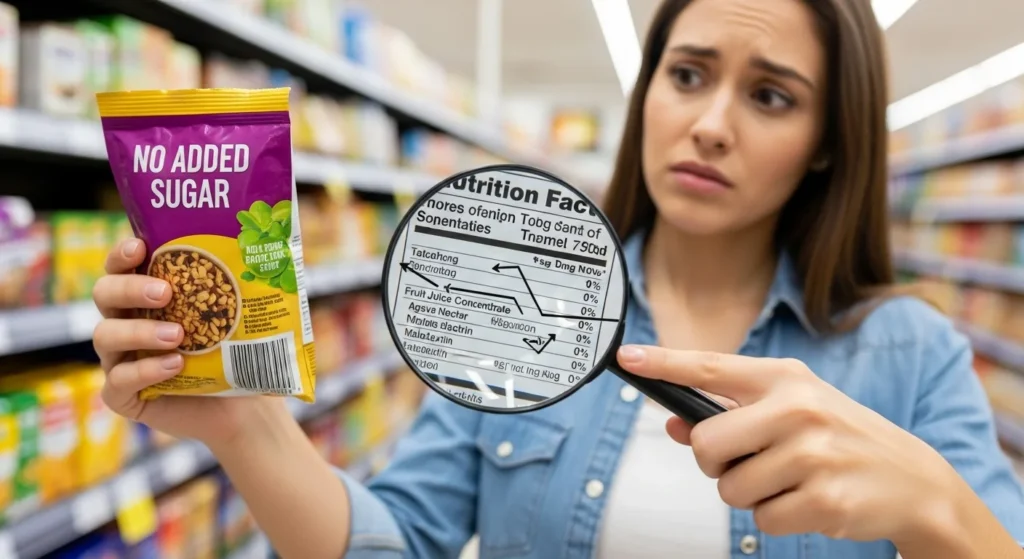
The Surprise That Happens After the First Bite
You pick up a product that feels safe.
The label reads: No Added Sugar.
You expect something mild.
Maybe even bland.
Then you take a bite.
It’s sweet.
Very sweet.
Not “fruit sweet.”
Not “naturally subtle.”
Just… sweet.
And the confusion hits immediately:
How can this taste sugary if no sugar was added?
The answer sits at the intersection of food science, labeling laws, and consumer psychology—and once you see it, you’ll never read packaging the same way again.
What “No Added Sugar” Actually Means (By Definition)
Here’s the most important clarification most people never receive:
“No added sugar” does not mean sugar-free.
It simply means that during processing, manufacturers didn’t add certain forms of sugar—such as table sugar, honey, syrups, or molasses—beyond what was already present.
According to guidelines recognized by agencies like the FDA, foods can legally carry a “no added sugar” claim if:
- The sweetness comes from naturally occurring sugars
- No sugar or sugar-containing ingredients were added during processing
- The label doesn’t imply the product is low-calorie or low-carb
That legal distinction changes everything.
Sugar vs Sweetness: The Difference Most Labels Don’t Teach
Our taste buds don’t detect labels.
They detect sweetness.
Sweetness can come from many sources:
- Naturally occurring sugars
- Fruit concentrates
- Starches broken down into sugars
- Certain fibers and sugar alcohols
- Intense sweeteners
So while “no added sugar” refers to ingredients, your body responds to the final sweetness level.
This is why a product can be technically compliant—and still taste like dessert.
The Most Common Ways Sweetness Sneaks In
Let’s break down the most common strategies used to keep foods sweet without “adding sugar.”
1. Fruit Juice Concentrates
Apple juice concentrate.
Grape juice concentrate.
Pear juice concentrate.
They sound wholesome—but nutritionally, they’re concentrated sugar sources.
Because they originate from fruit, they’re often considered natural ingredients rather than added sugars in certain contexts.
Result:
High sweetness, minimal fiber, and a health-friendly label.
2. Naturally Sweet Ingredients
Some foods are inherently high in sugar:
- Dates
- Raisins
- Figs
- Bananas
- Mango puree
When blended or pureed into products, these ingredients deliver sweetness comparable to syrups—without triggering the “added sugar” label.
The sugar is still there. It just arrived with a passport.
3. Starch Breakdown During Processing
In products like cereals, crackers, or sauces, starches can be broken down into simpler sugars during manufacturing.
This process increases sweetness without adding sugar ingredients.
Your body still processes the end result as sugar.
4. High-Intensity Sweeteners (Sometimes)
Some products labeled “no added sugar” may still contain:
- Stevia
- Monk fruit extract
- Sugar alcohols
These don’t count as added sugars—but they dramatically increase perceived sweetness.
A Simple Comparison That Changes Perspective
| Label Claim | Sugar Source | Sweet Taste | Blood Sugar Impact |
|---|---|---|---|
| No Added Sugar | Natural sugars | Often high | Can be significant |
| Sugar-Free | Sweeteners only | High | Variable |
| Unsweetened | None added | Low | Minimal |
| Naturally Sweet | Whole foods | Moderate | Balanced |
| Reduced Sugar | Less added | Moderate | Lower than original |
This table reveals the quiet truth:
Labels describe rules. Your body reacts to chemistry.
Why This Label Feels So Trustworthy
“No added sugar” works because it speaks to intent, not outcome.
It tells you:
- “We didn’t do the bad thing.”
- “We followed the rules.”
- “You can relax now.”
In a world where sugar is linked to weight gain, energy crashes, and long-term health concerns—acknowledged by organizations like the World Health Organization—that reassurance feels powerful.
And powerful feelings drive buying decisions.
Real-Life Example: The Yogurt Illusion
Consider two yogurts:
- Yogurt A:
- No added sugar
- Sweetened with fruit puree
- 18g total sugar
- Yogurt B:
- Small amount of added sugar
- Minimal processing
- 12g total sugar
Most shoppers choose Yogurt A—because the label feels safer.
But metabolically, Yogurt B may be gentler on blood sugar and appetite.
This is where labels quietly mislead without technically lying.
Common Mistakes People Make With “No Added Sugar”
These habits are extremely common—and completely understandable:
- Assuming “no added sugar” means low sugar
- Ignoring total sugar grams
- Overeating because it feels “clean”
- Giving these foods freely to children
- Trusting front-of-pack claims more than ingredient lists
None of these are failures. They’re predictable outcomes of clever labeling.
How to Spot Sweetness Without Getting Overwhelmed
You don’t need to memorize chemistry or read every line.
Just follow these practical steps:
1. Check Total Sugar, Not Just Added Sugar
If total sugar is high, sweetness is still present—regardless of the claim.
2. Look for Concentrates
Words like juice concentrate or fruit puree signal hidden sweetness.
3. Notice Texture
Thicker, smoother products often rely on concentrated sugars for mouthfeel.
4. Pay Attention to Satiety
If you’re hungry again quickly, the sweetness may be driving rapid digestion.
Why This Matters Today
As more people try to reduce sugar, food marketing adapts faster than habits.
“No added sugar” now fills the role that “low fat” once did:
- A shortcut
- A comfort signal
- A permission slip
Understanding the gap between label language and physiological reality helps you eat with confidence instead of confusion.
Hidden Tip Most People Miss
Foods that are truly lower in sugar often don’t advertise it loudly.
Why?
Because they don’t need to.
Whole foods, plain versions, and minimally processed options rarely rely on front-of-pack claims.
Sometimes, silence is the most honest label.
Key Takeaways
- “No added sugar” does not mean not sweet
- Natural sugars and concentrates can deliver high sweetness
- Your body responds to total sugar, not labeling rules
- Front-of-pack claims simplify, but ingredient lists clarify
- Awareness—not avoidance—is the real skill
Frequently Asked Questions
1. Is “no added sugar” better than regular sugar?
It depends on the total sugar content and how the food is processed.
2. Can “no added sugar” foods raise blood sugar?
Yes—if they contain high levels of natural or concentrated sugars.
3. Are fruit-sweetened products always healthy?
Not always. Processing and fiber removal matter more than the source.
4. Should I avoid these foods completely?
No. Use them intentionally, not automatically.
5. What’s the simplest rule to follow?
Trust the nutrition panel more than the marketing headline.
A Clear, Simple Conclusion
“No added sugar” isn’t a lie—but it’s not the full truth either.
It’s a rule-based claim, not a sweetness promise.
Once you understand how sweetness enters food without breaking the rules, you stop feeling tricked—and start making choices based on how food actually affects you.
That clarity is far sweeter than any label.
Disclaimer: This article is for general educational purposes and does not replace personalized medical or nutritional advice.

Pingback: How Food Labels Quietly Shape Your Expectations — And Why Your Brain Believes Them Before You Take a Bite