The Damage You Don’t Feel Is the Damage That Matters Most
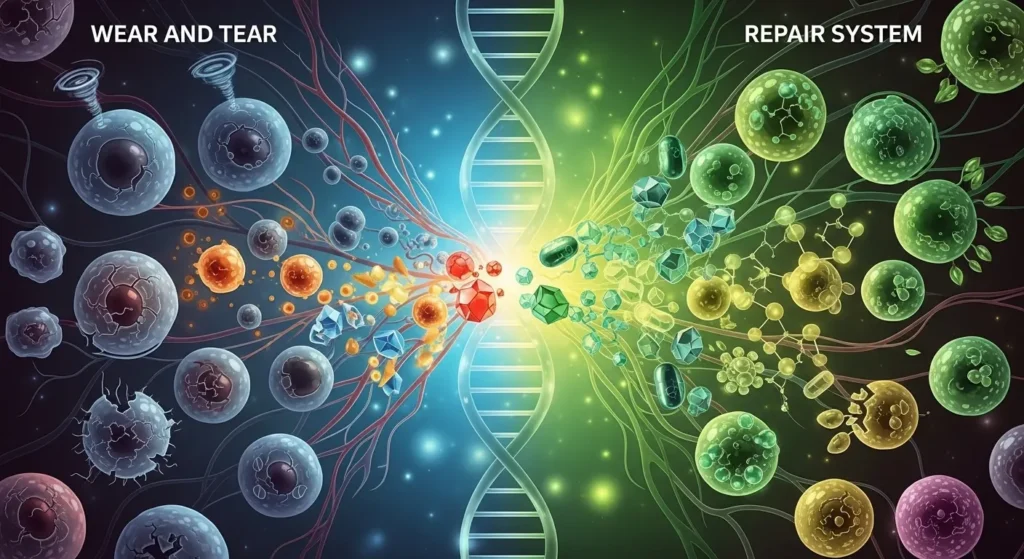
Every day, your body experiences wear and tear.
Not dramatic injury.
Not obvious pain.
Not something you rush to fix.
It’s the microscopic kind:
- Muscle fibers breaking down
- Cells exposed to oxidative stress
- Inflammation from movement, stress, and digestion
- Tissues stretching, compressing, and recovering
You don’t feel most of it.
But your body notices all of it.
And whether that wear turns into aging, fatigue, stiffness, or resilience depends heavily on one thing:
How well nutrition supports repair.
Wear and Tear Is Normal — Accumulation Is Not
Wear and tear isn’t a problem.
It’s part of being alive.
The real problem begins when:
- Damage outpaces repair
- Nutrients don’t arrive on time
- Recovery signals weaken
- Maintenance systems slow down
This is how “normal aging” quietly accelerates.
Not because the body is fragile — but because the repair budget runs low.
Nutrition is how that budget is funded.
Nutrition Is the Body’s Repair Currency
Think of nutrients as construction materials and instructions combined.
Protein provides rebuilding blocks.
Minerals enable enzyme function.
Vitamins regulate repair pathways.
Fats protect cell membranes.
Carbohydrates fuel recovery processes.
Without enough of these, the body makes trade-offs:
- Repair vital organs first
- Delay muscle and connective tissue repair
- Reduce long-term maintenance
That’s not failure.
That’s survival prioritization.
The Body Is Always Repairing — Even While You Sleep
Your body doesn’t wait for illness to repair itself.
Repair happens:
- During sleep
- After meals
- Between workouts
- During rest periods
This constant renewal is supported by nutritional signals studied extensively by institutions like National Institute on Aging, which emphasizes nutrition’s role in tissue maintenance and resilience.
When nutrients are consistent, repair stays efficient.
When nutrition is inconsistent, repair slows quietly.
Why Wear and Tear Feels Faster With Age
As you age, three things change:
- Repair efficiency declines slightly
- Nutrient absorption becomes less efficient
- Inflammation baseline rises
This doesn’t mean damage increases.
It means repair becomes more dependent on adequate nutrition.
What once “worked fine” now creates gaps.
Those gaps show up as:
- Slower recovery
- Joint stiffness
- Fatigue
- Muscle loss
- Reduced metabolic flexibility
Protein: The Primary Repair Material
Protein is central to slowing physical wear and tear.
It supports:
- Muscle fiber repair
- Enzyme production
- Immune recovery
- Hormone signaling
Yet many adults consume less protein as they age, not more.
Research highlighted by Harvard T.H. Chan School of Public Health shows protein adequacy plays a major role in preserving muscle mass and metabolic health.
Low protein doesn’t cause pain immediately.
It causes repair delay.
Micronutrients: The Invisible Repair Enablers
Micronutrients don’t rebuild tissue directly.
They enable the rebuilding process.
Key examples:
- Magnesium → muscle relaxation, energy production
- Zinc → wound healing, immune repair
- Vitamin C → collagen formation
- B vitamins → cellular energy and repair cycles
Deficiencies don’t feel dramatic.
They feel like:
- Lingering soreness
- Slow healing
- Brain fog
- Lower resilience
This is why “eating enough” isn’t the same as eating adequately.
Inflammation: Friend or Enemy?
Inflammation gets a bad reputation.
But short-term inflammation is necessary for repair.
The problem is chronic inflammation, often driven by:
- Ultra-processed foods
- Poor fat balance
- Micronutrient gaps
- Irregular eating patterns
Nutrition influences whether inflammation resolves… or lingers.
Lingering inflammation increases wear and tear instead of fixing it.
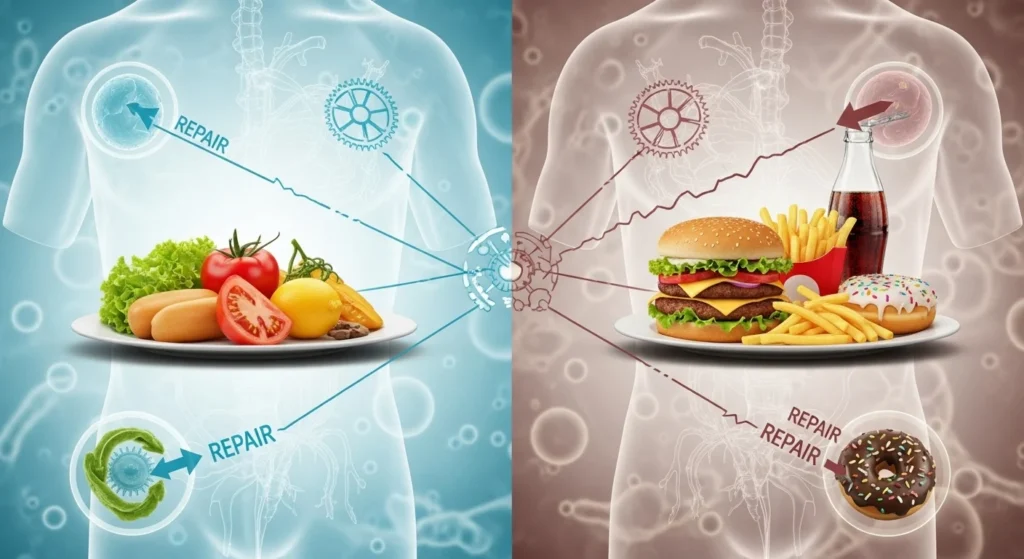
Repair-Supported Nutrition vs. Repair-Deprived Nutrition
| Repair-Supported Body | Repair-Deprived Body |
|---|---|
| Faster recovery | Prolonged soreness |
| Maintains muscle | Gradual muscle loss |
| Flexible metabolism | Sluggish energy |
| Efficient healing | Frequent aches |
| Lower injury risk | Accumulated strain |
The difference isn’t genetics.
It’s nutritional signaling over time.
Real-Life Example: Two Active Adults, Different Outcomes
Person A:
- Eats irregularly
- Low protein intake
- Relies on convenience foods
Person B:
- Eats consistent meals
- Prioritizes protein and minerals
- Recovers faster after activity
Same activity level.
Different wear accumulation.
Over years, these small differences create visible gaps in aging and mobility.
Mistakes That Quietly Accelerate Wear and Tear
Many well-meaning habits backfire.
Common mistakes:
- Chronic under-eating
- Skipping meals during busy days
- Fear-based fat avoidance
- Overtraining without recovery nutrition
- Relying on supplements instead of food
None of these cause immediate harm.
They cause repair debt.
Actionable Nutrition Principles for Repair
You don’t need extreme diets.
You need reliable support.
Focus on:
- Protein at every main meal
- Consistent eating patterns
- Whole-food mineral sources
- Balanced fats
- Adequate carbohydrate intake for recovery
Repair thrives on predictability.
Why This Matters Today
Modern life increases wear:
- Sedentary hours
- Stress hormones
- Sleep disruption
- Convenience foods
At the same time, nutritional density has decreased.
This mismatch explains why people feel worn down earlier — even without disease.
Organizations like World Health Organization emphasize lifestyle and nutrition as core factors in long-term health resilience.
Key Takeaways
- Wear and tear is normal; failed repair is not
- Nutrition funds the body’s repair systems
- Protein and micronutrients are essential for recovery
- Chronic under-fueling accelerates aging
- Consistent nutrition protects long-term resilience
Frequently Asked Questions
1. Can nutrition really reduce wear and tear?
Nutrition doesn’t stop damage, but it dramatically improves repair efficiency and recovery.
2. Is soreness a sign of damage?
Soreness often reflects delayed repair, not injury.
3. Do supplements replace food for repair?
Supplements can help gaps, but whole foods provide superior repair signaling.
4. Does skipping meals increase wear and tear?
Chronic skipping limits repair resources and increases cumulative strain.
5. Is it too late to support repair systems?
No. Repair pathways respond at any age when properly supported.
The Body Isn’t Fragile — It’s Resource-Dependent
Your body is built to handle stress, movement, and time.
But it requires steady nutritional input to do so.
Wear and tear only becomes a problem when repair is underfunded.
Support the repair system — and the body does what it’s always done best:
maintain, adapt, and endure.
Disclaimer: This article is for general educational purposes and is not a substitute for personalized medical or nutritional advice.







Pingback: Why Nutritional Consistency Matters More With Age — The Quiet Habit That Protects Strength, Energy, and Health
Pingback: How Long-Term Eating Patterns Shape Resilience — The Quiet Nutrition Advantage That Lasts for Decades