Cucumber gets dismissed as the vegetable equivalent of background noise — the crunchy filler in a sandwich, the thing people push to the side of a salad. But start eating one every day, and your body responds in ways that are easy to underestimate. Some of it happens almost immediately. Some of it builds quietly over a few weeks. None of it is dramatic, which is exactly why it works.
This isn’t a fad-diet pitch. Cucumber won’t melt away fat overnight or reverse aging in a weekend. What it will do — consistently, and backed by real nutrition science — is support hydration, digestion, blood sugar stability, heart health, and skin in ways that genuinely add up. Here’s what actually happens when cucumber becomes a daily habit, and where the hype runs ahead of the evidence.
First, What’s Actually Inside a Cucumber?
Before getting into effects, it helps to know what you’re working with. A whole medium cucumber, skin on, comes in at roughly 30 calories — less than what you’d get from a single spoonful of olive oil. That’s because cucumber is somewhere between 95% and 96% water by weight, which is also why it barely registers on any calorie count no matter how much of it you eat.
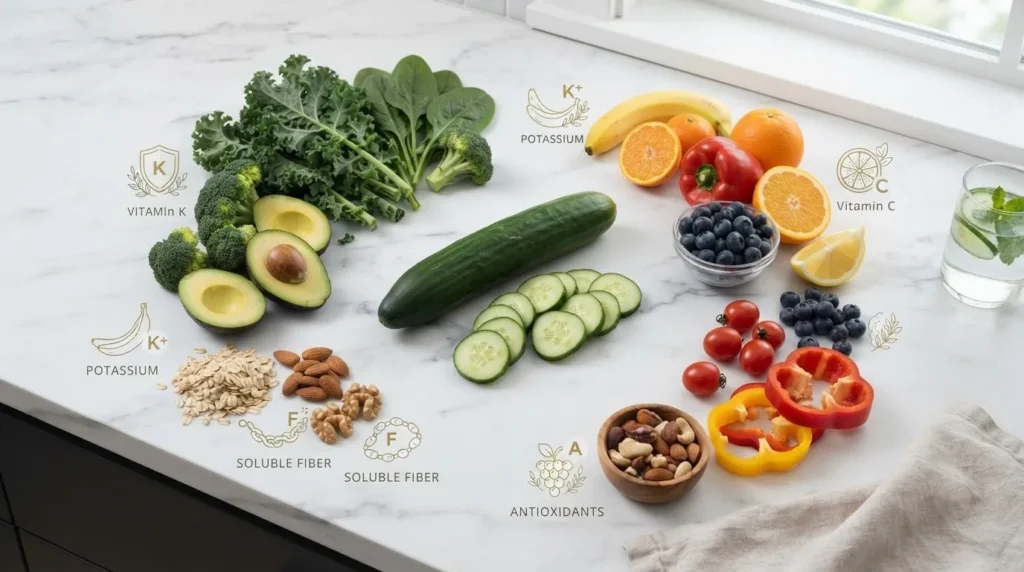
What’s left after the water is more useful than people assume:
- Vitamin K – a medium unpeeled cucumber provides roughly 40% of the recommended daily intake, important for blood clotting and bone health
- Vitamin C – supports immune function and collagen production
- Potassium – helps regulate blood pressure and fluid balance
- Soluble fiber (pectin) – feeds gut bacteria and slows digestion
- Antioxidants – including beta-carotene and cucurbitacins, compounds researchers are studying for anti-inflammatory effects
Cucumber isn’t in the same nutritional league as spinach or broccoli, and dietitians are quick to point that out. But it doesn’t need to be. Its value comes from what it adds alongside everything else on your plate, not from packing a mega-dose of any single nutrient.
Your Hydration Levels Shift Almost Immediately
This is the fastest, most measurable effect. Because cucumber is almost entirely water, eating one daily adds meaningfully to your fluid intake — and unlike a glass of plain water, it arrives with a small amount of potassium and other electrolytes that help your cells actually hold onto that fluid instead of flushing it straight through.

For anyone who struggles to drink enough water — and plenty of people do — cucumber is an easy backdoor into better hydration. Dietitians at Cleveland Clinic point to it as one of the simplest hydration boosts around, mainly because most people find it far more appealing to eat than to force down extra glasses of water. Slice it into a salad, drop it into your water bottle, or eat it plain — the hydration effect holds either way.
Digestion Gets Noticeably More Regular
Give it a week or two of daily cucumber, and a lot of people notice their digestion smooths out. Two things are doing the work: water and fiber. Dehydration is one of the most common, overlooked causes of constipation, and cucumber’s water content directly counters that. On top of it, the soluble fiber (pectin) in cucumber feeds beneficial gut bacteria and helps keep things moving at a steady, predictable pace.

One catch worth knowing: most of that fiber sits in and just beneath the skin. Peel your cucumber and you lose a meaningful chunk of the digestive benefit, along with some of the vitamin K and antioxidants. Wash it well and eat it skin-on if you can.
Blood Sugar Stays More Stable
Cucumber has a glycemic index of around 15 — near the very bottom of the scale, meaning it barely moves blood sugar even eaten in generous quantities. That alone makes it a safe, filling option for anyone managing blood sugar, whether that’s someone with diabetes or just a person trying to avoid the 3pm energy crash.

There’s also early-stage research — mostly animal and lab studies so far — suggesting cucumber extract may help regulate blood sugar more directly, not just avoid spiking it. It’s a promising direction, but it isn’t yet the kind of evidence that supports a specific medical claim, and cucumber is not a substitute for medication or a diabetes management plan. Think of it as a low-risk addition that fits well within one, not a treatment on its own.
Your Heart Gets a Quiet Assist
Potassium is the headline nutrient here — it helps counteract sodium’s effect on blood pressure and supports healthy blood vessel function. Add in cucumber’s antioxidant content, which helps limit the oxidative stress linked to artery damage over time, and it’s easy to see why cucumber shows up consistently on heart-healthy vegetable lists from major medical institutions.

None of this replaces the fundamentals of heart health — movement, sleep, stress management, not smoking. But swapping a daily bag of chips for cucumber spears is exactly the kind of small, unglamorous change that quietly moves the needle over years.
Skin: The Benefit People Notice Last, But Notice Most
This is where cucumber’s reputation runs slightly ahead of the science — though not by much. The vitamin C, beta-carotene, and silica in cucumber all play a documented role in supporting collagen and calming inflammation, whether eaten or applied directly to the skin. That’s the real basis behind decades of spa-cucumber-slices-on-the-eyes imagery — it’s not just aesthetic tradition, there’s a genuinely soothing, mildly anti-inflammatory effect behind it.

What cucumber won’t do is erase wrinkles or replace a skincare routine. Treat the skin benefit as a real bonus that shows up gradually, usually as slightly better hydration and a calmer complexion, rather than a transformation.
Weight Management Becomes a Little Easier
Cucumber’s real advantage here isn’t magic, it’s math. Because it’s so water-dense and low in calories, it has very low “energy density” — nutrition shorthand for how many calories are packed into a given volume of food. Research pooling multiple studies on high-water, low-calorie foods has consistently linked them to better weight outcomes, largely because they’re hard to overeat and easy to feel full on.
Swap the top half of your sandwich bread for cucumber slices, or eat a plate of it before a meal, and you’re using volume to your advantage — an unglamorous strategy that happens to be genuinely effective.
The Flip Side: What Happens If You Overdo It
Daily cucumber is low-risk for almost everyone, but “daily” and “unlimited” aren’t the same thing. A few things worth knowing before you go all-in:
- Bloating and gas can show up if you eat a large amount at once, especially for anyone with a sensitive gut or IBS — cucumber contains a sugar called raffinose that some people can’t fully digest.
- Oral allergy syndrome affects some people with ragweed allergies, causing an itchy mouth or throat after raw cucumber. Cooking it usually eliminates the reaction.
- Frequent urination is common with larger amounts, since cucumber has a mild natural diuretic effect — harmless, just inconvenient.
- Vitamin K and blood thinners don’t mix well when intake swings wildly. Anyone on warfarin or a similar medication should keep their cucumber (and leafy green) intake fairly consistent day to day, and check with their doctor before making a big change.
- Kidney conditions mean potassium-rich foods, cucumber included, are worth discussing with a doctor or dietitian first.
- Pesticide residue sits mostly on the skin, so wash cucumbers thoroughly, or buy organic if you plan to eat the peel daily.
None of this means avoid cucumber. It means eat it the way you’d approach any food: with a little awareness, not blind excess.
How to Actually Make It a Daily Habit
The easiest way to eat cucumber every day is to stop treating it as a special ingredient and start treating it as a default add-on:
- Slice it into your water pitcher in the morning
- Add it alongside breakfast — next to eggs or yogurt, it works better than it sounds
- Swap chips for cucumber spears and hummus
- Blend a quick chilled cucumber-tomato soup on hot days
- Toss together a five-minute Mediterranean-style salad with tomato, olive oil, and lemon
None of this requires a recipe or extra prep time, and that’s really the whole point. The version of “eating healthy” that actually sticks is almost always the boring, low-effort version.

The Bottom Line
Cucumber isn’t a superfood in the dramatic, headline-grabbing sense — there’s no rare compound in it that changes everything. What it has is a genuinely useful, low-risk combination of hydration, fiber, potassium, vitamin K, and antioxidants that, eaten daily, quietly supports digestion, blood sugar stability, heart health, and skin, with almost no downside for the average healthy person.
That combination — real evidence behind it, and nearly impossible to overdo by accident — is rare. Most daily habits that are genuinely good for you come with some friction. This one mostly just comes with a shopping list.
Sources
- Healthline – 6 Health Benefits of Eating Cucumber
- Cleveland Clinic – Are Cucumbers Good for You?
- Medical News Today – Cucumbers: Health Benefits, Nutritional Content, and Uses
- Harvard Health Publishing – Mouth-Watering Summer Fruits and Vegetables to Fill Your Plate
- USDA FoodData Central – Cucumber, with peel, raw

Aarti Solanki, B.Sc. (Food Science), is a food science writer passionate about making nutrition simple and evidence-based. She creates well-researched, easy-to-understand articles on healthy eating, food science, and nutrition, using information from trusted scientific and public health sources.