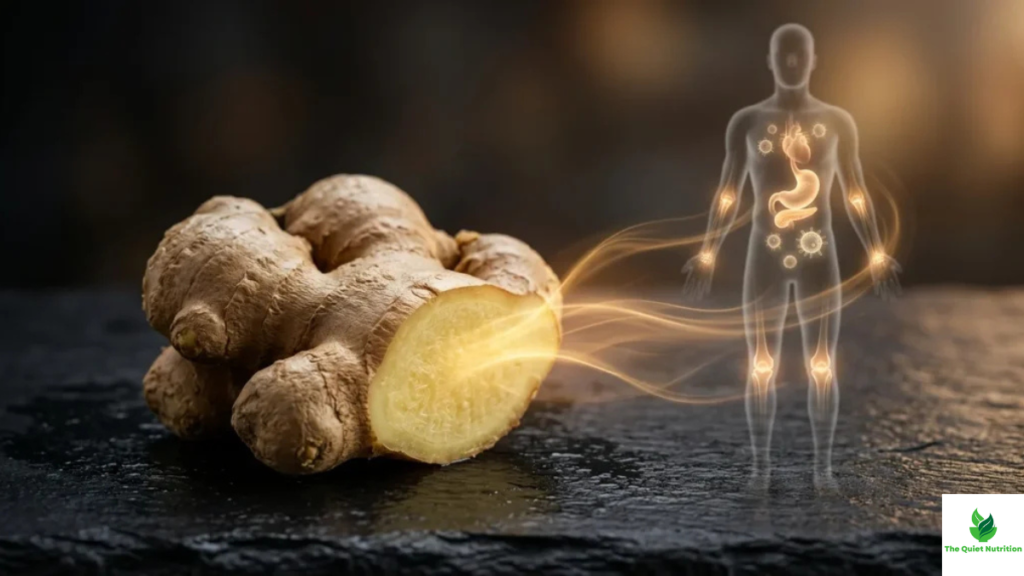
There’s a reason your grandmother reached for ginger tea every time someone in the house had a stomachache, a cold, or “just felt off.” Long before lab coats and clinical trials existed, cultures across India, China, and the Middle East were already treating this knobby little root like medicine. And here’s the twist: modern science is now proving they were right all along.
Ginger isn’t just a warming spice that makes your tea taste better or your stir-fry pop. Inside that unassuming root is a cocktail of natural compounds — most famously gingerol — that scientists have linked to reduced inflammation, better digestion, sharper immunity, and even improvements in blood sugar and cholesterol. It’s rare for a single food to touch this many systems in the body at once. That’s exactly why ginger keeps showing up in modern research, decades after it first showed up in ancient medicine cabinets.
Let’s break down exactly why ginger deserves the hype — and how to actually put it to work for you.
The Secret Ingredient: What Makes Ginger So Potent
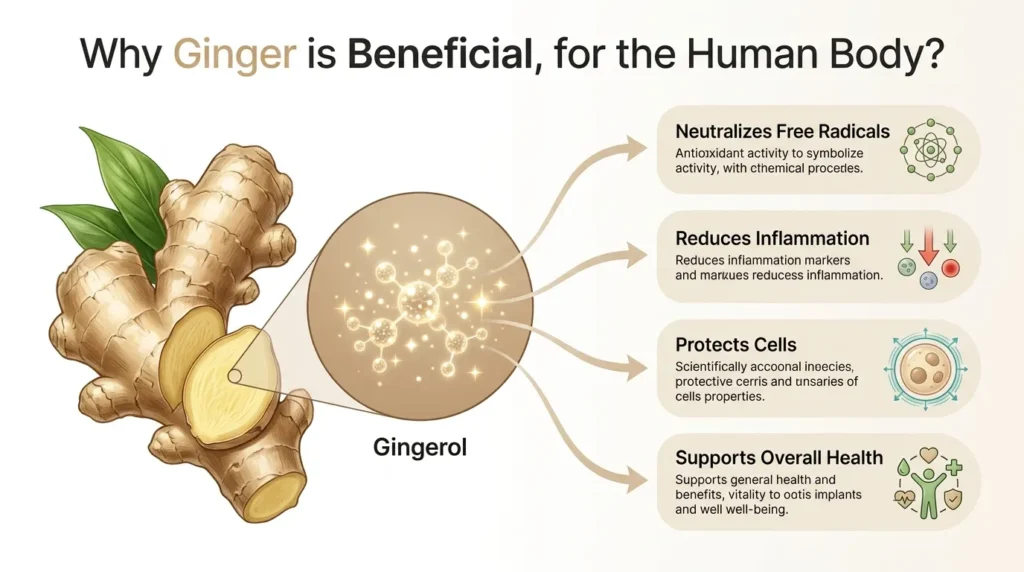
The spicy kick you feel when you bite into fresh ginger comes primarily from a compound called gingerol. According to the National Center for Biotechnology Information (NCBI), gingerol is the main bioactive component researchers study when investigating ginger’s effects on the body, and it’s largely responsible for the root’s antioxidant and anti-inflammatory power.
Think of gingerol as ginger’s engine. Antioxidants like it work by neutralizing free radicals — unstable molecules that damage cells over time and are linked to aging, chronic disease, and inflammation. The more free radicals your body has to fight off, the more stress your cells are under. Gingerol helps tip that balance back in your favor.
This single compound is the reason ginger shows up in conversations about everything from nausea relief to heart health. One root, dozens of benefits — that’s not marketing, that’s chemistry.
1. It Calms an Upset Stomach Like Almost Nothing Else
If ginger has one reputation that’s earned across every culture and every era, it’s this: it settles the stomach. The NIH advises consuming ginger-containing foods and beverages, such as ginger tea, specifically to help reduce nausea and vomiting, and researchers have found it useful for nausea tied to pregnancy, chemotherapy, and recovery from surgery.
It doesn’t stop at nausea, either. Research reviewed by NCBI suggests ginger can help food move more efficiently through the digestive tract, which may ease or prevent constipation and reduce that heavy, bloated feeling after a big meal. If you’ve ever sipped ginger tea after overeating and felt noticeably better twenty minutes later, this is why — it’s not a placebo, it’s physiology.
2. It Fights Inflammation at the Root — Literally
Chronic inflammation is quietly linked to almost every major health concern we worry about today: heart disease, arthritis, diabetes, even cognitive decline. This is where ginger does some of its most impressive work.
A comprehensive review published by NCBI’s Herbal Medicine collection outlines how ginger’s antioxidant and anti-inflammatory properties have been studied for their protective effects against a range of chronic conditions. And a meta-analysis published in the Journal of Functional Foods found that ginger supplementation was associated with meaningful reductions in inflammatory and metabolic markers.
In plain terms: eating ginger regularly may help your body run a cooler, calmer internal environment — one that’s less prone to the low-grade inflammation that drives long-term disease.
3. It Supports Heart Health in Multiple Ways at Once
This is where ginger starts to feel almost too good to be true — except the data backs it up. A clinical review found that people taking roughly 1 to 3 grams of ginger daily for 6 to 12 weeks experienced notable reductions in triglycerides and LDL (“bad”) cholesterol, along with a slight rise in HDL (“good”) cholesterol.
A separate meta-analysis of randomized controlled trials in people with diabetes or high cholesterol found that ginger intake significantly lowered triglycerides, total cholesterol, and fasting blood glucose, while raising HDL cholesterol. Some studies have even observed modest improvements in blood pressure, particularly in adults under 50.
To put that in perspective: this is a spice you already have in your kitchen doing double duty as a natural ally for your cardiovascular system — not a replacement for medication, but a genuinely useful addition to a heart-healthy lifestyle.
4. It Helps Regulate Blood Sugar
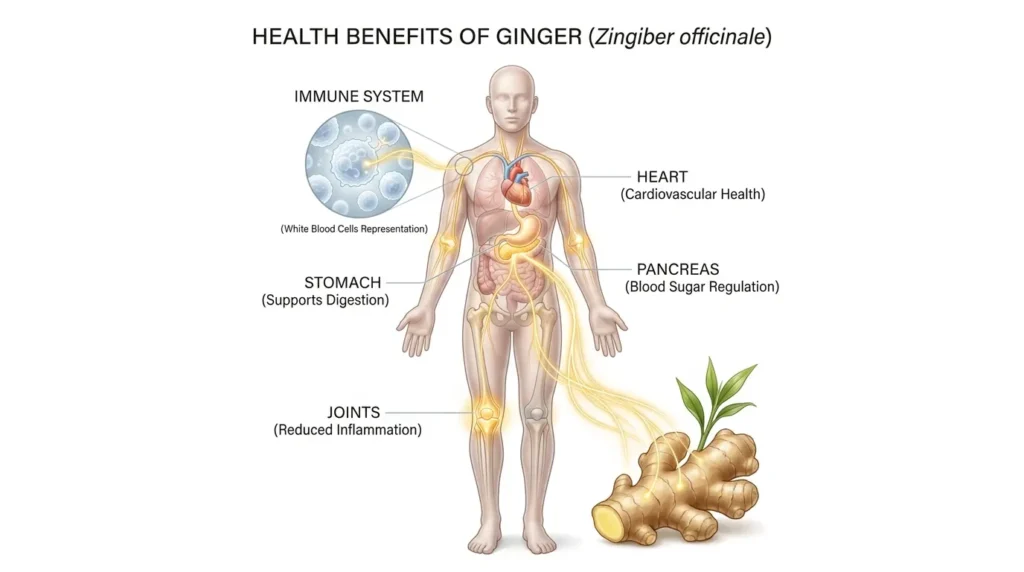
For people managing type 2 diabetes or simply trying to keep their blood sugar steady, ginger has shown real promise. In a randomized, double-blind, placebo-controlled trial, patients with type 2 diabetes who took 2 grams of ginger powder daily for 12 weeks saw measurable improvements in fasting blood sugar and long-term blood sugar markers compared to those on a placebo, as documented in a study on PubMed Central.
A broader meta-analysis reinforced this, linking ginger supplementation to significant reductions in fasting blood glucose and HbA1c — the marker doctors use to track blood sugar control over several months.
It’s worth noting that results across studies vary depending on dosage and duration, and ginger should never replace prescribed diabetes treatment. But as a supportive, food-based habit, the pattern in the research is hard to ignore.
5. It Eases Pain — From Sore Muscles to Arthritis
Ginger’s anti-inflammatory effects don’t just work on the inside — they show up in how your body handles pain, too. According to research summarized by NCBI’s StatPearls database, ginger has documented antinausea, anti-inflammatory, and pain-relieving properties, and it’s been studied specifically for its role in easing symptoms of arthritis and muscle soreness.
This is part of why so many athletes and physical therapists have started treating ginger less like a kitchen spice and more like a recovery tool — right alongside stretching and hydration.
6. It Gives Your Immune System a Boost
Nobody wants to be the person who catches every cold that goes around the office. Ginger may help. A large cross-sectional study from 2017 found that daily ginger consumption was associated with immune support, a benefit researchers believe may help protect against chronic disease and support faster recovery from common illnesses.
A smaller 2019 study went further, finding that daily ginger extract consumption was linked to a stronger antibody response, particularly in nonsmokers. It’s not a substitute for sleep, hydration, or a balanced diet — but it’s a small, tasty habit that appears to work with your immune system rather than against it.
7. It May Support Healthy Weight Management
Ginger’s effects on metabolism have caught the attention of weight-management researchers too. A 2019 review found that ginger supplementation was linked to significant reductions in body weight and waist-to-hip ratio in people who were overweight or living with obesity. Researchers believe this may be tied to ginger’s ability to reduce inflammation and slightly boost the body’s calorie-burning processes — though it works best alongside a balanced diet, not as a stand-alone fix.
How to Actually Use Ginger (Without Overdoing It)
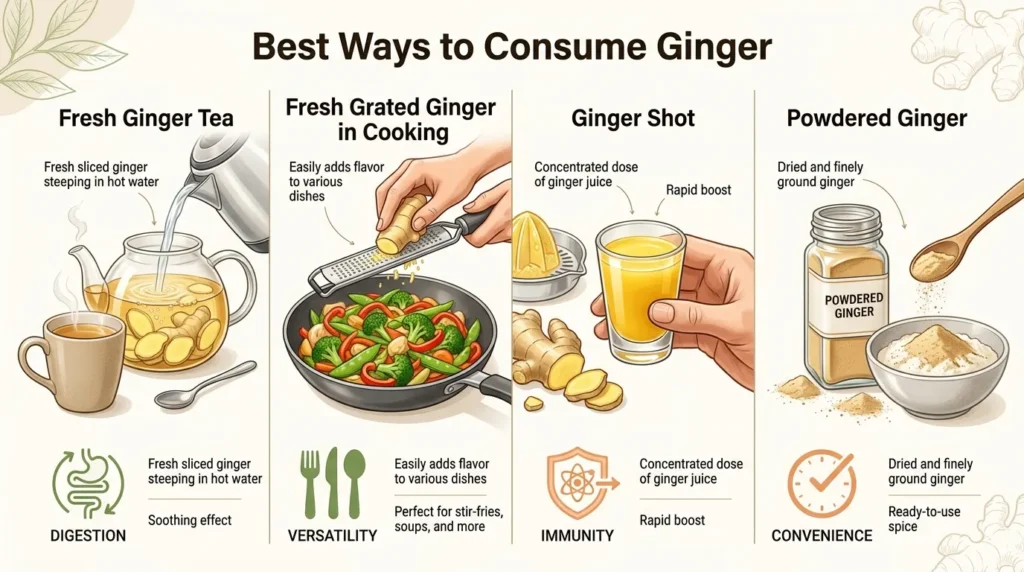
You don’t need exotic supplements to benefit from ginger. Here are simple, realistic ways to work it into daily life:
- Fresh ginger tea: Steep a few thin slices of fresh root in hot water for 10 minutes.
- Add it to cooking: Grated ginger works beautifully in stir-fries, soups, marinades, and smoothies.
- Ginger shots: A small amount of fresh ginger juice, often mixed with lemon, is an easy way to get a concentrated dose.
- Powdered ginger: Useful in baking or stirred into warm water; studies commonly use around 1–2 grams per day.
According to NCBI’s StatPearls, typical studied doses go up to about 1,000 mg of dried powdered ginger extract per day, though whole-food amounts in cooking are generally well tolerated by most healthy adults.
A Quick Word of Caution
Ginger is powerful, and “natural” doesn’t automatically mean “risk-free.” NCBI research notes that ginger can occasionally cause gastrointestinal discomfort, heartburn, or allergic reactions in some people, and it can interact with blood-thinning medications. If you’re pregnant, on medication, or managing a chronic condition, it’s worth checking with a doctor before adding concentrated ginger supplements to your routine — a rule that applies to virtually any potent natural remedy.
The Bottom Line
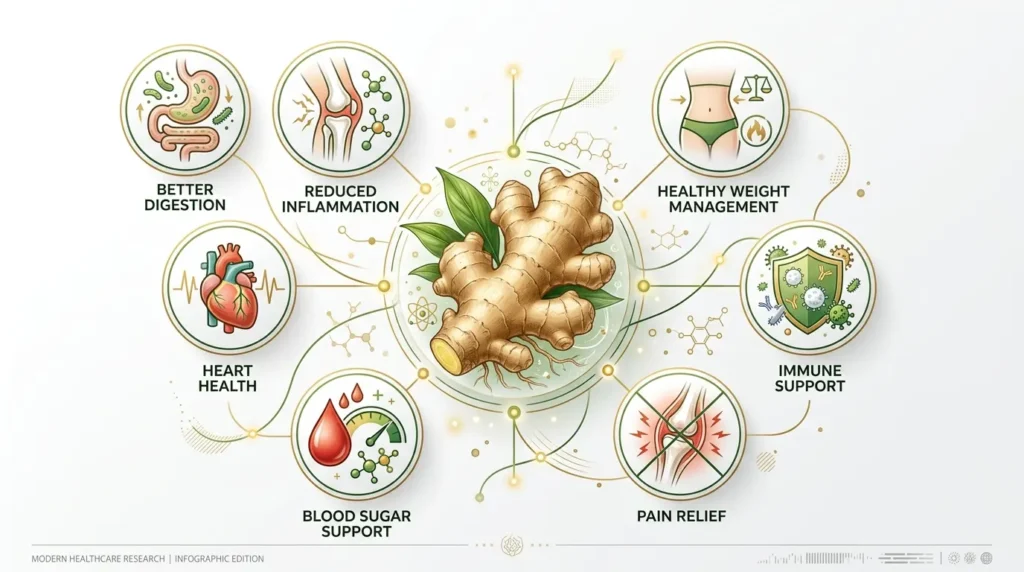
Ginger isn’t a miracle cure, and no single food can replace sleep, movement, or a balanced diet. But few ingredients on earth do as much quiet, consistent good as this root does — calming digestion, cooling inflammation, supporting your heart, steadying blood sugar, easing pain, and backing up your immune system, often all at the same time.
That’s why, thousands of years after it first showed up in traditional medicine, ginger still earns its place on the kitchen counter — and in the research lab.
Sources
- NCBI/NIH — The Amazing and Mighty Ginger, Herbal Medicine
- NCBI — Ginger Root, StatPearls
- Medical News Today (NIH-referenced) — Ginger: Benefits, Nutrition, and Uses
- PubMed Central — Effects of Ginger on Fasting Blood Sugar and HbA1c in Type 2 Diabetic Patients
- PubMed Central — Ginger Supplementation, CRP, Lipid Profile and Glycaemia Meta-Analysis
- Journal of Functional Foods — Ginger, Blood Glucose and Lipid Concentrations Meta-Analysis
- Clinical Review — Ginger for the Heart: Benefits Confirmed by Clinical Trials
- Healthline — 11 Proven Health Benefits of Ginger

Aarti Solanki, B.Sc. (Food Science), is a food science writer passionate about making nutrition simple and evidence-based. She creates well-researched, easy-to-understand articles on healthy eating, food science, and nutrition, using information from trusted scientific and public health sources.