The Aging Story We’ve Been Told Is Incomplete
Most people grow up believing aging works like rust.
You’re strong in your 20s.
You slow down in your 40s.
You decline in your 60s.
And nutrition?
It’s often treated as damage control—something you “fix” after problems appear.
But here’s the uncomfortable truth most people never hear:
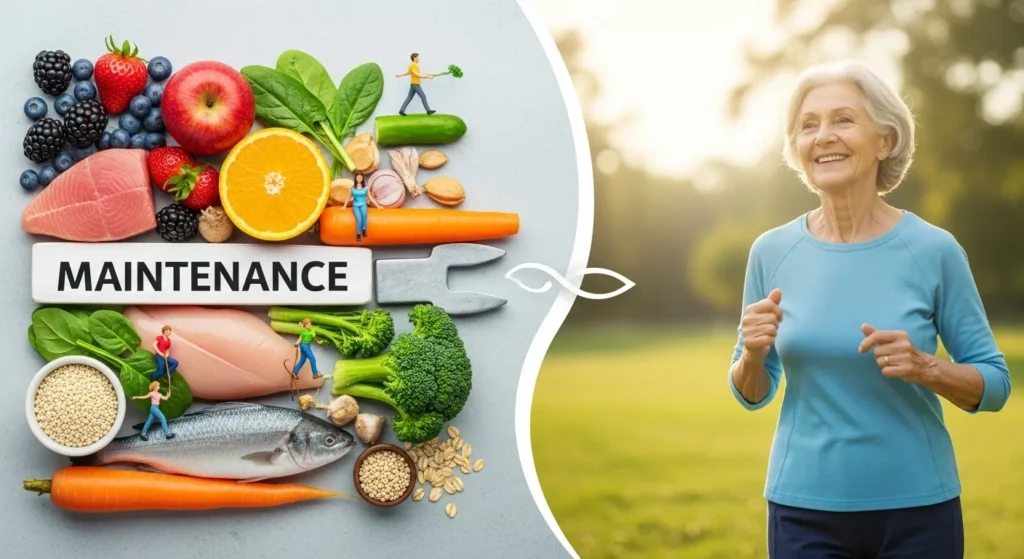
Aging is not primarily about decline. It’s about maintenance failure.
Your body doesn’t suddenly forget how to function.
It gradually stops receiving the signals and raw materials it needs to maintain itself.
And nutrition is one of the strongest signals of all.
Aging Happens Quietly — Long Before You Feel “Old”
Aging doesn’t announce itself with pain or disease.
It starts subtly:
- Muscle recovery takes a bit longer
- Hunger cues change
- Energy dips feel more frequent
- Skin heals slower
- Focus feels harder to sustain
These changes are often blamed on “getting older.”
But biologically, something else is happening.
Your body is prioritizing survival over optimization.
When nutrients are insufficient or inconsistent, the body shifts into conservation mode:
- Less muscle repair
- Lower metabolic flexibility
- Reduced hormone signaling
- Slower tissue renewal
That’s not decline.
That’s protective downshifting.
Nutrition as Information, Not Just Fuel
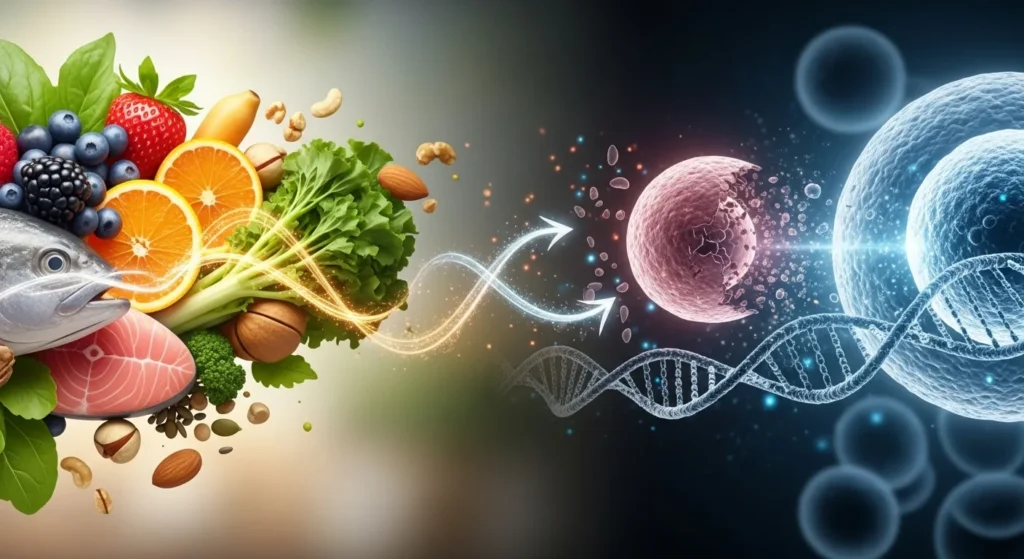
Food doesn’t just provide calories.
It sends instructions.
Protein signals muscle preservation.
Minerals signal cellular repair.
Micronutrients regulate enzyme activity.
Carbohydrates influence hormonal balance.
Fats shape inflammation and cell membranes.
This concept is strongly supported by research institutions like Harvard T.H. Chan School of Public Health, which emphasize dietary patterns over isolated nutrients for long-term health.
When those signals weaken, maintenance weakens.
And over years—not months—that creates what we call “aging.”
Why Maintenance Becomes Harder With Age (But Not Impossible)
As you age, your body becomes less forgiving of nutritional gaps.
Three major shifts occur:
- Anabolic resistance
Your muscles respond less efficiently to protein unless intake is adequate and well-timed. - Micronutrient absorption declines
Vitamins like B12, magnesium, and zinc become harder to absorb. - Energy sensing becomes conservative
The body prioritizes essential organs over muscle, skin, and connective tissue.
This doesn’t mean decline is inevitable.
It means maintenance requires intention.
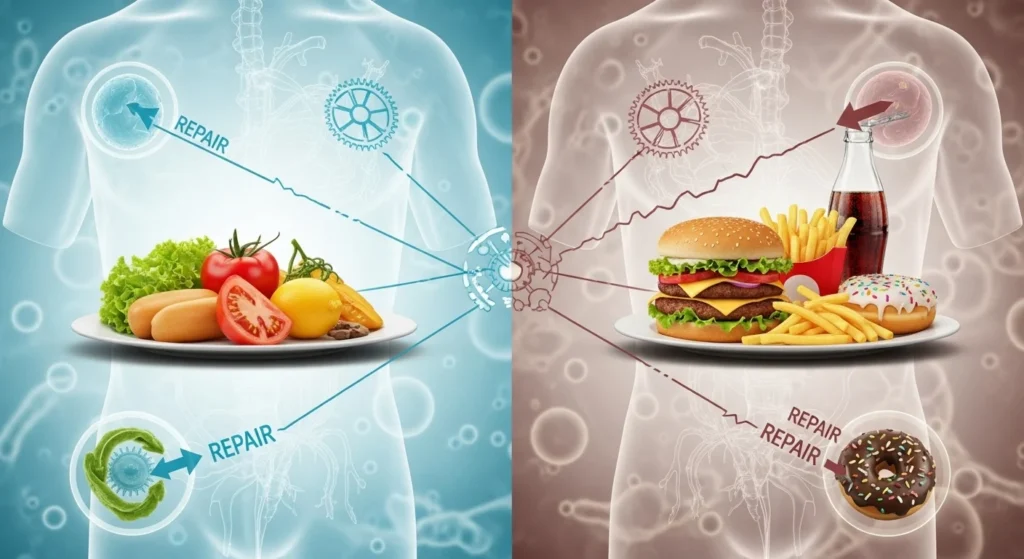
The Maintenance Model vs. The Decline Model
| Decline-Based View | Maintenance-Based View |
|---|---|
| Aging = unavoidable loss | Aging = under-supported systems |
| Less strength is “normal” | Strength is nutritionally supported |
| Slower metabolism is fate | Metabolism adapts to signals |
| Fatigue is expected | Fatigue is often under-fueling |
| Supplements fix problems | Food patterns prevent them |
This reframing changes everything.
Protein: The Cornerstone of Aging Maintenance
Protein is often under-consumed as people age.
Not slightly.
Significantly.
Why it matters:
- Preserves muscle mass
- Supports immune function
- Maintains metabolic rate
- Improves satiety and blood sugar stability
Research summarized by National Institute on Aging shows that maintaining muscle mass is one of the strongest predictors of independence and health span.
Yet many adults over 50 consume less protein than they did in their 30s—exactly when they need more.
The Silent Role of Micronutrients in Aging
Calories can be sufficient while nutrients are not.
Common deficiencies linked to accelerated aging:
- Magnesium → fatigue, insulin resistance
- Vitamin D → muscle weakness, immune decline
- B12 → cognitive and nerve changes
- Zinc → impaired healing and immunity
These don’t cause dramatic symptoms immediately.
They cause slow erosion.
That erosion often gets mislabeled as “just aging.”
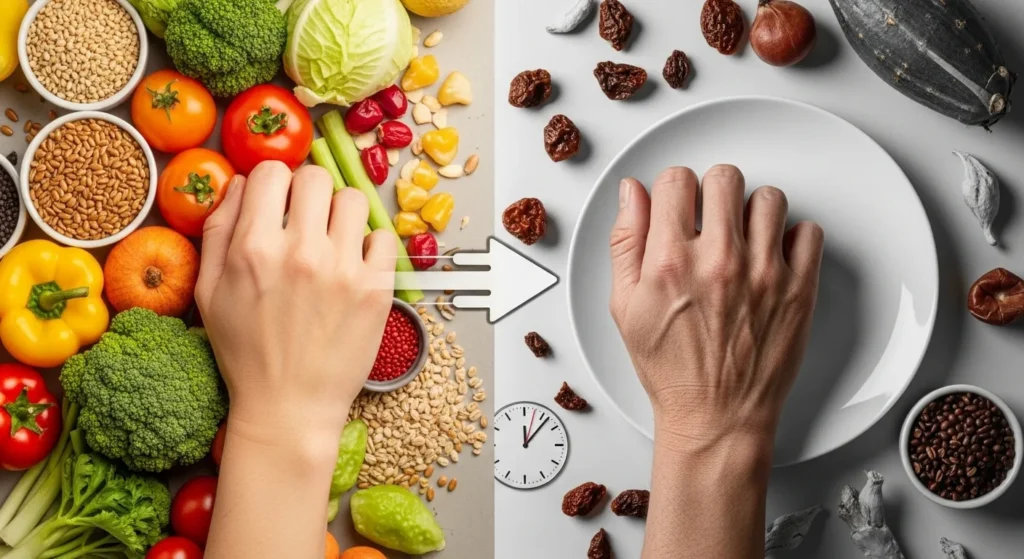
Why Dieting Accelerates Aging When Done Wrong
Aggressive calorie restriction without nutrient density creates a dangerous trade-off:
Short-term weight loss
Long-term maintenance loss
This is why repeated crash dieting is associated with:
- Muscle loss
- Hormonal disruption
- Reduced metabolic rate
Sustainable aging isn’t about eating less.
It’s about eating enough of the right things consistently.
Real-Life Example: Two 60-Year-Olds, Two Outcomes
Person A:
- Eats irregularly
- Low protein intake
- Skips meals
- Relies on ultra-processed foods
Person B:
- Prioritizes protein at each meal
- Eats consistently
- Focuses on whole foods
- Maintains strength training
Chronological age: Same.
Biological maintenance: Vastly different.
This gap widens every year.
Hidden Nutrition Mistakes That Speed Up Aging
Many people think they’re “eating healthy” but unknowingly undermine maintenance.
Common mistakes:
- Skipping breakfast with low total protein intake
- Replacing meals with snacks
- Over-relying on supplements instead of food
- Fear-driven fat avoidance
- Chronic under-eating during stress
These don’t show effects quickly.
They compound silently.
Practical Maintenance-Focused Nutrition Principles
You don’t need perfection.
Focus on:
- Protein at every main meal
- Regular meal timing
- Color variety for micronutrients
- Adequate carbohydrates for metabolic health
- Healthy fats for inflammation control
Even small improvements, sustained, change aging trajectories.
Why This Matters Today (More Than Ever)
Modern life creates the illusion of nourishment:
- Food is abundant
- Calories are cheap
- Convenience is everywhere
But nutritional sufficiency is rarer than ever.
We’re overfed and under-maintained.
That gap explains why people feel “old” earlier than previous generations—despite medical advances noted by organizations like World Health Organization.
Key Takeaways
- Aging is primarily a maintenance challenge, not a decline process
- Nutrition sends repair and preservation signals to the body
- Protein and micronutrients become more important with age
- Consistent nourishment outperforms restrictive dieting
- Maintenance-focused eating preserves strength, energy, and independence
Frequently Asked Questions
1. Can nutrition really slow aging?
Nutrition doesn’t stop time, but it significantly influences how well your body maintains itself over decades.
2. Do I need supplements as I age?
Supplements can help fill gaps, but food-based nutrition should always be the foundation.
3. Is weight loss bad for aging?
Intentional weight loss without muscle and nutrient support can accelerate aging. Quality matters more than scale weight.
4. How much protein do older adults need?
Most adults benefit from higher protein intake spread evenly across meals, especially with aging muscles.
5. Is it ever too late to improve maintenance?
No. Maintenance systems respond at any age when properly supported.
A Cleaner Way to Think About Aging
Aging isn’t your body failing you.
It’s your body adapting to what it’s given.
When nutrition supports maintenance, aging looks steadier, stronger, and more resilient.
Not perfect.
But preserved.
That’s a very different future than decline.
Disclaimer: This article is for educational purposes and does not replace personalized medical or nutritional advice. Always consider individual needs and professional guidance.





Pingback: Why Nutritional Consistency Matters More With Age — The Quiet Habit That Protects Strength, Energy, and Health
Pingback: Why Aging Is Influenced by Nutrient Availability — The Hidden Factor That Shapes How Fast You Age
Pingback: Why Aging Reflects Efficiency Loss, Not Failure — The Nutrition Truth That Changes How We Age
Pingback: Why Aging Isn’t Just About Time — It’s About Energy Balance