Why Cherries May Support Better Sleep Naturally
Have you ever been exhausted…
But the moment your head hits the pillow, your brain refuses to shut off?
You’re not alone.
Sleep is one of the most desired things in modern life—yet for many people, it feels strangely out of reach.
And while the internet is full of complicated sleep hacks…
Sometimes the most powerful support comes from something incredibly simple:
Food.
More specifically…
Cherries.
Yes—those small, sweet, deeply colored fruits might be doing something remarkable inside the body.
Not as a sleeping pill.
Not as a cure.
But as a gentle, natural support system that helps the body remember how to rest.
Let’s explore why cherries may support better sleep naturally—and why this matters more than most people realize.
Cherries Are One of the Only Foods With Natural Melatonin
Here’s what makes cherries unique:
Cherries—especially tart cherries—contain melatonin, a hormone that helps regulate the body’s sleep-wake cycle.
Melatonin is often called the body’s “internal darkness signal.”
It helps tell your brain:
“It’s time to slow down. It’s time to sleep.”
While your body makes melatonin naturally, levels can be influenced by:
- Stress
- Blue light exposure
- Irregular sleep routines
- Aging
- Lifestyle patterns
Cherries are one of the rare fruits that naturally contain measurable melatonin.
Why this matters today
Many people want gentle, food-based ways to support sleep without relying on strong interventions.
Cherries offer a fascinating option rooted in nutrition, not trends.
The Tart Cherry Connection: Why Researchers Pay Attention
Not all cherries are equal in sleep research.
Tart cherries (like Montmorency cherries) are often studied because they contain:
- Higher melatonin levels
- Strong antioxidant compounds
- Anti-inflammatory polyphenols
Some studies suggest tart cherry juice may support improved sleep duration and quality in certain adults.
While results vary, the consistent interest comes from the fruit’s natural biochemical profile.
Real-life example
Many people who add tart cherry juice in the evening describe:
- Easier wind-down
- Fewer nighttime wake-ups
- A calmer bedtime routine
Not as an instant fix…
But as a supportive habit.
Cherries Help More Than Sleep: They Support Relaxation Physiology
Sleep is not just about being tired.
It’s about the nervous system feeling safe enough to rest.
Cherries contain antioxidants and plant compounds that may help support the body’s relaxation environment.
These include:
- Anthocyanins (deep red pigments)
- Flavonoids
- Polyphenols
These compounds may help reduce oxidative stress, which is often elevated in people with poor sleep patterns.
Emotional truth
Better sleep isn’t always about doing more.
Sometimes it’s about giving the body signals of safety, nourishment, and calm.
Cherries may contribute to that.
Why Cherries May Support the Body’s Circadian Rhythm
Your circadian rhythm is your internal clock.
It affects:
- Sleep timing
- Energy levels
- Hormone release
- Digestion cycles
- Mood stability
Modern life disrupts circadian rhythm constantly:
- Screens late at night
- Artificial lighting
- Late meals
- Inconsistent sleep schedules
Because cherries contain melatonin and supportive nutrients, they may help reinforce nighttime signals.
Hidden tip
Cherries work best when paired with healthy sleep cues:
- Dim lights
- Consistent bedtime
- Reduced evening screen use
Fruit can help—but rhythm matters too.
Cherries vs Other Sleep-Friendly Foods (Comparison Table)
Here’s how cherries compare to other foods often linked with better sleep:
| Food | Key Sleep-Related Compound | Main Benefit | Best Time to Eat |
|---|---|---|---|
| Cherries (tart) | Natural melatonin | Circadian support | Evening |
| Kiwi | Serotonin-related nutrients | Relaxation support | Night snack |
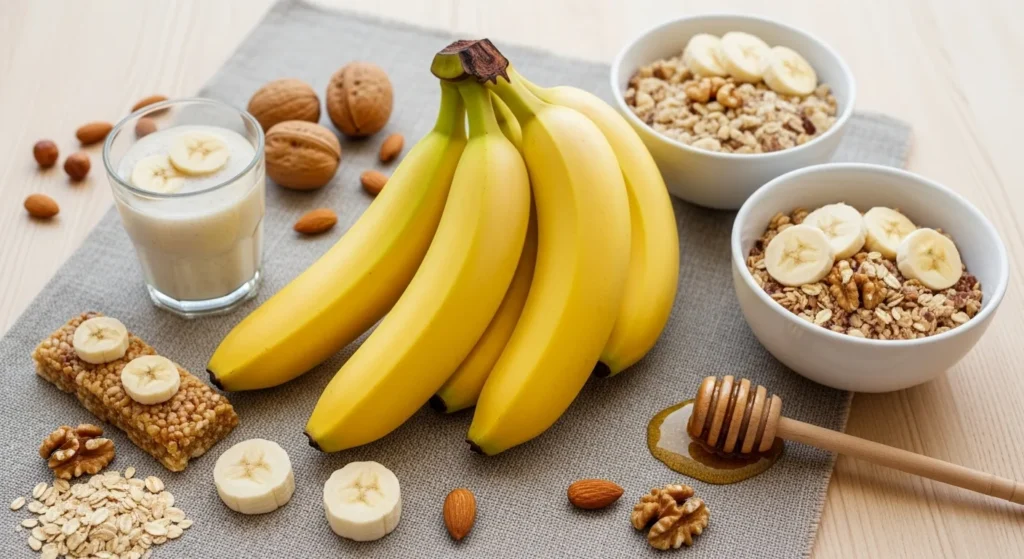
| Banana | Magnesium + carbs | Muscle calm | Post-dinner |
| Warm milk | Tryptophan | Comfort + routine | Before bed |
| Almonds | Magnesium | Nervous system support | Evening snack |
Cherries stand out because they directly contain melatonin—a rare trait in foods.
The Anti-Inflammatory Angle: Sleep and Inflammation Are Connected
Poor sleep and inflammation often feed into each other.
Sleep deprivation can elevate markers of inflammation.
And inflammation can make sleep feel lighter or less restorative.
Cherries—especially tart cherries—contain anti-inflammatory polyphenols that may help support recovery processes.
Why this matters
Many people don’t struggle with falling asleep…
They struggle with staying asleep or feeling rested.
Supporting inflammation balance may be part of the bigger picture.
How to Use Cherries for Sleep Support (Practical Weekly Habit)
You don’t need extreme routines.
Here are realistic ways people include cherries for sleep support:
1. Eat a small bowl of cherries after dinner
Fresh or frozen works.
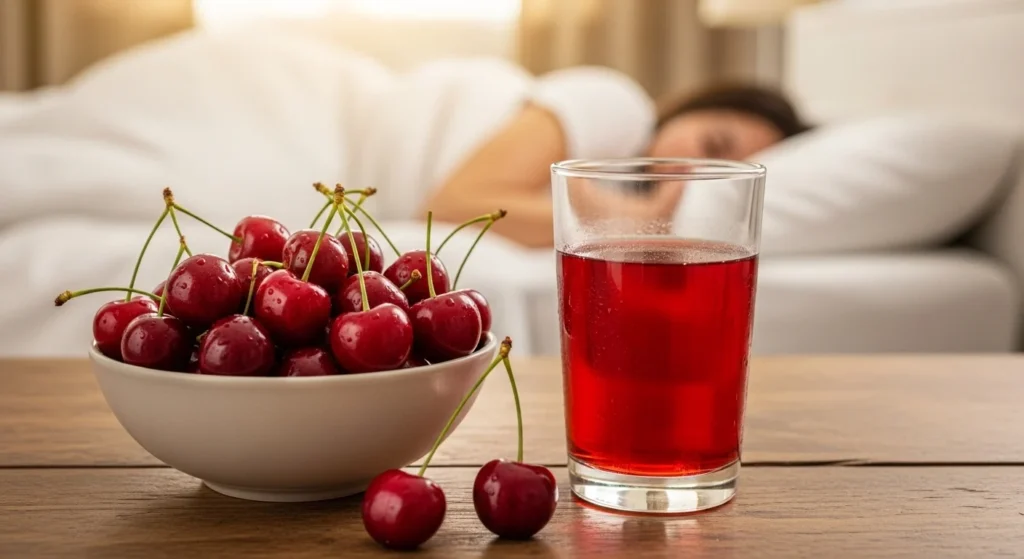
2. Try tart cherry juice (unsweetened)
A small serving in the evening is common.
3. Add cherries to yogurt as a nighttime snack
Balanced with protein for steadier blood sugar.
4. Use frozen cherries in a calming smoothie
Pair with banana or oats.
5. Make it consistent, not intense
Sleep benefits are more likely with regular use.
Mistakes to Avoid When Trying Cherries for Better Sleep
Cherries are helpful, but expectations matter.
Avoid these common mistakes:
- Drinking sugary cherry cocktails or sweetened juice
- Expecting immediate “knockout” effects
- Eating huge portions late at night
- Ignoring lifestyle sleep disruptors
- Using cherries as a replacement for sleep hygiene
Key reminder
Cherries support sleep naturally…
But they work best as part of a whole bedtime rhythm.
Real-Life Sleep Routine Example Using Cherries
Here’s a simple nighttime routine many people find sustainable:
- Finish dinner 2–3 hours before bed
- Dim lights 60 minutes before sleep
- Drink a small glass of tart cherry juice
- Read or stretch instead of scrolling
- Keep bedtime consistent
Cherries become part of the ritual—not a miracle, but a meaningful signal.
Why Cherries Matter in a World of Overstimulation
We live in a world that constantly pushes “awake.”
Notifications.
Stress.
Late-night screens.
Mental overload.
Sleep isn’t just rest anymore…
It’s recovery.
Cherries represent something powerful:
A reminder that nature often offers gentle tools that support the body’s own design.
That’s why cherries may be one of the most underrated foods for sleep support.
Key Takeaways: Why Cherries May Support Better Sleep Naturally
- Cherries are one of the few foods that naturally contain melatonin
- Tart cherries have been studied for sleep duration and sleep quality support
- Antioxidants in cherries may help reduce oxidative stress linked to poor rest
- Cherries may support circadian rhythm when used consistently
- They work best alongside good sleep habits—not as an instant solution
FAQ: Cherries and Natural Sleep Support
1. Do cherries really contain melatonin?
Yes, cherries—especially tart cherries—contain natural melatonin in measurable amounts.
2. Are tart cherries better than sweet cherries for sleep?
Tart cherries are more commonly studied because they often contain higher melatonin and polyphenol levels.
3. When should I eat cherries for sleep support?
Most people consume cherries or tart cherry juice in the evening, about 1–2 hours before bed.
4. Can cherries replace sleep supplements?
Cherries are a food-based support, not a replacement for medical treatment or supplements when needed.
5. Are cherries safe to eat regularly?
For most people, cherries are safe and nutritious when eaten as part of a balanced diet.
Conclusion: A Simple Fruit With a Nighttime Secret
Cherries may look like a regular fruit…
But inside their deep red color is something special:
- Natural melatonin
- Antioxidants
- Sleep-supportive plant compounds
In a world full of complicated sleep solutions…
Cherries offer something refreshing:
A gentle, nourishing, natural step toward better rest.
So if you’ve been searching for a simple bedtime-friendly food…
This sweet fruit might be worth a place in your evening routine.