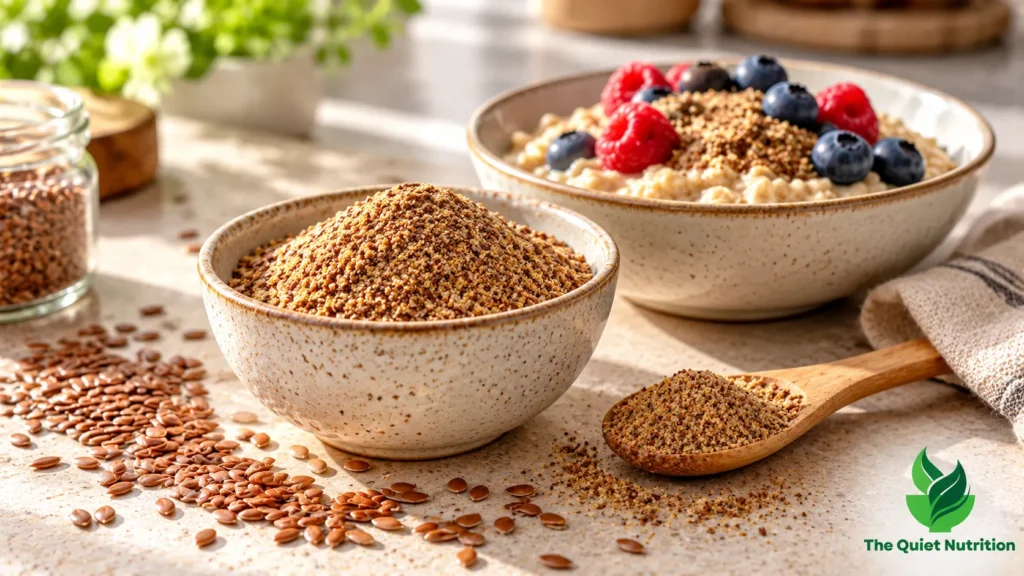
A tablespoon of ground flaxseed can add fiber, plant-based omega-3 fat and distinctive plant compounds to an ordinary breakfast. Yet the most useful thing about flaxseed may have less to do with how much it contains than with how easily your body can access it.
Whole flaxseeds can pass through the digestive tract partly intact. Grinding them makes their contents more accessible, turning a modest sprinkle into a more practical way to increase the nutritional value of oatmeal, yogurt or a smoothie. Research also suggests that flaxseed may support certain aspects of cardiovascular health, although the strength of the evidence varies by outcome and by the form of flaxseed studied.
That combination of everyday usefulness and interesting food science is what makes flaxseed worth a closer look. It is not a miracle ingredient, and there is no need to consume large quantities to make it part of a balanced diet. The real opportunity is understanding what it offers, what research has established and how to use it well.
What makes flaxseed nutritionally distinctive?
Flaxseed, also called linseed, is the small, flat seed of the flax plant. It is available whole, ground and as an oil, but these forms are not nutritionally interchangeable.
Ground flaxseed is particularly useful because it provides several components that serve different purposes in the diet.
Fiber helps support normal bowel function and contributes to a healthy overall eating pattern. Flaxseed contains both soluble and insoluble fiber, which behave differently during digestion.
Alpha-linolenic acid (ALA) is an essential omega-3 fatty acid found in plant foods. Your body needs ALA from the diet, and flaxseed is a particularly rich source. However, ALA is not identical to the omega-3 fats EPA and DHA found in oily fish. The body converts only a limited proportion of ALA into these longer-chain fatty acids.
Lignans are naturally occurring plant compounds. Flaxseed is especially rich in them compared with many other commonly eaten foods. Intestinal bacteria can transform some flaxseed lignans into compounds called enterolignans, which researchers study for their potential biological effects.
These components make flaxseed more than a source of one headline nutrient. They also help explain why studies investigating flaxseed do not always reach the same conclusions: whole seeds, ground seeds, isolated lignans and flaxseed oil deliver different combinations of compounds.
The small preparation change that matters: grind the seeds
If there is one practical lesson worth taking from flaxseed research, it is to pay attention to how the seeds are prepared.
The outer coating of a whole flaxseed can resist digestion. Some seeds may travel through the digestive tract without releasing all their contents. Grinding breaks up that protective structure and makes the seed’s nutrients more accessible.
A small randomized crossover study published in The Journal of Nutrition illustrates this difference. Researchers gave 12 healthy adults whole, crushed or ground flaxseed during separate 10-day periods. They found that blood concentrations of enterolignans were substantially higher after participants consumed ground flaxseed than after consuming whole seeds. The study was small and measured the availability of these compounds rather than long-term health outcomes, but it provides a useful explanation for the preference for ground flaxseed.
In practical terms, you can buy flaxseed already ground or grind whole seeds at home using a coffee grinder or food processor.
Whole seeds still contribute to the diet, particularly when used in foods, but ground flaxseed is generally the more reliable choice when your aim is to access its nutritional components.
There is another distinction worth remembering: flaxseed oil does not provide the same nutritional package as ground flaxseed. The oil supplies ALA but contains little or none of the fiber found in the whole seed and does not provide the same range of seed components. Choosing the oil instead of the ground seed therefore changes what you are adding to your meal.
How flaxseed may support digestive health
Flaxseed’s fiber content is one of its most straightforward nutritional advantages.
Fiber helps regulate bowel function, but different types of fiber work in different ways. Some absorb water and form a gel-like material, while others contribute bulk to stool. The combination can help support regularity when consumed as part of an adequate-fiber diet.
Flaxseed is often used to help relieve constipation, and its fiber makes that use biologically plausible. However, it should not be treated as an instant remedy or as a substitute for investigating persistent digestive symptoms.
The way you introduce it matters, too. Adding a large amount of ground flaxseed to a low-fiber diet overnight may cause gas, bloating or abdominal discomfort. Increasing the amount gradually and drinking enough fluid can make the change easier to tolerate.
A simple starting point is to mix a small spoonful into oatmeal or yogurt and see how your digestive system responds before increasing the quantity.
This is also a useful reminder that fiber works best as part of a broader dietary pattern. Vegetables, fruit, legumes, whole grains, nuts and seeds all contribute to fiber intake. Flaxseed can help, but it does not need to carry the entire burden.
What does the evidence say about heart health?
Cardiovascular health is one of the most researched areas of flaxseed nutrition. Studies have investigated its possible effects on blood pressure, cholesterol and other markers associated with cardiovascular risk.
The findings are promising, but they require careful interpretation.
Blood pressure: encouraging results, with limitations
A systematic review and dose-response meta-analysis published in 2023 examined 33 trials involving 2,427 participants. The researchers reported average reductions of approximately 3.2 mmHg in systolic blood pressure and 2.6 mmHg in diastolic blood pressure following flaxseed supplementation. However, results varied considerably between studies, meaning the pooled averages should not be interpreted as a guaranteed effect for an individual.
A later 2024 meta-analysis focused specifically on people with hypertension included five randomized controlled trials. It also reported reductions in blood pressure, but the small number of included studies limits how confidently the findings can be generalized.
What does this mean for an ordinary reader?
Flaxseed may be a useful addition to a heart-conscious eating pattern, particularly when it replaces less nutritious ingredients or helps increase fiber intake. But the research does not establish that sprinkling flaxseed on breakfast will produce a predictable fall in blood pressure.
People with hypertension should continue prescribed treatment and follow their healthcare professional’s advice.
Cholesterol: the form of flaxseed matters
Research on cholesterol suggests that whole or ground flaxseed and flaxseed-derived lignans may have benefits in some groups, but results are not consistent across all preparations.
The US National Center for Complementary and Integrative Health summarizes evidence indicating that some flaxseed products may help improve cholesterol measures, with effects differing by preparation and population. In the research it reviews, flaxseed oil has not shown the same cholesterol-lowering effects as some whole-seed or lignan preparations.
That difference is important because products made from the same plant can behave differently in the body.
It also highlights a broader principle in nutrition research: a food’s reputation cannot automatically be transferred to every supplement made from it. Evidence for ground flaxseed does not establish equivalent benefits from flaxseed oil capsules or isolated extracts.
What about preventing heart disease?
Blood pressure and cholesterol are relevant cardiovascular risk markers, but changes in these measures do not automatically prove that a particular food prevents heart attacks or strokes.
Flaxseed can contribute nutrients associated with a heart-supportive dietary pattern. Nevertheless, the evidence discussed here is not sufficient to treat it as a stand-alone cardiovascular treatment or to promise that it prevents disease.
The most sensible approach is to consider flaxseed alongside established dietary habits, including eating more minimally processed plant foods, choosing appropriate sources of unsaturated fat and limiting excess sodium.
The role of lignans—and why they are interesting
Lignans are among the most distinctive components of flaxseed. They belong to a broad family of plant compounds studied for their biological activity.
Some lignans can be converted by intestinal bacteria into enterolignans. These compounds can be measured in the bloodstream, allowing researchers to investigate how flaxseed is processed by the body.
This relationship between food and gut bacteria is one reason flaxseed attracts scientific interest. The compounds you absorb depend not only on what you eat but also on how the food is processed and how your body handles it.
However, several steps separate the presence of a plant compound from proof of a health benefit. Demonstrating that a compound becomes available in the bloodstream does not establish that it prevents cancer, improves longevity or treats a medical condition.
Flaxseed lignans have been investigated for a range of potential health effects, but those possibilities should not be confused with proven clinical outcomes.
For readers, the practical conclusion is relatively simple: ground flaxseed provides lignans as part of a whole-food package, without requiring a separate supplement or an elaborate routine.
Does flaxseed help with blood sugar or weight management?
These are common reasons people become interested in flaxseed, but the evidence is less straightforward than many wellness claims suggest.
Flaxseed’s fiber may influence how quickly food moves through the digestive system and how carbohydrates are absorbed. Researchers have also investigated whether flaxseed supplementation affects fasting blood glucose, insulin resistance and other metabolic measures.
Some studies report favorable changes, but the results depend on the population studied, the preparation used and the duration of the intervention. A change in a blood marker is not necessarily evidence of a meaningful long-term improvement in health.
Weight management requires similar caution. Fiber-containing foods can contribute to meals that are more satisfying, but flaxseed is not a weight-loss shortcut.
A 2022 randomized, placebo-controlled study examined a specific flaxseed mucilage preparation in adults with overweight or obesity. Mucilage is the gel-forming material associated with flaxseed fiber. The findings suggested potential benefits for body weight, but this was a particular preparation studied under controlled conditions—not proof that adding ordinary flaxseed to meals produces the same result. The National Center for Complementary and Integrative Health notes that flaxseed lignan extracts and flaxseed oil supplements do not appear to provide the same weight-loss effect.
For everyday eating, flaxseed makes the most sense as one component of a balanced meal. It can add fiber and unsaturated fat to breakfast, but it cannot compensate for an overall eating pattern that consistently provides more energy than the body needs.
How much flaxseed should you eat?
There is no single amount that everyone needs to consume. Research trials use different quantities, preparations and durations, so a dose tested in a clinical study should not automatically become a daily recommendation for everyone.
For a practical starting point, 1 tablespoon of ground flaxseed is an easy portion to incorporate into a meal.
According to Mayo Clinic, one tablespoon of ground flaxseed, weighing about 7 grams, provides approximately 37 calories, 2 grams of fiber and 2 grams of polyunsaturated fat, including omega-3 fats.
Simple Ways to Add Flaxseeds to Your Daily Diet
Stir into oatmeal: Add one tablespoon of ground flaxseed to cooked oatmeal, along with fresh berries, cinnamon, or chopped nuts.
Mix with yogurt: Stir ground flaxseed into plain Greek yogurt and top with your favorite fruit for an easy breakfast or snack.
Blend into a smoothie: Add ground flaxseed to a fruit smoothie to increase its fiber content and provide plant-based omega-3 fatty acids.
Use in homemade baking: Mix ground flaxseed into muffins, pancakes, or homemade bread. Start with a small amount, as it can change the texture and moisture of baked goods.
How to buy and store flaxseed
Both whole and ground flaxseed are widely available in supermarkets and health-food stores. Look for plain flaxseed without unnecessary added sugar, salt or flavorings.
If you buy whole seeds, grind small batches as needed. If you prefer the convenience of pre-ground flaxseed, check the packaging instructions and pay attention to freshness.
Flaxseed contains unsaturated fats, which can deteriorate with prolonged exposure to heat, light and oxygen. Keep it in an airtight container, away from direct sunlight and excessive heat. Refrigeration is a sensible option for ground flaxseed, particularly if you buy it in larger quantities; follow any storage guidance on the package.
A bitter, stale or paint-like smell can indicate that the oil has deteriorated. Discard flaxseed that appears spoiled rather than trying to mask the flavor.
These simple habits help preserve the ingredient’s quality without requiring expensive supplements or specialty products.
Who should be cautious with flaxseed?
Flaxseed is generally well tolerated in ordinary food portions by many adults, but increasing intake too quickly can cause bloating, gas or diarrhea. Taking large amounts with too little fluid can also worsen constipation and, in rare cases, contribute to intestinal blockage.
A few situations deserve particular attention:
- Medication use: Flaxseed may interact with certain medicines. People taking anticoagulant or antiplatelet medications, or other medicines that could be affected, should check with a healthcare professional before using large amounts or concentrated supplements.
- Pregnancy and breastfeeding: Safety information is limited, and some evidence raises concerns about use during pregnancy. Seek professional advice before deliberately increasing intake or using flaxseed supplements.
- Digestive difficulties: People with swallowing difficulties or certain intestinal conditions should seek individual advice before adding concentrated amounts of fiber.
- Supplements versus food: Oil capsules and concentrated lignan products can differ substantially from ground flaxseed. Do not assume they have the same benefits or risks.
The US National Center for Complementary and Integrative Health advises against eating raw or unripe flaxseeds because they may contain potentially harmful compounds. Choose food-grade flaxseed intended for consumption and follow the manufacturer’s preparation guidance.
The real value of flaxseed is in the details
Flaxseed does not need a dramatic health claim to justify its place in the kitchen.
It offers fiber, plant-based omega-3 fat and lignans in a compact ingredient that can be added to foods people already eat. Research suggests potential benefits for certain cardiovascular risk markers, but results differ by preparation and population, and many broader health claims remain unproven.
The most useful distinction is between the food itself and the promises sometimes attached to it. Flaxseed can contribute to a nutritious diet; it cannot replace the overall pattern of eating, movement, sleep and medical care that supports long-term health.
If you want to try it, start with a tablespoon of ground flaxseed stirred into oatmeal or yogurt. Increase the amount gradually if you tolerate it well, drink enough fluid and keep the seeds fresh.
That is a small, realistic dietary change—with a stronger nutritional rationale than treating any single ingredient as a cure-all.
Sources
- National Center for Complementary and Integrative Health — Flaxseed and Flaxseed Oil: Usefulness and Safety. Background on evidence, limitations and safety.
- Mayo Clinic — Flaxseed: Is ground better than whole?. Preparation, nutrition and practical use.
- Kuijsten A. et al., The Journal of Nutrition (2005) — The Relative Bioavailability of Enterolignans in Humans Is Enhanced by Milling and Crushing of Flaxseed. Human crossover study of flaxseed preparation.
- Fazeli Moghadam E. et al., Clinical Nutrition Research (2024) — Flaxseed Lowers Blood Pressure in Hypertensive Subjects: A Meta-Analysis of Randomized Controlled Trials. Blood pressure evidence in people with hypertension.
- PubMed — Effect of flaxseed supplementation on blood pressure: A systematic review and dose-response meta-analysis of randomized clinical trials. Pooled evidence from 33 trials.
- Xia H. et al., Nutrition & Metabolism (2021) — Comparisons of the effects of different flaxseed products on lipid profiles and related outcomes. Evidence on different flaxseed preparations and cholesterol-related measures.
- Healthcare (2023) — The Role of Flaxseed in Improving Human Health. Review of flaxseed composition, preparation and potential health effects.

Aarti Solanki, B.Sc. (Food Science), is a food science writer passionate about making nutrition simple and evidence-based. She creates well-researched, easy-to-understand articles on healthy eating, food science, and nutrition, using information from trusted scientific and public health sources.