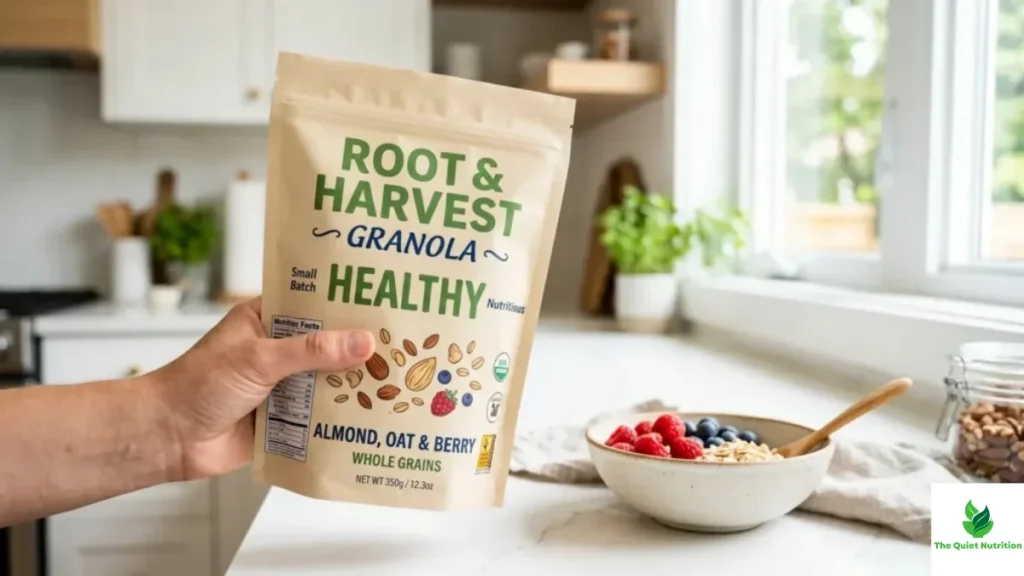
Here’s a fact that surprises almost everyone the first time they hear it: for roughly thirty years, a food company could legally put the word “healthy” on a box of sugary cereal, while a package of plain salmon wasn’t allowed to use that same word at all. Not because anyone was lying. Because of how the rule was written.
That’s not a loophole some clever marketer discovered. It was the actual federal definition, sitting in the U.S. code, for three decades. And it’s a perfect example of something worth understanding about food labels in general: “healthy” was never a nutritional judgment made fresh for each product. It’s a legal checkbox — and for most of recent history, the checkbox was checking the wrong things.
How Salmon Lost and Sugary Cereal Won
The original FDA definition of “healthy,” established in 1994, worked almost entirely off individual nutrient thresholds — limits on total fat, saturated fat, cholesterol, and sodium, plus a minimum requirement for certain vitamins. It made sense by the nutrition science of its era, which was fixated on minimizing fat above almost everything else.
The problem is that nutrition science moved on, and the legal definition didn’t move with it for a very long time. Fatty fish like salmon is rich in unsaturated fat and omega-3s widely recognized as beneficial — but under the old fat-based threshold, it could fail to qualify as “healthy” simply for containing more total fat than the rule allowed, regardless of what kind of fat it was. Meanwhile, a product low in fat but loaded with added sugar could sail through the same test and legally wear the label, because the old rule never accounted for added sugar at all.
This wasn’t a hypothetical edge case. FDA itself cited exactly this contradiction — nutrient-dense foods excluded, added-sugar-heavy foods included — as the core justification when it finally moved to overhaul the rule.
What Actually Changed, and When
In December 2024, after nearly a decade of review, the FDA issued a final rule replacing that outdated framework. The new definition drops the old approach of judging individual nutrients in isolation and instead builds around two combined requirements: a food has to contain a meaningful amount of an actual food group — vegetables, fruit, whole grains, dairy, or protein foods — and it has to stay under new caps on added sugar, sodium, and saturated fat, calibrated per serving.
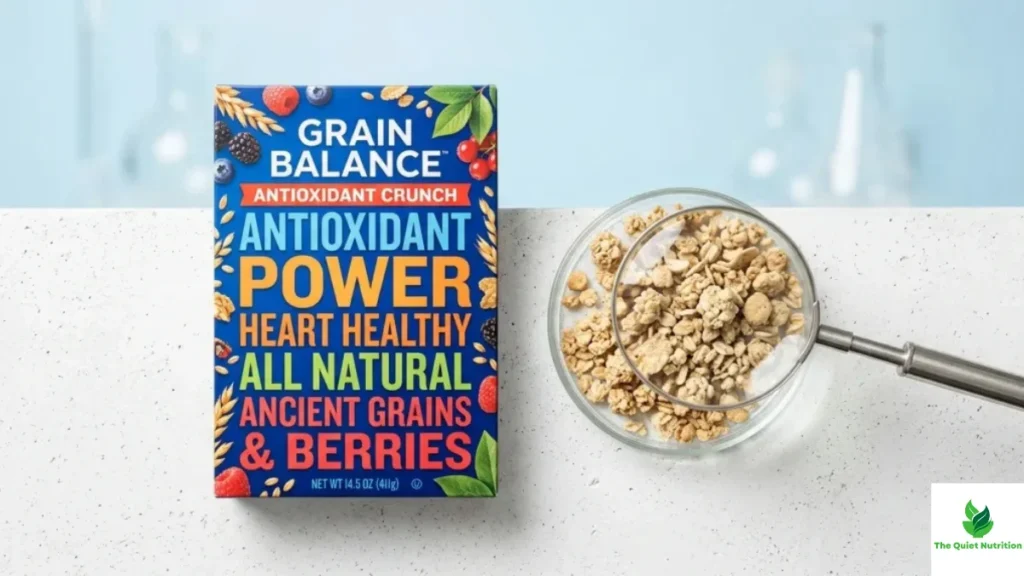
The shift sounds technical, but its real-world effect is blunt: FDA’s own analysis estimated that only about 5% of packaged foods on shelves today would qualify as “healthy” under the new criteria. Foods that could carry the label under the old rule — white bread, heavily sweetened cereals, sweetened yogurts among them — are expected to lose eligibility, while genuinely nutrient-dense foods that were previously excluded, salmon among them, are now eligible for the first time. Companies have until 2028 to bring existing “healthy” claims into compliance, so for the next few years, packages using the word on store shelves may still reflect the old, looser standard.
Why the Word Was Never a Simple Green Light
Even under the improved rule, it’s worth being clear about what “healthy” is actually certifying and what it isn’t. It’s a compliance claim tied to a specific, itemized checklist — a defined amount of one food group, and staying under specific percentages of the daily value for three nutrients. It was never designed to weigh things the new rule doesn’t measure: the degree of processing a product went through, the specific type of sugar or fat used, portion realism, or how the food behaves as part of a whole diet rather than in isolation.
Notably, the FDA itself considered and declined to let claims like high fiber, high protein, or high iron content — nutrients researchers generally want people to get more of — count toward qualifying for the label on their own. The rule is built entirely around avoiding a fixed set of things to limit, not rewarding everything nutrition science currently considers beneficial. That’s a reasonable regulatory choice, but it means “healthy” answers a narrower question than most shoppers assume it does.
What This Means at the Grocery Store
None of this makes the word useless — the updated rule is a meaningful improvement, built on current nutrition science instead of three-decade-old assumptions, and it will make the label a more reliable signal than it’s been in a very long time. But “meaningful improvement” and “complete picture” are different things.
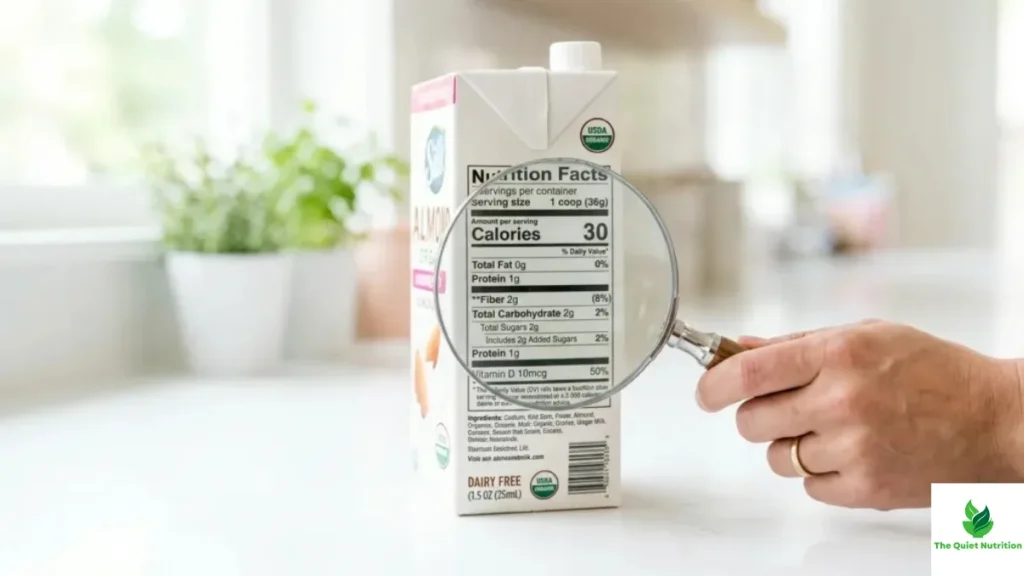
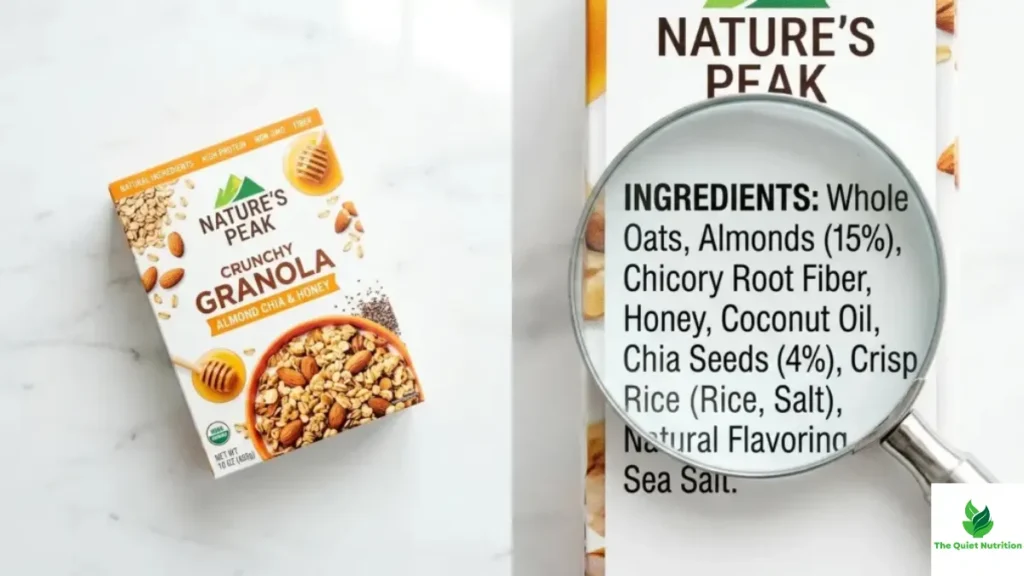
The most reliable approach doesn’t change much: treat the word “healthy” on the front of a package as a starting point for a decision, not the end of one. Flip the package over. The ingredient list and the actual Nutrition Facts panel will always tell you more than a single regulated word ever could — because that word, however well-intentioned its current definition is, was built to answer one specific legal question, not the broader one you’re actually asking when you read it.
Sources
- Food and Drug Law Institute (FDLI) — FDA Final Rule Updates the “Healthy” Nutrient Content Claim
- Keller and Heckman LLP — FDA Finalizes the “Healthy” Claim
- National Agricultural Law Center — FDA Releases Final “Healthy” Rule
- Hogan Lovells — FDA Issues Final “Healthy” Rule
- Covington & Burling LLP — FDA Issues Long-Awaited “Healthy” Rule

Aarti Solanki, B.Sc. (Food Science), is a food science writer passionate about making nutrition simple and evidence-based. She creates well-researched, easy-to-understand articles on healthy eating, food science, and nutrition, using information from trusted scientific and public health sources.

Pingback: How Serving Sizes Quietly Shape Your Perception of Food (Without You Realizing It)
Pingback: Why Ingredient Lists Matter More Than Front Labels (And What They Reveal That Marketing Hides)
Pingback: How Packaging Influences Food Choices — The Silent Persuasion You Rarely Notice
Pingback: Why “Natural” Has No Clear Definition — And Why That Confusion Works So Well
Pingback: Why “Whole Grain” Can Be Misleading — The Healthy-Sounding Label That Often Hides the Real Nutrition Story
Pingback: Why “Low Fat” Became a Marketing Shortcut — And How It Quietly Changed the Way We Eat
Pingback: “Free From” Doesn’t Mean Healthy: The Truth Behind America’s Favorite Food Label
Pingback: “High in Protein” But Still Unhealthy? How Nutrient Claims Distract From What Food Really Does to Your Body