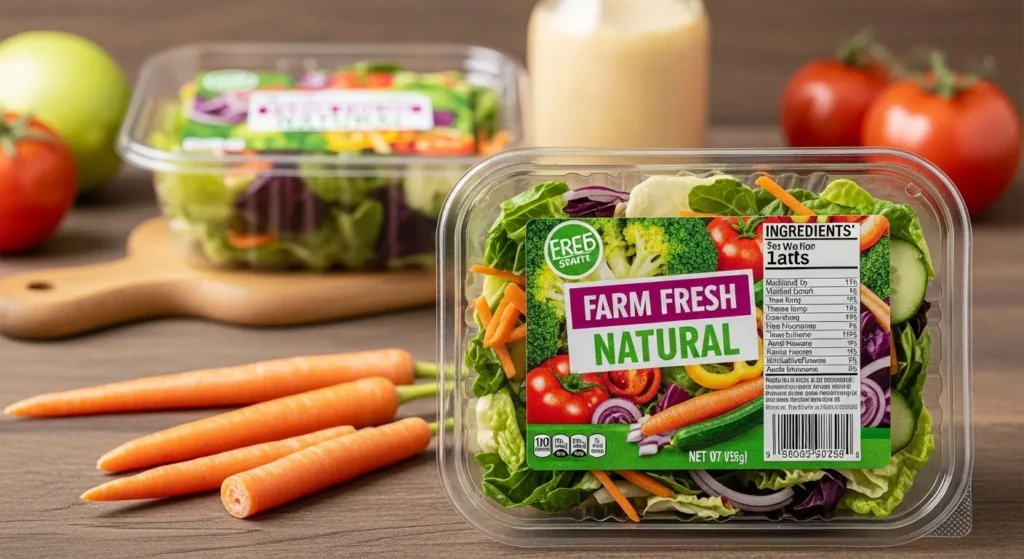
The Question Most Labels Never Answer
You pick up a food package.
You see:
- Calories
- Protein
- Fiber
- Vitamins
What you don’t see—anywhere obvious—is this:
How processed is this food?
That omission matters more than most people realize.
Because processing often determines:
- How fast food is digested
- How full you feel afterward
- How much you eat later
- How your body responds over time
Yet food labels rarely draw attention to it.
What “Processing” Actually Means (In Simple Terms)
Processing isn’t one thing.
It exists on a spectrum:
- Washing and cutting
- Grinding and cooking
- Refining, isolating, recombining
Some processing is helpful.
Some is neutral.
Some fundamentally changes how food behaves in the body.
The problem isn’t that processing exists.
It’s that labels don’t tell you where a food falls on that spectrum.
Why Processing Is Hard to Put on a Label
Unlike nutrients, processing:
- Has no single number
- Can’t be summarized easily
- Doesn’t fit a neat badge
There’s no:
- “Processing score”
- “Refinement percentage”
- “Structural integrity scale”
So instead of explaining it, labels sidestep it.
They talk about what’s easy to measure—not what’s most impactful.
How Labels Shift Attention Away From Processing
Food packaging focuses on:
- What’s added (protein, vitamins)
- What’s removed (fat, sugar)
- What sounds reassuring (“simple,” “real,” “natural”)
These cues pull attention forward.
Meanwhile, processing stays hidden:
- In long ingredient lists
- In unfamiliar names
- In manufacturing steps you never see
You’re told what the food contains—not what it’s been through.
Real-Life Example: The “Healthy” Snack Bar
A snack bar advertises:
- High protein
- Added fiber
- Whole grains
But its ingredients reveal:
- Protein isolates
- Refined syrups
- Stabilizers and emulsifiers
The food looks nutritionally impressive.
But structurally, it’s been:
- Broken apart
- Reassembled
- Engineered for shelf life and taste
Processing is the main story—yet the label tells it quietly.
Why Highly Processed Foods Can Still Look Nutritious
Modern food technology allows manufacturers to:
- Remove nutrients
- Add them back
- Adjust numbers precisely
This means a highly processed food can:
- Match nutrient targets
- Score well on label metrics
- Appear “balanced” on paper
But the body doesn’t experience nutrients in isolation.
It responds to:
- Food structure
- Digestion speed
- Ingredient interactions
Processing changes all of that—without changing the label claims.
Comparison Table: What Labels Show vs What Processing Changes
| Label Focus | What You See | What Processing Affects |
|---|---|---|
| Calories | Energy number | Speed of digestion |
| Protein | Grams listed | Satiety duration |
| Fiber | Present/absent | Gut response |
| Vitamins | Added amounts | Absorption context |
| Ingredients | Listed | Degree of alteration |
Labels show composition.
Processing shapes experience.
Why Processing Is Rarely Framed as a “Negative”
Processing sounds industrial.
It reminds people of:
- Factories
- Machines
- Distance from nature
That’s not a comforting story.
So labels prefer:
- “Made with care”
- “Simple ingredients”
- “Inspired by tradition”
These phrases soften perception without addressing reality.
The food may be highly processed—
but the language feels warm.
The Health Halo That Processing Hides Behind
When labels highlight:
- Protein
- Whole grains
- Vitamins
Processing fades into the background.
This creates a health halo where:
- Foods seem lighter than they are
- Portion sizes increase
- Scrutiny decreases
Many people assume:
“If the nutrients are right, processing doesn’t matter.”
But research and public-health discussions—often referenced by bodies like the World Health Organization—suggest otherwise.
Food structure matters.
Why Regulations Don’t Require Processing Transparency
Food labeling laws—overseen by regulators such as the U.S. Food and Drug Administration—focus on:
- Safety
- Accuracy
- Nutrient disclosure
They do not require:
- Degree-of-processing labels
- Manufacturing method explanations
As long as ingredients are listed and claims are truthful, processing can stay implicit.
This leaves consumers to infer what isn’t stated.
When Processing Isn’t a Problem
Not all processing is harmful.
Processing can:
- Improve safety
- Increase accessibility
- Reduce food waste
The issue is unnoticed overprocessing—when foods become:
- Easy to overeat
- Fast to digest
- Less satisfying
Balance comes from awareness, not avoidance.
Common Mistakes People Make About Processing
Mistake #1: Assuming “Healthy” Means Minimally Processed
Nutrient claims don’t reveal structure.
Mistake #2: Ignoring Ingredient Order and Length
Long lists often signal heavy manipulation.
Mistake #3: Treating Processing as All-or-Nothing
The degree matters—not just presence.
Mistake #4: Trusting Front-of-Pack Language
Processing hides best behind friendly words.
How to Spot Processing When Labels Don’t Say It
You don’t need special knowledge.
You need a few cues.
Actionable Steps
- Scan ingredient lists for isolates and concentrates
- Notice texture and shelf stability
- Compare fiber to carbohydrate content
- Ask: “Could I make this at home?”
- Favor foods closer to their original form
These habits reveal what labels downplay.
Why This Matters Today (And Long-Term)
Most modern diets don’t fail because of missing nutrients.
They fail because food is:
- Too easy to eat
- Too fast to digest
- Too detached from natural structure
Processing plays a central role in this shift.
When labels hide it, people lose an important signal.
Understanding processing helps you:
- Regain appetite awareness
- Improve satisfaction
- Reduce mindless eating
- Build sustainable habits
This awareness doesn’t restrict—it empowers.
Key Takeaways
- Food labels emphasize nutrients but downplay processing
- Processing affects digestion, satiety, and intake
- Highly processed foods can still look “healthy”
- Friendly language often masks industrial reality
- Recognizing processing restores nutritional clarity
Frequently Asked Questions
1. Is all processed food unhealthy?
No. Processing exists on a spectrum; degree matters.
2. Why don’t labels show processing level?
It’s hard to quantify and not legally required.
3. Can processed foods still fit into a healthy diet?
Yes—when balanced and eaten intentionally.
4. Are ultra-processed foods always obvious?
Not always; many look nutritionally impressive.
5. What’s the simplest processing check?
Ingredient list length and food structure.
Final Thought
Food labels tell you what’s in your food.
They rarely tell you what’s been done to it.
Once you learn to see past the highlights and notice processing,
nutrition stops feeling confusing
and starts feeling grounded again.
Not perfect.
Just clearer.
Disclaimer: This article is for general educational purposes and does not replace personalized nutrition or medical advice.

Pingback: Why Nutrition Panels Don’t Tell the Whole Truth — And What Food Labels Leave Out
Pingback: How Marketing Language Quietly Shapes Food Identity — And What You Think You’re Eating
Pingback: How Packaging Creates the Illusion of “Clean Ingredients” Without Full Disclosure