The Nutrition Label Looks Scientific… But Something Huge Is Missing
Most people do the same thing in the grocery aisle.
They pick up a product…
flip it over…
scan the calories…
check the protein…
maybe glance at sugar…
And they think:
“Okay, I know what this food is.”
But here’s the uncomfortable truth:
Nutrition labels are detailed…
but rarely complete.
Because one of the most important words in nutrition is almost never mentioned anywhere on packaging:
Balance.
Not balance as a trendy lifestyle idea…
Balance as the core foundation of how the human body actually thrives.
So why don’t labels talk about it?
And what does that omission quietly do to the way we eat?
Let’s unpack the missing story.
Nutrition Labels Were Built to Measure Food — Not Meals
The biggest reason balance doesn’t appear on labels is simple:
Labels describe a product.
Balance describes a pattern.
A label can tell you:
- grams of sugar
- milligrams of sodium
- percent daily value
- calories per serving
But balance asks bigger questions:
- What else did you eat today?
- Are you getting enough fiber overall?
- Is your diet diverse or repetitive?
- Are nutrients coming from real food or isolated additives?
Food labels were never designed to answer that.
They were designed for numbers.
And numbers are easier to print than context.
The Label’s Biggest Limitation: It Treats Food Like Math
Packaging encourages a dangerous illusion:
If nutrients add up correctly, the diet must be healthy.
But nutrition doesn’t work like a spreadsheet.
For example:
A snack bar with:
- 10g protein
- 5g fiber
- only 2g sugar
can still be ultra-processed, low in micronutrient diversity, and not particularly satisfying.
Meanwhile:
A handful of nuts might look “high calorie” on paper…
but supports fullness, minerals, and long-term dietary quality.
Balance cannot be reduced to a single line item.
Yet labels push us to try.
Why Companies Prefer Nutrient Highlights Over Balance
Here’s where the truth gets sharper.
Balance is hard to sell.
But one nutrient is easy to market.
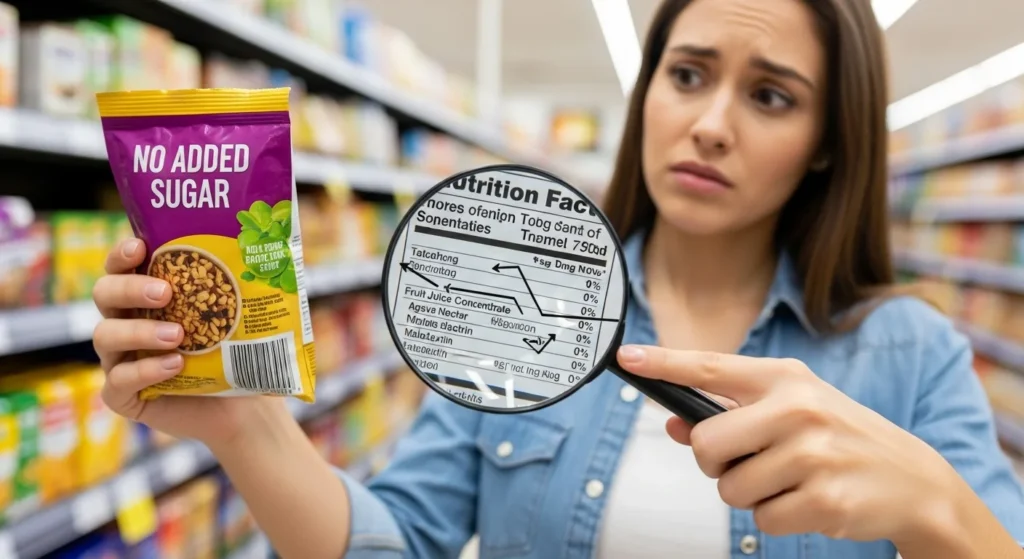
That’s why packaging screams things like:
- High Protein
- Low Fat
- Zero Sugar
- Keto-Friendly
- Only 100 Calories
These claims work because they trigger quick emotional decisions.
Balance is slower.
Balance requires thinking.
And food marketing rarely rewards slow thinking.
So instead of encouraging dietary patterns, labels encourage nutrient obsession.
The “Protein Halo” Is a Perfect Example
Walk through any supermarket and you’ll see it:
Protein cookies
Protein chips
Protein cereal
Protein brownies
The label becomes a badge of health.
But here’s the missing balance question:
Protein compared to what?
If a product has protein but also:
- refined starch
- emulsifiers
- high sodium
- low nutrient diversity
…it may not improve the diet much at all.
Yet consumers feel safer because one number is high.
That is how imbalance gets marketed as wellness.
Balance Is a Relationship — Labels Show Isolated Snapshots
Balanced nutrition depends on relationships:
- carbs + fiber
- fats + fat-soluble vitamins
- protein + total calorie intake
- sodium + potassium-rich foods
- sugar + meal structure
Labels show nutrients separately.
But the body experiences food together.
For example:
Eating sugar inside yogurt with fat and protein is different than drinking sugar in soda.
Same grams.
Different impact.
Balance lives in combinations.
Labels live in isolation.
Comparison Table: What Labels Show vs What Balance Requires
| Nutrition Labels Focus On | Balance Focuses On |
|---|---|
| Single product nutrients | Whole dietary patterns |
| Numbers per serving | Food quality over the day |
| Individual macronutrients | Nutrient diversity & context |
| Marketing-friendly claims | Long-term health support |
| “Low” or “High” nutrient targets | Overall moderation and variety |
| Short-term decisions | Sustainable eating habits |
Why Balance Doesn’t Fit Into a Marketing Box
Balance is not dramatic.
It doesn’t create urgency.
It doesn’t create a hero nutrient.
Because balance usually looks like:
- eating vegetables most days
- not fearing carbs
- having enough fiber
- including healthy fats
- moderating added sugar
- not over-fixating on one number
That doesn’t sell like “20g protein!”
Food companies want extremes.
Balance is quiet.
And quiet doesn’t stand out on a package.
The Daily Value System Also Creates Confusion
Nutrition labels rely heavily on % Daily Value.
That sounds helpful…
but it has limitations.
Daily Values are based on generalized needs.
They don’t reflect:
- individual lifestyles
- different cultures
- athletic demands
- aging-related changes
- meal timing
- overall food quality
So someone may think:
“I hit 100% of something… therefore I’m balanced.”
But the body doesn’t work on nutrient checklists.
It works on dietary harmony.
Real-Life Example: The Snack Swap Trap
Imagine two afternoon snacks:
Snack A
A “low sugar” protein bar
- 180 calories
- 15g protein
- 2g sugar
Snack B
Greek yogurt + berries + nuts
- 220 calories
- natural protein
- fiber
- antioxidants
- healthy fats
Snack A looks better on the label.
Snack B is often more balanced overall.
But Snack B requires understanding context.
Snack A requires reading one claim.
That’s why balance gets lost.
Hidden Tip: Ingredient Lists Reveal Balance Better Than Numbers
If you want the most honest clue…
Don’t start with calories.
Start with the ingredient list.
Balanced foods usually have:
- recognizable ingredients
- fewer additives
- natural fiber sources
- less isolated starch and sugar
Ultra-processed “nutrition-focused” foods often contain:
- protein isolates
- gums and emulsifiers
- artificial sweeteners
- industrial oils
Numbers can be engineered.
Ingredients are harder to hide.
Mistakes People Make When Labels Replace Balance
Here are the most common traps:
- Thinking low-calorie automatically means healthy
- Chasing high protein without fiber
- Avoiding fat entirely (and losing nutrient absorption)
- Treating snacks like nutrient supplements
- Repeating the same “healthy” packaged food daily
- Ignoring food variety because the label looks good
Balance is not about perfection.
It’s about pattern.
Actionable Steps: How to Eat With Balance Despite Label Limitations
You don’t need to ignore labels…
You just need to use them smarter.
The Balanced Label Checklist
Next time you shop, ask:
- What is this food replacing in my diet?
- Does it add fiber or remove it?
- Is this whole-food based or engineered?
- Would I eat this daily or occasionally?
- Does it support variety or repetition?
That’s balance thinking.
Not label thinking.
Why This Matters Today (Evergreen Truth)
Modern food is increasingly designed for:
- convenience
- hyper-palatability
- marketing appeal
- nutrient manipulation
Labels are necessary…
but not sufficient.
If balance disappears from the conversation, diets become:
- nutrient-chasing
- restrictive
- inconsistent
- emotionally stressful
The future of healthy eating isn’t more label math.
It’s more dietary context.
Balance is what keeps nutrition human.
Key Takeaways
- Food labels rarely mention balance because balance is about patterns, not products
- Companies market single nutrients because they sell better than moderation
- Numbers can distract from food quality and ingredient reality
- Balanced eating depends on variety, context, and long-term habits
- Ingredient lists often reveal more truth than front-of-package claims
- Smart shoppers use labels as tools—not as definitions of health
FAQ: Why Labels Rarely Mention Balance
1. Why don’t nutrition labels explain what a balanced diet is?
Because labels are regulated for product information, not dietary education or meal context.
2. Can a food be “healthy” but still unbalanced?
Yes. A single food may have good nutrients but still not support dietary variety or moderation if overused.
3. Why do labels focus so much on protein now?
Protein is highly marketable, and consumers associate it with fitness and weight control, even when context is missing.
4. What matters more than calories on a label?
Ingredient quality, fiber, added sugars, and how the food fits into your overall eating pattern.
5. How can I shop more balanced without overthinking?
Use a simple checklist: prioritize whole foods, watch added sugars, seek fiber, and avoid relying on one “hero nutrient.”
Conclusion: Labels Show Numbers — Balance Shows Life
Nutrition labels are useful.
They provide transparency.
They help compare products.
But they were never meant to teach balance.
Because balance isn’t a product feature.
It’s a lifestyle pattern built over weeks, not seconds in an aisle.
The healthiest diets aren’t built from chasing “high protein” or “low sugar” claims.
They’re built from variety, moderation, and real food context.
So next time you flip a package over…
Remember:
The label tells you what’s inside.
Balance tells you what it means.