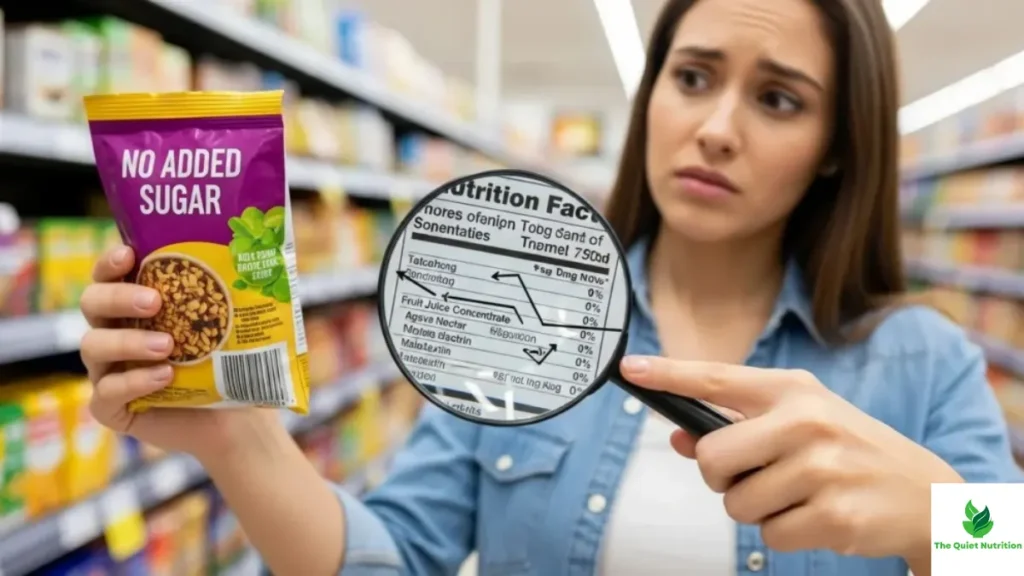
Two products can have nearly identical numbers on their nutrition labels — same calories, same sugar, same protein — and still affect your body in meaningfully different ways. That’s not a labeling error. It’s a labeling limitation. The Nutrition Facts panel was never designed to capture everything that matters about a food, and understanding what it leaves out is just as important as understanding what it includes.
The Label Tells You What’s There, Not How It’s Put Together
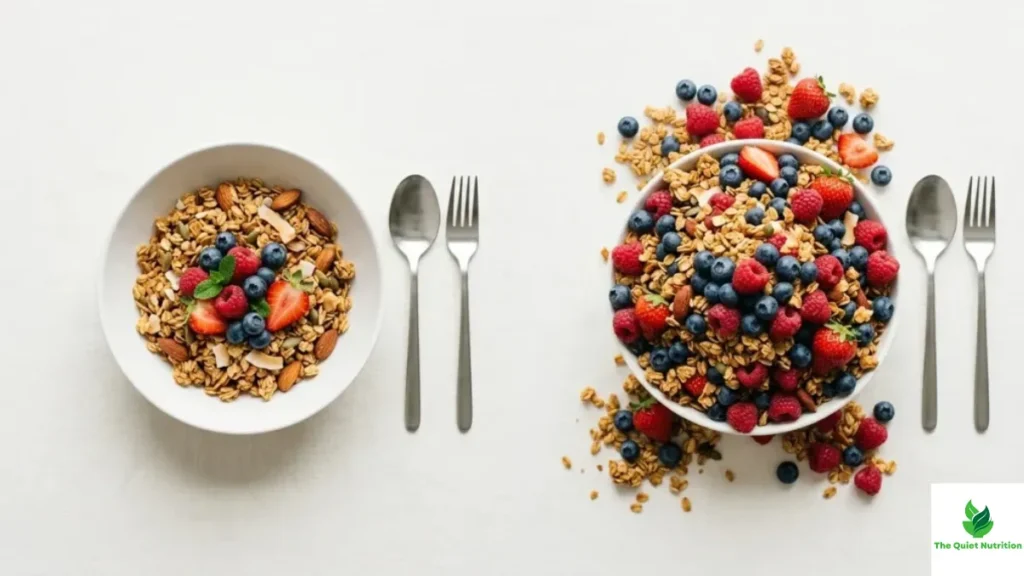
Every food is more than the sum of its listed nutrients — it’s a physical structure researchers call the food matrix, the way sugars, fats, fibers, vitamins, and minerals are physically bound together within the food itself. This structure affects a food’s appearance, flavor, and texture, but it also affects something the label never mentions: how easily your body can actually access and absorb those nutrients. A nutrient tightly bound within a food’s matrix may be released slowly during digestion, while the same nutrient in a more processed form can be absorbed far more quickly — even if both products list an identical amount on their label.
Two foods with the same grams of sugar can genuinely behave differently inside your body once digestion begins, and nothing on the standard label conveys that distinction.
Glycemic Impact Almost Never Makes It Onto the Label
The glycemic index — a measure of how quickly a carbohydrate-containing food raises your blood sugar compared to pure glucose — is left off nearly every nutrition label you’ll encounter. This isn’t a deliberate omission so much as a practical one: measuring glycemic index requires expensive, specialized human testing that goes well beyond standard nutrition analysis, and results can vary meaningfully between labs and individuals. The consequence is that two products with identical total carbohydrate counts can have very different effects on blood sugar, and the label simply has no way to show you that difference.
Processing Level Isn’t Reflected in the Numbers Either
You won’t find any indication on a standard nutrition label of how heavily a food was processed to reach its final form — a distinction researchers increasingly consider important for long-term health outcomes. Interestingly, research has found that a food’s degree of processing doesn’t necessarily predict its glycemic index or glycemic load; one large analysis found no meaningful relationship between processing classification and how foods affect blood sugar, with some heavily processed grain products actually showing improved glycemic response compared to minimally processed versions. This tells us something important: the potential harms linked to heavily processed foods likely come from other factors entirely, like energy density, engineered palatability, or the sheer number of additives — none of which show up as a single number anywhere on the panel.
Some Countries Are Testing a Fix — Separately From the Nutrition Facts Panel
Recognizing this gap, some countries have begun experimenting with a separate warning label specifically to flag ultra-processed foods, layered on top of existing nutrition labeling rather than replacing it. Early research on these labels suggests they can help consumers more accurately identify ultra-processed products, reduce how healthy those products are perceived to be, and discourage consumption — a signal that processing level genuinely changes buying behavior once it’s made visible, which it currently isn’t on a standard label.
The Additives List Doesn’t Explain Cumulative Effects
A label can disclose every individual additive in a product without ever addressing how those additives interact with each other, or how a diet built from many products each containing a handful of additives adds up in total. The Nutrition Facts panel is designed around a single product, evaluated on its own — not around the broader pattern of how that product fits into your everyday diet alongside dozens of others making similar individually-small contributions.
Satiety and Palatability Are Invisible on Paper
Nothing on a nutrition label tells you how filling a food will actually feel, or how engineered it may be to encourage you to keep eating past genuine fullness. Two products with the same calorie count can leave you satisfied for very different lengths of time, depending on factors like fiber content, food matrix structure, and formulation — none of which are captured by the standardized nutrient breakdown.
Why This Gap Matters More Than It Seems
None of this means the Nutrition Facts label is useless — it remains one of the most valuable, standardized tools available for comparing packaged foods at a glance. But treating the label as a complete verdict on a food’s healthfulness overstates what it was ever built to do. It was designed to disclose specific nutrient quantities, not to capture digestion speed, processing degree, nutrient bioaccessibility, or how a food actually behaves once it’s inside your body.
How to Fill In the Missing Context Yourself
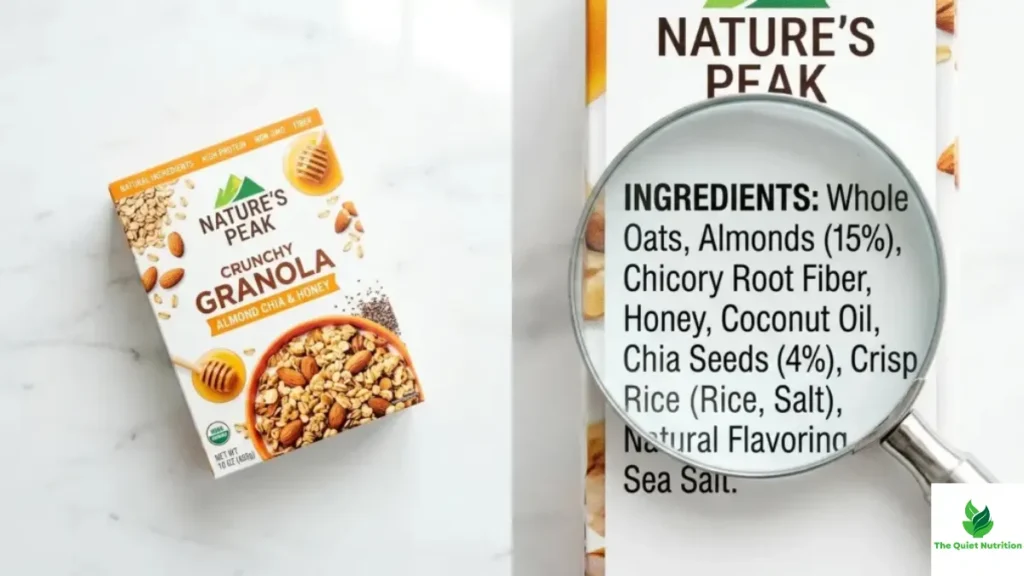
Since the label can’t tell the whole story, a few habits help close the gap. Favor foods closer to their whole, unprocessed form when possible, since the food matrix tends to stay more intact the less a food has been altered. Pay attention to the ingredient list length and composition as a rough proxy for processing level, since that information isn’t captured in the numbers above it. And remember that identical macronutrient counts don’t guarantee identical effects on blood sugar, satiety, or long-term health — the label is a starting point for comparison, not a complete biological explanation.
The Bottom Line
A nutrition label answers a narrow, specific question: how much of each listed nutrient does this serving contain? It was never designed to answer the broader question of what a food actually does to your body once you eat it — glycemic impact, nutrient bioaccessibility, processing degree, and satiety all live outside its scope. Recognizing that gap doesn’t make the label less useful. It just means the label is one input into a healthy choice, not the entire answer.
Sources
- American Journal of Clinical Nutrition – Food Processing According to the NOVA Classification Is Not Associated with Glycemic Index and Glycemic Load
- ScienceDirect – Ultra-Processed Foods Have a Lower Glycemic Index and Load Compared to Minimally Processed Foods
- PMC (NIH) – “Warning: Ultra-Processed”: An Online Experiment Examining Ultra-Processed Warning Labels
- Processed Food Site – A Holist and a Reductionist Disagree on the Importance of the Food Matrix
- Glycemic Index (GI Foundation) – Ultra-Processed Foods, GI and GL
- Logi Food Coach – Why Glycemic Index Is Missing on Most Labels

Aarti Solanki, B.Sc. (Food Science), is a food science writer passionate about making nutrition simple and evidence-based. She creates well-researched, easy-to-understand articles on healthy eating, food science, and nutrition, using information from trusted scientific and public health sources.


Pingback: How Packaging Creates the Illusion of “Clean Ingredients” Without Full Disclosure