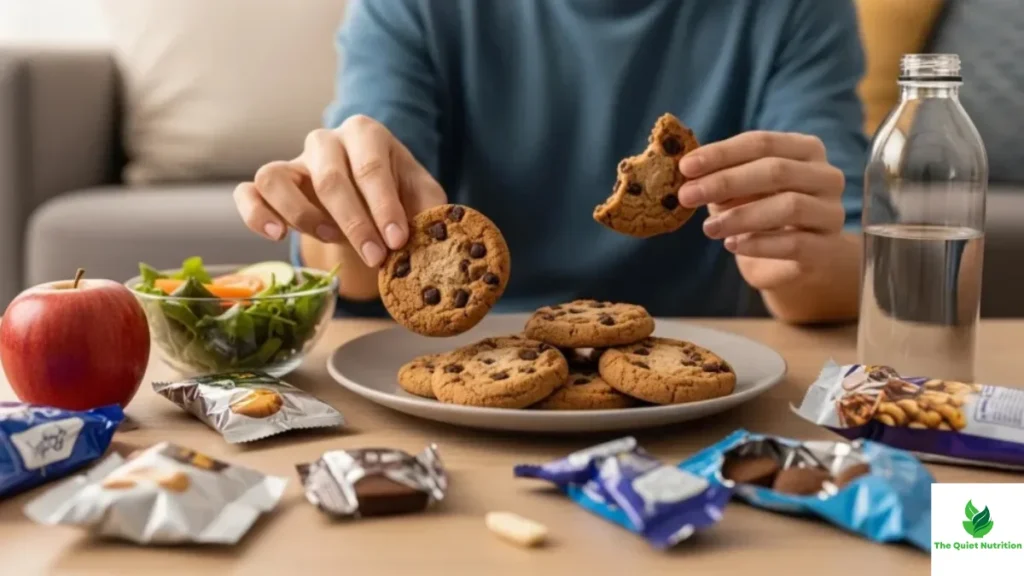
It sounds backwards: a label meant to help you eat better ends up making you eat more. But that’s exactly what a growing body of research has found. The word “healthy” on a package doesn’t just change what you think about a food — it changes how much of it you’re willing to eat, often without you noticing it happening.
The Health Halo Effect Doesn’t Stop at Perception
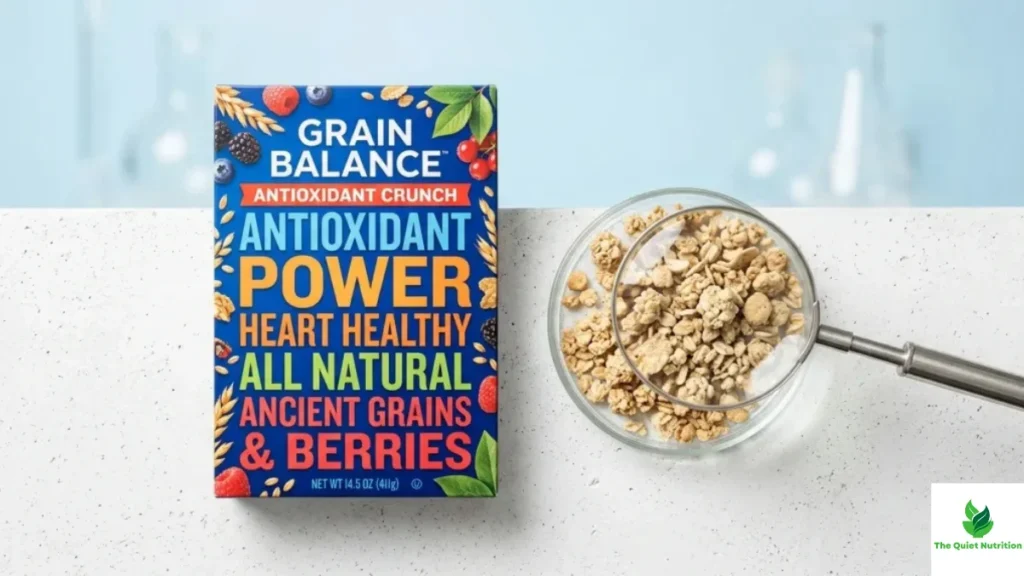
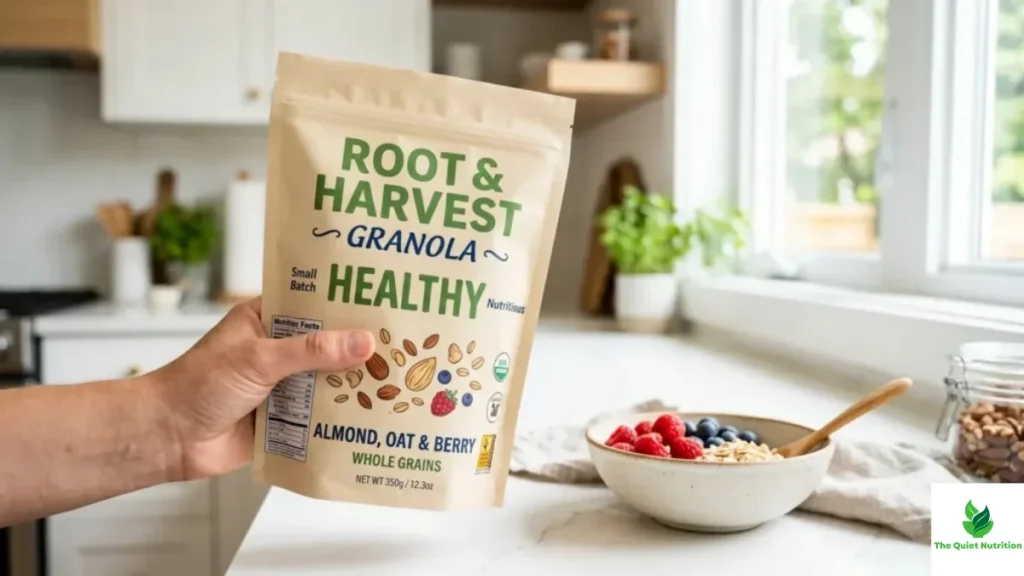
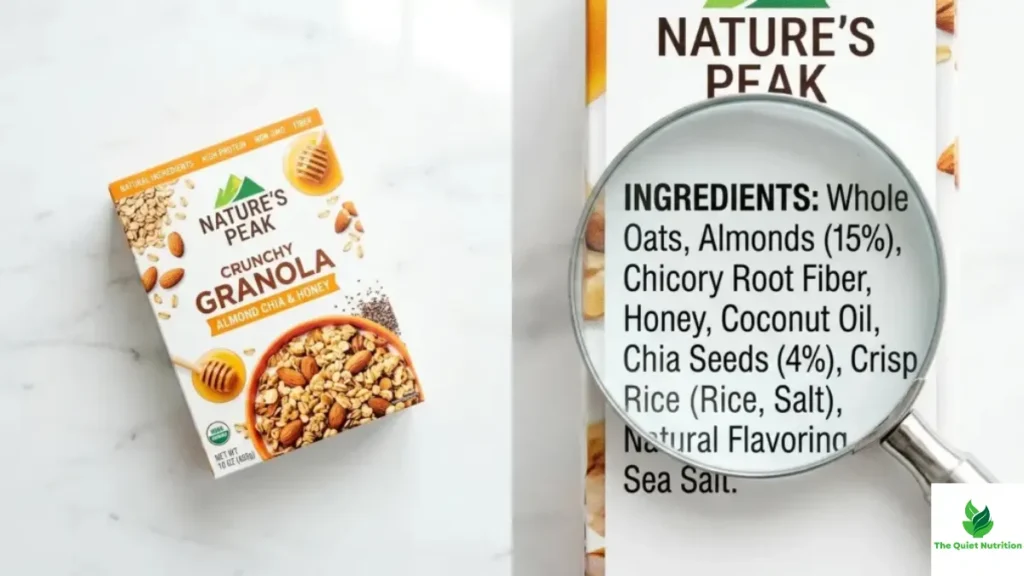
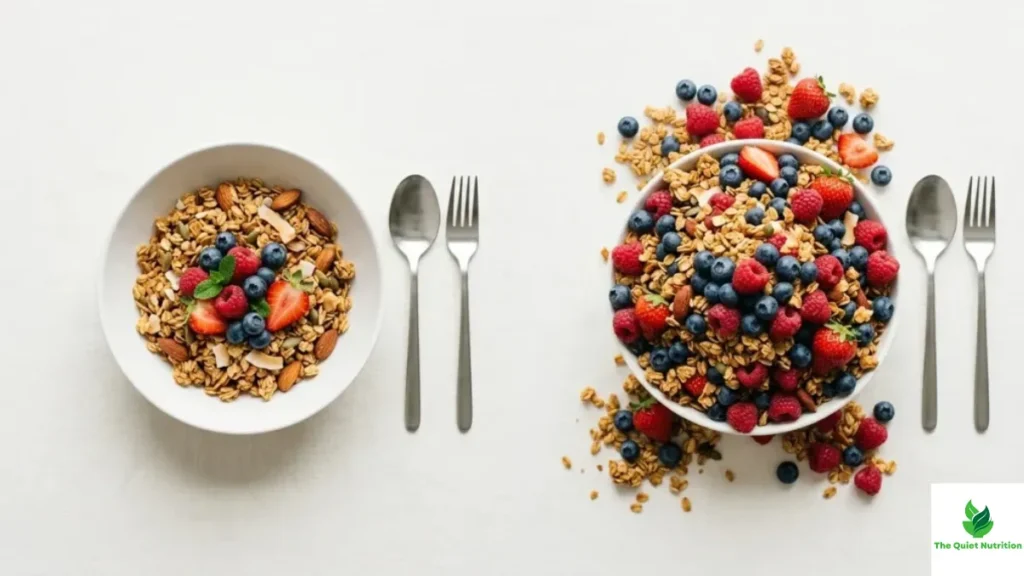
Researchers call this the health halo effect — the tendency for one positive claim to make an entire product seem healthier than it actually is. What’s less well known is that this effect goes beyond perception and directly influences behavior. Studies have found that people often eat larger portions of foods labeled as “healthy,” based on the mistaken belief that the food is lower in calories or more nutritious than it really is — sometimes resulting in people consuming more total calories than they would have from an unlabeled version of the same food.
A Nationally Representative Study Confirmed the Pattern
This isn’t limited to small lab experiments. A large, nationally representative survey of over 1,000 adults tested how different claims — “low in fat,” a cholesterol-lowering health claim, and a “fuller for longer” satiety claim — affected perceptions and portion selection across everyday foods like cereal, soup, lasagna, and yogurt. Participants didn’t just rate labeled products as healthier and tastier; they also selected different portion sizes based purely on which claim appeared on the package, even when the underlying product hadn’t changed at all.
Restaurants Trigger the Same Effect on a Larger Scale
The health halo doesn’t stay confined to packaged food. Research on fast-food restaurants found that people are more likely to underestimate the calorie content of a main dish and choose higher-calorie sides, drinks, or desserts when the restaurant is perceived as health-focused, compared to when it isn’t. This pattern helps explain a puzzle that has confused public health researchers for years: even as more restaurants introduced lower-calorie menu items, it didn’t translate into the expected drop in total calorie intake or obesity rates. The presence of a “healthy” option at the restaurant seemed to give people implicit permission to indulge elsewhere on the menu.
Even Ethical Claims Unrelated to Nutrition Can Trigger It
Perhaps the most surprising finding is how broadly this bias extends. Research has shown that labeling a product as “fair trade” — a claim that says nothing about calories or nutrition — still led people to judge that product as lower in calories than an identical item without the label. The same effect appeared when a company was simply described as treating its workers ethically. The halo effect, in other words, doesn’t require an actual health claim at all. Any signal of “goodness” can quietly lower your guard around how much you eat.
Why This Bias Is So Easy to Fall Into
The explanation researchers point to is a concept called spreading-activation: when one positive idea is triggered in your mind — like a nutrition claim — related positive associations activate alongside it, even ones that were never stated. A “low in fat” label doesn’t just tell you about fat content; it quietly activates a broader sense of “this is a good, guilt-free choice,” which can extend to portion size decisions the label never actually addressed.
Calorie Estimation Gets Genuinely Harder, Not Just Biased
This isn’t only about feeling permitted to eat more — it’s also about miscalculating how much you’re actually consuming. Research on food combinations has found that people commonly underestimate the total calorie content of a meal when a “healthy” item is paired with an indulgent one, since the presence of the healthy item skews the mental math for the whole plate. Because most nutrition labels describe calories per serving rather than per meal, and people are generally poor at estimating real portion sizes, that underestimation compounds rather than corrects itself over the course of a meal.
There’s a Simple Way to Break the Bias
Interestingly, researchers found a remarkably simple fix. When people were prompted to “consider the opposite” — to pause and ask whether a health claim might not tell the whole story — the biasing effects on calorie estimation and side-dish choices disappeared. This suggests the health halo isn’t a fixed flaw in judgment; it’s a fast, automatic mental shortcut that a moment of deliberate skepticism can interrupt.
Even Informed Shoppers Aren’t Immune
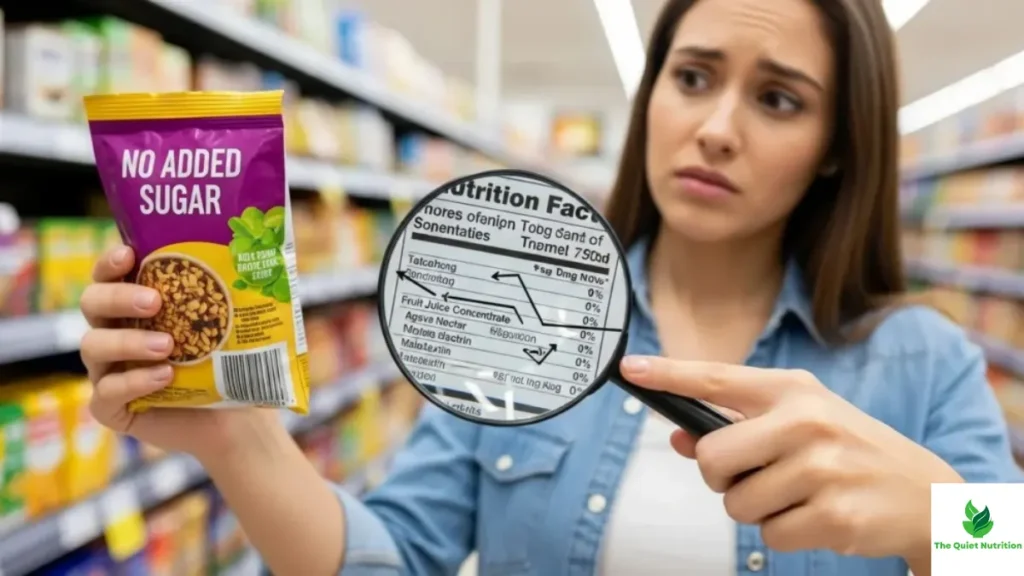
Qualitative research asking people directly about their shopping habits found that most participants still viewed products carrying health claims as inherently healthier, even when they intellectually understood that claims can be misleading. In one revealing case, a chocolate bar sold in a health food store confused participants — despite scoring poorly on an objective nutrient profile, a significant share of shoppers still described it as a healthy option simply because of where it was sold and how it was marketed.
How to Actually Protect Your Portions
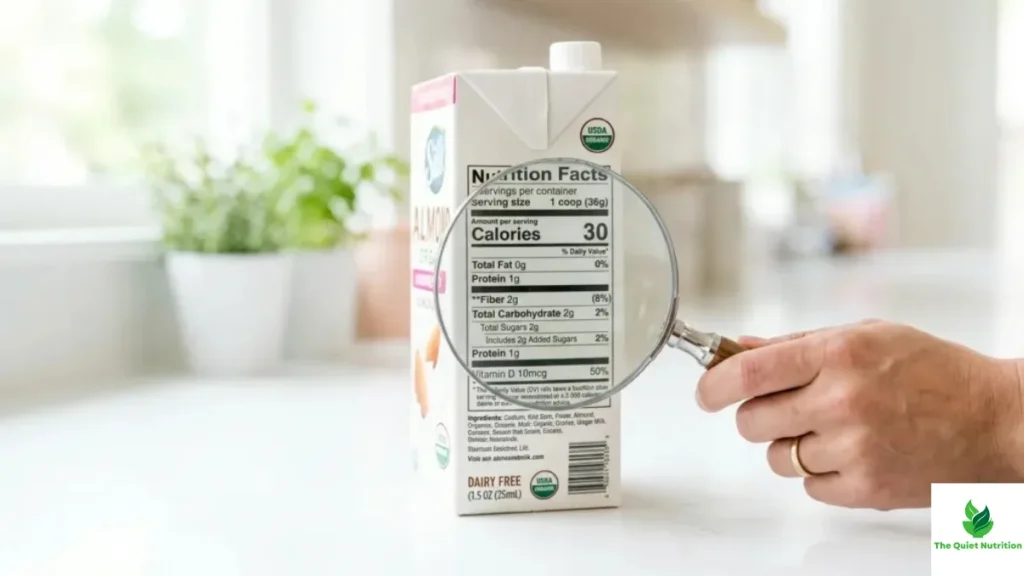
Awareness alone doesn’t fully cancel out the health halo effect, since it operates below the level of conscious reasoning. What does help is building in a deliberate pause: check the actual serving size and calorie count on the label rather than trusting the front-of-package claim, and when a meal includes a “healthy” component alongside something more indulgent, resist letting the healthy item talk you into a bigger portion of the other.
The Bottom Line
A “healthy” claim can be entirely accurate and still lead you to eat more than you intended, simply because of how your brain processes reassuring information. The fix isn’t to distrust every health claim — it’s to recognize that even honest claims can trigger an automatic, portion-inflating response, and to build in the small habit of checking the numbers before deciding how much to serve yourself.
Sources
- PMC (NIH) – The Impact of Nutrition and Health Claims on Consumer Perceptions and Portion Size Selection
- PMC (NIH) – Are the Claims to Blame? A Qualitative Study to Understand the Effects of Nutrition and Health Claims
- ResearchGate – Effect of Health Halo on Nutritional Inferences and Consumption
- ResearchGate – The Biasing Health Halos of Fast-Food Restaurant Health Claims
- Oxford Academic – Investigating Cognitive Biases: Does Halo Effect From Nutrition or Health Claims Drive Negative Calorie Illusion
- Institute of Food Technologists – Gauging the Health Halo Effect

Aarti Solanki, B.Sc. (Food Science), is a food science writer passionate about making nutrition simple and evidence-based. She creates well-researched, easy-to-understand articles on healthy eating, food science, and nutrition, using information from trusted scientific and public health sources.

Pingback: “Free From” Doesn’t Mean Healthy: Why Food Labels Obsess Over What’s Missing Instead of What Matters