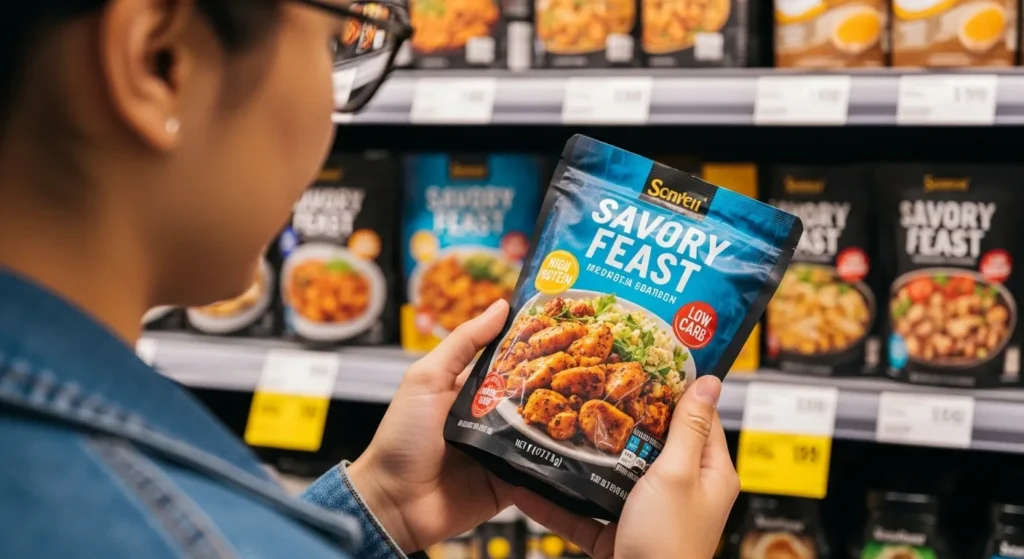
The Label Isn’t Trying to Educate You — It’s Trying to Convince You
Pick up any packaged food.
Your eyes are pulled to:
- “High Protein”
- “Low Fat”
- “Zero Sugar”
- “Made with Superfoods”
It feels informative. Helpful. Responsible.
But labels aren’t designed to teach nutrition.
They’re designed to win attention in seconds, influence emotion, and trigger purchase.
That’s not a conspiracy.
It’s commerce.
And understanding this distinction explains why labels often spotlight what sells—while quietly ignoring what actually nourishes.
Food Labels Are Marketing First, Information Second
Every food package has two jobs:
- Meet legal requirements
- Sell the product
The front of the package exists almost entirely for job #2.
It highlights:
- Trends consumers care about
- Nutrients currently fashionable
- Words that reduce guilt or hesitation
Nutrition quality, however, is rarely simple, trendy, or fast to explain.
So it gets pushed to the back—or left out entirely.
Nutrients That Sell Change With Culture
What labels emphasize shifts over time.
There was a time when:
- “Low fat” dominated shelves
- Calories were everything
- Cholesterol was the villain
Now we see:
- “High protein” everywhere
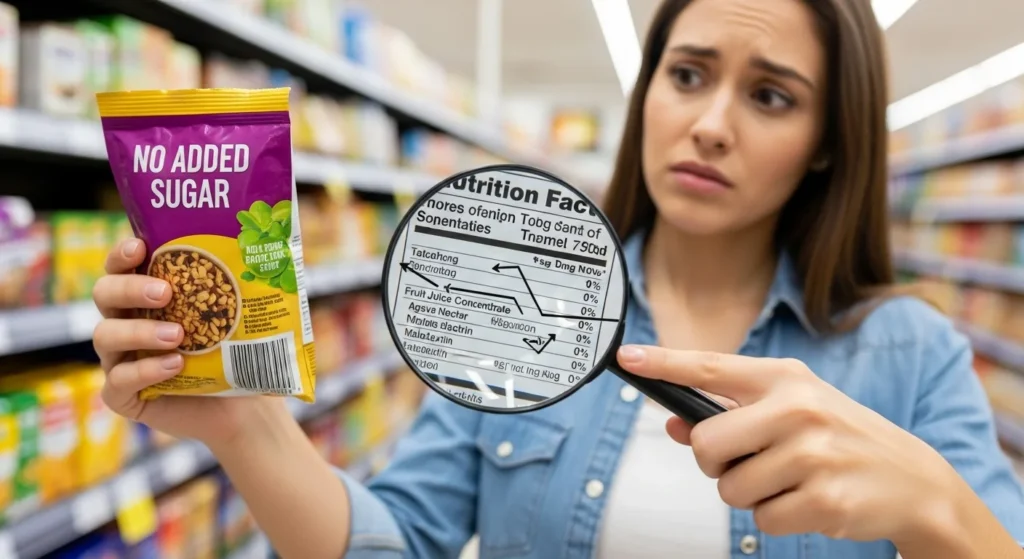
- “No added sugar” badges
- “Plant-based” claims
These shifts don’t reflect sudden breakthroughs in biology.
They reflect consumer interest.
Labels follow attention, not nourishment.
Why Whole Nutrition Doesn’t Fit on the Front
True nourishment involves:
- Food structure
- Processing level
- Ingredient quality
- Satiety
- Eating patterns
None of these are:
- Easily summarized
- Immediately exciting
- Guaranteed to sell
“Supports long-term satiety through intact food structure” doesn’t move units.
“High protein” does.
Marketing Rewards Simplicity — Nutrition Is Complex
Marketing works best when messages are:
- Short
- Positive
- Binary
Nutrition doesn’t work that way.
Foods aren’t simply:
- Good or bad
- Healthy or unhealthy
They’re contextual.
But nuance doesn’t sell well on a crowded shelf.
So labels simplify nutrition into single selling points, even when those points say little about the whole food.
Real-Life Example: The Protein Obsession
Protein is one of the most marketed nutrients today.
Why?
Because it sells.
It signals:
- Fitness
- Control
- Satiety
- Modern health awareness
So foods add protein isolates to:
- Cookies
- Chips
- Sweetened bars
The label looks impressive.
But protein quantity alone doesn’t guarantee:
- Better nutrition
- Better satisfaction
- Better eating patterns
The label highlights what sells—not what nourishes.
What Nourishes Is Often Invisible on Labels
Some of the most important aspects of food quality rarely appear on the front:
- Degree of processing
- Food matrix integrity
- Ingredient sourcing
- Digestive impact
- Satiety response
Why?
Because these are:
- Harder to regulate
- Harder to standardize
- Harder to market
So labels focus on what’s measurable—and marketable.
Comparison Table: What Labels Promote vs What Nourishes
| What Labels Promote | What Actually Nourishes |
|---|---|
| High protein | Protein quality and context |
| Low calories | Satiety and fullness |
| Zero sugar | Overall glycemic impact |
| Added vitamins | Bioavailability |
| Low fat | Fat quality |
| Trendy ingredients | Whole food structure |
| Buzzwords | Eating patterns |
Seeing this gap changes how you read packaging.
Why This Matters Today
Modern eaters are surrounded by:
- Ultra-processed convenience foods
- Conflicting nutrition advice
- Constant health messaging
When labels focus on selling points instead of nourishment:
- Confusion grows
- Trust erodes
- People blame themselves when food disappoints
Understanding the label’s purpose restores clarity—and self-trust.
Common Mistakes People Make Because of Labels
Many well-intentioned people fall into these traps:
- Choosing foods based on one highlighted nutrient
- Believing front-of-pack claims define health
- Ignoring ingredient order
- Feeling guilty when “healthy” foods don’t satisfy
- Chasing trends instead of patterns
These mistakes are understandable outcomes of marketing design.
How to See Past What Sells (Actionable Steps)
You don’t need to distrust labels.
You need to reframe them.
Practical Steps
- Treat front claims as advertisements
- Read ingredients before nutrition numbers
- Look for food, not nutrients, as the base
- Ask how the food fits into a meal
- Notice how it affects hunger afterward
Nourishment reveals itself through experience—not slogans.
Hidden Tip: Ask the Longevity Question
Instead of asking:
“Is this marketed as healthy?”
Ask:
“Could I eat this regularly and feel good?”
That question cuts through selling points instantly.
Key Takeaways
- Food labels are designed to sell first
- Nutrients highlighted reflect trends, not biology
- What nourishes is often complex and invisible
- Marketing simplifies nutrition into selling points
- Awareness restores confidence and calm
Once you understand the label’s goal, it loses power to mislead.
Frequently Asked Questions
1. Are food labels intentionally deceptive?
Not exactly—they’re optimized for marketing, not education.
2. Should I ignore front-of-pack claims?
View them as ads, not guidance.
3. Why do “healthy” foods sometimes disappoint?
Because selling points don’t equal nourishment.
4. What matters more than label claims?
Ingredients, processing level, and how food affects you.
5. How can I shop with less confusion?
Focus on patterns, not promises.
Conclusion: Labels Sell Food — You Decide How to Eat
Food labels aren’t villains.
They’re tools shaped by commerce.
When you stop expecting them to guide nourishment, and start using them as reference points—not decision-makers—eating becomes simpler, calmer, and more human.
That’s not about resisting marketing.
It’s about reclaiming perspective.
Disclaimer: This article is for general educational purposes only and does not replace personalized nutrition or medical advice.

Pingback: How Food Labels Trigger Fear — And Why Smart Shoppers Still Fall for It