The Change Most People Don’t Notice — Until It Matters
In your 20s, you could skip meals and feel fine.
In your 30s, it felt uncomfortable—but manageable.
By your 40s and beyond, the same habit suddenly shows consequences:
- Energy crashes
- Slower recovery
- Stubborn weight gain
- Muscle loss
- Brain fog
People assume this is “just aging.”
But what’s really happening is simpler — and more fixable.
Your body becomes less tolerant of nutritional inconsistency as you age.
Not because it’s weaker.
Because it becomes more strategic.
Aging Doesn’t Break the Body — It Tightens the Margin for Error
The human body is incredibly adaptive.
But with age, it stops wasting resources.
That means:
- Fewer backup systems
- Less excess storage
- Slower recovery from deficits
When nutrition is irregular, the body responds by conserving:
- Muscle tissue
- Hormonal output
- Metabolic flexibility
This isn’t decline.
It’s protective prioritization.
And consistency is what keeps those systems funded.
What Nutritional Consistency Really Means (And What It Doesn’t)
Consistency does not mean:
- Eating perfectly
- Tracking every calorie
- Following strict diets
It means:
- Regular meal timing
- Predictable protein intake
- Steady micronutrient supply
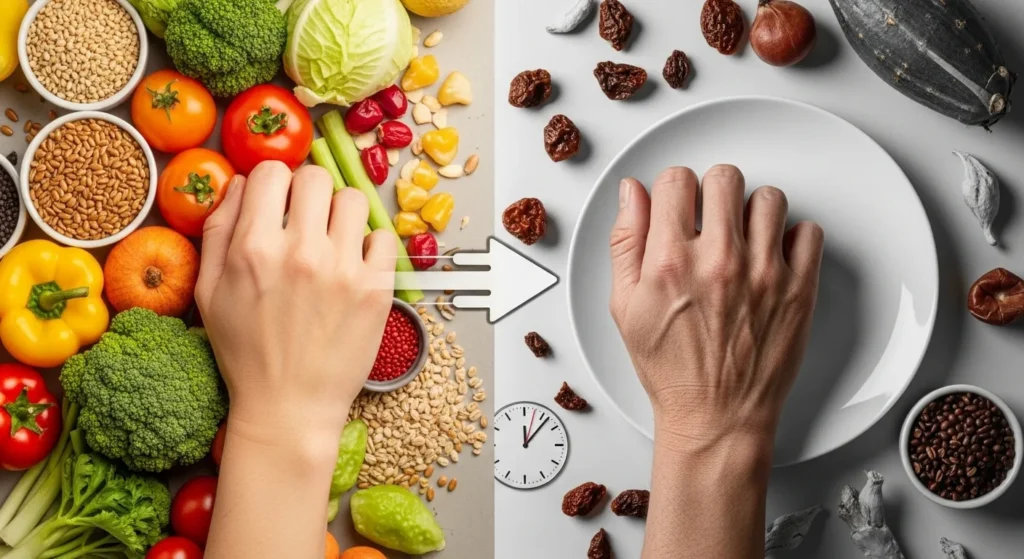
- Avoiding long, frequent gaps
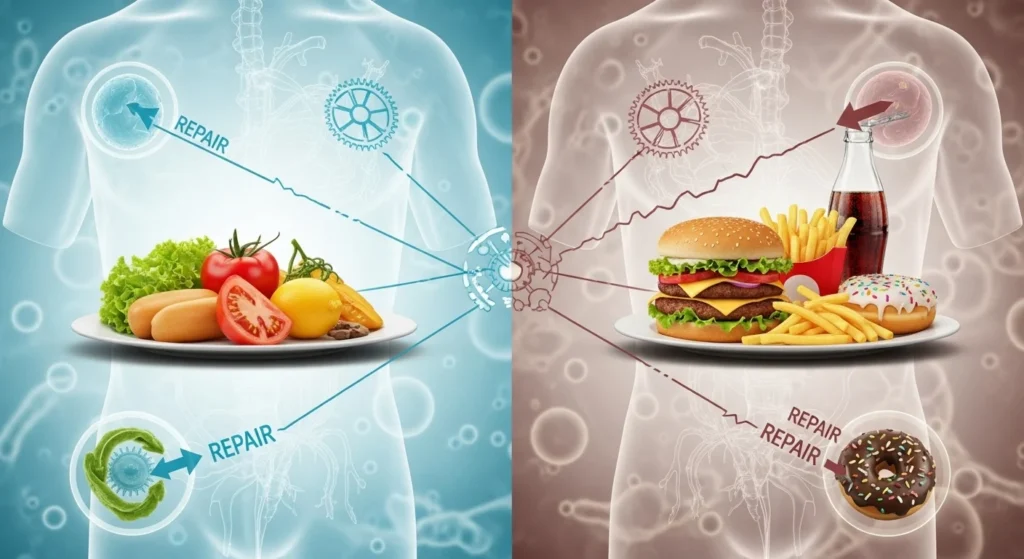
As explained by nutrition researchers at Harvard T.H. Chan School of Public Health, long-term health outcomes are shaped more by dietary patterns than isolated “good” or “bad” foods.
Your body responds to patterns — not promises.
Why Irregular Eating Hurts More With Age
Three biological shifts make consistency essential:
1. Reduced Muscle Sensitivity
Aging muscles require stronger, repeated signals (protein + energy) to maintain themselves.
2. Slower Glycogen Replenishment
Missed meals impact energy stability more dramatically.
3. Less Efficient Nutrient Absorption
Gaps compound faster when absorption declines.
These changes don’t cause illness.
They cause erosion.
Protein Timing Becomes More Important Than Quantity Alone
Many people focus on how much protein they eat.
With age, when you eat it matters just as much.
Irregular protein intake leads to:
- Missed muscle repair windows
- Increased muscle breakdown
- Lower metabolic rate
Research summarized by the National Institute on Aging highlights consistent protein intake as a key factor in preserving independence and physical function.
One large protein meal cannot compensate for days of under-consumption.
The Micronutrient Consistency Problem No One Talks About
Calories are easy to get.
Micronutrients are not.
Inconsistent eating leads to rolling deficiencies in:
- Magnesium
- Zinc
- B vitamins
- Potassium
These don’t trigger alarms.
They trigger:
- Fatigue
- Poor sleep
- Muscle cramps
- Reduced stress tolerance
Consistency keeps micronutrient levels stable enough for daily maintenance.
Consistency vs. Perfection: A Critical Difference
| Perfection-Focused Eating | Consistency-Focused Eating |
|---|---|
| All-or-nothing mindset | Flexible, repeatable habits |
| Long gaps between meals | Regular nourishment |
| Relies on motivation | Relies on structure |
| Higher burnout risk | Sustainable long-term |
| Short-term results | Long-term resilience |
Aging bodies reward reliability, not intensity.
Real-Life Example: Why the Same Diet Stops “Working”
Two people eat similar foods.
But:
- One eats regularly
- The other skips meals, then overeats
The second person experiences:
- Energy crashes
- Fat gain despite low intake
- Muscle loss
Same food quality.
Different consistency.
Over time, consistency wins.
Hidden Ways Inconsistency Sneaks In
Most people don’t realize how irregular their nutrition has become.
Common traps:
- Busy mornings → skipped breakfast
- Long workdays → delayed meals
- “Eating light” after heavy days
- Replacing meals with snacks
- Stress-induced appetite suppression
Each seems harmless.
Together, they undermine maintenance.
Why This Matters More Today Than Ever
Modern life creates nutritional chaos:
- Meetings replace meals
- Stress disrupts hunger signals
- Convenience foods lack micronutrients
At the same time, aging bodies require more reliable input, not less.
Public health guidance from organizations like the World Health Organization consistently emphasizes regular, balanced nutrition as a foundation for healthy aging.
Yet consistency is what modern life disrupts most.
Actionable Ways to Build Nutritional Consistency
You don’t need extreme change.
You need anchors.
Start with:
- Protein at every main meal
- Fixed meal windows
- Simple, repeatable foods
- Planned snacks when needed
- Eating even when appetite is low
Consistency is built through structure, not willpower.
Mistakes That Undermine Consistency With Age
Even health-conscious people make these errors:
- Overcorrecting after “bad” days
- Skipping meals to compensate
- Chronic under-eating during stress
- Fear-based restriction
- Waiting for hunger cues that no longer signal reliably
These patterns accelerate fatigue and muscle loss.
Emotional Relief: You Don’t Need to Be Perfect
One of the most freeing realizations with age is this:
Your body doesn’t need perfection.
It needs predictability.
Consistent nutrition reduces:
- Anxiety around food
- Energy volatility
- Weight cycling
- Physical wear
This is why people who eat simply — not obsessively — often age better.
Key Takeaways
- Aging reduces tolerance for nutritional gaps
- Consistency protects muscle, energy, and metabolism
- Protein timing matters more with age
- Irregular eating accelerates fatigue and muscle loss
- Simple, repeatable habits outperform strict diets
Frequently Asked Questions
1. Is consistency more important than food quality?
Both matter, but consistency determines whether quality can actually work.
2. Do I need to eat at exact times?
No. Regular windows matter more than rigid clocks.
3. Why don’t hunger cues work as well with age?
Hormonal signaling changes, making appetite less reliable.
4. Can skipping meals speed up aging?
Chronic skipping increases muscle loss and metabolic slowdown.
5. Is it too late to build consistency?
No. The body responds positively at any age.
The Quiet Shift That Protects Aging Bodies
As you age, nutrition stops being about control.
It becomes about support.
Consistency isn’t glamorous.
It doesn’t trend.
It doesn’t promise shortcuts.
But it quietly preserves:
- Strength
- Energy
- Independence
- Resilience
And that’s what aging well actually looks like.
Disclaimer: This article is for general educational purposes and does not replace individualized medical or nutritional advice.