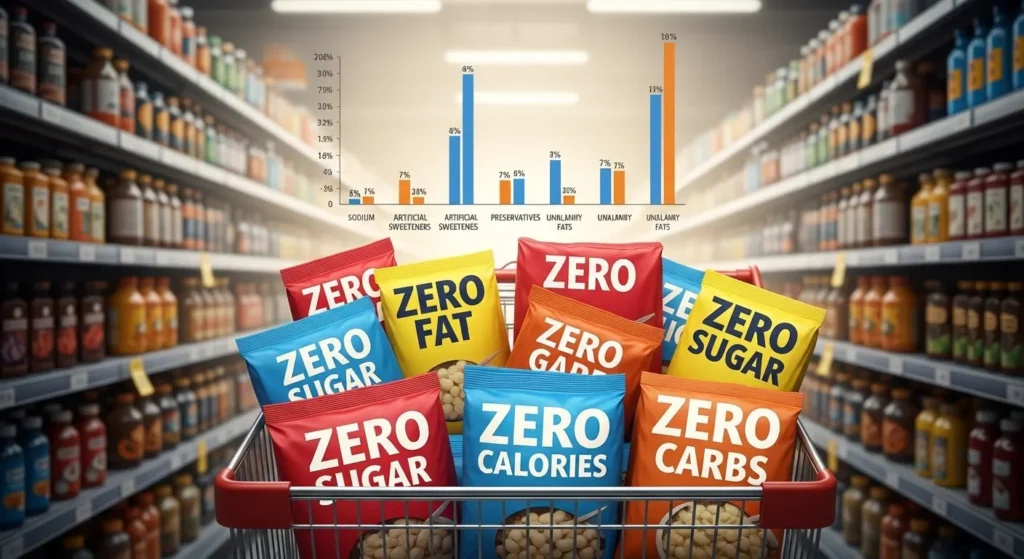
The Comforting Power of the Word “Zero”
Few words feel safer than zero.
Zero sugar.
Zero calories.
Zero fat.
Zero guilt.
That single word instantly lowers your guard. It suggests freedom. Control. Permission.
You don’t need to worry.
You don’t need to measure.
You don’t need to think.
But here’s the uncomfortable truth: “Zero” on a food label rarely means what people assume it means.
Not because labels are lying—but because they’re speaking a technical language that doesn’t match how humans eat, feel, or respond.
This article explains how “zero” claims can mislead, why they’re so powerful, and how to read them without fear, confusion, or obsession.
What “Zero” Actually Means on Nutrition Labels
On food labels, “zero” does not always mean none.
It often means:
- Below a legal threshold
- Rounded down
- Calculated per serving
- Isolated from real eating behavior
For example:
- “Zero calories” may mean less than 5 calories per serving
- “Zero sugar” may mean less than 0.5g per serving
Those numbers are legally allowed to round down to zero.
The label is technically correct—but biologically incomplete.
Serving Size Is the Foundation of Every “Zero” Claim
Most zero claims only work because of serving size.
If the serving size is small enough, almost anything can look like zero.
Common Examples
- Cooking sprays labeled “0 calories” (¼ second spray)
- Sweeteners labeled “0 sugar” (½ teaspoon serving)
- Drinks labeled “0 calories” per 100 ml, not per bottle
The food didn’t change.
The math did.
And most people don’t eat servings—they eat amounts.
“Zero Sugar” Doesn’t Mean Sugar-Free in Practice
“Zero sugar” is one of the most misunderstood claims.
It usually means:
- No added sugar above a threshold
- Sugar replaced with sweeteners
- Sugar present in forms not counted as sugar
What Often Replaces Sugar
- Sugar alcohols
- High-intensity sweeteners
- Refined starches
- Fruit concentrates
These still create:
- Sweet taste
- Habit reinforcement
- Appetite stimulation
The label says zero.
Your taste receptors disagree.
“Zero Calories” Foods Still Affect Eating Behavior
Calories are only one part of how food affects the body.
Even foods labeled “zero calorie” can:
- Trigger cravings
- Increase appetite later
- Encourage overeating elsewhere
Why?
Because:
- Sweet taste primes hunger
- Texture affects satiety
- Eating cues matter
A “zero calorie” drink consumed before a meal may lead to higher total intake later—something the label cannot show.
The Psychological Halo of Zero
Zero claims don’t just change numbers.
They change behavior.
When people believe something is “zero,” they often:
- Use more of it
- Consume it more frequently
- Stop paying attention to portions
- Justify other food choices
This is known as the licensing effect—when a perceived “good” choice gives permission for excess.
The danger isn’t the product.
It’s the false confidence it creates.
Zero Fat ≠ Healthy
“Zero fat” labels were once everywhere—and their impact still lingers.
Removing fat often requires:
- Added starches
- Added sugars
- Thickeners and stabilizers
Fat provides:
- Satiety
- Flavor satisfaction
- Eating completeness
Zero-fat foods may look virtuous but often leave people:
- Less satisfied
- Hungrier sooner
- Reaching for more snacks
The label celebrates absence.
Your body notices what’s missing.
Comparison Table: What “Zero” Claims Show vs What They Hide
| Zero Claim | What It Suggests | What’s Often Hidden |
|---|---|---|
| Zero calories | No impact | Rounding + appetite effects |
| Zero sugar | Sugar-free | Sweeteners or starches |
| Zero fat | Healthier | Lower satiety |
| Zero carbs | Keto-friendly | Sugar alcohols |
| Zero guilt | Safe to overeat | Behavioral overuse |
| Zero additives | Clean food | Processing still present |
| Zero sodium | Heart-friendly | Serving size distortion |
Seeing both sides restores balance.
Why This Matters Today
Modern food environments reward absence, not nourishment.
Marketing focuses on what’s removed:
- No sugar
- No fat
- No carbs
- No calories
But eating well isn’t about subtraction alone.
When “zero” becomes the goal, people often:
- Ignore food quality
- Distrust hunger signals
- Chase labels instead of satisfaction
Understanding zero claims helps you move from restriction to realism.
Common Mistakes People Make With Zero Claims
Even experienced label readers fall into these traps:
- Assuming zero means unlimited
- Ignoring serving size completely
- Trusting zero over ingredients
- Replacing meals with “zero” products
- Feeling confused when hunger increases
These outcomes aren’t personal failures—they’re predictable effects.
How to Use Zero-Label Foods Wisely (Actionable Steps)
Zero-labeled foods aren’t automatically bad.
They just need context.
Smart Ways to Use Them
- Treat zero claims as technical, not absolute
- Check serving size before trusting the claim
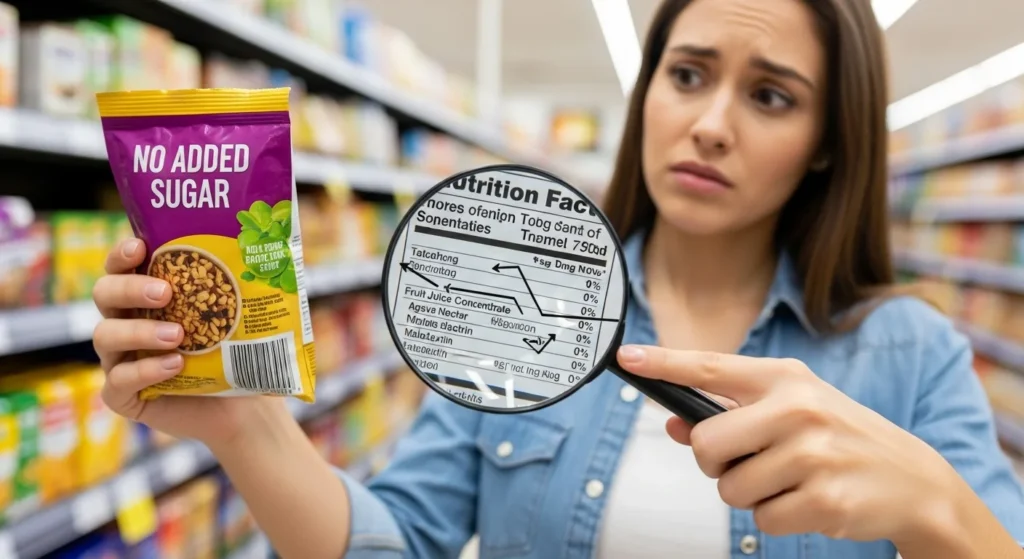
- Read ingredients to see what replaced what
- Notice how the food affects hunger later
- Use zero foods as tools—not foundations
When used intentionally, they can fit into a balanced pattern.
Hidden Tip: Ask the Replacement Question
Whenever you see “zero,” ask:
“What was removed—and what took its place?”
That single question reveals more than any label claim.
Key Takeaways
- “Zero” rarely means none—it means below a threshold
- Serving size makes or breaks zero claims
- Zero sugar often means sugar substitutes
- Zero calories can still influence appetite
- Awareness prevents overuse and confusion
Zero labels aren’t lies—but they’re incomplete stories.
Frequently Asked Questions
1. Are zero-labeled foods unhealthy?
Not necessarily—but they shouldn’t replace whole foods.
2. Is zero sugar better than regular sugar?
It depends on quantity, frequency, and overall diet.
3. Why do zero-calorie drinks increase hunger?
Sweet taste can stimulate appetite independent of calories.
4. Should I avoid zero-fat foods?
Use them carefully; fat contributes to satisfaction.
5. What matters more than zero claims?
Ingredients, eating patterns, and how food affects you.
Conclusion: Zero Isn’t Freedom — Understanding Is
“Zero” feels powerful because it promises control.
But food doesn’t work in absolutes.
Once you understand what zero claims actually mean—and what they leave out—you stop chasing emptiness and start choosing what truly supports you.
That’s not restriction.
That’s clarity.
Disclaimer: This article is for general educational purposes only and does not replace personalized nutrition or medical advice.