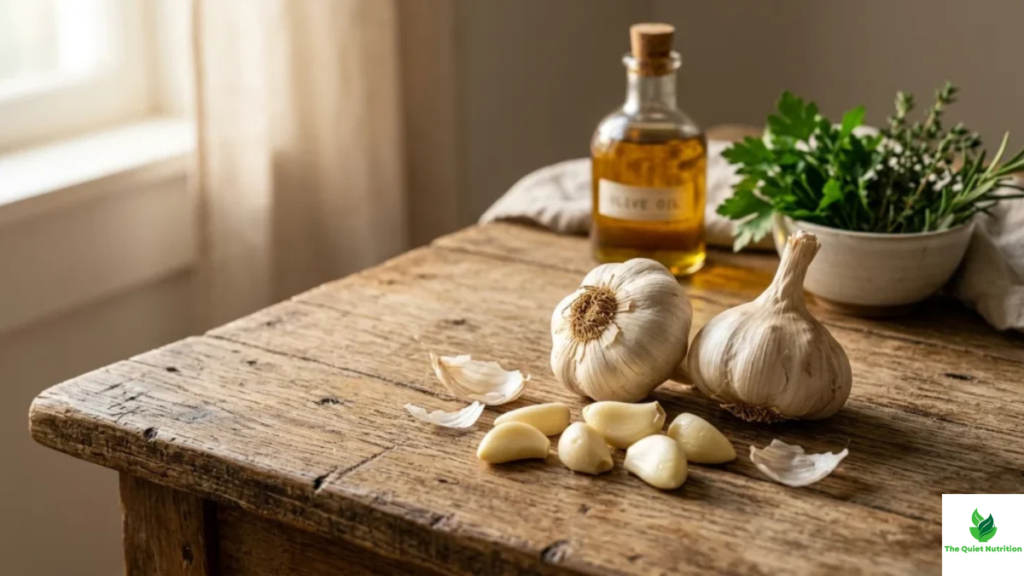
Walk into almost any kitchen in the world and you’ll find garlic somewhere — in a braided bunch on the counter, tucked in a mesh bag in the pantry, or sizzling in a pan the moment dinner prep begins. It’s one of the few ingredients that shows up in nearly every cuisine on earth, from Korean banchan to Italian sauces to Middle Eastern spreads. But garlic’s reputation isn’t built on flavor alone. For thousands of years, people have turned to this small, pungent bulb for its health-supporting properties, and modern research is now catching up to explain why.
So what’s actually going on inside a clove of garlic — and how much of its wellness reputation holds up?
The Compound Behind the Smell (and the Benefits)
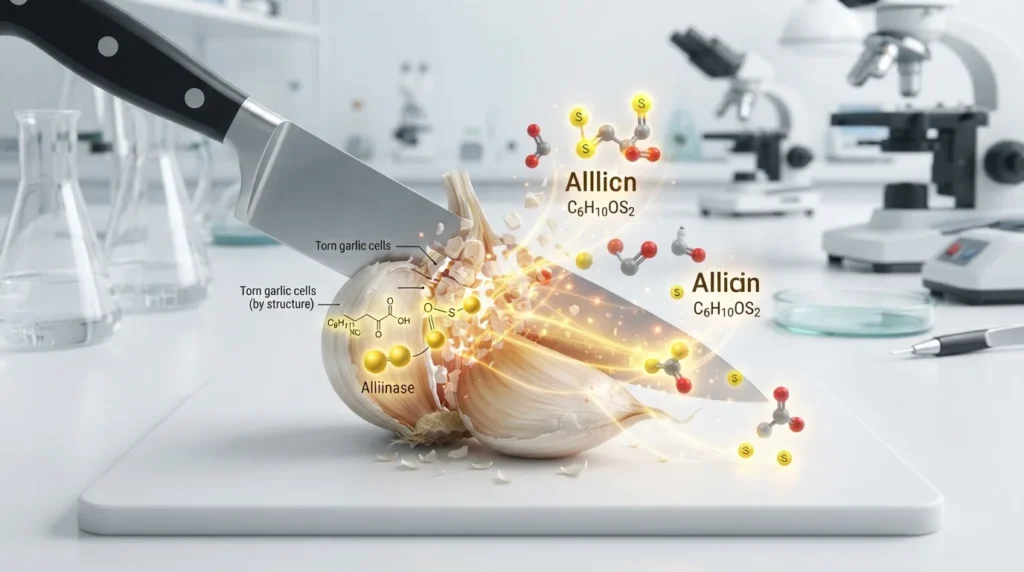
That sharp, unmistakable garlic smell comes from a compound called allicin. Here’s the interesting part: whole, unbroken garlic cloves don’t actually contain allicin. It only forms once you chop, crush, or chew the garlic, triggering a chemical reaction between two substances that are normally kept separate inside the plant’s cells. Once released, allicin is unstable and quickly breaks down into a family of other sulfur-based compounds, and it’s this whole group of compounds working together that researchers believe is responsible for most of garlic’s effects on the body.
Beyond allicin, garlic also brings a decent amount of vitamin C, vitamin B6, manganese, and selenium to the table, along with fiber and other plant compounds. It’s a low-calorie ingredient that packs in a surprising amount of nutritional value for something you typically use a clove or two of at a time.
Garlic and Heart Health
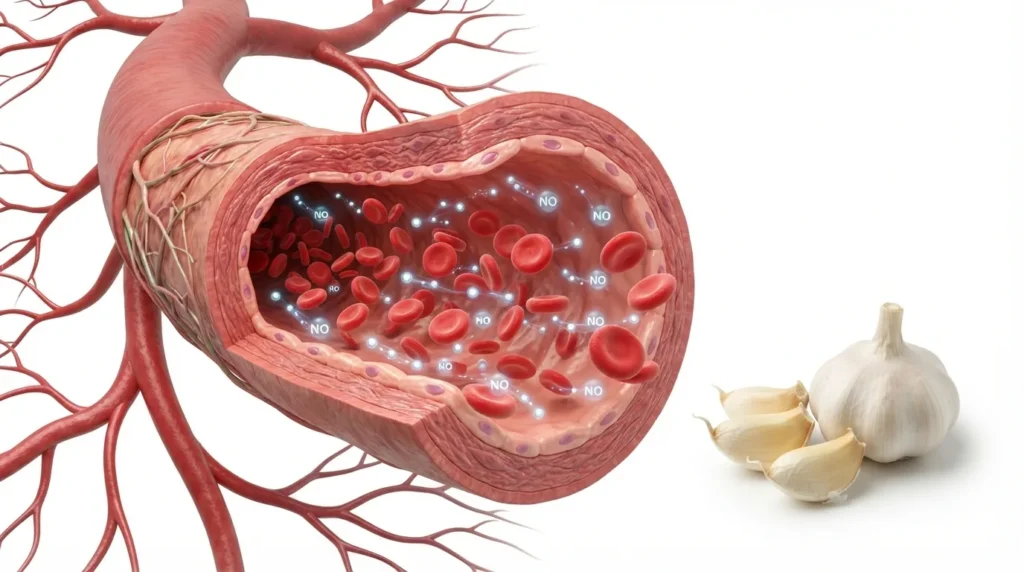
This is where garlic has been studied the most. Several clinical reviews have found that garlic supplements can produce a modest reduction in blood pressure, particularly in people who already have hypertension. The proposed mechanism is that garlic’s sulfur compounds help blood vessels relax and widen, partly by supporting the body’s natural nitric oxide production, which makes it easier for blood to flow without the heart having to work as hard.
Cholesterol is another area of interest. Research suggests garlic may modestly lower total cholesterol and LDL (“bad”) cholesterol in people whose levels are already elevated, though it doesn’t appear to do much for HDL (“good”) cholesterol or triglycerides. Worth noting: health researchers are careful to describe these effects as small rather than dramatic. Garlic isn’t a replacement for blood pressure or cholesterol medication, but as part of an overall heart-healthy diet, it seems to earn its place.
What About Immunity?
Garlic’s reputation as an immune booster is one of the most talked-about claims, and it’s a place where a little nuance helps. In lab studies, garlic’s compounds do show antimicrobial activity against a range of bacteria and viruses. That’s real. But when it comes to actual human studies — things like whether eating garlic helps you dodge a cold or recover faster from the flu — the research is much thinner than the internet headlines suggest. Reviews from the National Institutes of Health note that only a handful of well-designed studies have looked at this directly, and the results aren’t conclusive.
That doesn’t mean garlic is doing nothing for your immune system. It just means the “garlic cures colds” claim is more folklore-meets-early-science than settled fact.
Blood Sugar and Inflammation
There’s growing evidence that garlic may help modestly reduce fasting blood sugar and improve insulin sensitivity in people with diabetes, which matters because uncontrolled blood sugar is closely tied to cardiovascular risk. Garlic’s antioxidant compounds also appear to help calm chronic low-grade inflammation, a process linked to everything from joint pain to long-term cardiovascular strain.
Some early and animal-based research has even pointed to garlic’s antioxidants offering a protective effect against age-related cognitive decline, though this area of study is still developing and far from proven in humans.
The Cancer Question
You’ll sometimes see garlic marketed as cancer-fighting, and this is one area where it’s important to stay grounded in what the evidence actually shows. Major reviews from the National Center for Complementary and Integrative Health have found that eating garlic doesn’t appear to reduce stomach cancer risk, and its effect on colorectal cancer risk remains unclear, with some data even suggesting a possible increased risk from high-dose supplements in certain groups. Major health organizations don’t currently recommend garlic, in food or supplement form, as a cancer-prevention strategy. It’s a good reminder that “natural” and “proven” aren’t always the same thing.
A Food With History Behind It
Part of why garlic holds such a strong place in wellness culture is its long track record. Ancient Egyptian, Greek, and Indian texts describe garlic being used for everything from headaches to respiratory and digestive complaints, long before anyone understood what allicin was. That kind of centuries-deep, cross-cultural staying power is rare, and it’s one reason garlic gets taken seriously by modern researchers instead of being dismissed as a passing wellness trend.
Getting the Most Out of Your Garlic
If you want to make the most of garlic’s compounds, a little kitchen technique goes a long way:
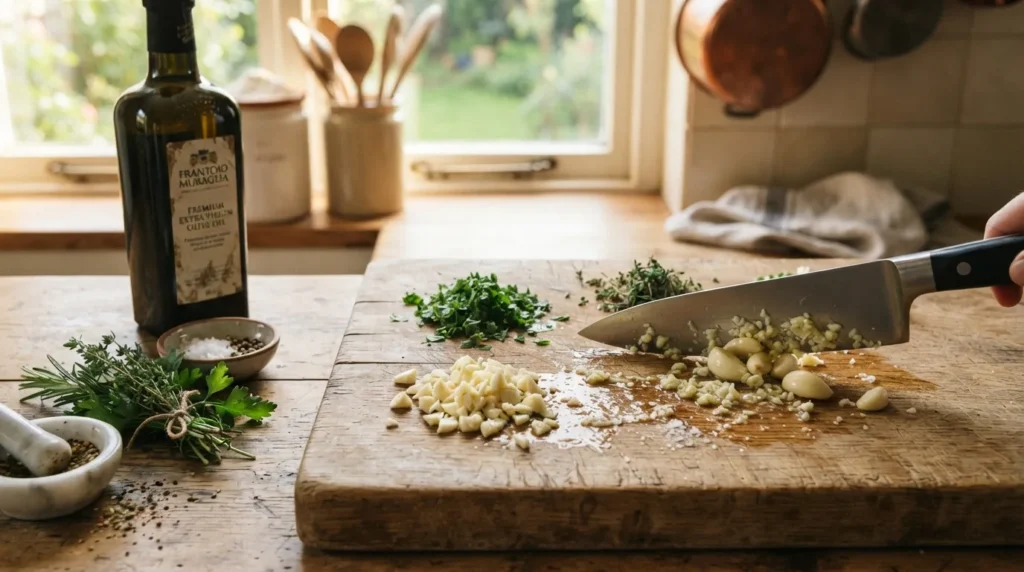
- Chop or crush it, then let it sit. Allicin needs a few minutes of air exposure to fully form after garlic is cut, so giving it a short rest before cooking helps preserve more of its beneficial compounds.
- Don’t overcook it. High heat breaks down sulfur compounds quickly, so adding garlic toward the end of cooking — and eating the dish soon after it’s made — helps retain more of its potential benefits.
- Whole food beats supplements for most people. Garlic in food form also delivers fiber and other nutrients that isolated supplements don’t provide, so cooking with it is generally the more well-rounded choice.
A Few Things Worth Knowing
Garlic is considered safe for most people when eaten as part of meals. That said, it can cause bloating, heartburn, or gas, especially raw or in large amounts, and it’s known for its lingering effect on breath and body odor. Garlic can also interact with blood-thinning medications and certain blood pressure drugs, so it’s worth a conversation with your doctor before taking concentrated garlic supplements, particularly if you’re on medication or scheduled for surgery.
The Bottom Line
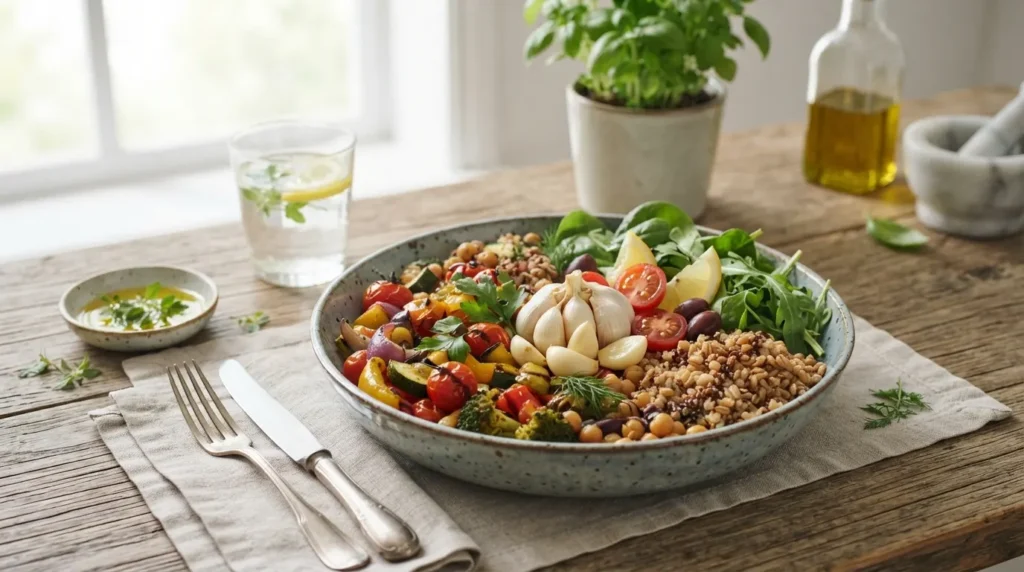
Garlic has earned its wellness-food reputation honestly. It’s not a miracle cure, and some of the boldest claims made about it outpace what the science actually supports. But for heart health, blood sugar support, and general antioxidant benefits, there’s real, credible research behind this everyday ingredient. The best part is that you don’t need a supplement aisle to benefit from it — a few cloves in your weekly cooking is enough to make garlic a meaningful, evidence-backed part of a healthy diet.
Sources
- American Heart Association — Sorting Folklore From Fact on the Health Benefits of Garlic
- National Center for Complementary and Integrative Health, NIH — Garlic
- NIH Office of Dietary Supplements — Dietary Supplements for Immune Function and Infectious Diseases
- National Library of Medicine, PMC — Garlic and Hypertension: Efficacy, Mechanism of Action, and Clinical Implications
- National Library of Medicine, PMC — The Immunomodulation and Anti-Inflammatory Effects of Garlic Organosulfur Compounds in Cancer Chemoprevention
- Healthline (medically reviewed) — 11 Proven Health Benefits of Garlic
- ZOE — Garlic and Heart Health: Assessing the Evidence
Disclaimer: This article is for general informational purposes and isn’t a substitute for medical advice. Talk to your doctor before starting any new supplement, especially if you take medication or have an existing health condition.

Aarti Solanki, B.Sc. (Food Science), is a food science writer passionate about making nutrition simple and evidence-based. She creates well-researched, easy-to-understand articles on healthy eating, food science, and nutrition, using information from trusted scientific and public health sources.