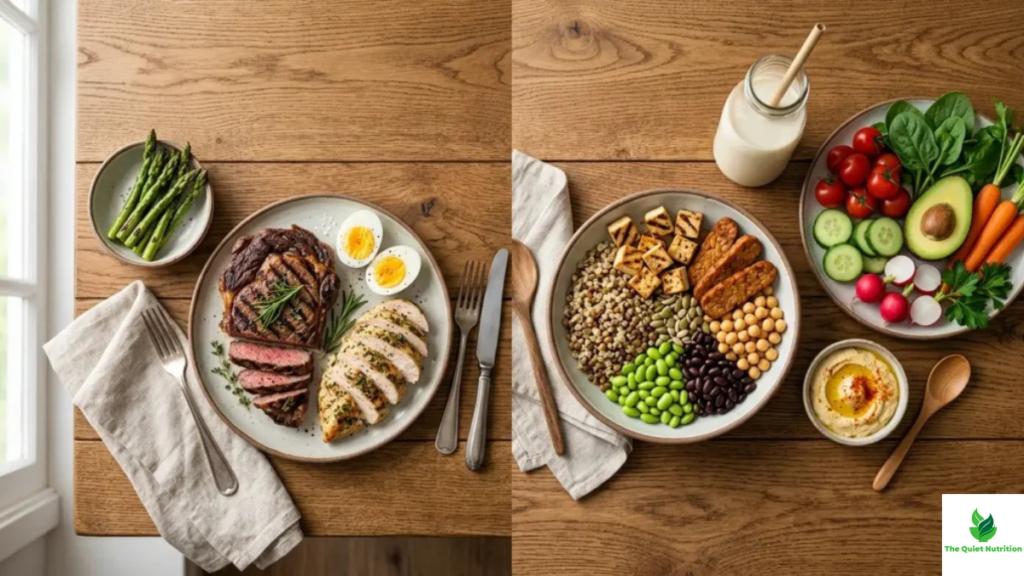
You’ve heard it a thousand times: if you want “real” protein, you need meat, eggs, or dairy. Plants, the story goes, are the consolation prize — fine for a side salad, but never quite enough to build muscle, repair tissue, or keep you strong as you age.
Here’s the twist almost nobody talks about: that story is outdated. Modern food science has a precise way of measuring protein quality, and when you look at the actual numbers, several plant foods stand shoulder-to-shoulder with chicken, beef, and eggs. Not “close enough.” Genuinely comparable.
If you’ve ever felt anxious about going plant-based, worried about protein while cutting back on meat, or just curious whether tofu can really do what a steak does — this is the article that settles it, with the science to back it up.
First, What Actually Makes a Protein “High Quality”?
Not all protein is created equal, and this is where most diet debates go wrong. Protein quality isn’t just about how many grams are on the label. It comes down to two things:
- Amino acid completeness — Your body needs nine essential amino acids from food because it can’t make them on its own. A “complete” protein contains all nine in useful amounts.
- Digestibility — How much of that protein your body can actually absorb and use, not just what’s printed on the package.
Scientists combine these two factors into a scoring system called PDCAAS (Protein Digestibility-Corrected Amino Acid Score), and its more advanced successor, DIAAS (Digestible Indispensable Amino Acid Score). Foods that score close to 1.0 are considered as good as it gets — nutritionally on par with eggs, milk, and meat.
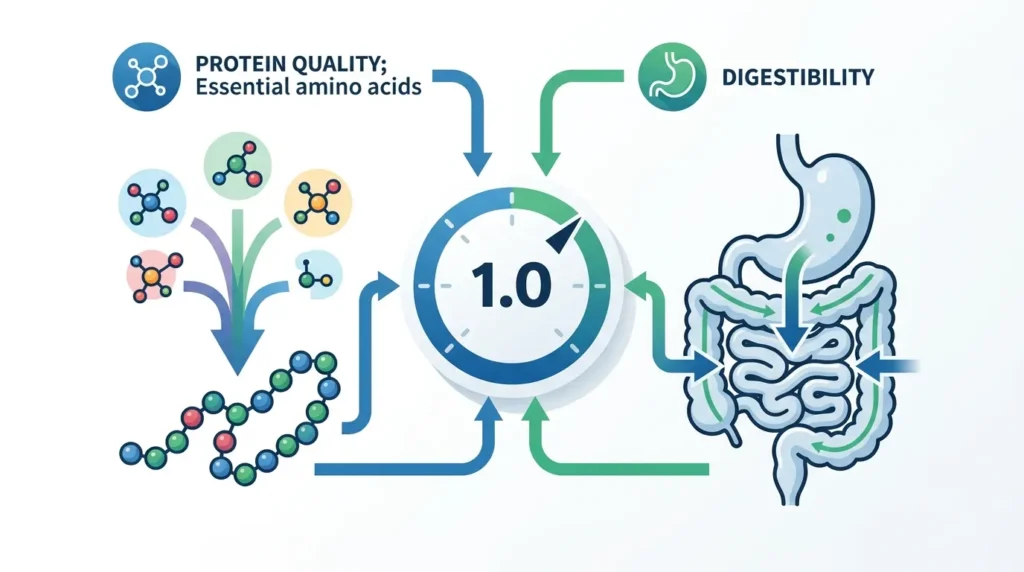
Here’s where it gets interesting: soy protein essentially has a PDCAAS of 1.00, putting it in the same tier as milk protein and whey. That’s not a plant-based approximation of quality protein. That’s quality protein, full stop.
The Plant Proteins That Actually Match Animal Protein
1. Soy — The Undisputed Champion
If there’s one plant food that ends the “incomplete protein” myth on its own, it’s soy. Soy protein carries a PDCAAS of 1.00 — close to some proteins from animal sources like meat and dairy — and its essential amino acids are well balanced, aside from being slightly lower in sulfur-containing amino acids like methionine.
It’s not just isolated soy protein powder, either. Research digging into real-world soy foods found that across all soy products combined, the average DIAAS was around 84.5 and the average PDCAAS around 85.6, with quality varying by product — tofu, soy milk, tempeh, and soy protein isolate all scoring in the high range. Soy milk, in particular, came out on top among whole soy foods.
Practical takeaway: Tofu stir-fries, edamame as a snack, tempeh in place of ground meat, and unsweetened soy milk in your coffee are all legitimate, science-backed ways to hit meat-level protein quality.
2. Pea Protein — The Rising Star
You’ve probably noticed pea protein popping up in everything from protein powders to plant-based burgers, and there’s a good reason. Pea protein carries a PDCAAS of around 0.89 — a good quality score, only slightly held back by its lower methionine content.
Pea protein’s real superpower is what it lacks in weaknesses elsewhere: it’s notably rich in lysine, an amino acid that grains tend to fall short on. That makes it a natural partner for pairing strategies (more on that below).
3. Quinoa — The Grain That Isn’t Really a Grain
Quinoa gets called a “superfood” so often the phrase has lost meaning, but on protein quality, it earns the title. Unlike most grains, which run low on lysine, quinoa has a naturally well-rounded amino acid profile, and studies place its PDCAAS score at 0.75 or higher — among the small handful of plant proteins to clear that bar.
It’s one of the only plant staples that functions as a genuinely complete protein on its own, no combining required — a rarity outside the legume family.
4. Mycoprotein — The Overlooked Powerhouse
Here’s one most people have never heard of: mycoprotein, made from a fermented fungus and sold commercially as Quorn. It doesn’t get the spotlight soy and pea protein do, but the data is striking. Mycoprotein demonstrates excellent quality, with a PDCAAS of 0.91 for the pure form and up to nearly 1.0 in some product formulations — approaching that of milk.
If you’re looking for a meat-textured, high-quality protein that isn’t soy, this is worth a serious look.
5. Potatoes, Canola, and Legumes — The Supporting Cast
It’s not just the headline names. Research shows canola, potato, and pea proteins also reach a PDCAAS of at least 0.75, putting humble foods like potatoes and lentils firmly in respectable protein-quality territory — not just filler carbs, but genuine contributors to your amino acid intake.
Why “Incomplete Protein” Is Mostly a Myth
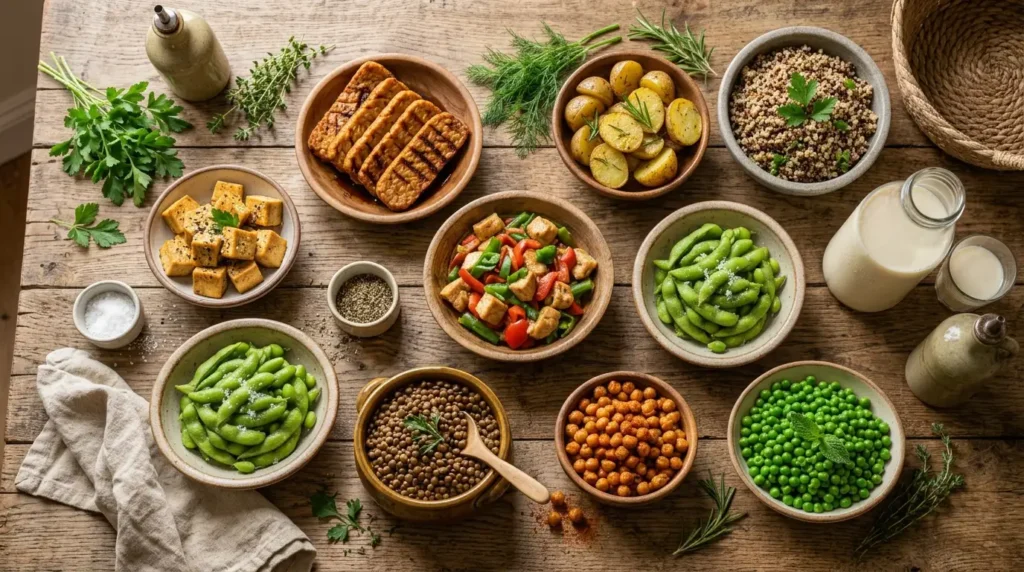
For decades, the nutrition world clung to the idea that most plant proteins were “incomplete” and that vegetarians needed to obsessively combine foods at every single meal to avoid deficiency. That advice is largely outdated.
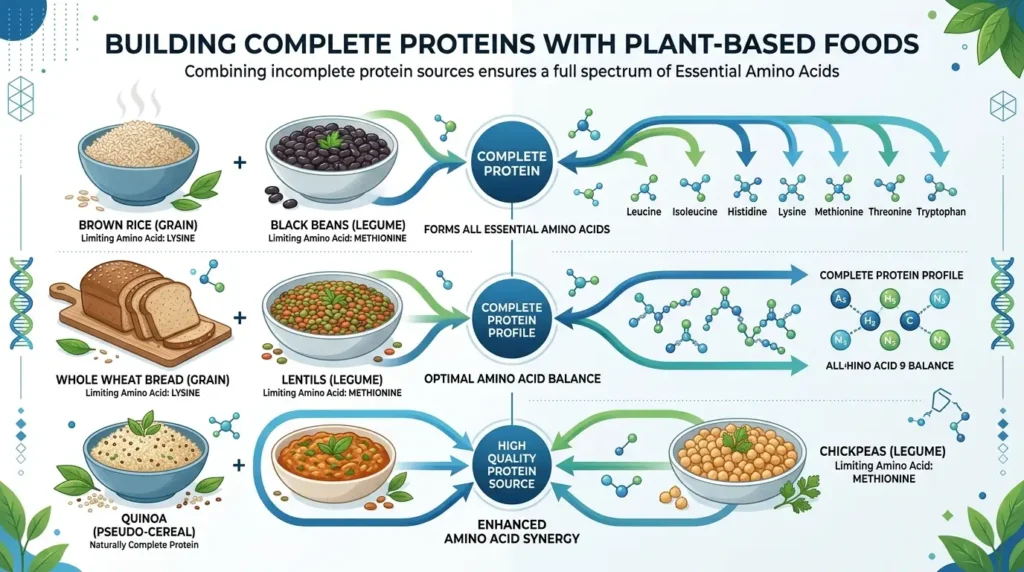
Yes, it’s true that many individual plant proteins run low in specific amino acids — legumes tend to fall short on methionine and cysteine, while grains are typically low in lysine. But your body doesn’t require every amino acid from a single meal. It draws from an amino acid pool built up over the course of the day. Eat lentils at lunch and rice at dinner, and your body fills in the gaps just fine — no perfectly timed combining required.
This is also exactly why pairing strategies work so well: legumes cover what grains lack, and grains cover what legumes lack, creating a combined amino acid profile that rivals animal protein.
It’s Not Just About Muscle — It’s About Your Heart
Protein quality is only half the story. What plant protein comes packaged with may matter just as much as the protein itself.
A major Harvard-led study tracking roughly 203,000 people over 30 years found that those who ate the highest ratio of plant-based protein to animal-based protein had a 19% lower risk of cardiovascular disease and a 27% lower risk of coronary heart disease compared to those with the lowest ratio. The researchers estimated that a plant-to-animal protein ratio of at least 1:2 was considerably more effective at preventing cardiovascular disease than the typical American ratio of roughly 1:3, while a ratio of 1:1.3 or higher appeared to offer even greater protection against coronary heart disease specifically.
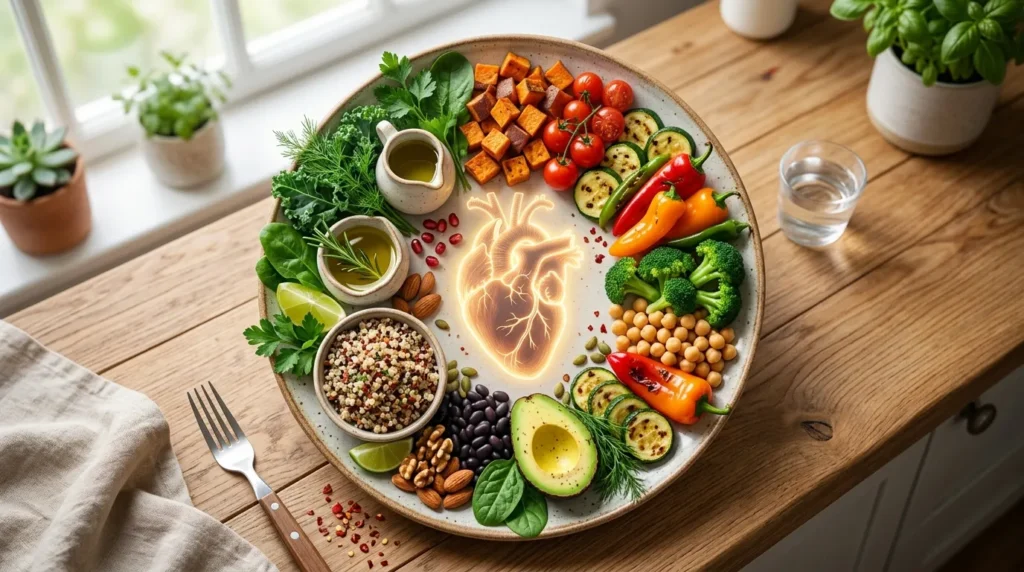
Why the extra benefit? According to the senior researcher on the study, plant proteins are usually paired with fiber, antioxidant vitamins, minerals, and healthy fats, and replacing red and processed meat with plant sources like nuts and legumes has been shown to improve blood lipids, blood pressure, and inflammatory markers.
In other words: matching the protein quality is one win. Getting the fiber, antioxidants, and heart-healthy fats that come along for the ride is a second win that meat simply doesn’t offer.
So, Should You Ditch Meat Entirely?
Not necessarily — and no credible source is telling you to. The science doesn’t say animal protein is bad; it says plant protein is far more capable than most people assume, and shifting the balance in your diet carries real, measurable benefits. Even the Harvard researchers behind the cardiovascular study weren’t calling for elimination, just a meaningful shift toward more plants and less red and processed meat.
If you’re vegetarian, vegan, or simply trying to eat a bit lighter on animal products, the takeaway is reassuring: you’re not settling for “good enough.” With soy, pea protein, quinoa, mycoprotein, and smart legume-grain pairings, you can build a diet that matches — and in some health outcomes, outperforms — a meat-heavy one.
Your Practical Plant-Protein Cheat Sheet
- Want a one-stop complete protein? Reach for soy — tofu, tempeh, edamame, or soy milk.
- Building a protein shake? Pea protein isolate is a strong non-soy option, especially for anyone with soy allergies.
- Cooking a grain-based meal? Quinoa needs no pairing — it stands on its own.
- Craving a meat-like texture? Mycoprotein (Quorn) delivers near-milk-level quality with a chewy bite.
- Eating rice, bread, or pasta? Pair it with beans, lentils, or chickpeas to round out the amino acid profile.
The Bottom Line
The idea that plants can’t compete with meat on protein quality is one of the most persistent myths in nutrition — and it simply doesn’t hold up against the data. Soy alone scores as well as milk and whey. Pea protein, quinoa, and mycoprotein aren’t far behind. And the broader dietary pattern that comes with eating more plant protein is linked to real reductions in heart disease risk.
You don’t need to fear the produce aisle. You just need to know which plants are doing the heavy lifting — and now you do.
Sources
- Harvard T.H. Chan School of Public Health — Higher ratio of plant protein to animal protein may improve heart health
- The American Journal of Clinical Nutrition — Dietary plant-to-animal protein ratio and risk of cardiovascular disease in 3 prospective cohorts
- Harvard Gazette — Study finds 1:2 ratio of plant to animal protein lowers risk of heart disease
- Frontiers in Nutrition — Protein quality of soy and the effect of processing: A quantitative review
- Encyclopedia MDPI — Quality of Plant Proteins (PDCAAS/DIAAS data tables)
- PubMed — Perspective: Plant-Based Meat Alternatives Can Help Facilitate a Lower Animal to Plant Protein Ratio, Harvard T.H. Chan School of Public Health
Disclaimer:This article is for general nutrition information and does not replace personalized advice from a registered dietitian or physician.

Aarti Solanki, B.Sc. (Food Science), is a food science writer passionate about making nutrition simple and evidence-based. She creates well-researched, easy-to-understand articles on healthy eating, food science, and nutrition, using information from trusted scientific and public health sources.