
By 3 p.m., your body still has plenty of gas in the tank, but your brain feels like it’s running on fumes — decisions get harder, focus slips, and you start rereading the same email three times. That mismatch isn’t random. Your brain is the most metabolically demanding organ you have, and what you feed it (and when) determines whether it keeps pace with the rest of your day or taps out early.
Your Brain Burns Fuel Differently Than the Rest of You
The brain makes up roughly 2% of body weight but consumes a wildly disproportionate share of the body’s energy just to keep basic functions running — before you’ve even started thinking hard. That constant demand means brain function is directly tied to nutrient supply, not just at the biochemical level, but in ways you can feel: focus, mood, and mental stamina all move with what and when you eat. As one review of exercise and diet research puts it, brain function depends on adequate nutrition, and even short-term changes in the amount and composition of nutrients healthy people eat measurably affect cognitive performance. That same research found that eating breakfast is consistently linked to better cognitive functioning in well-nourished children, and that combining smart eating with exercise produces bigger brain benefits than either alone.
The Nutrients That Keep Cognitive Fuel Flowing
Mental fatigue isn’t one thing — it shows up differently depending on which system runs low first.
- B vitamins, iron, magnesium, and zinc are directly involved in the metabolic pathways that generate cellular energy, along with oxygen transport and neuronal signaling — which is why low status in any of these can show up as brain fog or sluggish thinking, not just physical tiredness.
- Omega-3 fatty acids (DHA and EPA) are linked to improved attention, memory, and processing speed, and may be especially useful for reducing cognitive fatigue during high-stress mental work like exams or demanding jobs.
- Choline feeds into the production of acetylcholine, a neurotransmitter central to memory and attention, and also forms part of the structural material of brain cell membranes — yet it’s one of the most commonly under-consumed nutrients in modern diets, especially among younger adults.
- Carbohydrate quality matters as much as quantity. A recent review found that simple sugars are consistently linked to worse overall cognition, while complex carbohydrates support both short- and long-term memory and healthier brain aging — largely because they produce steadier glucose and insulin patterns instead of sharp swings.
It’s Not Just What You Eat — It’s the Pattern
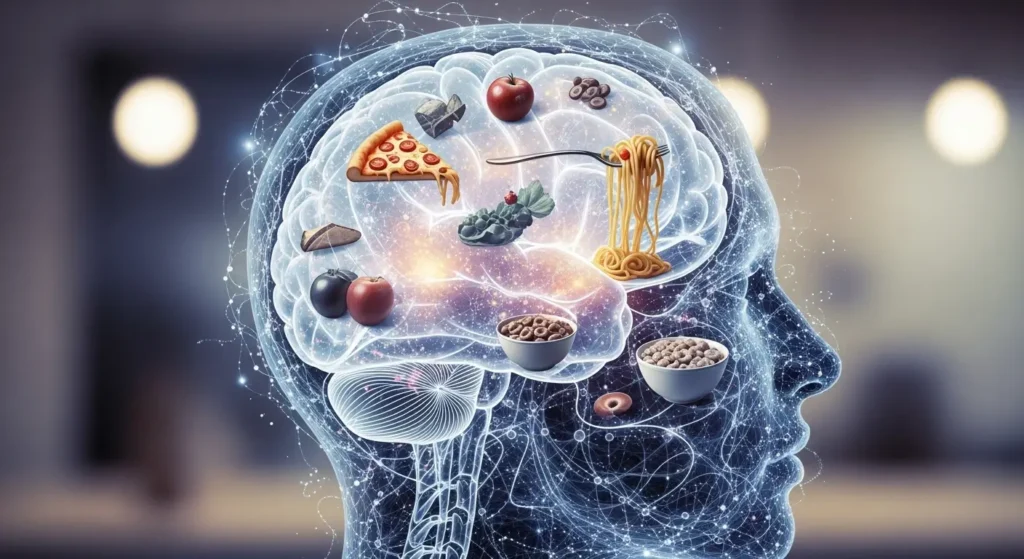
Nutritional psychiatry, a field pioneered in part by Harvard Medical School researcher Dr. Uma Naidoo, focuses on exactly this: that what you eat directly shapes the structure and function of your brain, and ultimately your mood. Naidoo’s work also points to gut health as part of the equation — many serotonin receptors sit in the gut, and diets built around whole foods rather than ultra-processed ones tend to support both mood and mental clarity, partly by reducing inflammation.
Meal timing compounds this. Long gaps without eating followed by a big, carb-heavy meal create the same kind of instability that drives an afternoon crash — a pattern nutrition researchers increasingly treat as a cognitive issue, not just a metabolic one, since irregular intake disrupts neurotransmitter production and blood sugar stability throughout the day.
Why This Matters Beyond the Occasional Slump
This isn’t only about getting through a sluggish afternoon. A broader review of dietary interventions found that multinutrient approaches — particularly combinations of B vitamins and omega-3s — show real benefit for memory, especially in people with metabolic risk factors or early cognitive decline, and that antioxidant-rich dietary patterns like the MIND diet are consistently associated with better memory and overall cognitive outcomes over time. In other words, the same nutritional gaps that make you foggy today are the ones tied to long-term brain health.
How to Keep Your Brain’s Tank From Running Dry
- Don’t skip meals, especially breakfast. Long fasting windows during the day are a common trigger for the mid-morning or mid-afternoon crash.
- Favor complex carbs over simple sugars. Whole grains, legumes, and vegetables provide steadier glucose than refined carbs and sweets.
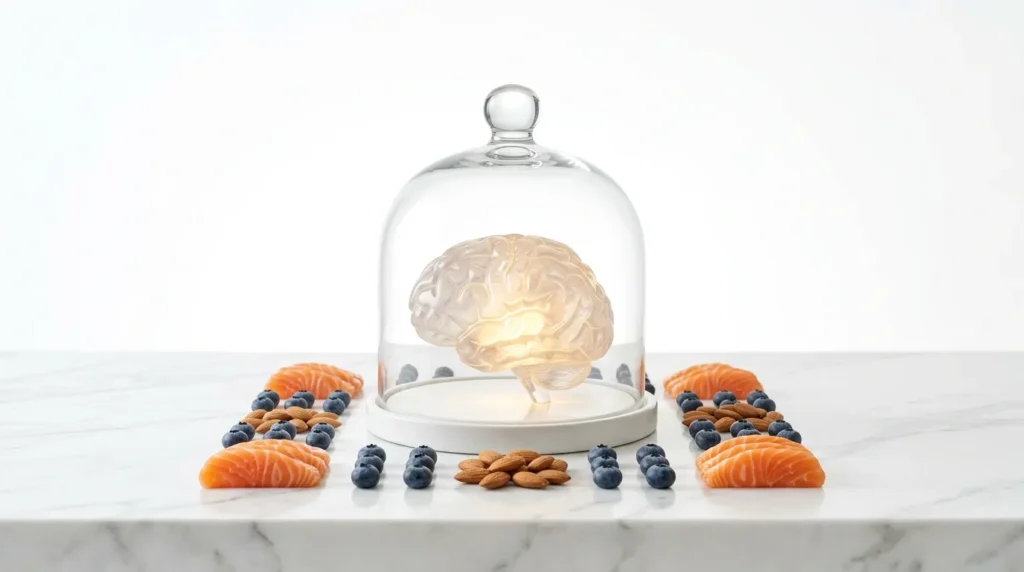
- Build in omega-3s and choline sources regularly. Fatty fish, eggs, and walnuts support both neurotransmitter production and cell membrane health.
- Watch for micronutrient gaps. Persistent brain fog or fatigue can sometimes trace back to low B12, iron, or magnesium — worth flagging to a doctor if it’s chronic.
- Treat consistency as the goal. Regular meal timing supports more stable energy and neurotransmitter availability than any single “brain food.”
The Takeaway
Your brain doesn’t run out of energy because it’s weak — it runs out because it’s constantly metabolically active and unusually sensitive to nutrient timing and quality. Feeding it steadily, with the right mix of complex carbs, healthy fats, and key micronutrients, is what keeps your focus lasting as long as your day does.
Sources
- NIH/PMC — Exercise, Nutrition and the Brain
- NIH/PMC — Vitamins and Minerals for Energy, Fatigue and Cognition: A Narrative Review
- NIH/PMC — Role of Dietary Carbohydrates in Cognitive Function: A Review
- NIH/PMC — Effects of Dietary Interventions on Cognitive Outcomes
- NIH/PMC — Effects of Nutritional Interventions on Accuracy and Reaction Time (Mental Fatigue Meta-Analysis)
- Harvard Health — Gut feelings: How food affects your mood
- Today’s Dietitian — Cognitive Performance Nutrition

Aarti Solanki, B.Sc. (Food Science), is a food science writer passionate about making nutrition simple and evidence-based. She creates well-researched, easy-to-understand articles on healthy eating, food science, and nutrition, using information from trusted scientific and public health sources.






Pingback: Why Your Brain Feels Exhausted Even When You’re Not Doing Much
Pingback: The Surprising Brain Benefits of Blueberries (What These Tiny Berries May Be Doing Inside Your Mind)