
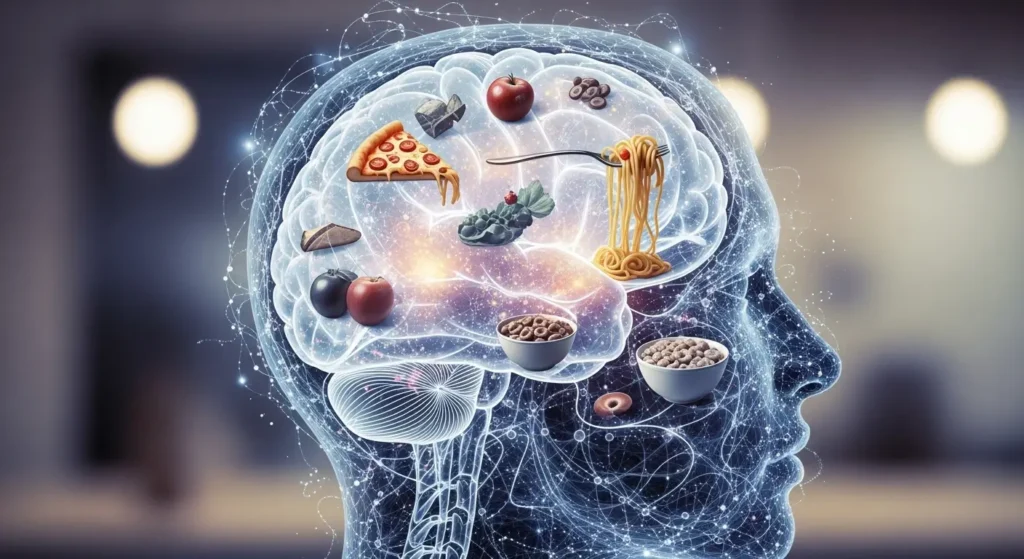
Some days your mind feels quick — answers arrive before you finish reading the question. Other days everything feels a beat slower, like your brain is running through static. The difference often has less to do with sleep or stress than people assume, and more to do with what you’ve been eating. Processing speed, it turns out, is remarkably sensitive to nutrition.
Your Brain Runs on an Outsized Energy Budget
Despite making up only around 2 percent of body weight, the brain consumes roughly 20 percent of your daily calories. That disproportionate energy demand means even small shifts in fuel availability and nutrient quality can show up quickly in how fast your brain actually processes information, not just in how you feel generally.
Glucose Is the Immediate Fuel — But Timing Matters
Carbohydrates remain your brain’s primary energy source, and research has established that glucose ingestion measurably enhances memory performance. However, the type of carbohydrate matters for processing speed specifically. Complex carbohydrates found in oats, whole grains, fruit, and vegetables release glucose slowly, helping maintain steady focus and consistent mental speed, compared to the rapid spike and crash pattern associated with simple sugars.
Omega-3s Directly Change How Fast Your Brain Responds
Few nutrients have as much direct evidence behind them for processing speed specifically as omega-3 fatty acids, particularly DHA and EPA. These fats are structural components of neuronal cell membranes — not just fuel your brain uses, but part of what your brain’s cells are physically built from. Research has linked higher intakes of DHA and EPA to improved attention, memory, and mental processing speed specifically.
The evidence gets more precise at the mechanistic level. A double-blind, crossover study using visual evoked potential testing found that EPA-rich supplementation produced significantly faster choice reaction times compared to baseline, with researchers linking the effect to more efficient neural recovery following visual cortical activation. Separately, research measuring blood omega-3 levels in adolescents found a significant association between higher omega-3 status and faster information processing speed, along with fewer impulsive errors on cognitive testing.
B Vitamins Protect the Wiring Your Speed Depends On
B vitamins play a quieter but equally important role. They help regulate homocysteine, a compound that, when it accumulates in the blood, is linked to accelerated brain atrophy and cognitive decline. Since processing speed depends heavily on the integrity of the neural pathways carrying information across the brain, protecting that structural wiring has a direct bearing on how quickly those signals can travel. In controlled research on cognitive supplementation, multivitamin and mineral interventions produced improvements specifically on visuomotor processing speed and memory tasks compared to baseline performance.
Hydration Affects Processing Speed More Than Most People Realize
Even mild dehydration measurably affects concentration, memory, and mental processing speed. Because your brain is highly water-dependent tissue, a relatively small fluid deficit can slow reaction time and information processing well before you consciously feel thirsty — making hydration one of the simplest, most overlooked levers for maintaining mental speed throughout the day.
Micronutrient Research Shows Mixed but Meaningful Results
It’s worth noting that not every study finds a large effect. A meta-analysis pooling ten randomized, placebo-controlled trials in healthy adults found no significant improvement in attention, visual processing, or simple reaction time following three to six months of multivitamin supplementation, even though the same body of research showed improved memory tied to micronutrient levels. Other individual studies have found associations between multivitamin supplementation and faster, more accurate numerical processing in adults, as well as improved choice reaction time in children. The overall picture suggests nutrition’s effect on raw processing speed is real but nuanced — often more pronounced when correcting an existing nutritional gap than when added on top of an already well-nourished baseline.
What Slows Processing Speed Down
The flip side matters just as much as what helps. Diets low in nutrient density, poor hydration, and irregular or sugar-heavy eating patterns are associated with slower reflexes and delayed response times. Highly processed, low-fiber meals tend to produce sharper blood sugar swings, which can translate into the kind of inconsistent, foggy mental speed many people mistake for simply having an “off day.”
Building a Diet That Supports Faster Thinking
The research points toward a fairly consistent pattern rather than any single miracle nutrient: fiber-rich complex carbohydrates for steady glucose delivery, regular intake of omega-3-rich foods like fatty fish, walnuts, or flaxseed, adequate B vitamins from sources like leafy greens and whole grains, and consistent hydration throughout the day. None of these act instantly like a stimulant — most nutritional effects on processing speed build over weeks of consistent intake, particularly when they’re correcting a prior shortfall.
The Bottom Line
Mental processing speed isn’t fixed — it’s shaped, meal by meal, by the fuel and structural nutrients your brain has available. Glucose stability, omega-3 intake, B vitamin status, and hydration all show measurable links to how quickly your brain can take in information and respond to it. A faster brain isn’t something you train for occasionally. It’s something you feed for, consistently, over time.
Sources
- Today’s Dietitian – Cognitive Performance Nutrition
- PMC (NIH) – Improvement in Cognition Following Double-Blind Randomized Micronutrient Interventions
- PMC (NIH) – Omega-3 Fatty Acids Modify Human Cortical Visual Processing: A Double-Blind, Crossover Study
- PMC (NIH) – Association Between Blood Omega-3 Index and Cognition in Typically Developing Dutch Adolescents
- Frontiers in Human Neuroscience – Nutritional Influences on Human Neurocognitive Functioning
- Concordia Clinic – How Does Nutrition Affect Academic Performance?

Aarti Solanki, B.Sc. (Food Science), is a food science writer passionate about making nutrition simple and evidence-based. She creates well-researched, easy-to-understand articles on healthy eating, food science, and nutrition, using information from trusted scientific and public health sources.







Pingback: Why Your Brain Runs Out Before You Do — The Nutrition–Cognition Connection
Pingback: Why Missing Meals Sabotages Focus, Memory, and Mental Clarity