The tomato sits in your kitchen so quietly, so humbly, that it’s easy to take it for granted. It isn’t flashy like a superfood powder. It doesn’t come with a $40 price tag or a celebrity endorsement. It just sits there — red, unassuming, patient. And yet, science keeps returning to it with something close to admiration.
If you eat tomatoes every day — sliced on toast, tossed in salad, simmered into sauce, or just halved and eaten raw — something is happening inside your body that you probably never stop to appreciate. Your heart is quietly benefiting. Your skin is building a kind of invisible armor. Your eyes are being protected from damage that often shows up only decades later.
This isn’t marketing language. This is biology — specific, documented, and genuinely fascinating. Let’s walk through it together, system by system, the way your body actually experiences it.
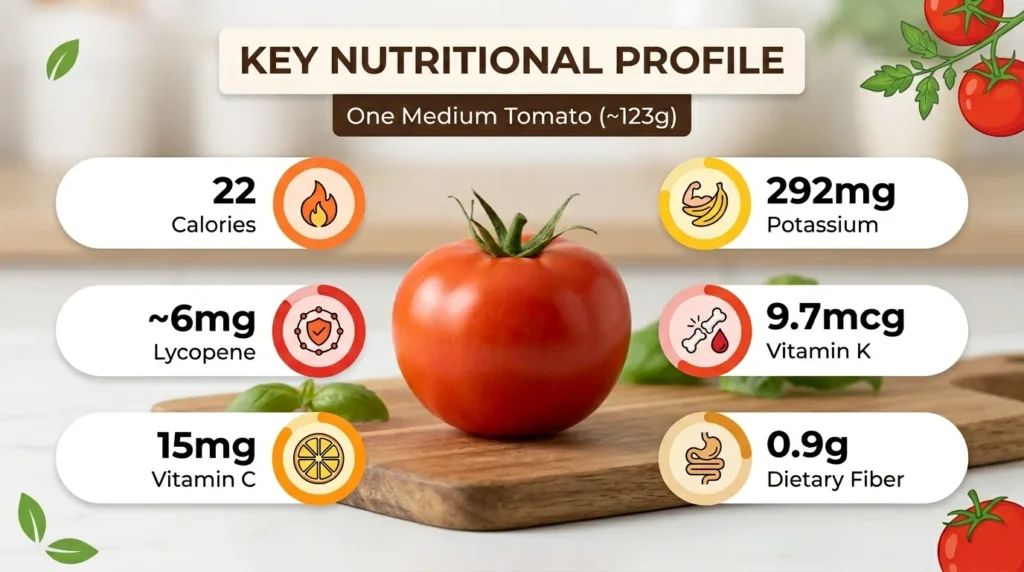
Those numbers seem modest. But the compound that makes tomatoes genuinely remarkable isn’t fully captured in a standard nutrition label — and that’s lycopene, the fat-soluble carotenoid pigment responsible for tomatoes’ signature red color and a disproportionate share of their health impact.
Worth Knowing Before We Dive In
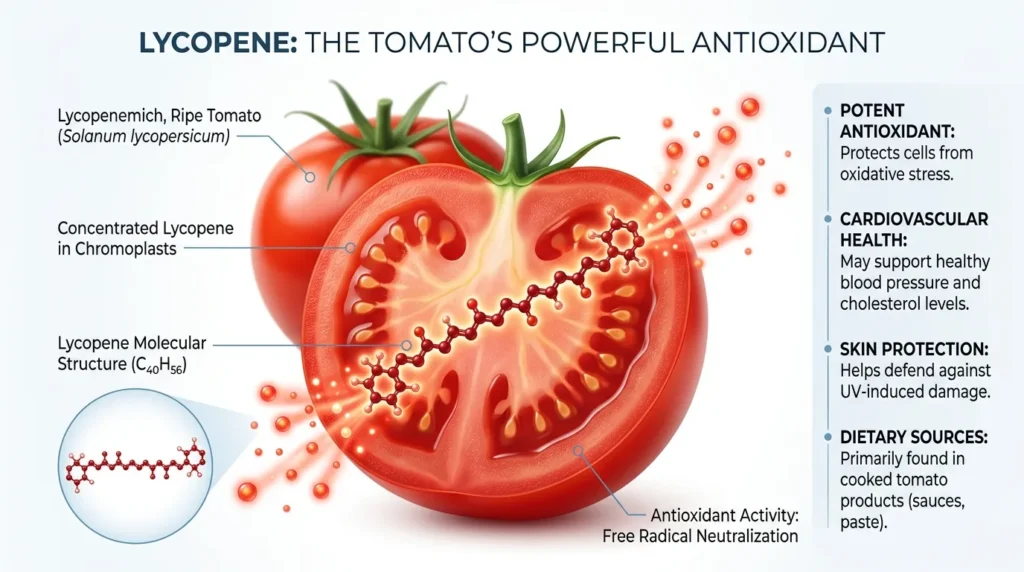
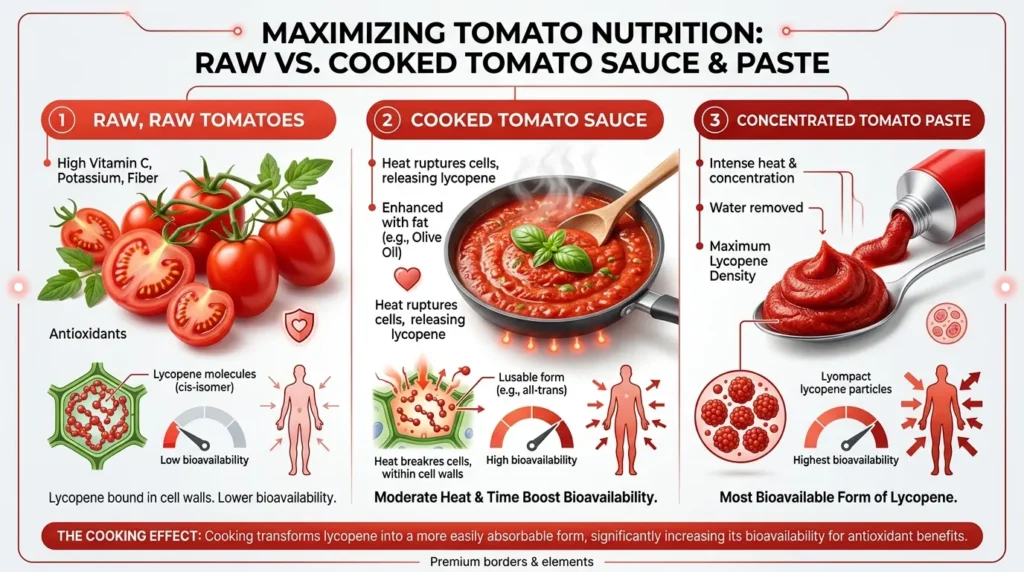
Lycopene is one of the most powerful antioxidants found in food. Unlike many nutrients that lose potency when cooked, lycopene in tomatoes actually becomes more bioavailable after cooking. A tablespoon of tomato paste delivers more absorbable lycopene than several raw tomatoes. Heat breaks down the cell walls, releasing the compound more efficiently.
So that jar of pasta sauce? That simmered soup? Nutritionally speaking, that’s often where tomatoes do their best work.
What Tomatoes Do to Your Heart
Heart disease is still the world’s leading cause of death — and the frustrating part is that so many contributing factors are invisible and gradual. Arterial plaque builds slowly. Blood pressure creeps up over years. Inflammation quietly damages vessel walls long before any symptoms appear. This is precisely why everyday foods matter more than most people realize.
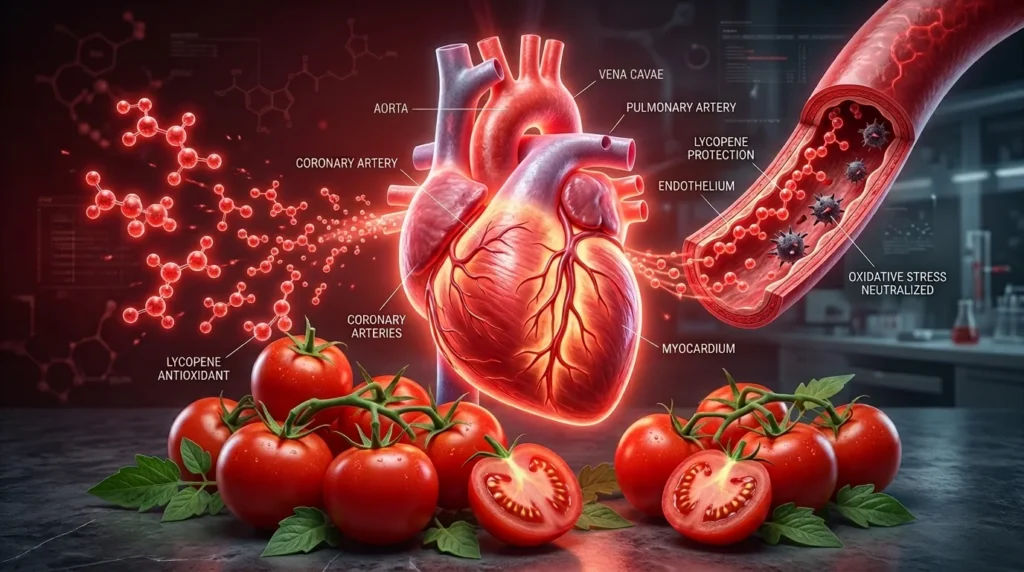
Tomatoes work on the cardiovascular system through several distinct but interconnected pathways.
They fight the oxidation of LDL cholesterol
Not all cholesterol is inherently dangerous. LDL becomes particularly harmful when it gets oxidized — when free radicals damage it in a way that makes it sticky and prone to building up along artery walls. Lycopene is a formidable antioxidant that can help reduce this oxidative damage. A study published in the American Journal of Clinical Nutrition found that regular tomato consumption was associated with lower levels of oxidized LDL in participants. That matters because oxidized LDL is the kind that triggers the inflammatory response leading to atherosclerosis.
They support healthy blood pressure
Tomatoes are a meaningful source of potassium — a mineral that many people in Western diets consume far too little of. Potassium works in direct opposition to sodium: it helps relax blood vessel walls and encourages the kidneys to flush out excess sodium. A diet consistently rich in potassium from whole foods like tomatoes, bananas, and leafy greens has been associated with lower systolic blood pressure readings.
The folate in tomatoes also matters here. Folate helps regulate homocysteine, an amino acid that — at elevated levels — is associated with increased cardiovascular risk. Tomatoes aren’t a cure for high homocysteine, but they contribute to the nutritional environment that keeps it in check.
They reduce chronic low-grade inflammation
Chronic inflammation in the cardiovascular system doesn’t announce itself with pain. It operates quietly, over years, as a background state that gradually erodes arterial health. Lycopene, beta-carotene, and vitamin C in tomatoes each have anti-inflammatory properties. They don’t eliminate inflammation outright, but consumed consistently, they help lower the overall inflammatory burden.
What the research says: A meta-analysis published in Scientific Reports (2017) reviewed multiple studies and found that higher tomato and lycopene intake was associated with a significantly reduced risk of cardiovascular events. The researchers noted that the effect was most consistent among participants who consumed cooked tomato products regularly — further supporting the bioavailability advantage of cooking.
Related Read: If you’re interested in other heart-protective whole foods, our piece on the surprising heart benefits of grapes covers how resveratrol and flavonoids in grapes add a complementary layer of cardiovascular support.
What Tomatoes Do to Your Skin

Skin health gets talked about almost exclusively in the language of products — serums, SPFs, retinols, cleansers. But your skin is a living organ, and what you eat shapes it from the inside out in ways that no topical product can fully replicate. Tomatoes happen to be one of the most skin-friendly foods available — and again, lycopene leads the charge.
They offer a measurable layer of UV protection
This is one of the most counterintuitive and well-documented facts about tomatoes. In a study from The British Journal of Dermatology, participants who consumed tomato paste daily for 12 weeks showed 33% greater protection against UV-induced redness (erythema) compared to the control group. The researchers attributed this to lycopene accumulating in the skin tissue, where it acts as an internal photo-protector.
Let’s be clear about what this means and what it doesn’t: eating tomatoes is not a substitute for sunscreen. No food is. But it adds a biological layer of protection that SPF alone doesn’t provide — one that works from the inside, at the cellular level, before UV damage even begins.
They boost collagen synthesis
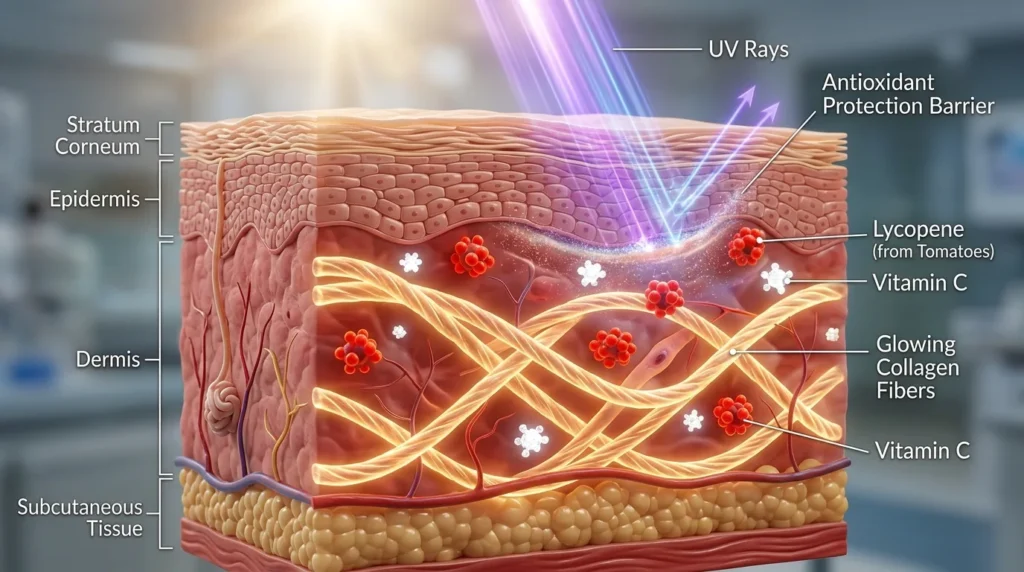
Vitamin C is essential for collagen production. Collagen is the structural protein that keeps skin firm, elastic, and able to bounce back. As collagen production naturally slows with age, maintaining a steady supply of vitamin C becomes increasingly important. A medium tomato provides roughly 15–20% of your daily recommended vitamin C intake. It’s not the richest source, but when you’re eating tomatoes daily, that contribution compounds meaningfully over weeks and months.
They neutralize free radicals that age skin
Environmental exposure — sun, pollution, smoke, stress — generates free radicals that attack skin cells. Over time, this oxidative stress damages collagen fibers, accelerates the breakdown of elastin, and contributes to the visible signs of aging: fine lines, uneven skin tone, dullness. Lycopene and vitamin C both function as antioxidants that neutralize free radicals before they can cause this damage.
Think of it this way: every tomato you eat is sending a small but consistent signal to your skin cells to stay defended. Not dramatically. Not instantly. But consistently, over time — the way most meaningful biological change actually works.
Related Read: Your skin also responds strongly to other antioxidant-rich foods. Read our piece on what strawberries do inside your body to see how vitamin C from different sources compounds across your diet.
“The skin is a window into nutritional health. What accumulates inside your cells over weeks and months shows up — on your face, in your texture, in your resilience. Tomatoes are one of the quietest contributors to that internal defense.”
What Tomatoes Do to Your Eyes
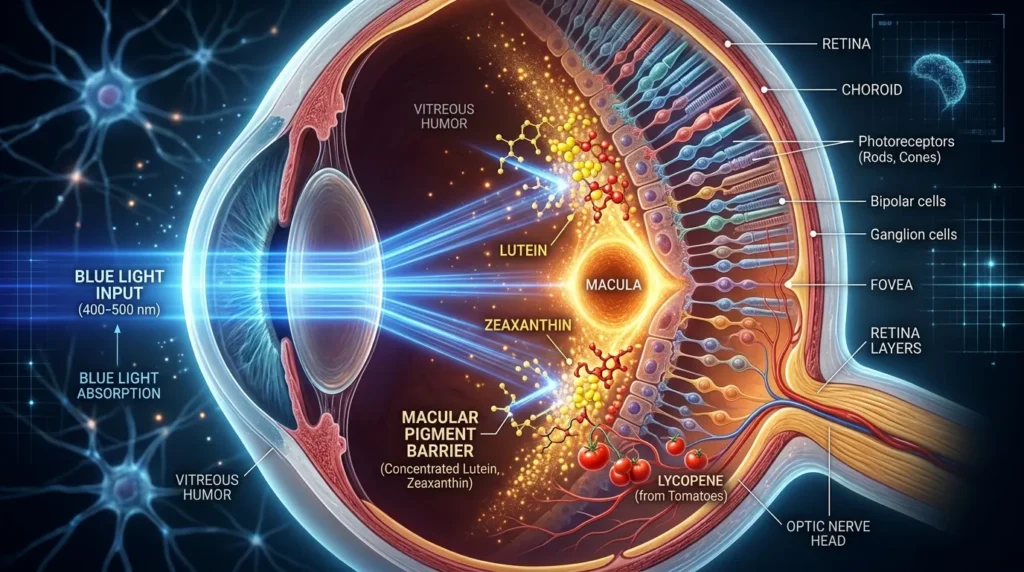
Of the three organ systems covered here, the eyes might be where tomatoes’ contribution is least expected — but it’s genuinely compelling. Tomatoes contain two compounds that have a particular affinity for eye tissue: lutein and zeaxanthin.
These are carotenoids — pigment compounds in the same family as lycopene — and they have a remarkable habit of concentrating in the macula, the small central area of the retina responsible for sharp, detailed vision. They essentially form a natural filter in the eye, protecting delicate photoreceptor cells from high-energy blue light and oxidative damage.
They may reduce the risk of age-related macular degeneration
Age-related macular degeneration (AMD) is the leading cause of vision loss in people over 60, and like cardiovascular disease, it develops silently over decades. The Age-Related Eye Disease Study (AREDS), a landmark clinical trial, found that antioxidants including lutein and zeaxanthin were associated with a reduced risk of AMD progression in at-risk individuals.
Tomatoes aren’t as rich in lutein as dark leafy greens like spinach or kale, but they contribute meaningfully — and they’re far more commonly consumed daily. Over months and years, that regularity adds up.
They protect against cataracts
Cataracts form when proteins in the eye’s lens clump together, clouding vision over time. Oxidative stress accelerates this process. Vitamin C acts as a protective antioxidant within the lens fluid, and consistent dietary intake has been associated with a lower risk of cataract development. Several long-term observational studies have found that people with higher fruit and vegetable consumption — particularly antioxidant-rich produce — have a meaningfully lower rate of age-related cataracts.
They help with everyday eye strain and dryness
Beta-carotene, present in tomatoes in smaller amounts, converts to vitamin A in the body. Vitamin A is essential for the production of rhodopsin — the pigment that allows the eye to function in low-light conditions — and for maintaining the health of the cornea and the tear film that keeps eyes moist. Chronic, low-level vitamin A insufficiency can contribute to dry eyes, poor night vision, and general eye fatigue. Tomatoes, as part of a varied diet, help prevent this kind of quiet deficiency.
Related Read: For eyes specifically, apricots are another exceptional food. Our deep-dive on why your eyes are begging for apricots explores beta-carotene and eye protection in even more detail.
The bioavailability factor: Lutein and zeaxanthin, like lycopene, are fat-soluble. This means your body absorbs them far better when they’re consumed alongside a small amount of healthy fat. Drizzle olive oil on your tomato salad. Cook them in a pan with a little avocado oil. This isn’t just culinary preference — it’s how you actually get the nutrients into your bloodstream.
Which Type of Tomato Should You Be Eating?
Not all tomatoes deliver the same nutritional load. A few practical distinctions are worth knowing:
- Roma and plum tomatoes tend to have lower water content and a more concentrated lycopene density. They’re excellent for cooking — and remember, cooking increases lycopene bioavailability significantly.
- Cherry and grape tomatoes have higher antioxidant density by weight compared to large beefsteak varieties. They make excellent daily snacks precisely because of this.
- Canned whole tomatoes and tomato paste are among the richest available sources of bioavailable lycopene. The heating process during canning essentially pre-releases the compound. This makes canned tomatoes a practical, affordable, and nutritionally serious ingredient.
- Vine-ripened tomatoes consistently show higher antioxidant content than tomatoes picked green and ripened during transport. When possible, choose tomatoes that actually ripened on the vine — they’ll usually taste better for the same reason they’re more nutritious.
- Tomato juice is a reasonable source of lycopene, but watch for sodium content in commercial brands. Opt for low-sodium versions, or make your own with a blender and a strainer.
Related Read: Watermelon is another surprising lycopene source — sometimes even richer than tomatoes by weight. See our piece on watermelon’s hidden health benefits for the full story.
How to Actually Get Tomatoes Into Every Day
The gap between nutritional knowledge and actual eating habits is wide. Knowing that tomatoes are beneficial doesn’t automatically translate into eating them consistently. Here are practical, realistic ways to build tomato consumption into daily life without turning it into a chore:
- Morning: Slice two cherry tomatoes onto scrambled eggs. Add a pinch of salt and a drizzle of olive oil. Done in 30 seconds, and you’re getting fat-soluble carotenoids with the egg yolk — a perfect nutritional pairing.
- Midday: Keep a container of halved cherry tomatoes in the fridge at eye level. When you reach for a snack, they’re the first thing you see. Visibility drives choice more than willpower does.
- Evening: Build the habit of using canned crushed tomatoes as a base. A simple sauce of canned tomatoes, garlic, and olive oil simmered for 15 minutes delivers more bioavailable lycopene than almost any other preparation.
- The olive oil rule: Whenever you eat raw tomatoes, add a little healthy fat — olive oil, avocado, cheese, nuts. It meaningfully improves the absorption of lycopene, lutein, and beta-carotene.
- Tomato paste as a quiet daily add-in: A tablespoon of tomato paste stirred into soups, stews, or even grain bowls is one of the highest-lycopene additions you can make to a meal. It disappears into the food and takes about two seconds to add.
⚠️ A Note on Moderation and Individual Variation
Tomatoes are part of the nightshade family and contain solanine in small amounts. For most people, this is completely irrelevant — the amounts in ripe tomatoes are negligible. However, a small subset of people with certain autoimmune conditions or digestive sensitivities report increased joint discomfort or gut irritation when consuming large amounts of nightshades. If you notice such patterns, it’s worth discussing with a healthcare provider.
Additionally, tomatoes are moderately acidic. People with acid reflux or GERD sometimes find that tomatoes (especially cooked products like sauce) worsen symptoms. Again, this is individual — many people with reflux tolerate tomatoes without issue. Listen to your own body.

The Bigger Picture: Why Consistency Matters More Than Quantity
One of the most important things the research on tomatoes reveals isn’t about any single nutrient or any single health outcome. It’s about the nature of protective nutrition more broadly.
The cardiovascular benefits, the skin protection, the eye defense — none of these happen from a single tomato, or a week of eating tomatoes, or even a month. They emerge from the consistent presence of these compounds in your bloodstream and tissues over time. Lycopene accumulates in the skin. Lutein builds up in the retina. Potassium supports vascular health as part of an ongoing dietary pattern.
This is actually good news, not discouraging news. It means you don’t need to eat an extraordinary amount of tomatoes. You don’t need to overhaul your diet overnight. You just need to make tomatoes a quiet, dependable presence in your daily eating — the way they’ve been in Mediterranean diets for centuries, diets consistently associated with lower rates of cardiovascular disease, certain cancers, and age-related decline.
The tomato isn’t a magic ingredient. It’s a reliable one. And in nutrition, reliable beats spectacular almost every time.
Related Read: The idea that small daily food choices compound into significant health outcomes over time is explored beautifully in our piece on why small food changes create big results.
Related Read: If you’re building a daily fruit and vegetable habit, you might also enjoy our exploration of why spinach is more powerful than you think — particularly its complementary benefits for eye and cardiovascular health alongside tomatoes.
The Tomato Deserves a Seat at Every Meal
What makes the tomato remarkable isn’t a dramatic single effect. It’s the quiet breadth of what it does — protecting your arteries, building a biological shield in your skin, and accumulating in your retina like a slow act of foresight for your future vision.
It costs almost nothing. It works best when you’re not even thinking about it. And it gets better when you cook it.
There are very few foods you can say all of that about. Put a tomato in your kitchen today and use it like it matters — because it does.
Continue exploring: Why almonds are a daily superfood · The gold standard of healthy fats · The hidden power of lemons
Disclaimer: This article is written for informational and educational purposes only. It does not constitute medical advice, and the information here should not be used to diagnose, treat, cure, or prevent any health condition. Always consult a qualified healthcare professional before making significant changes to your diet, especially if you have existing health conditions or are on medication. External research studies referenced are cited for informational context; individual results vary, and nutritional science continues to evolve.

Aarti Solanki, B.Sc. (Food Science), is a food science writer passionate about making nutrition simple and evidence-based. She creates well-researched, easy-to-understand articles on healthy eating, food science, and nutrition, using information from trusted scientific and public health sources.