Most people know carrots are “good for you.” But if you press them on why, you’ll get a shrug, a vague mention of eyesight, and the word “healthy” repeated twice. That’s about it.
Here’s what almost nobody tells you: the carrot is one of the most quietly powerful foods in the vegetable world — and what it does inside your body, specifically to your eyes, your skin, and your immune system, is genuinely fascinating science. Not the hand-wavy kind. Real, mechanism-level biology.
Whether you eat them raw as a snack, tossed in a stir-fry, or blended into a smoothie, this is what actually happens when you commit to one carrot a day. The answer is more compelling than the old “good for your eyes” story you heard as a child.
Quick Note: This article is for general educational purposes. While the science discussed here is well-established, individual results can vary. Always consult a healthcare provider before making significant changes to your diet, especially if you have existing health conditions.
The Small Orange Vegetable With Enormous Nutritional Firepower
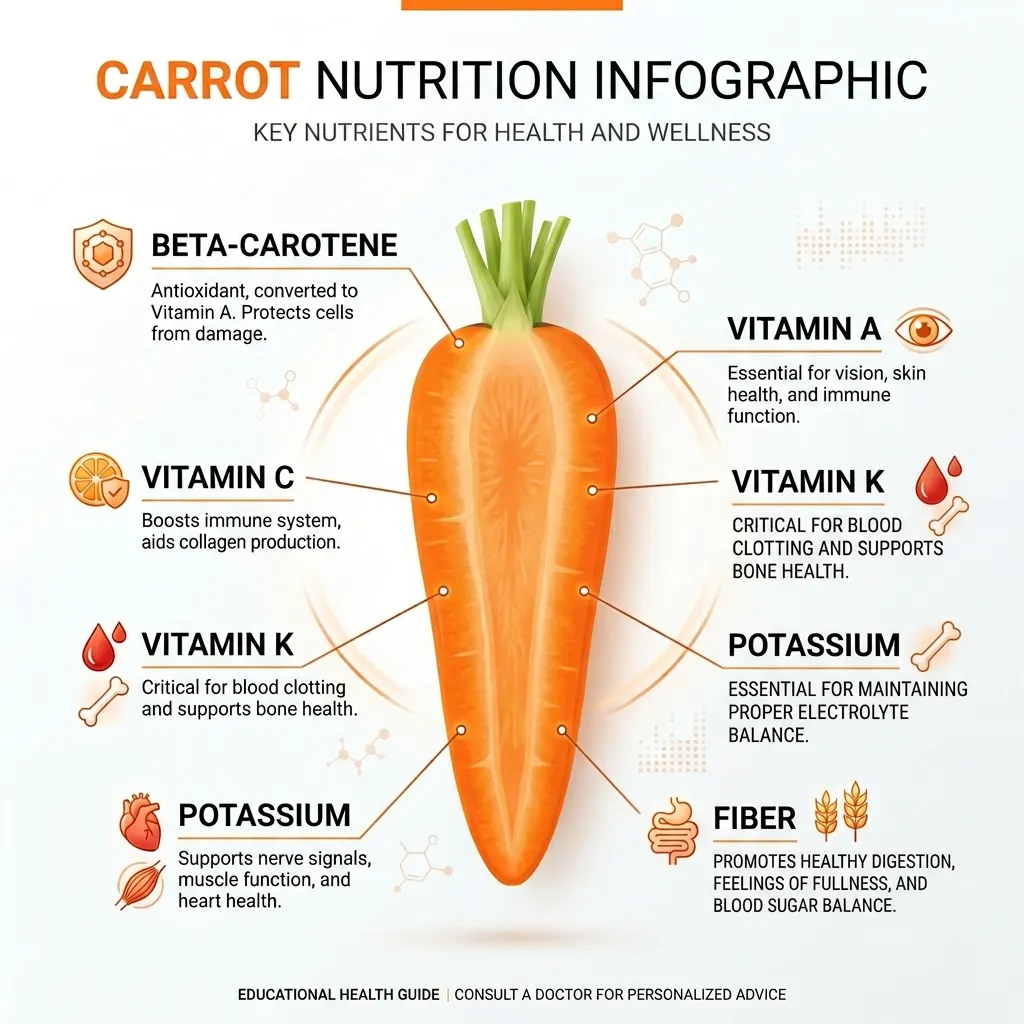
Before we dive into what carrots do, it helps to understand what’s inside them. Because once you see the nutrient profile, the benefits stop seeming like coincidence and start looking like biology working exactly as it should.
One medium raw carrot (about 61 grams) contains:
| Nutrient | Amount per Medium Carrot | % Daily Value (Approx.) |
|---|---|---|
| Beta-Carotene | ~5,050 mcg | — |
| Vitamin A (as RAE) | ~509 mcg | ~200% |
| Vitamin C | ~3.6 mg | ~4% |
| Vitamin K1 | ~8 mcg | ~10% |
| Potassium | ~195 mg | ~6% |
| Fiber | ~1.7 g | ~7% |
| Calories | ~25 kcal | — |
Source: USDA FoodData Central
That beta-carotene figure is the star of the show. It’s a fat-soluble pigment — the reason carrots are orange — and it acts as a precursor to Vitamin A, one of the most versatile nutrients in human physiology. But it doesn’t work alone. The fiber, Vitamin C, Vitamin K, and polyphenols in carrots support entirely different systems in the body, all at once.
Just like spinach hides extraordinary nutrients inside a humble leaf, the carrot hides an entire therapeutic toolkit inside that familiar crunch.
What Happens to Your Eyes When You Eat Carrots Daily
The “carrots improve eyesight” story has been around so long that most people assume it’s exaggerated or outright myth. The reality? It’s not a myth — it’s just often explained without enough context to be useful.
The Rhodopsin Connection

Inside your retina are photoreceptor cells called rods and cones. Rods are responsible for low-light and peripheral vision. For rods to function, they need a pigment called rhodopsin — and rhodopsin cannot be produced without Vitamin A.
When Vitamin A is sufficient, rhodopsin regenerates continuously, keeping your low-light vision sharp and responsive. When Vitamin A is deficient, rhodopsin production slows. Night blindness — difficulty seeing in dim environments — is often one of the first clinically recognized signs of Vitamin A deficiency, according to research from the National Institutes of Health.
One medium carrot provides approximately 200% of your recommended daily Vitamin A. If you’re running low — even subclinically, without obvious symptoms — daily carrot consumption directly replenishes the substrate your eyes need to maintain clear night vision.
Key Insight: Carrots don’t give you “super vision.” They restore and maintain the eye function that Vitamin A deficiency quietly erodes — often before you notice any problem.
Protection Against Age-Related Eye Damage
Two carotenoids found in carrots — lutein and zeaxanthin — act as a kind of internal sunscreen for the retina. They accumulate in the macula (the central region of the retina responsible for detailed vision) and filter out harmful high-energy blue light.
Research published in the Archives of Ophthalmology found that higher dietary intake of lutein and zeaxanthin was associated with a meaningfully reduced risk of age-related macular degeneration (AMD) — a leading cause of vision loss in adults over 50.
The antioxidant activity of beta-carotene also helps neutralize free radicals that accumulate in eye tissue from UV exposure and screen time. In a world where most adults spend 7–10 hours daily on screens, this oxidative protection is increasingly relevant.
This eye-protective theme isn’t unique to carrots. If you’ve read our earlier piece on why your eyes are silently begging for apricots, you’ll see the same beta-carotene mechanism at work. The two foods actually complement each other beautifully when eaten regularly.
What Happens to Your Skin When You Eat Carrots Daily
Skin is the body’s largest organ — and one of the most responsive to nutrition. What you eat doesn’t just fuel your insides; it literally becomes your outer layer, cell by cell, over weeks and months. Carrots have a particularly direct relationship with skin health.
Beta-Carotene and the Skin Glow Effect

Beta-carotene is a fat-soluble pigment that deposits in skin tissue when consumed regularly. At moderate intake, this doesn’t turn skin orange — it creates a subtle, warm, golden undertone that researchers have linked to what humans perceive as an attractive, healthy complexion. A landmark study at the University of St. Andrews found that carotenoid-rich skin tone was rated as more attractive and healthier-looking than sun-tanned skin by a panel of observers.
This is skin nutrition showing on the outside — not as a dramatic transformation, but as the quiet glow that comes from consistent, nourishing eating. As we’ve explored before, small food changes create big results — they just take longer than most people expect.
Vitamin A and Skin Cell Renewal
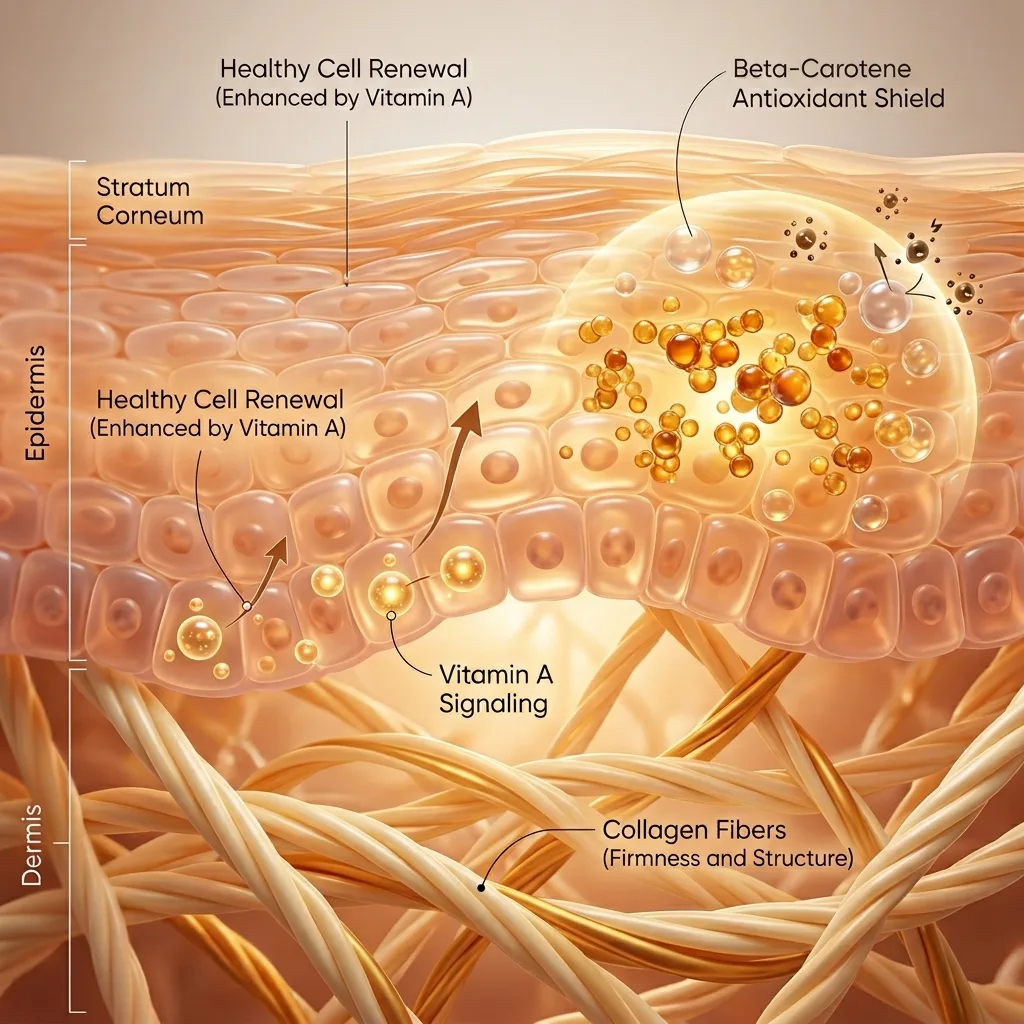
Vitamin A is directly involved in regulating skin cell turnover — the process by which old, damaged skin cells are replaced by fresh ones. Retinoids (the activated form of Vitamin A) signal skin cells to divide and differentiate normally. When Vitamin A levels are low, this process slows. The result can show up as dry, flaky, rough-textured skin, clogged pores, and a dull appearance.
Topical retinoids are used in dermatology precisely because of this skin-renewal effect. Dietary Vitamin A from carrots supports the same mechanism from the inside out — more gradually, but without the irritation that topical products can cause.
Antioxidant Defense Against Skin Aging
Every day, your skin is assaulted by UV radiation, environmental pollutants, and metabolic by-products called reactive oxygen species (ROS). These free radicals break down collagen, damage DNA in skin cells, and accelerate visible aging — fine lines, uneven texture, and loss of firmness.
Beta-carotene is a potent antioxidant. Daily consumption contributes to a measurable increase in the skin’s antioxidant capacity, helping neutralize ROS before they can degrade structural proteins. Combined with the Vitamin C in carrots (which directly supports collagen synthesis), this creates a meaningful anti-aging defense — not through magic, but through consistent biochemistry.
Foods like strawberries and watermelon provide complementary antioxidants (ellagic acid and lycopene, respectively) — eating a varied plant-rich diet amplifies carrot’s skin benefits significantly.
What Happens to Your Immune System When You Eat Carrots Daily

The immune system is the body’s standing army — always active, always scanning for threats, and perpetually hungry for specific nutrients to maintain its readiness. Carrots are one of the most complete single-source contributors to immune function available in any kitchen.
Vitamin A and the Mucosal Barrier
The first line of immune defense isn’t antibodies or white blood cells. It’s the mucous membranes lining your nose, throat, lungs, and gut. These epithelial tissues are your body’s physical barrier against invading pathogens — and they depend heavily on Vitamin A to stay structurally intact.
Vitamin A regulates the production and maintenance of epithelial cells. When levels drop, mucosal surfaces thin and become more permeable. Viruses and bacteria that would normally be trapped and expelled instead gain easier entry into the body.
According to a review in the Journal of Clinical Medicine, Vitamin A deficiency is associated with impaired mucosal immunity, reduced natural killer cell activity, and a weakened antibody response. Daily carrot consumption — providing consistent, bioavailable Vitamin A — directly supports barrier integrity.
Beta-Carotene’s Role in Immune Cell Activation
Beta-carotene doesn’t just convert to Vitamin A — it has independent immunological activity. Studies show that beta-carotene can enhance the function of natural killer (NK) cells, which identify and destroy virus-infected and cancerous cells. It also supports the activity of T-helper cells, which coordinate the broader immune response.
A clinical study published in Clinical Nutrition found that supplementing with beta-carotene increased NK cell activity in healthy adults — suggesting regular dietary intake from whole foods like carrots has tangible immune benefits beyond simple Vitamin A conversion.
The Anti-Inflammatory Bonus
Chronic low-grade inflammation is increasingly recognized as one of the root mechanisms behind immune dysfunction, accelerated aging, and a wide range of chronic diseases. Carrots contain several bioactive compounds — including polyacetylenes like falcarinol — with documented anti-inflammatory properties.
Laboratory studies have found falcarinol to inhibit specific inflammatory pathways, and population studies consistently show that people who eat more carotenoid-rich vegetables have lower markers of systemic inflammation. Oranges support immune function through Vitamin C in a complementary way — together, these two foods cover different but overlapping immune pathways.
Raw vs. Cooked Carrots — Which Actually Delivers More?
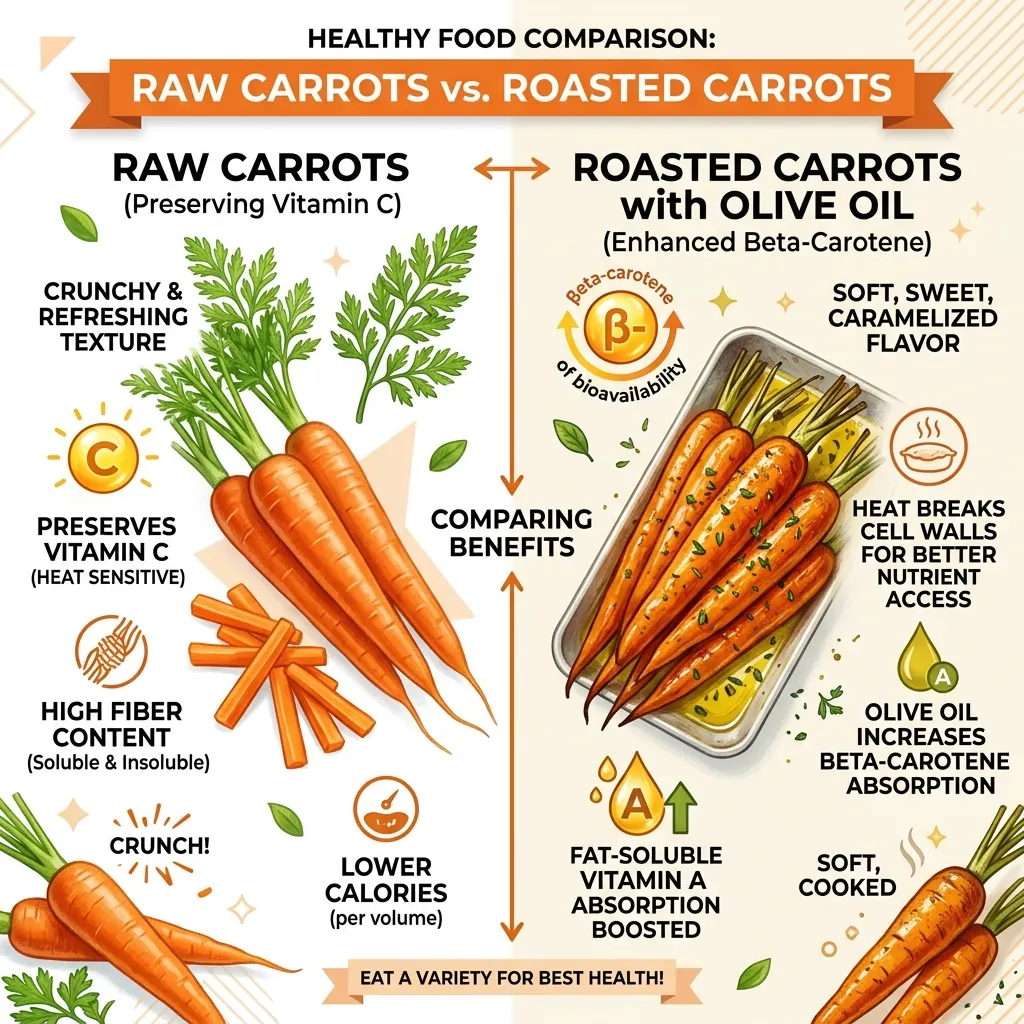
This is one of the most commonly debated carrot questions, and the answer is nuanced in an interesting way.
Raw carrots preserve Vitamin C and certain heat-sensitive enzymes, but the beta-carotene is trapped inside rigid plant cell walls, making it harder for the body to absorb. Research shows that cooking — particularly steaming or light sautéing — breaks down these cell walls and increases beta-carotene bioavailability significantly.
The absorption multiplier gets even more impressive with fat. Since beta-carotene is fat-soluble, eating cooked carrots with a small amount of olive oil, avocado, or nuts can increase carotenoid absorption by up to 6-fold compared to eating them plain and raw, according to a study in the Journal of Agricultural and Food Chemistry.
Practical tip: For maximum beta-carotene benefit, roast or steam your carrots and add a drizzle of olive oil. For variety, raw carrots with hummus (which contains tahini fat) is also a smart combination. Eat both forms — they each bring something useful.
How Many Carrots a Day Is the Sweet Spot?

One medium carrot a day is genuinely enough. It delivers approximately 200% of your daily Vitamin A requirement, a meaningful dose of beta-carotene, fiber, and the full array of micronutrients discussed above. You don’t need to eat five carrots to double the benefits — the body converts what it needs and stores the rest in the liver.
Eating one to two medium carrots daily is the range most nutritionists consider optimal for consistent benefit. Going beyond four or five large carrots every single day over a long period can cause carotenemia — a harmless but visible orange tint to the skin, particularly on the palms and soles. It reverses when intake is reduced.
Understanding why your body treats food as information, not just fuel, puts this in perspective — the carrot isn’t a supplement to megadose. It’s a signal, delivered daily, that keeps multiple biological systems calibrated and functioning optimally.
Are There Any Side Effects Worth Knowing About?
For most healthy adults, eating one to two carrots daily is completely safe and poses no risk. A few things worth being aware of:
- Carotenemia: Very high daily intake over time can cause a yellowing of the skin (especially palms and feet). Harmless and reversible. Not a concern at normal serving sizes.
- Vitamin A toxicity (hypervitaminosis A): This occurs from preformed Vitamin A (found in animal liver and high-dose supplements), NOT from dietary beta-carotene from vegetables. The body regulates how much beta-carotene it converts. Eating carrots cannot cause Vitamin A toxicity.
- Blood sugar: Carrots have a moderate glycemic index (around 39 for raw carrots) but a low glycemic load due to their high water and fiber content. They are appropriate for most people, including those monitoring blood sugar, in normal serving sizes.
- Allergies: Rare, but carrot allergy exists, often linked to birch pollen allergy (oral allergy syndrome). Symptoms are typically mild and mouth-localized.
Frequently Asked Questions
How many carrots should I eat per day to see real benefits?
One medium carrot (about 61g) per day is enough to provide roughly 200% of your daily Vitamin A requirement. You don’t need to overdo it — one or two carrots daily is the sweet spot for consistent benefits without any risk of carotenemia.
How long does it take to see skin improvements from eating carrots daily?
Skin cell turnover takes roughly 28–40 days. Most people begin noticing a subtle glow and improved texture within 4–6 weeks of consistent daily intake. Results depend on overall diet quality, hydration, and individual skin type.
Can eating too many carrots turn your skin orange?
Yes — this is called carotenemia. It happens when large amounts of beta-carotene accumulate in the skin, most commonly from excessive carrot juice consumption. It’s harmless and fully reversible. One to two carrots a day will not cause this.
Are raw carrots better than cooked for nutrition?
Both are valuable but in different ways. Raw carrots preserve Vitamin C and certain plant enzymes. Cooked carrots (steamed or lightly sautéed) increase beta-carotene bioavailability by breaking down cell walls. Pairing cooked carrots with healthy fat boosts carotenoid absorption up to 6x. Variety is best.
Do carrots really improve night vision?
Partially — with important context. Vitamin A from carrots is genuinely essential for producing rhodopsin, the pigment that enables low-light vision. If you are Vitamin A deficient, eating carrots can measurably improve night vision. If your levels are already optimal, extra carrots won’t give you enhanced night sight. The biology is real; the myth is in the overselling.
Can I get the same benefits from carrot juice?
Carrot juice concentrates beta-carotene and Vitamin A but removes most of the dietary fiber. It’s a valid way to get carotenoids, but you lose the gut health and blood sugar stabilizing benefits that fiber provides. Whole carrots are generally preferable. If you do drink carrot juice, keep portions modest — a small glass (100–150ml) is plenty.

The Bigger Picture: One Carrot, Three Systems, One Simple Habit
There’s something almost too simple about this. Eat one carrot a day. Your eyes get the Vitamin A and carotenoids they need to stay sharp, protect the retina, and maintain low-light function. Your skin receives the beta-carotene and antioxidants it needs for cellular renewal, collagen support, and aging resistance. Your immune system gets the mucosal armor and NK cell activation it needs to hold the line against pathogens.
Three distinct body systems. One vegetable. Delivered daily, not in megadoses, but in the quiet, consistent way that nutrition actually works — not as a dramatic intervention, but as ongoing support for systems that never stop running.
This is what daily eating patterns quietly building long-term health looks like in practice. Not a detox. Not a protocol. Just a carrot.
And if you’re looking to amplify the benefits, consider pairing your daily carrot habit with other similarly underrated whole foods. Kiwi adds a powerful Vitamin C punch that complements carrot’s antioxidant profile. Almonds provide the fat needed to maximize beta-carotene absorption. Guava brings additional immune-supporting Vitamin C at levels that even citrus can’t match.
The carrot doesn’t need to work alone. But it’s a remarkably good place to start.
References:
1. USDA FoodData Central — Raw Carrot Nutrient Profile
2. National Institutes of Health — Vitamin A and Vision
3. Seddon JM et al. (1994). Archives of Ophthalmology — Dietary Carotenoids and AMD
4. Whitehead RD et al. (2012). PLOS ONE — Carotenoid Skin Coloration and Perceived Health
5. Huang Z et al. (2018). Journal of Clinical Medicine — Vitamin A and Immune Function
6. Bendich A (1989). Clinical Nutrition — Beta-Carotene and NK Cell Activity
7. Ghavami A et al. (2012). Journal of Agricultural and Food Chemistry — Fat-Mediated Carotenoid Absorption

Aarti Solanki, B.Sc. (Food Science), is a food science writer passionate about making nutrition simple and evidence-based. She creates well-researched, easy-to-understand articles on healthy eating, food science, and nutrition, using information from trusted scientific and public health sources.