The Moment You Feel “Safe” in the Snack Aisle
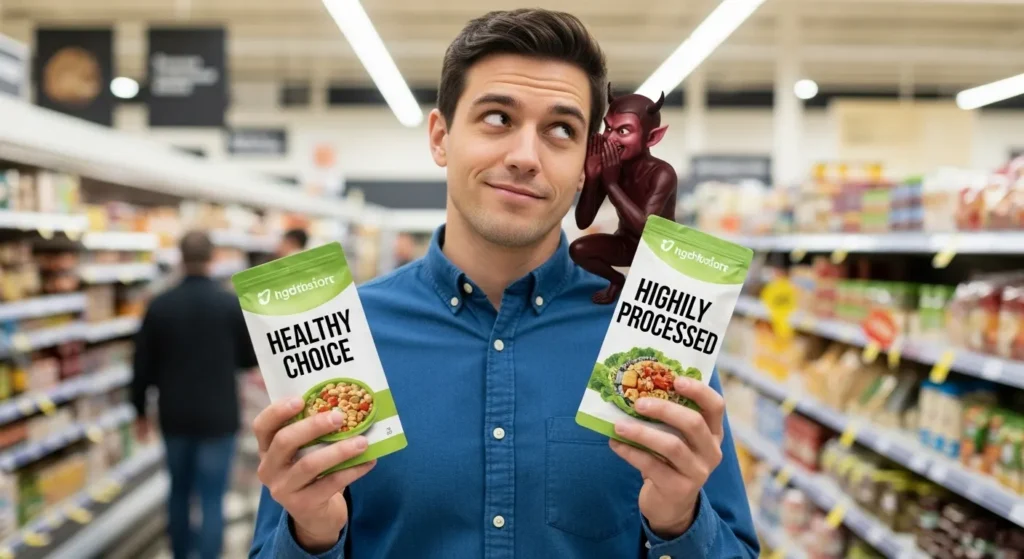
You’re standing in the grocery store.
Two products sit side by side.
One looks ordinary.
The other screams:
High Protein.
Low Sugar.
Gluten-Free.
Heart Healthy.
And instantly, without even thinking, something clicks in your brain:
“This one is better. I’m in control. I’m making a smart choice.”
But here’s the shock:
Food labels are often designed less to inform you…
And more to make you feel in control — even when the food itself hasn’t earned that trust.
That false comfort is one of the most powerful forces shaping modern eating.
The Deep Truth: Labels Sell Emotional Control, Not Just Nutrition
Most people assume labels exist for clarity.
But the truth is more psychological:
Labels don’t just give information…
They give reassurance.
They offer the emotional reward of believing:
- You’re choosing wisely
- You’re avoiding danger
- You’re doing something healthy
- You’re managing your body properly
In a world filled with confusing nutrition advice, labels provide something comforting:
A simple promise of control.
Even if it’s incomplete.
The “Control Illusion”: Why Humans Crave Simple Health Signals
Behavioral psychology has long shown that people feel calmer when choices appear manageable.
In nutrition, that often translates into:
- Counting grams
- Avoiding one ingredient
- Buying foods with health claims
- Believing “this option is safe”
This creates what experts call:
The Illusion of Control
You feel like health is something you can handle easily…
Because the label reduces complexity to one phrase:
- “Low fat”
- “No sugar”
- “High fiber”
But health is not that simple.
And labels know it.
How Labels Create Confidence Without Real Nourishment
Here’s the subtle trick:
The more chaotic nutrition feels…
The more powerful labels become.
Because labels don’t require deep understanding.
They offer shortcuts.
Instead of asking:
- Is this food processed?
- Will it keep me full?
- Is it structurally intact?
- Does it support long-term health?
You only ask:
Does it have the right words?
That’s not control.
That’s comfort disguised as control.
Real-Life Example: The Protein Bar Illusion
Protein bars are one of the best modern examples.
They look like health.
They sound like discipline.
They promise strength.
But many are made with:
- Protein isolates
- Syrups
- Emulsifiers
- Artificial sweeteners
- Highly processed oils
Yet the label says:
20g Protein
And suddenly, it feels like a responsible meal.
Even though your hunger may return quickly…
And cravings may increase later.
The label gave control.
Not nourishment.
The Health Halo Effect: When One Claim Changes Everything
A powerful phenomenon in consumer research is called:
The Health Halo Effect
When a product highlights one “healthy” trait…
People assume the entire product is healthy.
For example:
- “Low carb” cookies feel guilt-free
- “Organic” chips feel cleaner
- “Sugar-free” soda feels harmless
- “Gluten-free” snacks feel wholesome
Even when the product is still ultra-processed.
That single claim creates confidence.
And confidence is emotionally addictive.
Why This Matters Today: Labels Replace Food Literacy
Modern shoppers are overwhelmed.
Most people don’t have time to study food science.
So labels become a replacement for understanding.
This matters because:
Ultra-processed foods are now everywhere.
And the industry has mastered the art of making processed food feel controlled.
Labels let people believe:
- They’re eating better
- They’re being mindful
- They’re making progress
Without requiring real dietary change.
That’s why label-driven eating often feels frustrating:
“I’m buying healthy foods… so why do I still feel off?”
Because control isn’t the same as health.
The Hidden Trade-Off: What Labels Distract You From
Labels emphasize what’s easy to market:
- Nutrients
- Absence
- Numbers
- Buzzwords
But they distract from what matters most:
- Processing level
- Ingredient quality
- Food structure
- Satiety response
- Long-term metabolic impact
A cereal can be “fortified with vitamins”…
And still spike blood sugar rapidly.
A snack can be “low fat”…
And still encourage overeating.
The label gives control.
The body experiences reality.
Comparison Table: Label Control vs Real Control
| Label Signal | Feels Like Control | What It Often Misses | Real Control Looks Like |
|---|---|---|---|
| “Low Sugar” | Safer choice | Artificial sweeteners, cravings | Whole fruit, balanced meals |
| “High Protein” | Filling, healthy | Processed isolates, additives | Eggs, yogurt, legumes |
| “Gluten-Free” | Cleaner eating | Refined starch replacement | Whole grains if tolerated |
| “Organic” | Pure and safe | Still ultra-processed food | Minimally processed foods |
| “Low Fat” | Weight-friendly | Added carbs, low satiety | Healthy fats in real form |
Mistakes to Avoid When Reading Labels
Here are the most common traps smart people fall into:
1. Trusting the front of the package
Front labels are marketing, not education.
2. Believing removal equals health
“No sugar” does not automatically mean nourishing.
3. Focusing on one nutrient
Health is a pattern, not a number.
4. Confusing control with restriction
Control is not fear-based avoidance.
5. Ignoring ingredient reality
A long ingredient list tells a deeper story.
Hidden Tips: How to Break Free From Label Comfort
Want real control back?
Here are expert-level habits that work:
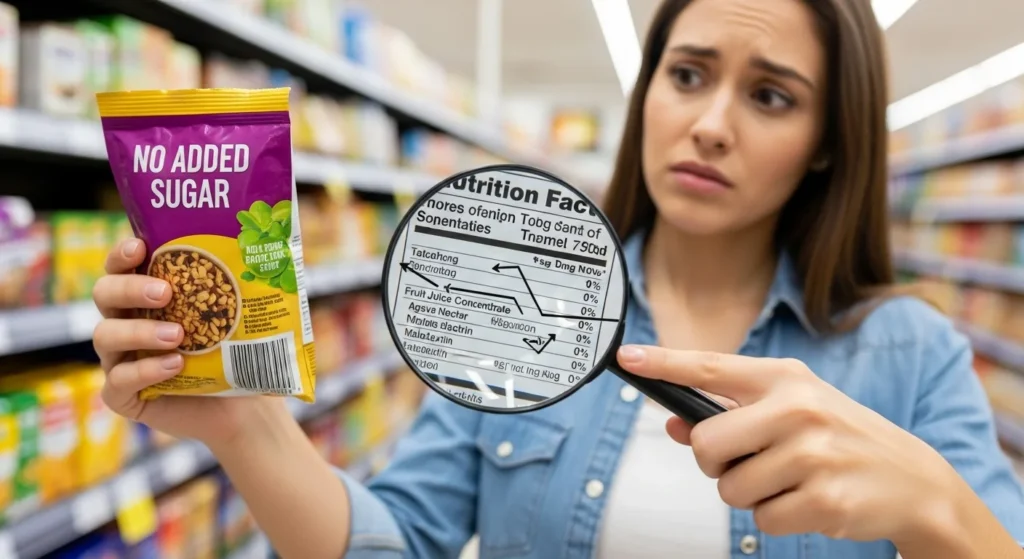
Flip the package immediately
The ingredient list is more honest than claims.
Ask: “What was done to this food?”
Processing matters more than slogans.
Look for foods that don’t need labels
Whole foods don’t scream for trust.
Focus on satisfaction, not perfection
Foods that keep you full reduce mindless eating.
Shop for presence, not absence
Choose foods rich in:
- Fiber
- Natural fats
- Protein in intact form
- Real structure
Actionable Steps: How to Shop With Real Confidence
Use this practical grocery filter:
The 5-Step Real Control Method
- Ignore the claim
- Read the ingredient list
- Count how many items sound industrial
- Ask if this resembles real food
- Choose the least manipulated option
Better choices often look boring:
- Oats instead of cereal puffs
- Nuts instead of protein chips
- Yogurt instead of dessert bars
- Lentils instead of fortified crackers
Real control is quiet.
Not loud.
Key Takeaways
- Food labels often create emotional reassurance, not true nutrition clarity
- Claims give a false sense of control through simplification
- The health halo effect makes processed foods seem healthier than they are
- Real health comes from food structure, ingredients, and satisfaction
- The best control comes from understanding food, not chasing buzzwords
- Whole foods rarely need to convince you
FAQ: Common Questions People Ask
1. Are food labels meant to mislead?
Not always, but many claims are designed more for marketing than true nutritional guidance.
2. Is “high protein” always a good sign?
No. Protein quality and processing matter more than the number.
3. Why do I feel healthier buying labeled foods?
Because labels create emotional comfort and a sense of control, even if the food is still processed.
4. What matters more than label claims?
Ingredient quality, food structure, processing level, and how the food affects hunger and energy.
5. How can I shop smarter without overthinking?
Focus on simple, recognizable foods and treat packaged claims as noise, not guidance.
Clean Conclusion: Real Control Doesn’t Come From Packaging
Food labels are powerful because they speak to something deeply human:
The desire to feel safe.
The desire to feel in control.
But the truth is:
Health isn’t a slogan.
It isn’t a nutrient claim.
It isn’t something you buy because the box says “better.”
Real control comes from food that doesn’t need convincing.
Whole foods. Simple ingredients. Natural structure.
So next time a label makes you feel comfort…
Pause.
Because the healthiest choices don’t shout.
They quietly support you.

Pingback: One Says Low Sugar, One Says High Protein — Why Comparing Food Labels Often Backfires