
The Moment Your Guard Drops
You’re scanning a shelf.
Your eyes land on bold words:
Clinically Proven.
Heart Healthy.
Doctor Recommended.
Supports Immunity.
Something inside you relaxes.
You don’t feel sold to.
You feel reassured.
And that reaction happens faster than conscious thought.
Bright health claims don’t just inform — they trigger trust.
Understanding why this happens isn’t about blaming consumers.
It’s about understanding how the human brain makes decisions under pressure.
Why the Brain Loves Shortcuts
Every grocery store is a cognitive overload.
Hundreds of products.
Limited time.
Competing priorities.
To cope, the brain relies on mental shortcuts, known as heuristics.
Health claims act as one of the strongest shortcuts available.
They answer complex questions instantly:
- Is this safe?
- Is this good for me?
- Is this a responsible choice?
Bright claims reduce uncertainty — and certainty feels good.
The Authority Effect: Why Certain Words Carry Weight
Some phrases trigger trust because they borrow authority.
Words like:
- “Clinically tested”
- “Doctor approved”
- “Science-backed”
- “Expert formulated”
These phrases tap into the same psychological mechanism that makes people trust uniforms, titles, and credentials.
Organizations like the World Health Organization and the FDA are often referenced or implied — even when no direct endorsement exists.
Your brain hears: Someone smarter already checked this.
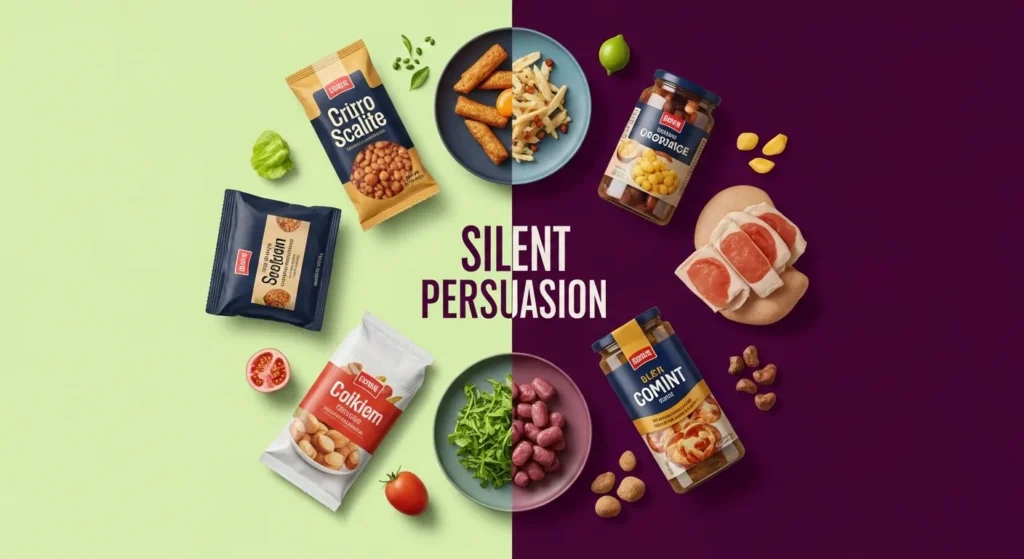
Bright Claims vs Subtle Information
There’s a reason health claims are large, colorful, and front-facing.
And nutrition facts are small, monochrome, and tucked away.
The brain prioritizes:
- High contrast
- Bold fonts
- Simple promises
Subtle data requires effort.
Bright claims require belief.
In fast decision environments, visibility beats accuracy.
The Health Halo Effect, Revisited
One of the most researched phenomena in nutrition psychology is the health halo effect.
When a food carries a strong health claim, people tend to:
- Assume it’s healthier overall
- Eat larger portions
- Underestimate calories
- Feel less guilt
This effect has been documented across multiple food categories and discussed in public health research referenced by bodies like the Centers for Disease Control and Prevention.
The claim changes behavior — not just perception.
Why Bright Claims Feel More Honest
Here’s the paradox:
The louder the claim, the more trustworthy it feels.
Why?
Because clarity feels like honesty.
A bold promise creates the illusion of transparency, even when the claim is narrowly defined.
For example:
- “Supports immunity” may refer to a single added vitamin
- “Heart healthy” may meet minimal criteria
- “Clinically tested” may involve limited trials
The claim isn’t necessarily false — it’s incomplete.
A Simple Comparison That Reveals the Gap
| Bright Health Claim | What It Signals Emotionally | What It Actually Guarantees |
|---|---|---|
| Clinically proven | Scientifically superior | Some level of testing |
| Doctor recommended | Medical endorsement | Often advisory input |
| Heart healthy | Cardiovascular safety | Meets specific criteria |
| Boosts immunity | Strong protection | Supports limited functions |
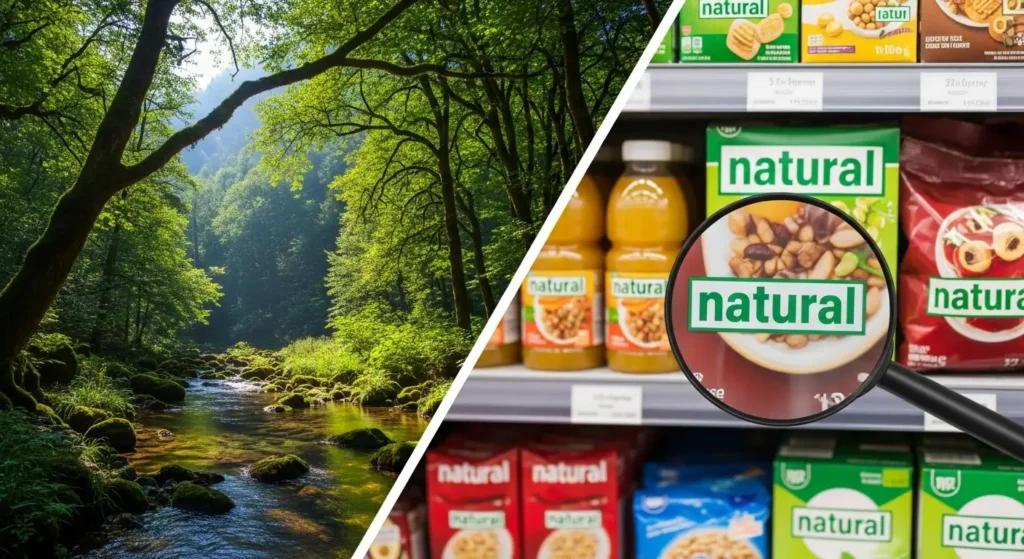
| Natural & healthy | Safe and pure | Not strictly defined |
This gap is where trust is triggered — and nuance disappears.
Real-Life Example: The Cereal Aisle Illusion
Consider two breakfast cereals:
- Cereal A:
- “Supports brain health”
- “With essential vitamins”
- Bright icons on the box
- Cereal B:
- No front claims
- Similar nutrient profile
- Plain packaging
Most shoppers choose Cereal A.
Not because it’s objectively better — but because the claims felt like guidance.
Why We Trust Claims More Than Ingredients
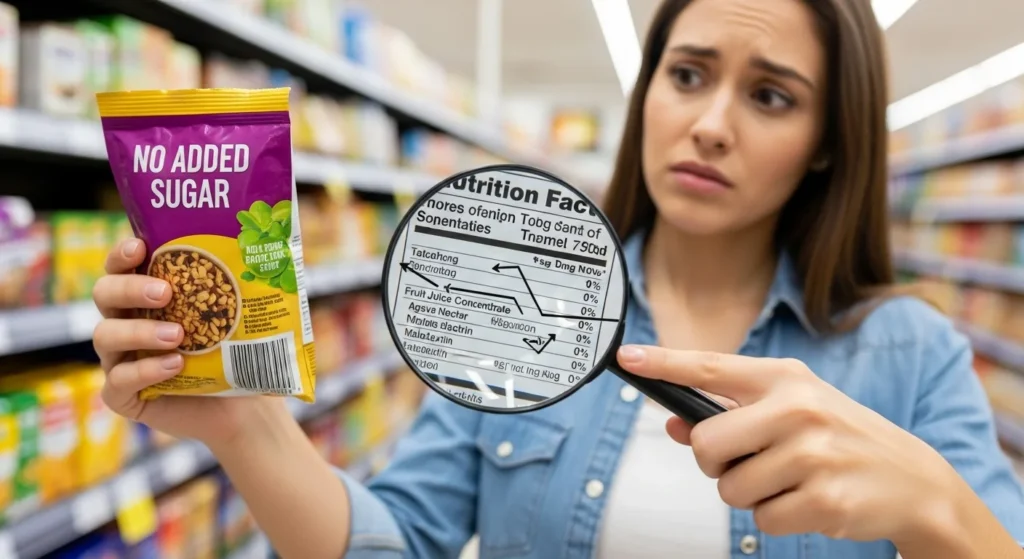
Reading ingredient lists takes effort.
Interpreting health claims feels easier.
This creates a decision pattern:
- Claim builds trust
- Trust reduces scrutiny
- Scrutiny feels unnecessary
- Purchase feels justified
The brain prefers comfort over complexity.
Bright claims provide comfort.
Common Mistakes People Make
These habits are extremely common:
- Assuming claims are comprehensive
- Believing regulation equals endorsement
- Ignoring serving size context
- Letting one claim override overall quality
- Trusting familiarity over verification
These aren’t mistakes of intelligence — they’re features of human cognition.
How Regulation Adds to the Trust Illusion
Health claims are often regulated — but within narrow boundaries.
This creates a dangerous assumption:
If it’s allowed, it must be good.
In reality, regulatory approval usually means:
- The claim meets minimum criteria
- The wording follows guidelines
- The claim avoids outright deception
It does not mean the food is optimal, necessary, or superior.
How to Pause Without Becoming Cynical
The goal isn’t distrust.
It’s calibrated trust.
Here’s a simple, practical approach:
1. Ask: “What Does This Claim Actually Refer To?”
One nutrient? One function? One study?
2. Check What’s Not Being Said
Claims highlight strengths — not trade-offs.
3. Compare Without Claims
Look at similar products without bold promises.
4. Notice Emotional Relief
That “safe choice” feeling is the cue to slow down.
Why This Matters Today
As people become more health-conscious, marketing adapts.
Claims grow brighter.
Icons multiply.
Confidence increases.
But trust without understanding leads to:
- Overconsumption
- Nutrient imbalance
- Confusion
- Frustration
Awareness restores balance — without removing convenience.
A Hidden Tip Most People Miss
Truly high-quality foods often don’t need to explain themselves loudly.
They rely on:
- Simplicity
- Familiar ingredients
- Consistency
When trust comes from experience rather than promises, claims become optional.
Key Takeaways
- Bright health claims trigger instant trust
- Authority language shortcuts decision-making
- Health halos change behavior, not just belief
- Regulation limits deception, not exaggeration
- Pausing restores informed choice
Frequently Asked Questions
1. Are health claims always misleading?
No. Many are accurate — but narrowly focused.
2. Why do I feel safer choosing foods with claims?
Claims reduce uncertainty, which the brain finds comforting.
3. Are health claims regulated?
Yes, but within specific and limited criteria.
4. Should I ignore health claims completely?
No — just don’t let them be the final decision.
5. What matters more than claims?
Overall food quality, balance, and how it fits your needs.
A Clear, Grounded Conclusion
Bright health claims don’t work because people are careless.
They work because the brain is efficient.
They promise clarity in a noisy world — and clarity feels like trust.
Once you understand that mechanism, claims lose their spell.
You don’t become suspicious.
You become selective.
And that’s where real confidence in food choices begins.
Disclaimer: This article is for general educational purposes and is not a substitute for personalized medical or nutritional advice.
Pingback: How “No Added Sugar” Can Still Mean Sweet — The Label Trick Most People Don’t Catch
Pingback: Why “Natural” Has No Clear Definition — And Why That Confusion Works So Well
Pingback: Why “Low Fat” Became a Marketing Shortcut — And How It Quietly Changed the Way We Eat
Pingback: How Food Label Design Tricks the Brain Into Seeing “Healthy” — Even When It Isn’t
Pingback: Why Ingredient Order Matters More Than Buzzwords — And How to See Past Food Label Hype
Pingback: Why “High Protein” Doesn’t Equal Balanced Nutrition — The Popular Health Shortcut That Often Backfires
Pingback: What Nutrition Labels Leave Out: The Missing Context Behind “Healthy” Foods