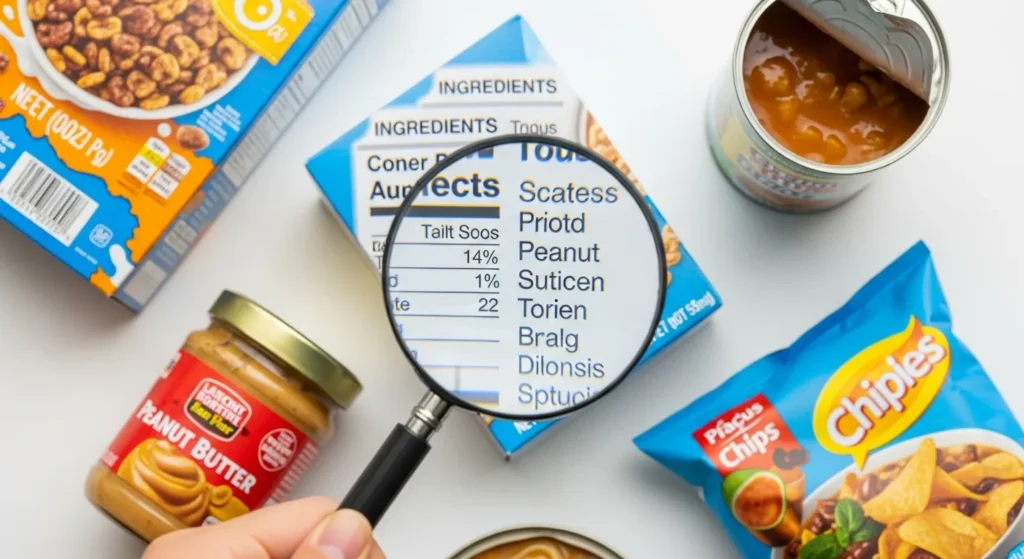
The Moment Most People Read the Wrong Part of the Label
You pick up a food package.
Your eyes go straight to the front:
- “All Natural”
- “Made with Whole Grains”
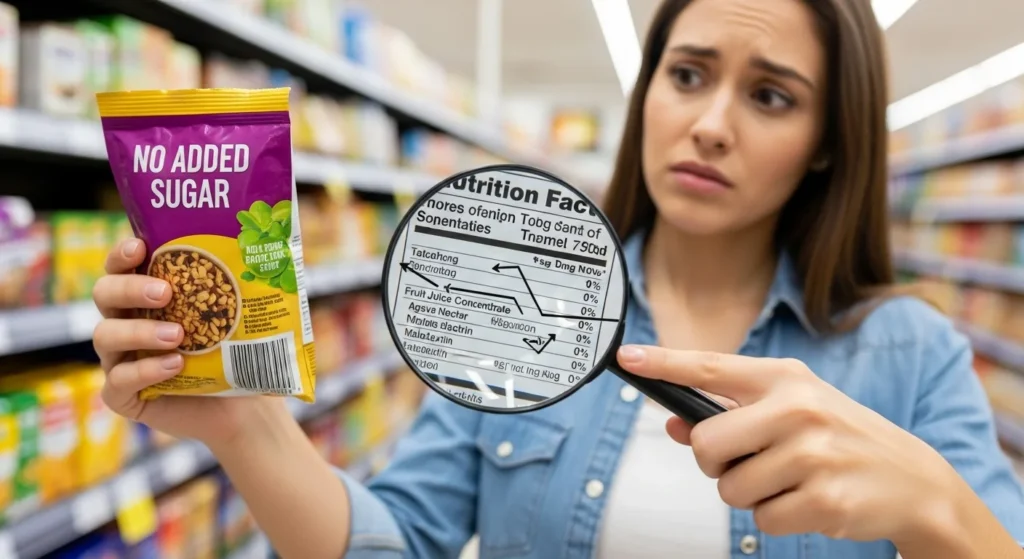
- “No Added Sugar”
- “Clean Ingredients”
You feel reassured.
Only later—if at all—do you glance at the ingredient list.
That’s backwards.
Because while buzzwords are designed to persuade, ingredient order is designed to disclose.
And once you understand how ingredient order works, food labels become far less confusing—and far more honest.
Buzzwords Create Comfort — Ingredient Lists Create Clarity
Food marketing is emotional by design.
Buzzwords are meant to:
- Reduce hesitation
- Signal safety
- Build trust quickly
- Simplify decisions
But buzzwords are optional language.
Ingredient order is not.
By regulation, ingredients must be listed in descending order by weight.
That single rule makes ingredient order the most reliable part of any food label.
How Ingredient Order Actually Works
The first ingredient is the most abundant.
The last ingredient is present in the smallest amount.
That’s it.
No creativity.
No interpretation.
No storytelling.
What This Means in Practice
If a product claims to be:
- “Made with whole grains”
…but sugar appears before whole grain flour—
Sugar dominates the product.
The buzzword highlights a feature.
The ingredient order reveals the foundation.
Why Buzzwords Exist in the First Place
Buzzwords fill a gap.
They exist because most consumers:
- Don’t read ingredient lists
- Don’t understand processing
- Want fast reassurance
Words like:
- Natural
- Clean
- Wholesome
- Real
- Smart
Have no strict nutritional definition.
They describe how food wants to feel, not what it’s made of.
Ingredient order doesn’t care about feelings.
Real-Life Example: The “Healthy” Snack Bar
Imagine two snack bars.
Snack Bar A (Front Claims)
- High Protein
- No Artificial Colors
- Clean Ingredients
Ingredient Order Starts With:
- Glucose syrup
- Refined flour
- Vegetable oil
Snack Bar B (Minimal Claims)
- No bold promises
Ingredient Order Starts With:
- Oats
- Nuts
- Seeds
Snack Bar A sounds healthier.
Snack Bar B is simpler.
Ingredient order quietly exposes the difference.
Why the First 3 Ingredients Matter Most
Most packaged foods are dominated by their top three ingredients.
Those ingredients determine:
- Calorie density
- Blood sugar response
- Satiety
- Processing level
If the first three ingredients are:
- Refined grains
- Added sugars
- Industrial oils
No buzzword can undo that reality.
This is why experienced label readers scan the top half of the list—and stop.
Buzzwords Distract From Processing Level
One of the biggest truths ingredient order reveals is how processed a food really is.
Long ingredient lists with:
- Modified starches
- Emulsifiers
- Flavor enhancers
Signal heavy processing—even if the front says “natural.”
Buzzwords create a story.
Ingredient order shows the machinery behind it.
Comparison Table: Buzzwords vs Ingredient Order
| What Buzzwords Say | What Ingredient Order Shows |
|---|---|
| Clean | Actual dominant ingredients |
| Natural | Processing complexity |
| Healthy | Sugar and oil priority |
| Wholesome | Refinement level |
| Made with | Percentage relevance |
| Smart choice | Formulation reality |
| Better for you | Weight-based truth |
When the two conflict, ingredient order wins.
Why This Matters Today
Modern food shelves are crowded with:
- Similar packaging
- Similar claims
- Similar promises
Ingredient order is often the only honest differentiator.
When you rely on buzzwords:
- Foods blur together
- Trust erodes
- Confusion increases
When you rely on ingredient order:
- Choices simplify
- Confidence improves
- Decision fatigue drops
This isn’t about perfection—it’s about clarity.
Common Mistakes People Make With Ingredient Lists
Even label-conscious shoppers slip up.
Common mistakes include:
- Reading ingredients after buying
- Ignoring order and focusing on presence
- Assuming small “bad” ingredients don’t matter
- Trusting front-of-pack claims over lists
- Feeling overwhelmed by long names
Ingredient order doesn’t require expertise—just attention.
How to Use Ingredient Order Practically (Actionable Steps)
1. Ignore the Front First
Flip the package immediately.
2. Read the First 5 Ingredients
They tell you almost everything.
3. Look for Food, Not Formulas
Recognizable ingredients usually mean simpler processing.
4. Watch for Sugar Splitting
Multiple sugars spread across the list still add up.
5. Compare Similar Foods Side by Side
Ingredient order reveals which one is closer to real food.
Hidden Tip: “Made With” Often Means “Very Little”
“Made with real fruit” doesn’t mean mostly fruit.
If fruit appears:
- 5th or 6th on the list
- After sugars and syrups
It’s there for marketing—not nutrition.
Ingredient order exposes this instantly.
Key Takeaways
- Buzzwords persuade; ingredient order discloses
- Ingredients are listed by weight, not importance
- The first three ingredients define the food
- Marketing language has no strict definitions
- Ingredient order simplifies smart choices
When you trust the list, labels stop feeling manipulative.
Frequently Asked Questions
1. Are buzzwords always misleading?
Not always—but they’re incomplete without ingredients.
2. Is a long ingredient list always bad?
Not automatically, but it often signals heavy processing.
3. Should I avoid foods with sugar listed at all?
Context matters—but sugar early in the list is significant.
4. Do organic or clean labels change ingredient order?
No. Order still reflects quantity.
5. What’s the fastest way to assess a food?
Read the first five ingredients before anything else.
Conclusion: The Truth Is Already on the Package
Food labels don’t hide information.
They bury it under emotion, color, and confidence.
Ingredient order cuts through all of that.
Once you learn to trust the list more than the language, food choices become calmer, clearer, and far less stressful.
Not stricter.
Not obsessive.
Just informed.
Disclaimer: This article is for general educational purposes only and does not replace personalized nutrition or medical advice.

Pingback: How Food Label Design Tricks the Brain Into Seeing “Healthy” — Even When It Isn’t
Pingback: Why Clean-Looking Packaging Instantly Builds Trust — Even Before You Read the Label