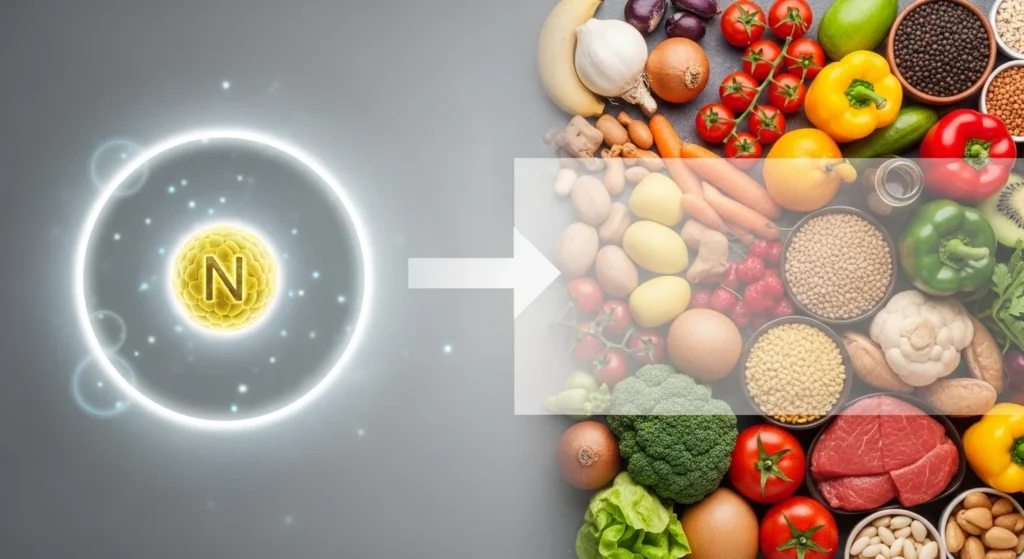
The Claim Your Eyes Always Catch First
You’re in a store.
You grab a product without thinking too much.
One phrase jumps out immediately:
- High Protein
- Low Fat
- Sugar Free
- High Fiber
You don’t even reach the nutrition panel yet.
Your brain already says:
“This must be a better choice.”
That reaction isn’t accidental.
It’s the result of how modern nutrition claims are designed—and why they focus on single nutrients instead of whole-food balance.
Why Single-Nutrient Claims Exist at All
Nutrition science is complex.
Food affects:
- Hormones
- Metabolism
- Satiety
- Gut health
- Long-term disease risk
But complexity doesn’t sell well on packaging.
So labels simplify.
They extract one measurable nutrient and present it as the headline.
This approach fits regulatory frameworks set by authorities like the U.S. Food and Drug Administration and aligns with population-level nutrition messaging guided by bodies such as the World Health Organization.
Accuracy is required.
Context is not.
The Psychology Behind Single-Nutrient Focus
Your brain prefers certainty.
A clear number feels safer than nuance.
- “20g protein” feels actionable
- “Low fat” feels reassuring
- “0 sugar” feels protective
Balanced nutrition, on the other hand:
- Requires comparison
- Depends on combinations
- Varies by individual
Single-nutrient claims reduce mental effort.
They answer one question quickly—
even if it’s the wrong question.
How Nutrition Became Fragmented in the First Place
Historically, nutrition science focused on deficiencies.
Scurvy → vitamin C
Rickets → vitamin D
Anemia → iron
This nutrient-by-nutrient approach saved lives.
But food environments changed.
We moved from scarcity to abundance—
while labels stayed stuck in reductionist thinking.
Instead of asking:
“How does this food function as a whole?”
Labels still ask:
“Which nutrient can we highlight?”
Real-Life Example: The Protein Explosion
Protein is everywhere.
- Protein bars
- Protein chips
- Protein cookies
- Protein water
Why?
Because protein:
- Has a positive health reputation
- Is easy to measure
- Signals strength and fullness
But many “high-protein” foods are also:
- Highly processed
- Low in fiber
- High in refined carbs or sweeteners
Protein becomes the hero—
while everything else fades into the background.
Why Single Nutrients Are Easier to Market Than Balance
Balanced nutrition doesn’t fit on a label.
It involves:
- Ratios
- Timing
- Food structure
- Dietary patterns
Single nutrients are:
- Quantifiable
- Comparable
- Legally definable
A claim like “High Fiber” can be regulated.
A claim like “Metabolically supportive” cannot.
So labels choose what’s easiest to prove—not what’s most meaningful.
The Health Halo Effect in Action
Once a product highlights one “good” nutrient, your brain fills in the rest.
This is known as the health halo effect.
One positive claim leads people to assume:
- Lower calories
- Better quality
- Better long-term health
Even when:
- Sugar is high
- Ingredients are refined
- Portion sizes are misleading
The nutrient claim becomes a shortcut for judgment.
Comparison Table: Single-Nutrient Claims vs Whole-Food Reality
| Focus Area | Single-Nutrient Claim | Whole-Food Perspective |
|---|---|---|
| Protein | Amount highlighted | Quality + context matter |
| Fat | Reduced or removed | Type and balance matter |
| Sugar | “Free from” claim | Glycemic load still exists |
| Vitamins | Added nutrients | Bioavailability varies |
| Fiber | One number | Food structure matters |
Nutrition works as a system—not isolated parts.
Why Single-Nutrient Claims Can Backfire
Here’s the paradox:
Focusing on one nutrient often worsens overall dietary quality.
Examples:
- Low-fat foods → higher sugar intake
- High-protein snacks → ultra-processing
- Vitamin-fortified foods → reduced whole-food intake
People optimize for the label—not the diet.
Over time, this leads to:
- Overeating
- Reduced diversity
- Confusion about what “healthy” really means
When Single-Nutrient Claims Are Actually Useful
To be fair, these claims have value.
They help:
- People with specific deficiencies
- Medical dietary needs
- Comparing similar products quickly
The problem starts when:
- The claim becomes the conclusion
- The rest of the label is ignored
Single nutrients should guide questions—not end them.
Common Mistakes People Make With Nutrient Claims
Mistake #1: Letting One Nutrient Define Health
Health is cumulative, not additive.
Mistake #2: Ignoring Processing Level
A nutrient claim doesn’t reflect food structure.
Mistake #3: Eating More Because It Feels “Safe”
Health halos increase portion size.
Mistake #4: Replacing Meals With Claims
Claims can’t replace balanced meals.
How to Read Nutrition Claims Without Falling for the Trap
You don’t need to ignore nutrition claims.
You need to reframe them.
Actionable Steps
- Ask: “What’s the trade-off?”
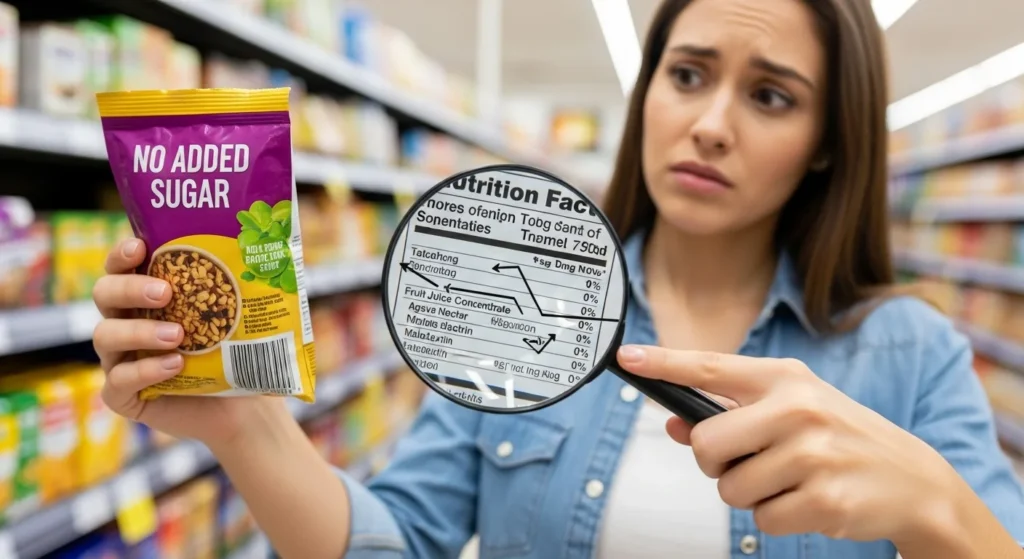
- Check fiber and sugar together
- Look at ingredient length and refinement
- Compare similar products only
- Think in meals, not nutrients
This shifts focus from fragments to function.
Why This Matters Today (And Always)
Modern diets aren’t failing due to lack of nutrients.
They’re failing due to:
- Poor balance
- Over-processing
- Simplified messaging
Single-nutrient claims make nutrition feel manageable—
but often steer people away from what actually works.
Understanding this restores:
- Confidence
- Autonomy
- Long-term consistency
Nutrition becomes less about chasing numbers
and more about building patterns that last.
Key Takeaways
- Nutrition claims focus on single nutrients because they’re easy to measure and market
- One nutrient doesn’t define food quality or health impact
- Health halos distort perception and intake
- Balance exists across foods and meals, not labels
- Reading claims critically leads to better decisions
Frequently Asked Questions
1. Are single-nutrient claims misleading?
They are accurate but incomplete without context.
2. Why is protein emphasized so much?
It has strong positive associations and is easy to quantify.
3. Should I avoid foods with nutrient claims?
No—use claims as clues, not conclusions.
4. Is balanced nutrition measurable?
Not easily on labels; it emerges from dietary patterns.
5. What’s the best way to judge food quality?
Look at ingredients, fiber, sugar, and processing together.
Final Thought
Nutrition labels don’t lie.
They zoom in.
And when you understand why they focus on single nutrients,
you stop chasing claims
and start building balance—quietly, consistently, and confidently.
Disclaimer: This article is for general educational purposes and does not replace personalized nutrition or medical advice.

Pingback: How Front-of-Pack Labels Simplify Too Much — And Why “Easy” Nutrition Choices Often Miss the Truth
Pingback: Why Food Labels Highlight What Sells — Not What Truly Nourishes You