A former roommate of mine went through a phase, years ago, of buying almost exclusively “zero sugar” everything — soda, flavored yogurt, protein bars, even a barbecue sauce that proudly wore the claim across its label. He was proud of the discipline it seemed to represent. Then his dentist, at a routine checkup, asked what on earth he’d been drinking, because his enamel was showing wear more consistent with someone downing regular soda daily than someone who’d sworn off sugar completely. He hadn’t touched a regular soda in over a year. The zero-sugar version, it turned out, had problems the word “zero” was never built to disclose.
That conversation is a fairly efficient way into a broader truth about “zero” claims generally: the word is doing exactly what it’s regulated to do, and regulated is a much narrower promise than most shoppers assume they’re getting.
Zero Is a Threshold, Not an Absolute
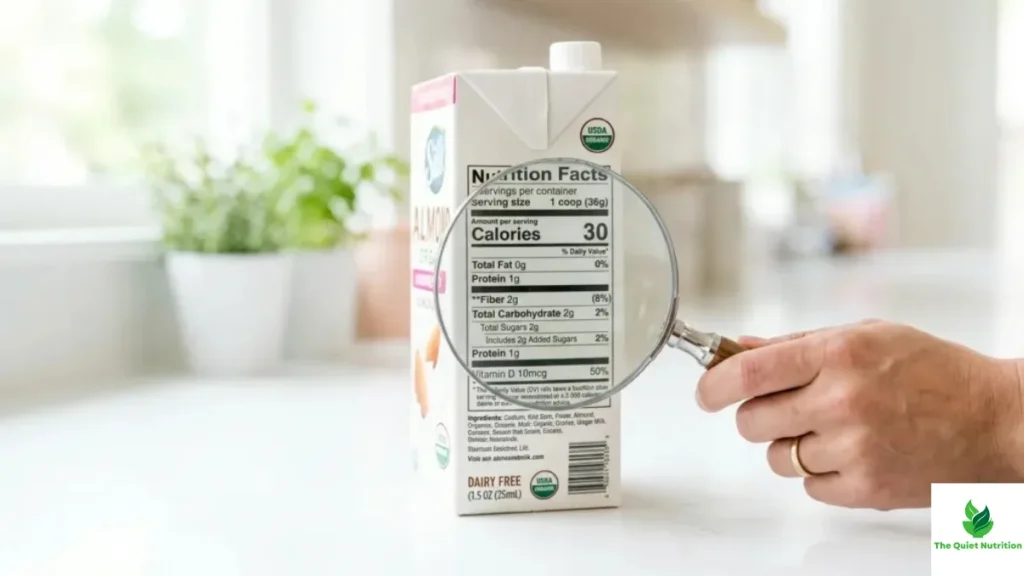
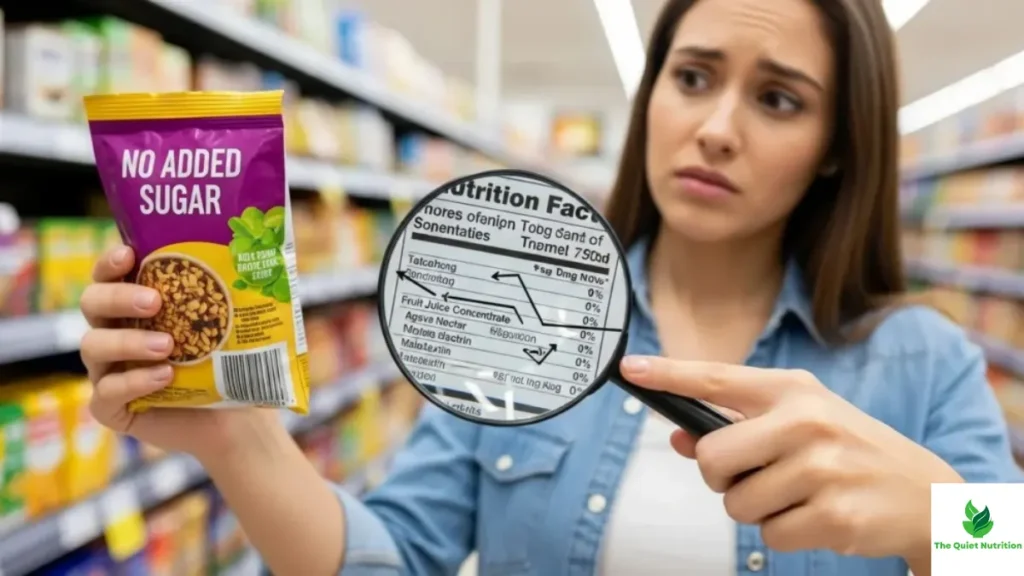
The first thing worth understanding is that “zero” on a food label rarely means what the word means in ordinary conversation. Regulatory frameworks typically allow “zero” claims as long as a product falls under a small defined threshold per serving — often less than half a gram for sugar, similarly small thresholds for other nutrients. A product can legally say “zero sugar” while containing a small but real amount, and if servings stack up across a day, that supposedly absent sugar accumulates into something no longer trivial. The claim isn’t false. It’s precise in a way that doesn’t match how the word gets read.
This becomes more consequential the more “zero” products someone consumes across a single day, since each individual claim is technically accurate in isolation while the cumulative reality behind several of them stacked together can diverge meaningfully from the mental picture “zero, zero, zero” creates.
What Replaces the Sugar Rarely Gets the Same Scrutiny
The more interesting story, and the one that touched my former roommate’s dental enamel directly, is what fills the gap once sugar is engineered out. Zero-sugar products typically rely on artificial or natural-but-intense sweeteners — sucralose, aspartame, stevia extracts, sugar alcohols — and each carries its own physiological footprint that a “zero sugar” claim says nothing about. Sugar alcohols, common in zero-sugar candies and some protein bars, are poorly absorbed by the digestive tract and can produce significant gastrointestinal discomfort in larger quantities, a side effect entirely absent from the marketing language. Certain sweeteners have also been studied for their acidic properties and their direct effects on tooth enamel, independent of sugar itself, which turned out to be closer to what actually happened to my roommate — the acidity of the beverage, not sugar content, was the culprit his dentist eventually traced it to.
None of this makes these sweeteners universally dangerous — the research is genuinely mixed and often subject to legitimate scientific debate depending on the specific compound and dose. But “zero sugar” was never claiming anything about what replaced the sugar, and that gap is precisely where a shopper’s assumptions tend to run ahead of what the label actually promised.
Zero on One Nutrient Says Nothing About the Others
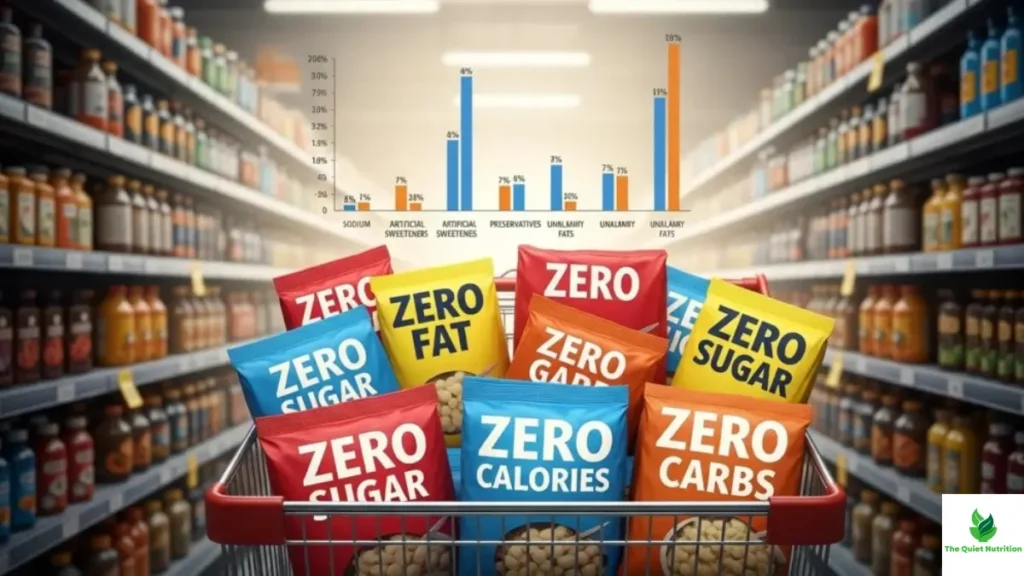
“Zero” claims are, by regulatory design, narrow and specific to a single nutrient, yet they tend to generate a much broader halo of perceived healthfulness in the mind of the shopper reading them. A product can be genuinely zero sugar while remaining high in sodium, saturated fat, or calories, none of which the sugar claim was ever attempting to address. The word borrows credibility for the entire product while only ever having earned it for one narrow metric, and most people, understandably, don’t parse that distinction while standing in a grocery aisle deciding quickly between two options.
The Psychological Cost of “Zero” Permission
There’s a behavioral layer here too, documented in consumption research: people tend to eat or drink more of a product carrying a “zero” or “guilt-free” claim than they would of an equivalent product without that framing, a phenomenon sometimes called licensing behavior. The perceived absence of one negative attribute creates psychological permission to consume more overall, occasionally erasing whatever caloric or health advantage the reformulation was supposed to provide in the first place. The zero-sugar soda my roommate drank multiple cans of daily wasn’t a problem because of any single can. It was a problem because “zero” had quietly given him permission to stop counting at all.
What Actually Changed
He didn’t go back to regular soda. He cut the volume instead, treating “zero sugar” as a reasonable occasional choice rather than a green light for unlimited consumption, and started paying attention to the sweetener and acidity profile rather than stopping at the front-panel claim. His dentist noticed the difference at the next visit. The label hadn’t changed. His relationship to what the word “zero” was actually promising had.
That’s the honest takeaway buried under all of this: “zero” claims are usually accurate, narrowly, technically, defensibly accurate. They’re just answering a much smaller question than the confidence they inspire would suggest, and the gap between those two things is exactly where a genuinely careful eater still has room to be quietly misled.
Sources:
- U.S. Food and Drug Administration — Food Labeling Guide: https://www.fda.gov/food/food-labeling-nutrition
- Harvard T.H. Chan School of Public Health — Nutrition Source: https://www.hsph.harvard.edu/nutritionsource/
- National Institutes of Health — Artificial Sweeteners and Health Research: https://www.ncbi.nlm.nih.gov/pmc/
- American Dental Association — Diet, Acidity, and Enamel Health: https://www.ada.org/resources/research/science-and-research-institute/oral-health-topics
- Mayo Clinic — Artificial Sweeteners: A Safe Substitute for Sugar?: https://www.mayoclinic.org/healthy-lifestyle/nutrition-and-healthy-eating/in-depth/artificial-sweeteners/art-20046936

Aarti Solanki, B.Sc. (Food Science), is a food science writer passionate about making nutrition simple and evidence-based. She creates well-researched, easy-to-understand articles on healthy eating, food science, and nutrition, using information from trusted scientific and public health sources.