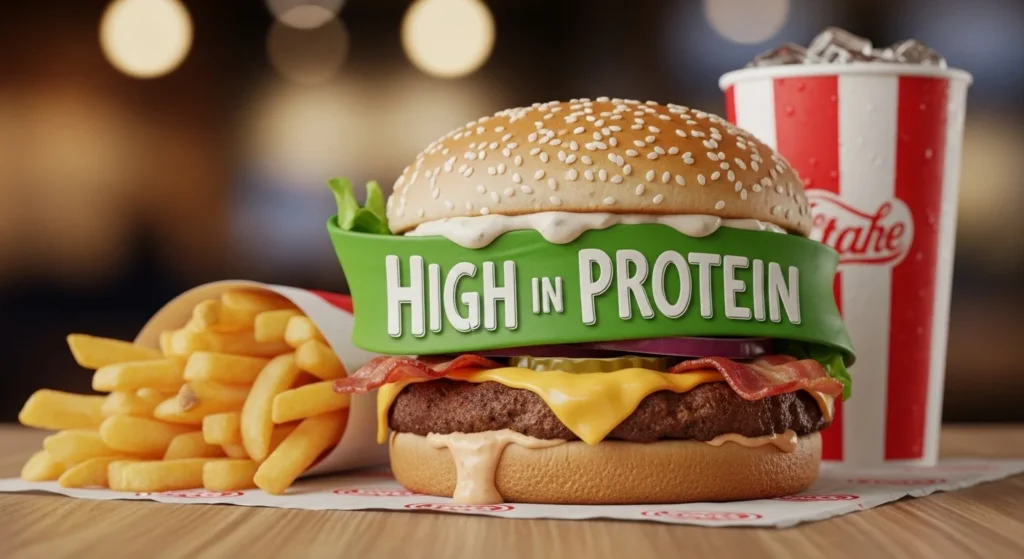
The Healthiest Lie in the Grocery Store
Walk into any supermarket today and you’ll see it everywhere:
High in protein.
Rich in fiber.
Fortified with vitamins.
Supports immunity.
The packaging looks convincing.
The words feel comforting.
And you think:
“This must be a better choice.”
But here’s the unsettling truth:
Many of the foods shouting the loudest about nutrients are often the ones most disconnected from real nourishment.
Because nutrition isn’t just about what nutrients a food contains…
It’s also about what the food is.
And that’s where food structure changes everything.
The Core Problem: Nutrients Don’t Equal Nutrition
Most people have been trained to see food through one lens:
✅ Calories
✅ Protein
✅ Fat
✅ Vitamins
But food doesn’t work inside your body like a math equation.
A cookie with added fiber isn’t the same as oats.
A protein bar isn’t the same as eggs.
A vitamin-fortified cereal isn’t the same as fruit.
The nutrients may look similar on paper…
But the structure is completely different.
And structure controls:
- Digestion speed
- Hormone response
- Fullness signals
- Blood sugar patterns
- Long-term metabolic effects
This is why nutrient claims can be dangerously distracting.
What Is Food Structure (And Why Does It Matter)?
Food structure refers to the physical and biological form of food:
- The intact plant cell walls in beans
- The natural fat-protein matrix in yogurt
- The fiber network in whole grains
- The slow-release starch in potatoes
When food is whole, its nutrients are packaged in a way your body evolved to handle.
But when food is processed…
That structure is broken.
Nutrients become isolated.
Digestion becomes faster.
Satiety becomes weaker.
Food becomes something new.
The Marketing Trick: Nutrient Claims Create a Health Halo
This is one of the biggest psychology traps in nutrition.
When people see claims like:
- “High protein”
- “Low fat”
- “With vitamins”
- “Gluten-free”
- “Heart healthy”
They automatically assume:
✅ Less guilt
✅ Better health
✅ Smarter choice
This is called the health halo effect.
A sugary cereal becomes “healthy” because it has added iron.
A processed snack feels responsible because it has protein.
But the claim distracts from the real question:
What is this food doing structurally inside my body?
Why Ultra-Processed Foods Love Nutrient Claims
Ultra-processed foods are engineered for:
- Long shelf life
- Hyper-palatable taste
- Easy overconsumption
But they often lose natural nutrients during processing.
So manufacturers add them back artificially.
This allows packaging to highlight:
✅ Added protein
✅ Added fiber
✅ Added vitamins
Even if the food is still structurally broken.
It’s like adding a multivitamin to candy and calling it wellness.
Real-Life Example: Fiber Cookies vs Real Fiber
Let’s compare:
A fiber-added cookie:
- Fiber powder added
- Refined flour base
- Rapid digestion
- Low satiety
- High craving potential
A bowl of lentils:
- Fiber intact inside plant cells
- Slow digestion
- Strong fullness response
- Better gut fermentation
- Stable blood sugar
Same nutrient claim.
Completely different biological outcome.
Structure changes everything.
The Hidden Role of Structure in Blood Sugar
Food structure is one of the biggest drivers of glucose response.
A whole apple and apple juice have similar nutrients.
But structurally:
- Apple = intact fiber + chewing + slow release
- Juice = liquid sugar + no fiber barrier
Your body reacts differently.
Ultra-processed foods remove barriers.
That means:
- Faster glucose spikes
- Stronger insulin response
- Faster hunger rebound
Nutrient labels don’t show this.
Structure does.
Comparison Table: Nutrient Claims vs Food Reality
| Food Product Claim | What It Sounds Like | Structural Reality | Better Alternative |
|---|---|---|---|
| “High Protein Bar” | Muscle-building snack | Processed isolate + additives | Eggs or Greek yogurt |
| “Fiber-Enriched Cereal” | Gut-friendly breakfast | Refined grains + sugar | Oats or chia pudding |
| “Vitamin-Fortified Juice” | Immunity boost | Liquid sugar spike | Whole fruit |
| “Low-Fat Cookies” | Healthy dessert | Often more sugar, less satiety | Nuts + dark chocolate |
| “Plant-Based Nuggets” | Clean eating | Ultra-processed matrix | Beans, tofu, lentils |
Why This Matters Today (More Than Ever)
Modern food environments are filled with products designed to appear healthy.
Most people aren’t overeating because they lack discipline…
They’re overeating because food structure has changed.
When structure is broken:
- Hunger signals weaken
- Cravings increase
- Fullness disappears
- Eating becomes effortless
This is why people feel confused:
“I’m eating high protein… so why am I still hungry?”
Structure is the missing piece.
The Biggest Mistake People Make
The most common modern nutrition mistake is this:
Choosing foods based on nutrient claims instead of food form.
People look for:
- More protein
- Added vitamins
- Less sugar
- More fiber
Instead of asking:
✅ Is this food intact?
✅ Is it minimally processed?
✅ Does it still have its natural structure?
This shift is life-changing.
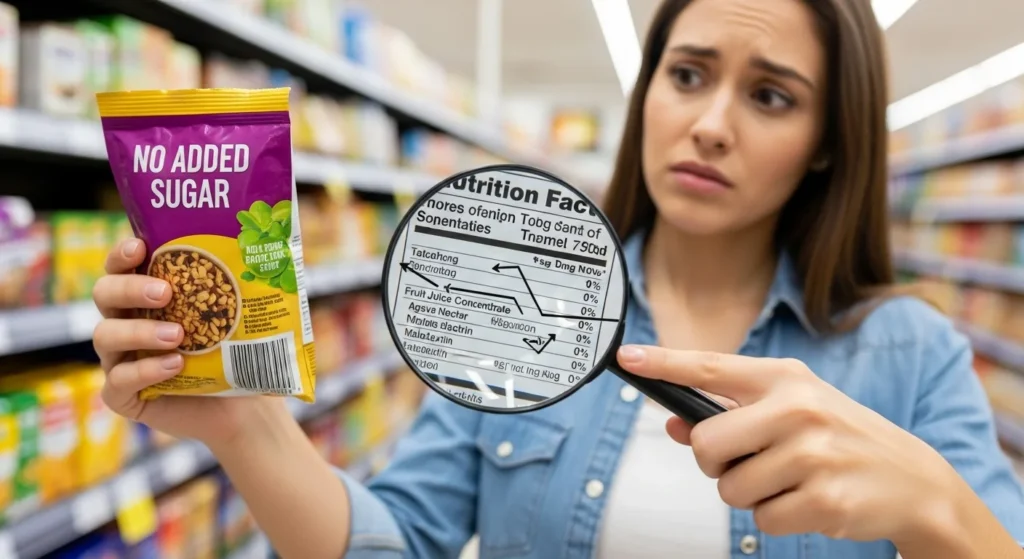
Hidden Tip: Look Beyond the Front Label
If you want a quick filter:
Flip the package over.
Look at the ingredient list.
If you see:
- Protein isolate
- Modified starch
- Emulsifiers
- Artificial sweeteners
- Added fibers (inulin, maltodextrin)
That’s usually a sign the structure is engineered.
Real food doesn’t need convincing.
Actionable Steps: How to Spot Structure-Supportive Foods
Here are practical rules that work in real life:
1. Choose foods that still look like food
- Oats, not oat puffs
- Potatoes, not potato crisps
2. Prefer intact fibers over “added fiber”
Whole beans beat fiber powders every time.
3. Focus on meals, not nutrient hacks
Protein bars are not meals.
4. Watch how fast it disappears
If it melts in your mouth…
Your body absorbs it fast too.
5. Build structure into snacks
Better snack examples:
- Nuts + fruit
- Yogurt + seeds
- Hummus + carrots
Key Takeaways
- Nutrient claims often create a health illusion
- Food structure determines digestion, fullness, and metabolic impact
- Ultra-processed foods use added nutrients to appear healthy
- Whole foods contain nutrients in biologically protective packaging
- The best nutrition question is not “How much protein?”
It’s “What form is this food in?”
FAQ: Common Questions People Ask
1. Are nutrient claims always misleading?
Not always, but they can distract from processing. Whole foods rarely need bold claims.
2. Is “high protein” food always good?
No. Protein isolate in ultra-processed snacks is not the same as protein in whole eggs or legumes.
3. What’s wrong with fortified foods?
Fortification can help in some contexts, but it doesn’t restore the lost structure of real food.
4. How can I tell if a food is ultra-processed?
Look for long ingredient lists, additives, isolates, and engineered textures.
5. What matters more: nutrients or structure?
Both matter, but structure determines how nutrients behave inside your body.
Simple Conclusion: The Healthiest Foods Don’t Need to Shout
The most powerful nutrition shift is this:
Stop chasing labels.
Start choosing structure.
A food isn’t healthy because it says “high fiber.”
It’s healthy because your body can recognize it, digest it slowly, and feel satisfied by it.
The best foods don’t need marketing.
They just work.
Because real nutrition isn’t a claim…
It’s a structure.

Pingback: One Says Low Sugar, One Says High Protein — Why Comparing Food Labels Often Backfires