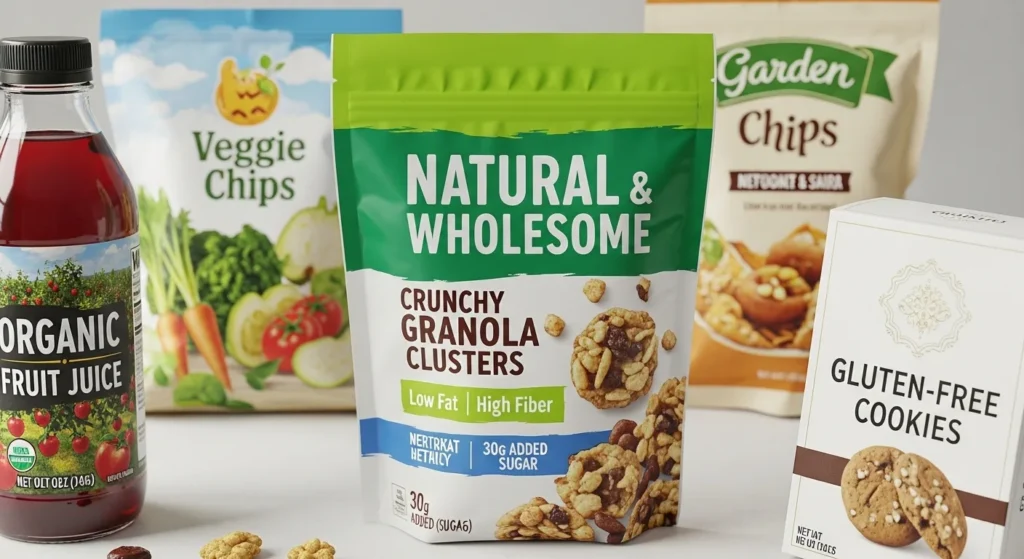
You Decide If Food Is Healthy Before You Read It
You don’t realize it—but you’ve already judged the food.
Before calories.
Before ingredients.
Before logic.
The moment your eyes land on a package, your brain makes a rapid, emotional decision:
“This looks healthy.”
“This feels indulgent.”
“This seems safe.”
That reaction happens in milliseconds.
And it’s driven almost entirely by label design, not nutrition.
Understanding how label design influences perceived health explains why so many foods feel healthier than they are—and why smart, well-informed people still get misled.
Label Design Works Faster Than Rational Thought
Human brains are visual first.
We process:
- Color
- Shape
- Layout
- Texture
Much faster than words or numbers.
Food brands know this.
That’s why design elements are chosen long before nutrition panels are finalized. Design creates an emotional shortcut—a feeling of health—that the facts often struggle to undo.
Once the brain decides something is “healthy,” it becomes harder to question it later.
Color Is the Strongest Health Signal
Color psychology plays a massive role in perceived nutrition.
Colors Commonly Associated With “Healthy”
- Green → natural, fresh, plant-based
- White → clean, pure, minimal
- Beige/brown → whole, earthy, traditional
- Soft pastels → gentle, light, low impact
Colors Linked to Indulgence
- Red → excitement, appetite
- Black → richness, luxury
- Bright neon → artificial, fun
A green label can make a sugary snack feel virtuous—even when nothing else changed.
Minimalist Design Signals “Clean Eating”
One of the most powerful health cues is simplicity.
Minimalist labels often feature:
- Few words
- Wide spacing
- Neutral tones
- Simple fonts
This design style suggests:
- Fewer ingredients
- Less processing
- More honesty
Even when the ingredient list tells a different story.
The brain equates visual simplicity with nutritional simplicity—even though the two are unrelated.
Fonts Quietly Influence Trust
Typography matters more than most people realize.
Fonts That Signal Health
- Thin sans-serif fonts
- Handwritten or script styles
- Soft, rounded lettering
These fonts feel:
- Human
- Approachable
- Natural
Fonts That Signal Processing
- Bold block letters
- Sharp edges
- Aggressive contrast
Two identical foods can feel completely different depending on font alone.
Your brain reads tone before content.
Imagery Shapes Expectations Instantly
Images bypass logic entirely.
Common “healthy” imagery includes:
- Leaves
- Fields
- Wooden textures
- Sunlight
- Raw ingredients
These visuals imply freshness—even if the food is shelf-stable and highly processed.
A single oat stalk on the front can outweigh a long ingredient list on the back.
That’s not ignorance.
That’s human cognition.
White Space = Premium Health
White space isn’t empty.
It communicates:
- Calm
- Control
- Confidence
Foods with crowded labels feel chaotic.
Foods with breathing room feel intentional.
This is why many ultra-processed foods redesign their packaging to appear:
- Cleaner
- Softer
- More “wellness-focused”
Nothing inside changed.
Perception did.
Comparison Table: Label Design vs Nutritional Reality
| Design Element | What It Signals | What It Actually Means |
|---|---|---|
| Green color | Natural, healthy | Branding choice |
| Minimal text | Fewer ingredients | Visual strategy |
| Handwritten font | Homemade | Marketing tone |
| Farm imagery | Fresh, whole | Symbolic only |
| White space | Clean eating | Premium positioning |
| Matte packaging | Wellness | Aesthetic trend |
| Soft colors | Light impact | Emotional cue |
Design influences belief—before facts get a chance.
Why This Matters Today
Food shelves are more crowded than ever.
When attention is limited, design becomes the decision-maker.
This matters because:
- Perceived health affects portion size
- “Healthy-looking” foods are eaten more freely
- Trust shifts from ingredients to appearance
People don’t overeat because they don’t care.
They overeat because packaging lowers their guard.
Understanding design restores awareness—not restriction.
Common Mistakes People Make With Label Design
Even careful shoppers fall into these traps:
- Trusting green or minimalist packaging
- Skipping ingredient lists when food “feels safe”
- Associating premium design with nutrition
- Assuming calm visuals mean low impact
- Feeling confused when “healthy-looking” foods disappoint
These reactions are normal—and predictable.
How to See Past Label Design (Actionable Steps)
You don’t need to ignore design.
Just pause before believing it.
Simple, Practical Steps
- Notice your first emotional reaction
- Ask: “What made this feel healthy?”
- Flip the package immediately
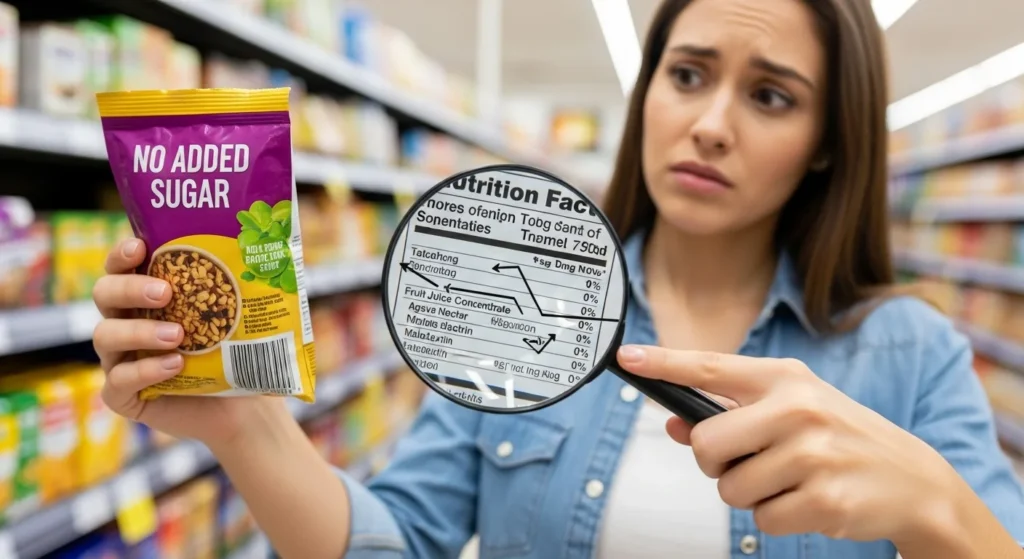
- Read ingredient order before nutrition claims
- Compare two similar foods side by side
Design loses power once it’s seen.
Hidden Tip: Design Targets Identity, Not Health
Many labels aren’t selling nutrition.
They’re selling identity:
- “I eat clean”
- “I’m mindful”
- “I choose better”
Recognizing this shifts food from self-image back to nourishment—where it belongs.
Key Takeaways
- Label design shapes health perception instantly
- Color, fonts, and layout trigger emotional trust
- Minimalism often signals health without proof
- Imagery overrides ingredient logic
- Awareness restores choice without anxiety
Once you see design clearly, labels become less persuasive—and more neutral.
Frequently Asked Questions
1. Is healthy-looking packaging intentionally misleading?
Not exactly—but it’s designed to influence perception.
2. Should I distrust minimalist food labels?
No. Just verify them with ingredients.
3. Why do I eat more of “healthy-looking” foods?
Perceived health reduces caution and increases portions.
4. Are premium-looking foods healthier?
Not necessarily. Design reflects positioning, not nutrition.
5. What matters more than label design?
Ingredients, processing level, and how food affects you.
Conclusion: Your Eyes Decide First — But They Don’t Have to Decide Last
Label design speaks before food does.
It whispers comfort, safety, and virtue—often louder than facts.
When you learn how design shapes perception, you don’t become cynical.
You become calm, confident, and harder to mislead.
That’s not about eating perfectly.
That’s about seeing clearly.
Disclaimer: This article is for general educational purposes only and does not replace personalized nutrition or medical advice.

Pingback: Why Clean-Looking Packaging Instantly Builds Trust — Even Before You Read the Label
Pingback: “Free From” Doesn’t Mean Healthy: The Truth Behind America’s Favorite Food Label