The Ingredient List Looks Honest… Until You Look Closer
Most shoppers have learned one simple rule:
“Just read the ingredients.”
It sounds like the gold standard.
Flip the package over.
Scan the list.
Avoid anything that looks unfamiliar.
But here’s the surprising truth:
Ingredient transparency is not equal across foods.
Some products reveal everything clearly.
Others hide complexity behind vague terms, grouped categories, or legally protected wording.
So even though two labels may look similar…
One may be telling you far more than the other.
And that difference matters more than most people realize.
Because ingredient transparency shapes trust, health decisions, allergies, and long-term eating patterns.
Let’s unpack what’s really going on behind that tiny print.
Ingredient Transparency Was Never Designed to Be Perfect
Ingredient lists were created for disclosure…
but within limits.
Food labeling laws require ingredients to be listed by weight, from most to least.
That’s helpful.
But transparency stops being simple when food manufacturing becomes complex.
Modern packaged foods can contain:
- flavor systems
- preservative blends
- processing aids
- multiple forms of sugar
- compound ingredients
The label may technically comply…
while still leaving consumers confused.
Transparency isn’t always about whether something is listed.
It’s about whether it’s understandable.
Whole Foods Are Naturally More Transparent
The most transparent ingredient lists are often the shortest.
For example:
- oats
- almonds
- eggs
- olive oil
- frozen broccoli
There’s nothing to interpret.
But once you enter ultra-processed territory, transparency changes.
A frozen meal might include:
- starch stabilizers
- emulsifiers
- gum blends
- flavor enhancers
- preservatives
Not because companies are evil…
but because shelf-stable food requires engineering.
The issue is that the label rarely explains why those ingredients exist.
So transparency becomes partial.
The Vague Terms That Create the Biggest Transparency Gap
One of the most important truths in label literacy is this:
Some ingredients are specific.
Others are intentionally broad.
Here are common examples:
- “Natural flavors”
- “Spices”
- “Seasoning blend”
- “Vegetable oil”
- “Added color”
- “Flavoring agents”
These terms can legally represent dozens of substances.
Consumers often assume vague means harmless.
But vague mostly means:
You don’t get details.
That is a major transparency gap.
Real-Life Example: Two Strawberry Yogurts, Two Different Stories
Consider two yogurt labels.
Yogurt A
Ingredients: milk, strawberries, sugar
Clear. Simple.
Yogurt B
Ingredients: cultured milk, strawberry preparation (sugar, modified corn starch, natural flavor, color), stabilizers, gums
Both are “strawberry yogurt.”
But one is far more processed.
The second label is still compliant…
yet far less transparent.
Same product category.
Very different ingredient reality.
“Natural Flavors” Is the Most Misunderstood Ingredient Phrase
Let’s clarify something important:
“Natural flavors” does not necessarily mean fresh fruit or herbs.
It’s a regulatory term that can include compounds extracted from natural sources.
That’s not automatically unsafe.
But it is opaque.
It doesn’t tell you:
- what was used
- how much
- why it was added
So consumers can’t fully evaluate the ingredient quality.
Transparency gets replaced with trust.
Ingredient Transparency Varies by Food Category
Some industries are naturally clearer.
Others are built on complexity.
Most transparent categories:
- plain dairy
- frozen vegetables
- dried beans
- single-ingredient oils
- minimally processed grains
Least transparent categories:
- flavored snacks
- processed meats
- soda and sweet beverages
- protein bars
- packaged desserts
- instant meals
The more engineered the food, the less transparent the ingredient story becomes.
Comparison Table: Transparent vs Opaque Ingredient Lists
| Feature | High Transparency Foods | Low Transparency Foods |
|---|---|---|
| Ingredient count | 1–5 ingredients | 20+ ingredients |
| Terms used | Specific and familiar | Vague and grouped |
| Flavor sources | Real herbs/spices | “Natural flavors” |
| Oils listed | Olive oil, butter | “Vegetable oil blend” |
| Sugar forms | Sugar or honey | Multiple hidden sweeteners |
| Consumer clarity | Easy to interpret | Requires label expertise |
The Loophole of Compound Ingredients
Here’s a hidden detail most shoppers miss:
Ingredients can contain ingredients.
For example:
“Chocolate chips” might include:
- sugar
- cocoa butter
- soy lecithin
- vanilla flavor
But on the label, it may appear as one item unless broken down.
Similarly:
“Fruit filling” or “seasoning mix” can represent long sub-lists.
Transparency becomes layered.
And consumers often don’t realize what’s inside the inside.
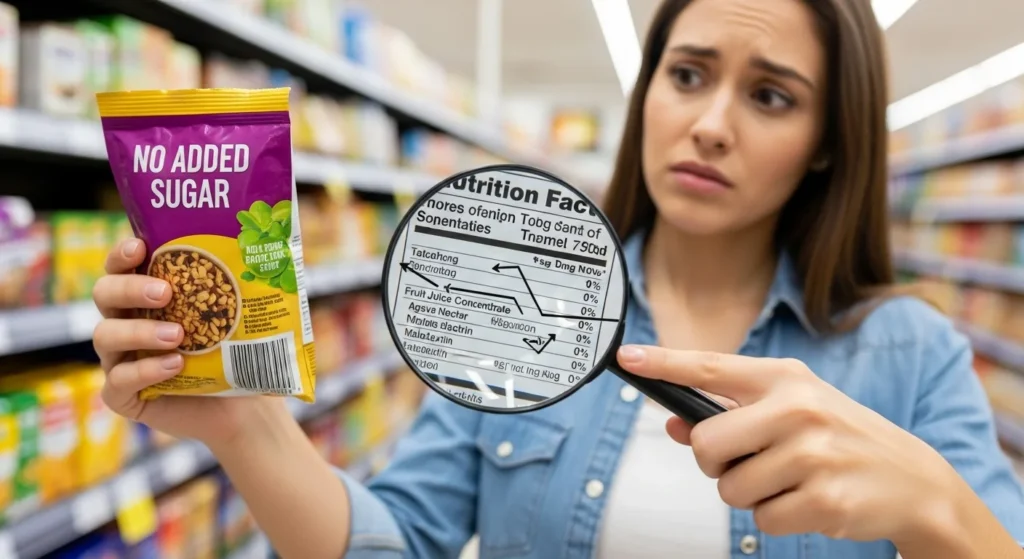
Sugar Transparency Is One of the Biggest Games
Ingredient transparency varies widely when it comes to sugar.
Why?
Because sugar has many names.
Examples include:
- cane syrup
- rice syrup
- corn sweetener
- dextrose
- maltose
- fruit concentrate
Companies may split sugars into multiple types so none appears first on the list.
This is technically legal.
But it reduces clarity.
To the consumer, it looks like less sugar.
In reality, it may be the dominant ingredient system.
Hidden Tip: The First Three Ingredients Tell the Real Story
Ingredient lists are ordered by weight.
That means the first three ingredients usually reveal what the product truly is.
If the first ingredients are:
- refined flour
- sugar
- industrial oil
Then no front label claim can change the core.
If the first ingredients are:
- oats
- nuts
- fruit
That’s a different foundation.
This is one of the simplest transparency tools you can use immediately.
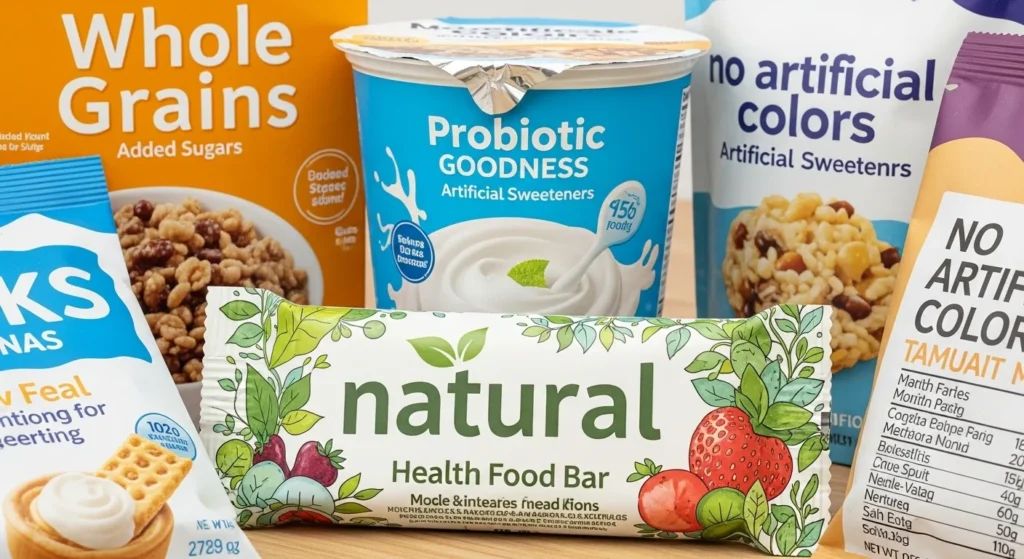
Marketing Often Creates “Clean Illusions”
Ingredient transparency is also shaped by perception.
Packages often emphasize:
- “No artificial preservatives”
- “Made with real ingredients”
- “Clean label”
But the ingredient list may still include:
- stabilizers
- gums
- processed starch
- flavor systems
Clean marketing doesn’t always mean clean simplicity.
It often means:
ingredients chosen to sound acceptable, not necessarily minimal.
That’s an important distinction.
Mistakes People Make When Trusting Ingredient Lists
Here are common traps:
- assuming fewer unfamiliar words means healthier
- ignoring vague category terms
- trusting “natural” without context
- missing multiple sugar sources
- thinking organic always equals transparent
- skipping ingredient order importance
Transparency requires interpretation, not just reading.
Actionable Steps: How to Judge Ingredient Transparency Smarter
You don’t need to memorize chemistry.
Just use a simple framework.
The Ingredient Transparency Checklist
- Count the ingredients
- Under 10 often means simpler processing
- Watch for vague terms
- “Natural flavors” and “seasoning” reduce clarity
- Scan the first three ingredients
- They define the product
- Look for stacked sugars
- Multiple sweeteners signal heavy formulation
- Ask: Could I make this at home?
- If not, transparency may be low
These steps work in any grocery store, instantly.
Why This Matters Today (Evergreen Importance)
Ingredient transparency isn’t just a niche concern.
It affects:
- consumer trust
- dietary quality
- allergy safety
- long-term habits
- understanding ultra-processed foods
As food becomes more engineered, transparency becomes more valuable.
Because the label is often the only window consumers have into the system behind the product.
Knowing what’s clear vs what’s obscured helps you make choices with confidence, not confusion.
Key Takeaways
- Ingredient transparency varies widely between whole foods and processed products
- Vague terms like “natural flavors” create major disclosure gaps
- Compound ingredients can hide long sub-lists
- Sugar transparency is often reduced through multiple naming systems
- The first three ingredients reveal the true foundation of a food
- Simple shopping frameworks restore clarity and control
FAQ: Ingredient Transparency and Food Labels
1. Why are some ingredient lists so vague?
Because regulations allow grouped terms like “flavors” or “spices,” and companies protect proprietary formulations.
2. Does “natural flavors” mean healthy?
Not necessarily. It means flavor compounds derived from natural sources, but it doesn’t reveal specifics.
3. Are longer ingredient lists always bad?
Not always, but they often indicate higher processing and lower transparency.
4. How can I spot hidden sugars?
Look for multiple sweeteners scattered throughout the list: syrups, concentrates, dextrose, maltose, and more.
5. What’s the simplest way to judge transparency quickly?
Check the first three ingredients and avoid products with heavy vague category terms.
Conclusion: Transparency Isn’t Just Listing Ingredients — It’s Clarity
Ingredient lists are one of the most powerful tools consumers have.
But they are not equally revealing across the food system.
Some foods tell you exactly what they are.
Others speak in vague language, layered blends, and marketing-friendly terms.
The goal isn’t to fear packaged food.
It’s to understand the transparency spectrum.
Because when you can see clearly…
you eat with more confidence, less confusion, and far more control.