
Some days you wake up and just feel good — clear-headed, steady energy, no weird aches, decent mood. Other days everything feels a little harder for no obvious reason. Most people chalk this up to sleep or stress, and sometimes that’s exactly right. But there’s a quieter variable running underneath almost everything else: what you’ve actually been eating, consistently, over the past several days and weeks.
Nutrition doesn’t just affect how you look or how much you weigh. It sets your body’s baseline — the default state your immune system, brain, digestion, and energy levels operate from before anything else even factors in. When that baseline is solid, you tend to feel resilient. When it’s shaky, everything feels a little harder than it should.
Your Immune System Runs on What You Feed It
One of the least talked-about roles of nutrition is how directly it shapes immune function. Certain nutrients — vitamin C, vitamin D, zinc, and protein among them — are directly involved in how immune cells are produced and how well they respond to threats. This isn’t about mega-dosing supplements when you already feel sick. It’s about consistent, adequate intake creating an immune system that’s simply better equipped from the start.
This is part of why people with chronically poor nutrition tend to get sick more often, recover more slowly, and experience more complications from illness. The immune system isn’t a fixed asset — it’s built and maintained from raw material, and that raw material comes from food.
Inflammation: The Quiet Background Noise
Inflammation gets talked about a lot in health circles, but here’s the simple version: your body needs some inflammation to function — it’s part of healing. The problem is chronic, low-grade inflammation that never fully switches off, and diet plays a major role in whether that happens.
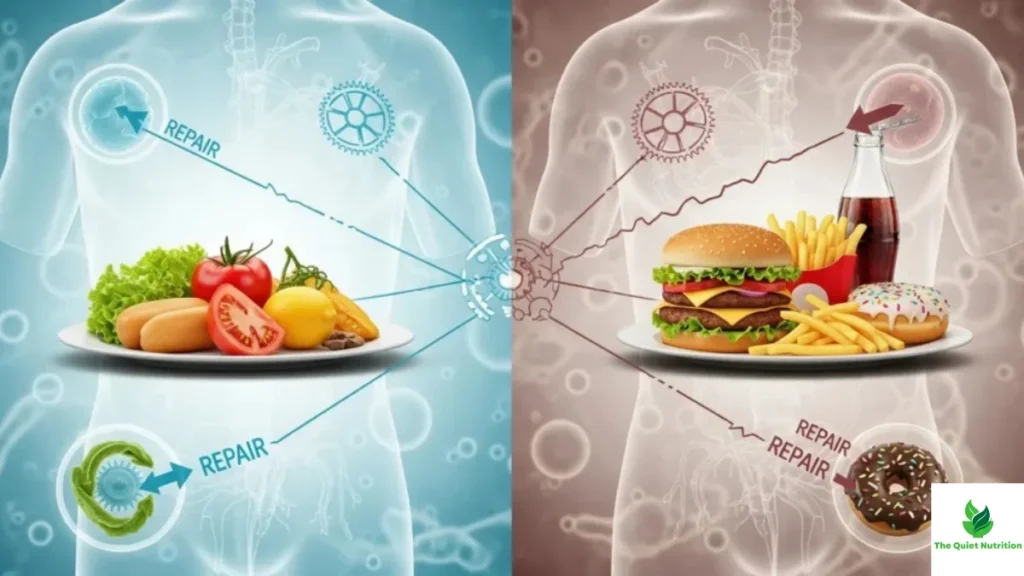
Diets consistently high in ultra-processed foods, refined sugar, and low in fiber tend to push the body toward this low-grade inflammatory state. Over time, this has been linked to everything from fatigue and joint discomfort to more serious long-term conditions. On the flip side, diets rich in vegetables, fruits, whole grains, and healthy fats — often grouped under the umbrella of anti-inflammatory eating — tend to support a calmer internal environment.
You usually can’t feel inflammation directly on a day-to-day basis. But it shows up indirectly, as low energy, brain fog, or just a general sense of not feeling quite right.
Gut Health Isn’t Just a Trend
The gut microbiome has become a buzzword, but the underlying science is genuinely important. Your digestive system hosts trillions of bacteria that influence digestion, immune regulation, and even mood, largely through the gut-brain connection.
What you eat directly shapes which bacteria thrive in your gut. Fiber-rich foods — vegetables, legumes, whole grains — feed beneficial bacteria, while diets low in fiber and high in processed food tend to favor less beneficial strains. This isn’t about buying expensive probiotics. It’s about giving your gut consistent, varied plant-based fuel so it can do its job well.
Blood Sugar Stability and How You Actually Feel Hour to Hour
This is one of the most underrated pieces of daily wellbeing. Meals that spike blood sugar rapidly — think refined carbs with little protein or fiber — tend to be followed by an equally rapid crash. That crash often shows up as sudden fatigue, irritability, or intense hunger just a couple hours later.
Meals balanced with protein, fiber, and healthy fats digest more slowly, keeping blood sugar — and by extension, energy and mood — more stable throughout the day. This is a big part of why some people feel steady all day while others feel like they’re on an energy rollercoaster, and the difference often comes down to meal composition rather than willpower.
Why “Baseline” Matters More Than Any Single Meal
No single meal makes or breaks your health. What actually shapes your baseline is the pattern repeated over weeks and months. This is good news, because it means there’s no need for perfection — one indulgent meal doesn’t undo anything, and one healthy meal doesn’t fix everything either.
What matters is the general direction: are most of your meals giving your body real, varied, adequate fuel, or is it running on convenience and gaps most of the time? Your baseline health is essentially the average of thousands of small food choices, not a handful of dramatic ones.
The Takeaway
Feeling consistently good isn’t random, and it’s rarely just about willpower or luck. It’s largely a reflection of a body that’s being adequately and consistently fed — supporting immune defense, keeping inflammation in check, nurturing gut bacteria, and stabilizing energy through the day. Nutrition is easy to overlook precisely because its effects are invisible day to day. But given enough time, it becomes one of the clearest explanations for why some people simply feel better, more often, than others.
Source: Harvard T.H. Chan School of Public Health – The Nutrition Source

Aarti Solanki, B.Sc. (Food Science), is a food science writer passionate about making nutrition simple and evidence-based. She creates well-researched, easy-to-understand articles on healthy eating, food science, and nutrition, using information from trusted scientific and public health sources.







Pingback: Why Aging Is About Maintenance, Not Decline — The Nutrition Truth That Changes How You Age
Pingback: How Everyday Food Choices Keep Your Body From Falling Apart
Pingback: How the Body Protects Balance Through Nutrition, Not Willpower
Pingback: Why Small Eating Habits Matter More Than You Think
Pingback: The Hidden Health Benefits of Eating Mangoes (Why This Fruit Does More Than Taste Amazing)
Pingback: The Surprising Heart Benefits of Grapes (And Why Doctors Love Them)
Pingback: Watermelon Isn’t Just Water: The Hidden Health Benefits Most People Don’t Know