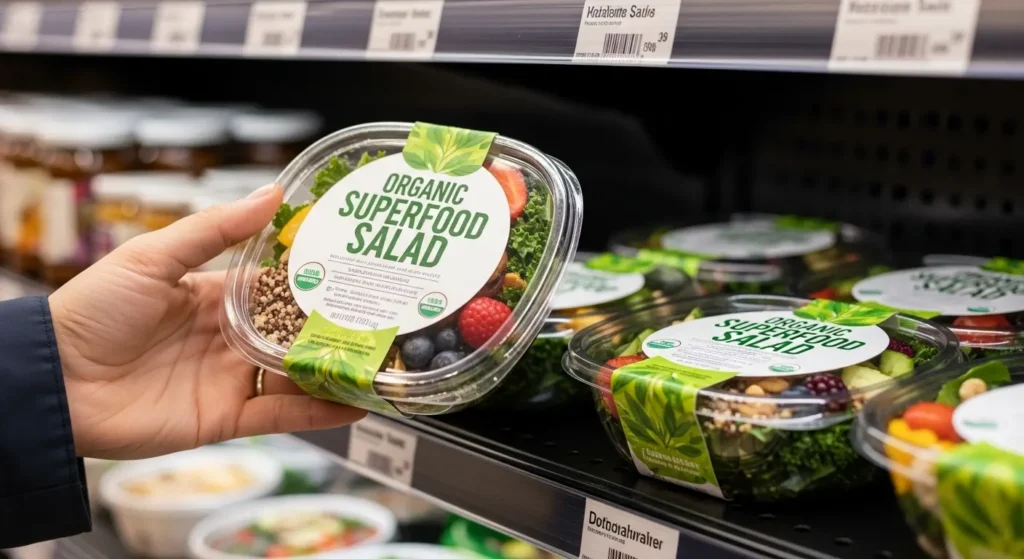
A Decision Happens Before the Bite
You’re standing in a grocery aisle.
Two products sit side by side.
Same calories.
Same ingredients.
Same nutrition facts.
But one says:
“Clean. Natural. Guilt-Free.”
The other just lists what it is.
Most people instinctively reach for the first.
Not because of nutrition.
Not because of logic.
But because expectation has already been set.
And that expectation quietly changes:
- How healthy you think the food is
- How much you trust it
- How much you enjoy eating it
- How much of it you consume
This isn’t a marketing trick alone.
It’s human psychology at work.
Why Label Language Has So Much Power
Your brain doesn’t wait for digestion to decide value.
It decides in advance.
Language acts as a shortcut—a mental promise.
Words like:
- “Natural”
- “Wholesome”
- “Heart-healthy”
- “Light”
- “High-protein”
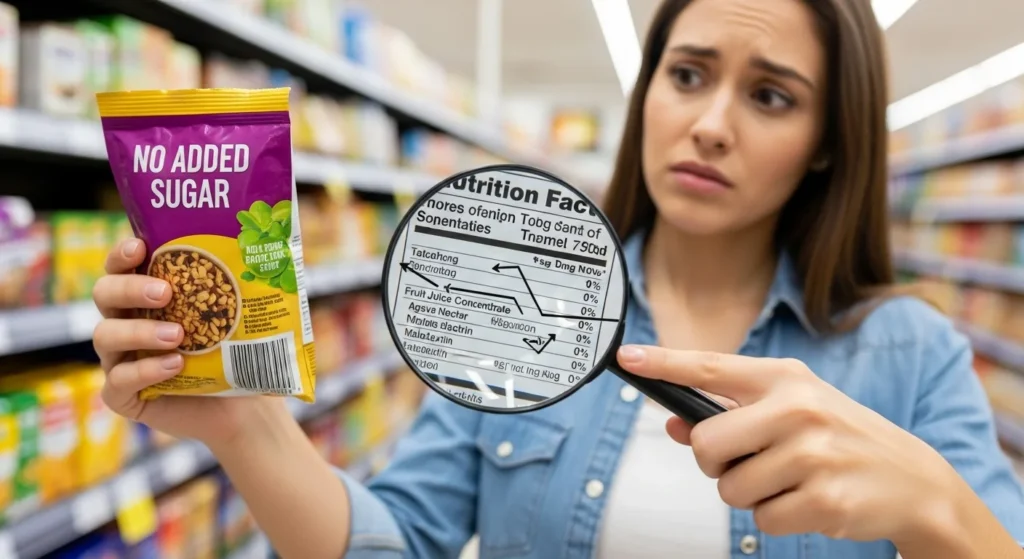
- “No added sugar”
…trigger expectation loops in the brain.
Once that loop starts, your perception follows.
This phenomenon is well documented in nutrition psychology and consumer research, including studies referenced by organizations like the World Health Organization and the U.S. Food and Drug Administration.
Expectation Changes Taste (Yes, Literally)
Here’s something surprising:
Food labeled “healthy” often tastes better to people who expect it to.
In blind tests:
- The same food rated more enjoyable when labeled “organic”
- The same snack rated less indulgent when labeled “low-fat”
- The same drink rated more satisfying when labeled “natural”
Your tongue isn’t lying.
Your brain is leading.
Expectation shapes sensory experience before flavor even registers.
The Most Powerful Label Words (And What They Signal)
Let’s break down the most influential words—and what people think they mean.
1. “Natural”
What people assume:
- Less processed
- Safer
- Healthier
Reality:
- No universally strict definition
- Can still be high in sugar, fat, or sodium
“Natural” creates emotional safety, not nutritional accuracy.
2. “Clean” or “Clean Eating”
What people assume:
- Morally good food
- Free from harm
- Better self-control
Reality:
- Not a regulated term
- Often used for branding, not science
This language taps into identity, not nutrition.
3. “Low-Fat” or “Light”
What people assume:
- Lower calories
- Better for weight control
Reality:
- Often compensated with sugar or refined carbs
- Can lead to overconsumption
People eat more when they feel “allowed.”
4. “High-Protein”
What people assume:
- Muscle-building
- Satiety
- Metabolic benefit
Reality:
- Amounts vary widely
- Context matters more than the claim
Protein is helpful—but the label alone doesn’t tell the full story.
Comparison Table: What Labels Promise vs. What They Actually Deliver
| Label Claim | What You Expect | What It Often Means |
|---|---|---|
| Natural | Healthy, pure | Minimally defined marketing term |
| Clean | Better quality | Brand identity, not regulation |
| Low-Fat | Weight-friendly | Often higher sugar |
| No Added Sugar | Blood sugar safe | Still may contain high natural sugars |
| High-Protein | Filling, anabolic | Amount and quality vary |
This gap between expectation and reality is where confusion begins.
Why Expectations Change How Much You Eat
Here’s a hidden effect most people miss:
Health-labeled foods are often eaten in larger portions.
Why?
Because the brain grants permission.
- “This is healthy.”
- “I earned this.”
- “More won’t hurt.”
Studies consistently show people:
- Consume more calories from foods labeled “healthy”
- Underestimate total intake
- Feel less guilt while overeating
Expectation alters self-regulation.
The Trust Effect: Why Labels Feel Reassuring
Label language doesn’t just inform—it builds trust.
Trust reduces:
- Label reading
- Critical thinking
- Ingredient scrutiny
Once trust is established, people stop questioning.
This is why:
- Bright, confident health claims feel calming
- Simple language feels honest
- Scientific-sounding phrases feel authoritative
Even when details are vague.
Real-Life Example: The Yogurt Illusion
Two yogurts:
- Same calories
- Same sugar
- Same fat
One says:
“Greek Style • Protein-Rich • Natural”
The other doesn’t.
Most people:
- Rate the first as healthier
- Feel fuller after eating it
- Justify paying more
Nothing changed except expectation.
Common Mistakes People Make With Label Language
Mistake #1: Assuming Claims Equal Quality
Claims highlight one feature—not the whole product.
Mistake #2: Ignoring Portion Psychology
Health labels often increase intake.
Mistake #3: Trusting Emotional Words
Words like “clean” feel safe—but don’t equal balance.
Mistake #4: Skipping the Nutrition Context
One nutrient doesn’t define a food.
How to Read Labels Without Being Manipulated
You don’t need to avoid labels.
You need to decode them.
Actionable Steps
- Read claims last, not first
- Scan ingredients before believing the headline
- Compare similar products side by side
- Watch portion size assumptions
- Notice emotional reactions—pause before buying
Awareness breaks the spell.
Why This Matters Today (And Always)
Food environments are louder than ever.
More products.
More claims.
More wellness language.
Your brain evolved for scarcity—not abundance of persuasion.
Understanding label language:
- Protects your autonomy
- Improves long-term habits
- Reduces guilt-driven eating
- Builds trust in your own judgment
This isn’t about restriction.
It’s about clarity.
Key Takeaways
- Label language shapes expectations before taste or digestion
- Words like “natural” and “clean” trigger trust, not accuracy
- Expectations influence enjoyment, fullness, and intake
- Health labels often lead to overeating, not moderation
- Reading labels critically restores control and confidence
Frequently Asked Questions
1. Are food labels intentionally misleading?
Not always. Many use legal but vague language that relies on consumer interpretation.
2. Is “natural” ever a reliable indicator?
Only when paired with transparent ingredient lists and minimal processing.
3. Why do healthy foods sometimes taste better?
Because expectation primes sensory experience before eating.
4. Should I ignore front-of-pack claims completely?
Use them as clues—not conclusions.
5. How can I teach kids to understand labels?
Focus on ingredients and balance, not “good” vs. “bad” food language.
Final Thought
Food labels don’t just describe food.
They frame the entire eating experience—from trust to taste to portion size.
When you learn to see the language clearly, you stop eating expectations
…and start eating with intention.
Disclaimer: This article is for general educational purposes and does not replace personalized nutrition or medical advice.

Pingback: Why “Fortified” Sounds Healthier Than It Is — The Nutrition Label Promise Most People Misunderstand
Pingback: Why Ingredient Order Matters More Than Buzzwords — And How to See Past Food Label Hype
Pingback: Why Clean-Looking Packaging Instantly Builds Trust — Even Before You Read the Label
Pingback: How Marketing Language Quietly Shapes Food Identity — And What You Think You’re Eating