You Don’t Just Eat Food — You Eat the Story Around It
Pick up a food package.
Before you read ingredients.
Before you check nutrition.
Before you even think logically…
Your brain has already decided what this food is.
Healthy.
Indulgent.
Clean.
Premium.
Safe.
“Bad but worth it.”
That decision doesn’t come from facts.
It comes from language.
Marketing words quietly assign food an identity long before taste or nutrition enters the picture. And once that identity sticks, it shapes how much we trust, crave, justify, and repeat our choices.
This article explains how marketing language shapes food identity, why it works so well, and how to recognize it without becoming cynical or overwhelmed.
Food Identity Is Psychological — Not Nutritional
Food identity is the role a product plays in your mind.
Is it:
- A daily staple?
- A guilt food?
- A “healthy treat”?
- A recovery snack?
- A premium indulgence?
Nutrition labels give numbers.
Marketing language gives meaning.
Words frame food as:
- Responsible or reckless
- Natural or artificial
- Modern or traditional
- Functional or comforting
Once framed, the brain filters all future information through that identity.
The First Words You See Shape Everything That Follows
Most people believe they evaluate food rationally.
But research in consumer psychology consistently shows that first impressions dominate perception.
Marketing language appears:
- On the front of the pack
- In bold fonts
- In emotional language
- Before facts
Once the brain accepts a label like “clean,” “wholesome,” or “plant-based,” it becomes harder to question what’s inside.
This is called cognitive framing—and food brands use it expertly.
“Healthy-Sounding” Words That Redefine Ordinary Food
Some words don’t describe food.
They rebrand it.
Common examples include:
- Clean
- Natural
- Wholesome
- Real
- Balanced
- Smart
- Light
- Guilt-free
None of these terms have strict definitions.
Yet they instantly signal virtue.
A cookie becomes a “balanced snack.”
Sugar becomes “naturally sweetened.”
Processing becomes “crafted.”
The food hasn’t changed.
Its identity has.
How Emotional Language Overrides Logic
Marketing language often bypasses logic and speaks directly to emotion.
Emotional Triggers Commonly Used
- Relief: “Finally, a snack you can feel good about”
- Belonging: “For people who care about what they eat”
- Safety: “No nasties, no worries”
- Hope: “Better choices start here”
- Status: “Premium ingredients, elevated taste”
Once emotion is engaged, critical thinking softens.
This isn’t manipulation—it’s persuasion psychology at work.
The “Better-For-You” Halo Effect
When food is marketed as “better,” consumers unconsciously assume multiple benefits—even without evidence.
This is known as the halo effect.
What the Halo Effect Does
- “Organic” feels lower calorie
- “Plant-based” feels healthier overall
- “Artisan” feels higher quality
- “Protein-rich” feels filling
Even when nutrition panels say otherwise, the identity holds.
This explains why people often eat larger portions of foods labeled as healthy.
Processing Disappears Behind Positive Language
Marketing language is especially powerful at hiding processing.
Words like:
- Crafted
- Inspired
- Kitchen-made
- Carefully prepared
- Chef-designed
Create a mental image of hands, care, and tradition.
But these words don’t reflect:
- Industrial refinement
- Ingredient isolation
- Additive use
- Structural alteration
The food feels artisanal—even when it isn’t.
Comparison Table: What Marketing Language Says vs What It Means
| Marketing Language | Implied Identity | What It Actually Tells You |
|---|---|---|
| Clean | Pure, healthy | No legal definition |
| Natural | Unprocessed | Often loosely regulated |
| Guilt-free | Safe to overeat | Emotional reassurance |
| Plant-based | Nutrient-dense | May still be ultra-processed |
| Wholesome | Traditional | Vague comfort cue |
| Smart choice | Responsible | Marketing framing |
| Light | Lower impact | Relative, not absolute |
| Crafted | Handmade | Branding language |
Understanding this gap restores perspective.
Why This Matters Today
Food environments are more crowded than ever.
With thousands of similar options, language becomes the differentiator.
When marketing shapes food identity:
- Trust shifts from ingredients to words
- Decision fatigue increases
- Confusion replaces clarity
- People outsource judgment to branding
Learning to see language clearly isn’t about distrust—it’s about informed confidence.
Common Mistakes People Make With Marketing Language
Many smart people fall into these traps:
- Assuming positive words equal better nutrition
- Confusing emotional comfort with food quality
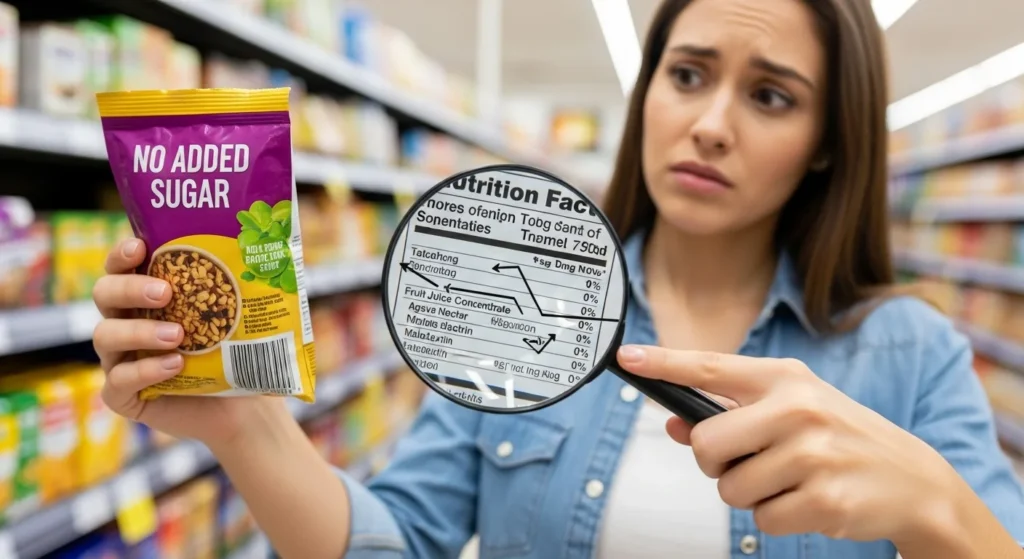
- Ignoring ingredient lists once identity feels “safe”
- Over-trusting “better-for-you” positioning
- Feeling guilty when “healthy” foods disappoint
These reactions are normal. They’re designed outcomes.
How to Read Marketing Language Without Losing Joy
You don’t need to reject branding.
You just need to separate identity from reality.
Actionable Steps
- Notice emotional words before facts
- Ask: “What feeling is this trying to create?”
- Read ingredients after noticing the story
- Compare foods with similar marketing claims
- Let experience—not promises—guide trust
Awareness reduces influence without creating anxiety.
Hidden Tip: Words That Signal Positioning, Not Nutrition
Some words reveal target audience, not quality:
- Active
- Modern
- Busy
- Mindful
- Conscious
These signal who the product is for—not what it does nutritionally.
Seeing this distinction prevents misplaced expectations.
Key Takeaways
- Food identity is shaped by language, not numbers
- Marketing words trigger emotion before logic
- Positive terms often lack strict definitions
- Processing is hidden behind comforting language
- Awareness restores control without skepticism
Once you see the language layer, food choices feel lighter—not harder.
Frequently Asked Questions
1. Is food marketing language misleading?
Not inherently—but it’s persuasive by design.
2. Should I ignore front-of-pack language?
No. Observe it, then verify it.
3. Are “clean” or “natural” labels meaningful?
They’re emotional cues, not guarantees.
4. Why do “healthy” foods disappoint sometimes?
Because identity was shaped before experience.
5. What matters more than marketing words?
Ingredients, processing level, and how food actually feels to you.
Conclusion: You’re Not Weak — Language Is Powerful
Food marketing doesn’t trick people because they’re careless.
It works because language shapes meaning before reason wakes up.
Once you understand how food identity is built, you don’t need stricter rules—just clearer vision.
And with clarity comes freedom, confidence, and calmer choices.
Disclaimer: This article is for general educational purposes only and does not replace personalized nutrition or medical advice.