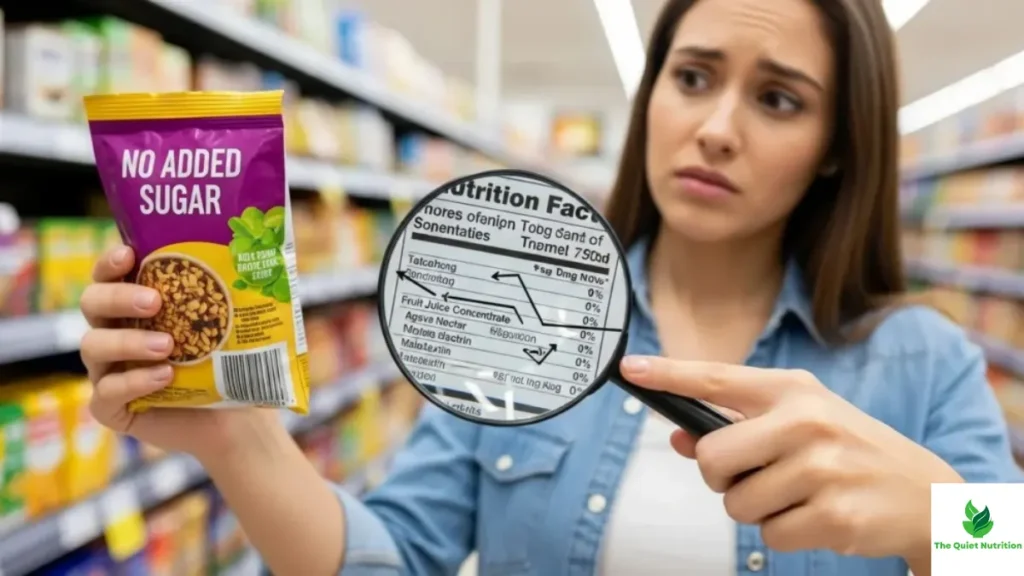
Picture two products sitting on a grocery shelf: a bottle of apple juice proudly labeled “No Added Sugar,” and a soda. Most people would assume the juice is the clearly healthier choice. But check the nutrition label, and it’s entirely possible the juice contains just as much sugar per serving as the soda — sometimes more. Nothing about the label is technically false. It’s just telling you something much narrower than most people assume.
This is one of the most common, and most legal, forms of food label confusion out there. “No added sugar” is a real, regulated claim. It’s just not the claim most shoppers think it is.
What “No Added Sugar” Actually Means
In the United States, the FDA allows a “no added sugars” claim when a product doesn’t contain any sugars added during processing or packaging — things like table sugar, corn syrup, honey added as an ingredient, or concentrated fruit juice used as a sweetener. What it does not mean is that the product is low in sugar overall.
Naturally occurring sugars — like the fructose in fruit or lactose in dairy — are completely unaffected by this claim. A product can be packed with naturally occurring sugar and still technically qualify as “no added sugar,” because the regulation is about the source of the sugar, not the total amount of sugar in the product.
Fruit Juice Is the Clearest Example
Whole fruit contains fiber, water, and a matrix of nutrients that slow down how quickly its natural sugar is absorbed. Juice strips most of that structure away, leaving concentrated fructose with very little fiber to buffer it. A cup of apple juice can contain a similar amount of total sugar to a cup of soda, even without a single gram of “added” sugar, simply because the fruit’s natural sugar has been extracted and concentrated.
This matters physiologically. According to research summarized by Harvard’s School of Public Health, sugar consumed without fiber — whether it’s “added” or “natural” — tends to be absorbed quickly, contributing to rapid blood sugar spikes in a way that’s metabolically similar regardless of its technical labeling category.
Dried Fruit and Flavored Yogurt Play the Same Game
Dried fruit is another common example. Drying fruit removes water and concentrates its sugar content dramatically — a small handful of raisins, for instance, can contain a surprising amount of sugar for its size, all of it naturally occurring, all of it technically compliant with a “no added sugar” claim.
Flavored yogurts marketed this way often lean on naturally sweet fruit purées or juice concentrates instead of table sugar, which allows the “no added sugar” claim while still delivering a product with a similar total sugar content to a traditionally sweetened version. The ingredient swap satisfies the regulation without necessarily changing the metabolic experience of eating it.
Why This Isn’t Necessarily “Deceptive,” But Still Misleading in Practice
To be fair to regulators, the claim isn’t designed to mislead — it exists to help people avoid products with sugar deliberately added during manufacturing, which is a genuinely useful distinction for reducing overall added sugar intake at a population level. The Dietary Guidelines for Americans specifically recommend limiting added sugars, and this labeling category supports that goal on paper.
The issue is less about the rule itself and more about how consumers interpret it. Most people read “no added sugar” as a general health signal — low sugar, low calorie, diabetes-friendly — when it’s actually a much narrower, technical claim about ingredient sourcing. The gap between what the label legally means and what shoppers assume it means is where the confusion lives.
How to Actually Check
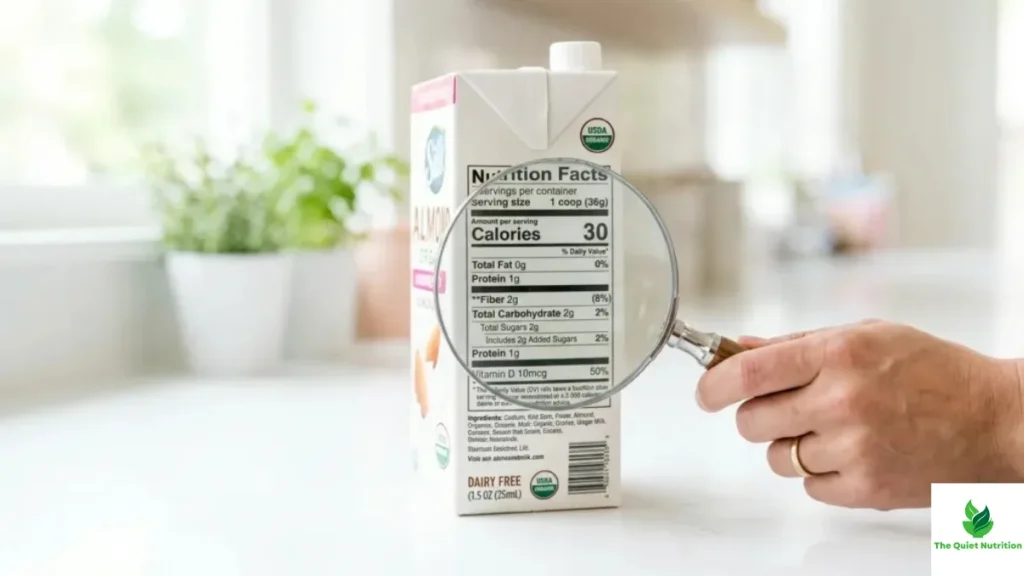
The most reliable way to cut through this is to ignore front-of-package claims entirely and go straight to the Nutrition Facts panel. The “Total Sugars” line captures both naturally occurring and added sugars combined, giving a much more accurate picture of what you’re actually consuming. Comparing that number across similar products — juice versus juice, yogurt versus yogurt — tends to be far more useful than trusting any front-label claim.
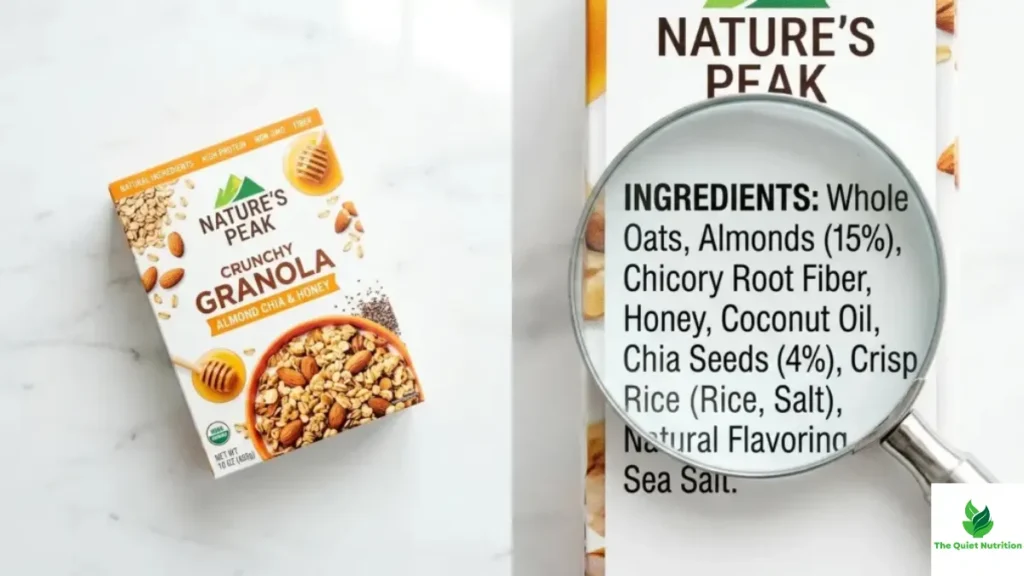
It’s also worth glancing at the ingredient list itself. Ingredients like “fruit juice concentrate,” “cane syrup,” or “dried cane juice” can sometimes appear even in products marketed around reduced sugar, depending on how the specific claim is framed, so reading ingredients alongside the nutrition panel gives a fuller picture than either alone.
The Bigger Lesson
“No added sugar” isn’t a lie, but it’s also not the all-clear signal it’s often mistaken for. It’s a narrow technical claim wearing the clothing of a broader health promise. Once you understand what the label is actually regulating, versus what it implies, it becomes much easier to make label-reading a genuinely useful habit rather than a source of false reassurance.
Sources
- U.S. Food and Drug Administration – Added Sugars on the Nutrition Facts Label
- U.S. Department of Agriculture and HHS – Dietary Guidelines for Americans
- Harvard T.H. Chan School of Public Health – The Nutrition Source: Added Sugar
- World Health Organization – Sugars Intake for Adults and Children
- U.S. Food and Drug Administration – How to Understand and Use the Nutrition Facts Label

Aarti Solanki, B.Sc. (Food Science), is a food science writer passionate about making nutrition simple and evidence-based. She creates well-researched, easy-to-understand articles on healthy eating, food science, and nutrition, using information from trusted scientific and public health sources.


Pingback: How Food Labels Quietly Shape Your Expectations — And Why Your Brain Believes Them Before You Take a Bite