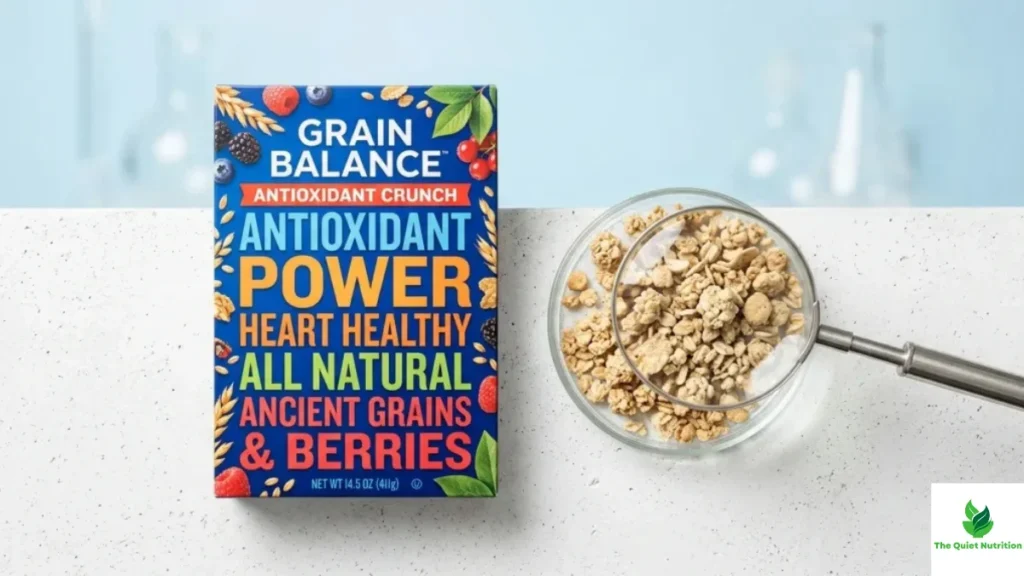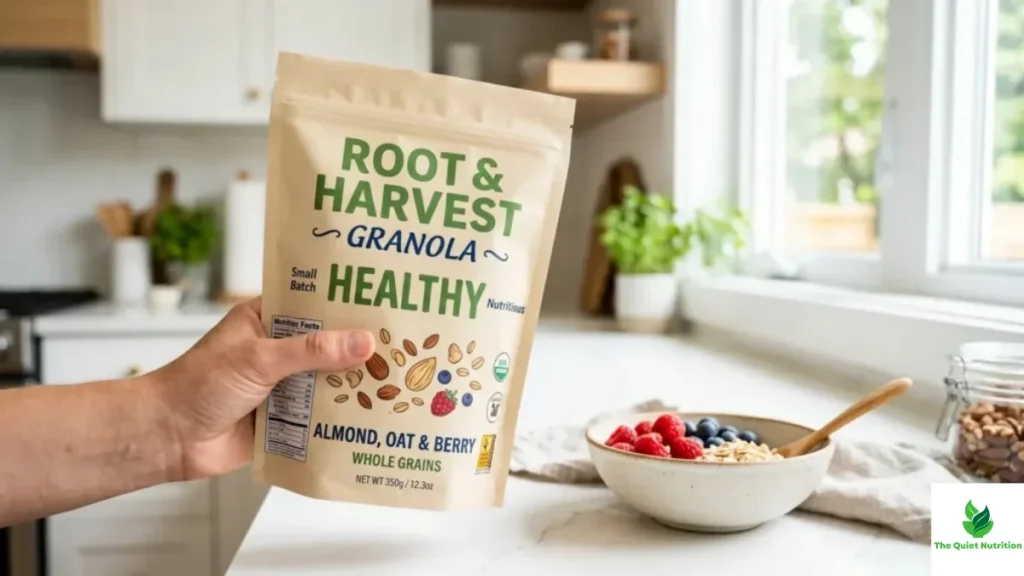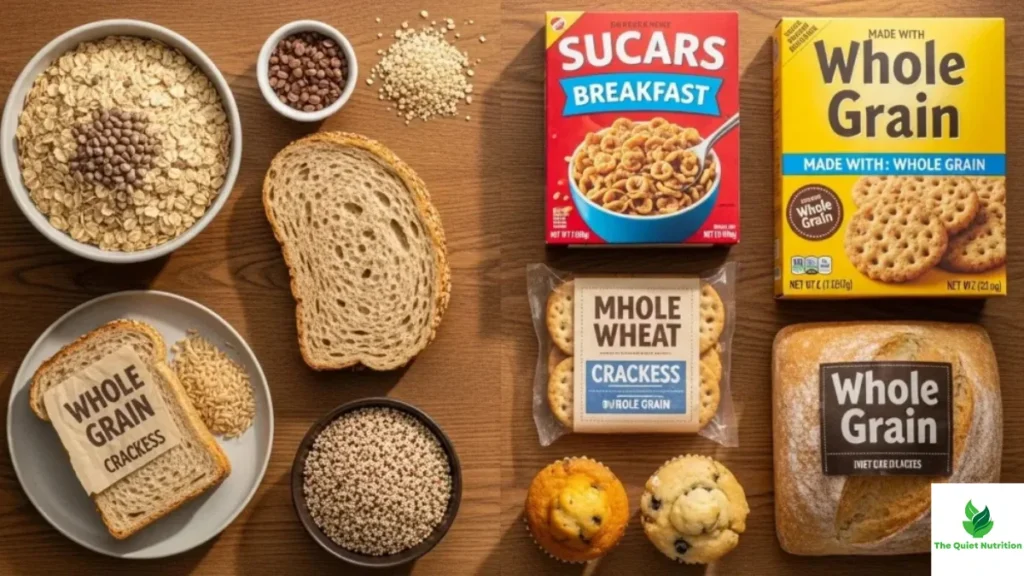
A loaf of bread sits on the shelf with “WHOLE GRAIN” printed across the front in confident, earthy lettering. Reasonable assumption: this bread is made from whole grains. Reasonable assumption, and often wrong — or at least far less true than the label implies. Few phrases in the grocery store carry as much unearned trust as “whole grain,” and the gap between what it sounds like and what it’s legally allowed to mean is bigger than most shoppers realize.
There’s No Single Rule for What “Whole Grain” Has to Mean
Here’s the core problem: unlike some nutrition claims, whole grain labeling in the U.S. isn’t governed by one clear, enforced standard. There’s no requirement telling manufacturers how much of a product actually has to come from whole grains before the word “whole grain” can appear on the front. A nutrition advocacy group petitioned the FDA back in 2012 specifically to address this gap, and the confusion it flagged still persists — the FDA’s own guidance on the issue remains in draft form, referenced occasionally in warning letters but never formally finalized.
That regulatory softness creates real room for products to lean heavily on the phrase while containing mostly something else entirely. A cracker or bread can legitimately say “whole grain” while its actual flour content is dominated by refined white flour, with only a modest whole grain contribution mixed in.
The Claims Look Similar But Mean Wildly Different Things
Nutrition researchers and industry groups have mapped out just how much variation hides behind similar-sounding label language. “100% whole grain” means exactly that — no refined flour at all. “Whole grain” on its own generally implies the product is at least 51% whole grain by total weight, which still leaves nearly half the product’s weight as something else. “Good source of whole grain” can mean as little as 15 to 25% whole grain content. And “made with whole grains” is the loosest of all — it may contain a little whole grain or a lot, with no way to tell from the phrase itself.
Then there’s “multigrain,” which sounds like it should mean something similar to whole grain but doesn’t. It simply indicates a mixture of more than one type of grain — with no guarantee that any of them are whole. A twelve-grain bread can legitimately use that label while its first ingredient, the one making up the largest share of the product, is enriched white flour.
Real Products Illustrate How Wide This Gap Gets
This isn’t a hypothetical concern. Certain widely available whole-grain-labeled crackers have been found to contain more white flour than whole wheat flour, while carrying only a single gram of fiber per serving — nutritionally close to the standard, non-whole-grain version of the same product, despite the prominent front-of-package claim.
Even the whole grain “stamp” system, designed specifically to bring clarity to this issue, has its own complexity worth understanding. The organization behind the stamp allows it to appear on products containing 8 grams or more of whole grain per serving, even when the product contains more refined grain than whole — a decision the organization has defended by pointing out that no research directly links the percentage of whole grain in a product to specific health outcomes, even though whole grain intake overall is well linked to better health. A stamp without a percentage listed specifically means the product contains less than half whole grain by weight, even though a shopper glancing quickly at a reassuring seal might assume the opposite.
Consumers Consistently Get This Wrong — Which Is the Whole Point
This confusion isn’t a minor edge case. Research testing how well shoppers could identify actual whole grain content found that a substantial share of participants — in some experiments nearly half — incorrectly identified less healthy, mostly-refined products as the better whole grain option, largely because they relied on front-of-package claims like “multigrain” or “wheat” rather than checking the ingredient list or nutrition panel. In a related study, roughly half of participants overstated how much whole grain was actually present in products dominated by refined grains.
The pattern researchers identified was consistent: people default to trusting the front-of-package language rather than doing the extra work of verifying it against the ingredient list — which is precisely the gap loosely regulated claims are able to exploit.
Why the Distinction Is Worth Caring About
This isn’t just a labeling technicality — the nutritional difference between whole and refined grain is genuinely significant. Refining strips away the bran and germ portions of the grain, removing much of the fiber, along with iron and B vitamins, and leaving mostly starchy endosperm behind. Compared to enriched white flour, 100% whole wheat flour contains meaningfully higher levels of several nutrients, including vitamin E, vitamin B6, magnesium, and selenium. Whole grain intake overall has been linked to lower risk of heart disease, type 2 diabetes, stroke, and earlier death from any cause — benefits tied specifically to the intact grain, not to a product that merely gestures toward one on its packaging.
What Actually Tells You the Truth
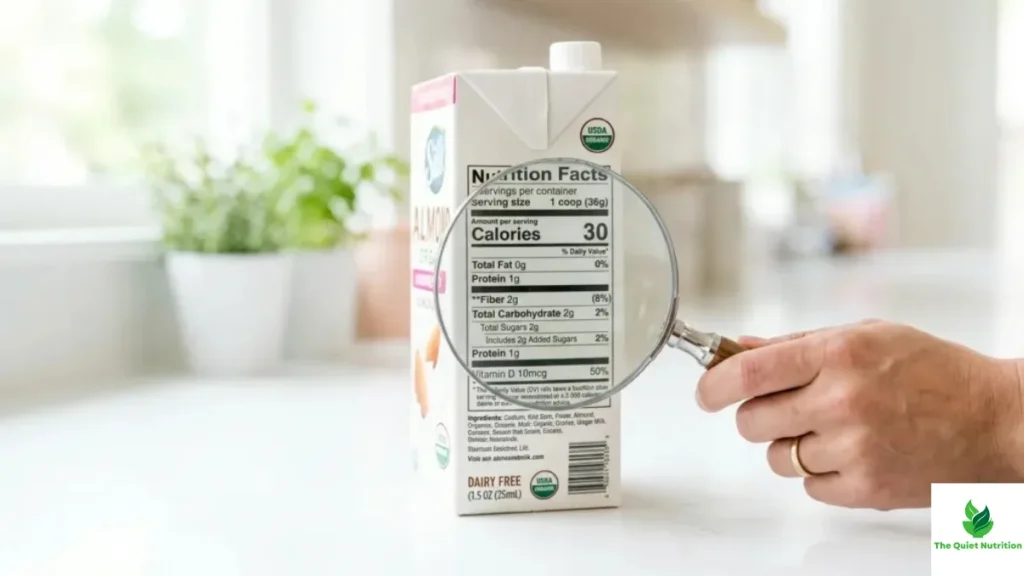
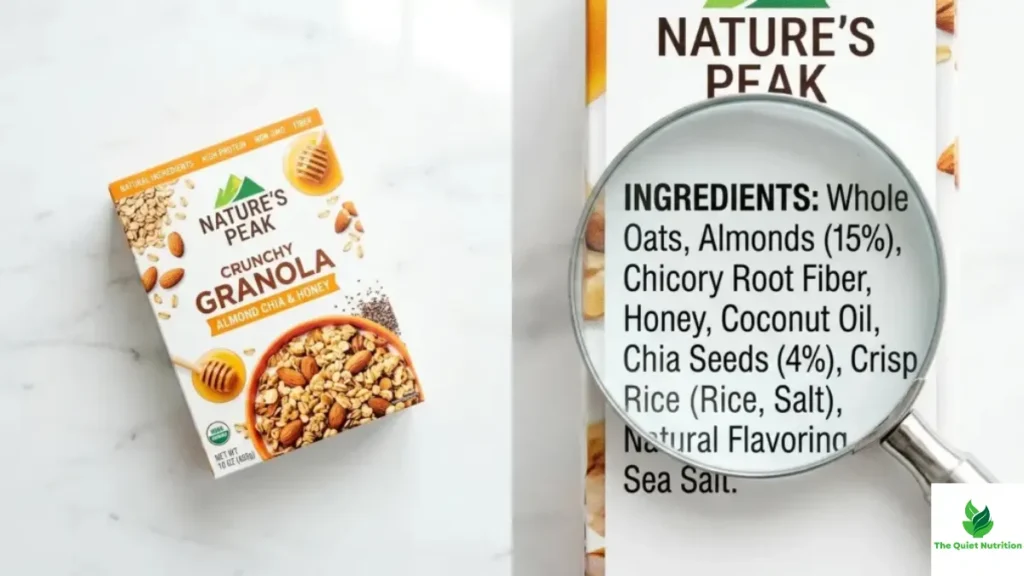
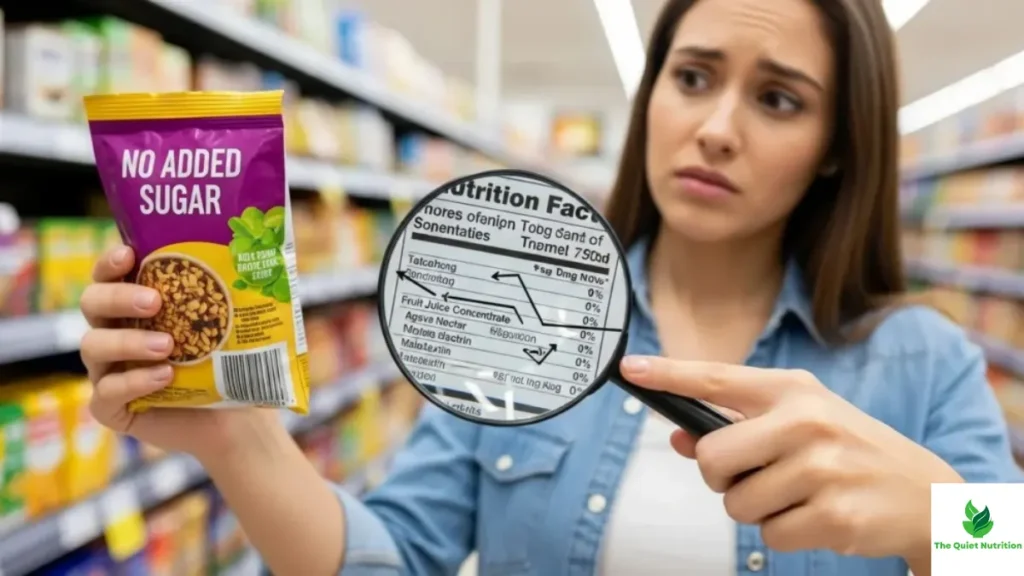
The fix here mirrors advice that applies across food labeling generally, but it’s especially important for grains: skip the front-of-package language and go straight to the ingredient list. If a whole grain — whole wheat flour, oats, brown rice, whole cornmeal — is listed first, before any refined flour, that’s a meaningfully better sign than any seal or slogan on the front. “100% whole grain,” stated plainly and specifically, is currently the most reliable claim available. Everything softer than that — “made with,” “multigrain,” an unlabeled stamp — deserves a second look at what’s actually sitting at the top of the ingredient list before you believe what the front of the box is implying.
Sources:
- Harvard Health Publishing — Whole Grains or No Grains? Food Labels Can Be Misleading
- Consumer Reports — Decoding Bread Labels
- The Whole Grains Council — Government Guidance on Whole Grain Labeling
- Michigan State University Extension — Grain Label Claims

Aarti Solanki, B.Sc. (Food Science), is a food science writer passionate about making nutrition simple and evidence-based. She creates well-researched, easy-to-understand articles on healthy eating, food science, and nutrition, using information from trusted scientific and public health sources.