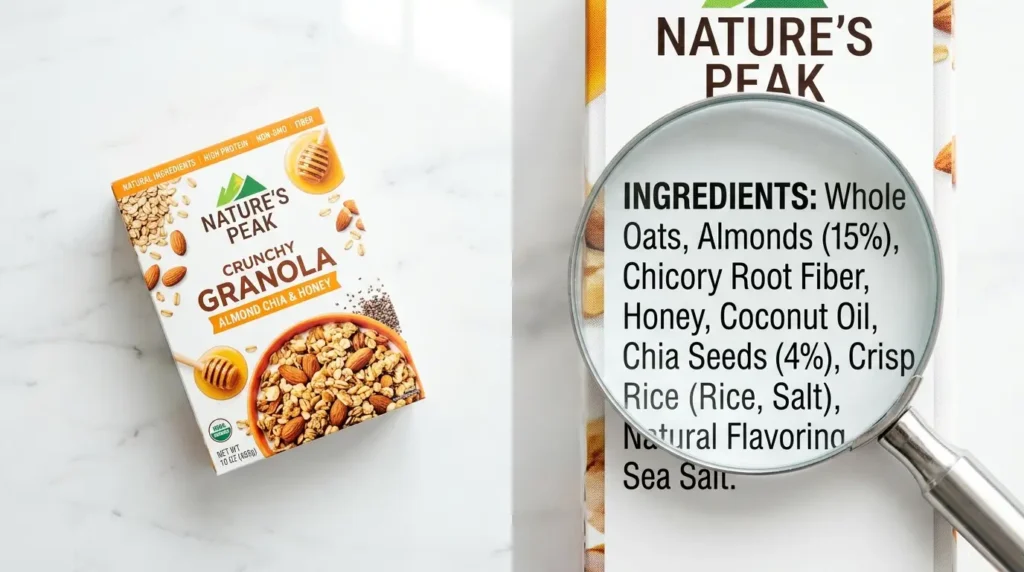
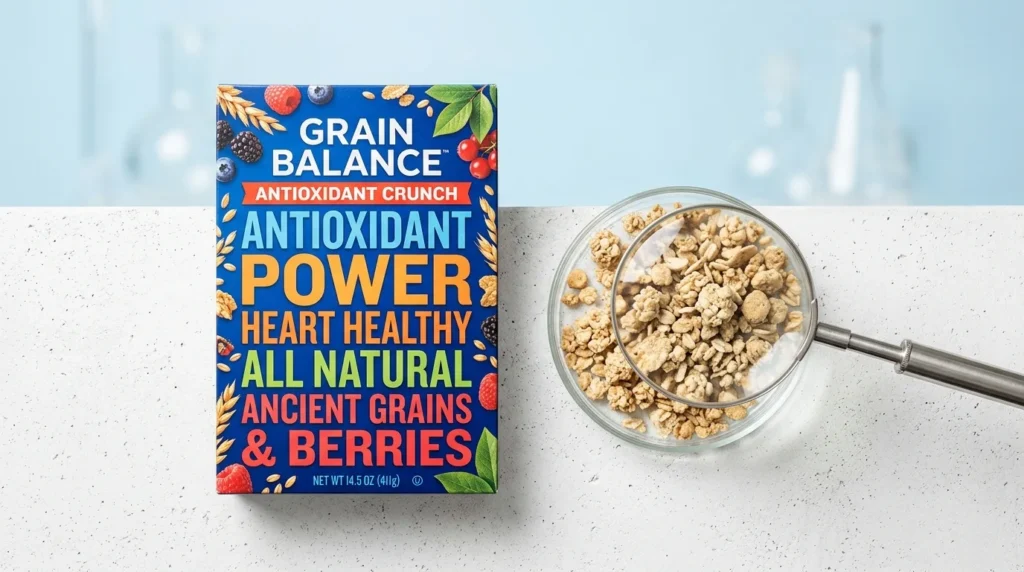
Stand in any grocery aisle for five minutes and watch how people shop. Almost nobody flips the box over first. They look at the front — the sunburst graphics, the words “natural,” “wholesome,” “protein-packed,” “made with real fruit” — and that’s often where the decision gets made. The ingredient list, tucked in tiny gray text on the back, barely gets a glance.
That’s exactly what food companies are counting on.
The front of the package is advertising. It’s designed by marketing teams, tested on focus groups, and legally allowed to say almost anything that sounds good without technically lying. The ingredient list, on the other hand, is the one part of the package that’s genuinely regulated for accuracy. It’s the closest thing food packaging has to a confession.
Once you understand how to read it, you stop shopping based on what a brand wants you to believe and start shopping based on what’s actually in the box. That shift alone can change your health, your grocery bill, and the way you feel about food.
The Front of the Pack Is a Marketing Pitch, Not a Nutrition Report
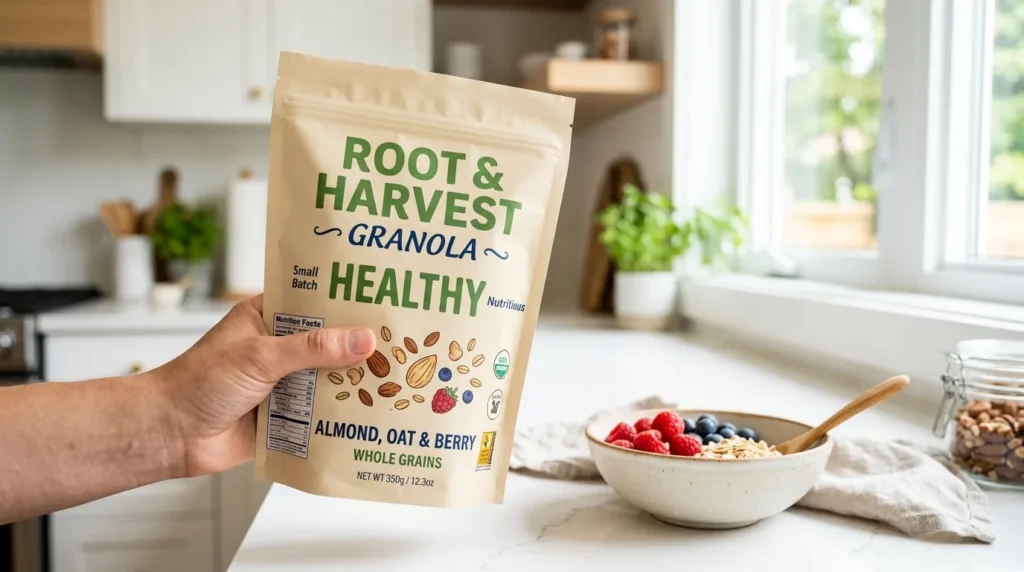
Words like “natural,” “clean,” “wholesome,” and “farm-fresh” feel like promises. Legally, most of them are closer to poetry.
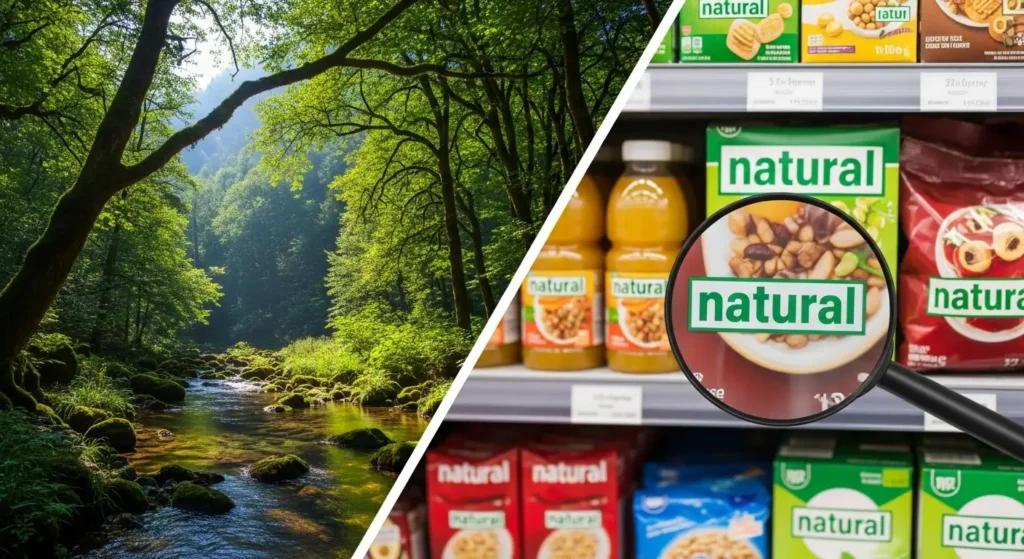
Take “natural.” It’s one of the most trusted words on a food label — and it has no formal legal definition in the United States. The FDA has not engaged in rulemaking to establish a formal definition for the term, though it has a longstanding informal policy that “natural” means nothing artificial or synthetic has been added to a food that wouldn’t normally be expected to be there. That policy doesn’t address how the food was grown, processed, or manufactured, and it says nothing about whether the product is actually good for you. A soda sweetened with cane sugar and dyed with beet juice can wear “natural” proudly, right next to a nutrition profile that looks nothing like the wholesome image the word conjures.
Front-label claims aren’t just vague — research suggests they actively distort how healthy a product appears to be. A widely cited study out of INSEAD found that the type of health claim on a product’s front label was often completely uncorrelated with its actual nutritional quality, yet these claims still shaped how consumers expected the product to taste and how healthy or fattening they believed it to be. In one striking example from that research, 460 of 633 breakfast cereals studied carried some kind of health or nutrition claim on the box — a sea of green flags on products with wildly different sugar and fiber content.
It gets more specific with “whole grain” claims. A Harvard-covered study on bread, cereal, and cracker labeling found that between 29% and 47% of participants incorrectly picked the less healthy product as the better option when it carried front-of-package language like “multigrain” or “wheat,” simply because consumers tend to be swayed by potentially misleading front-of-package language rather than checking the Nutrition Facts panel or ingredient list.
None of this means brands are breaking the law. It means the law leaves a lot of room for words that sound like nutrition facts but are really just vibes.
Why the Ingredient List Is Harder to Fake
Here’s the part that changes everything: unlike the front of the box, the ingredient list operates under strict federal rules.
Under U.S. law, every ingredient required on a food label must be listed by its common or usual name, in descending order of predominance by weight. In plain English: whatever the product contains the most of by weight has to be listed first, and everything else follows in order down to the smallest amount. If water makes up 60% of a formula and sugar makes up 15%, water has to come before sugar — no exceptions, no marketing spin.
That single rule is why the ingredient list tells a truer story than the front of the box ever could. A granola bar can call itself “protein-packed” on the front, but if you flip it over and see brown rice syrup, sugar, and corn syrup solids in the first three spots, you know exactly where its calories are really coming from — regardless of what the packaging wants you to feel.
There are a few built-in exceptions worth knowing, so you’re not caught off guard:
- The “2% or less” clause. Ingredients that make up 2% or less of a product’s weight don’t have to follow strict descending order — they can be grouped at the end after a phrase like “Contains 2% or less of…”. This is often where preservatives, colorings, and stabilizers hide.
- Compound ingredients. If a product uses something like chocolate chips or enriched flour, manufacturers can either break out every sub-ingredient in parentheses or, for standardized ingredients, list them under one recognized name.
- Spices and flavors. These can sometimes be grouped under generic terms like “spices” or “natural flavor” rather than named individually, which is legal but makes it harder to know exactly what you’re consuming.
Even with those carve-outs, the ingredient list is still the most tightly regulated, least “creative” part of the package — which is exactly why it’s worth your attention.
The Sugar Shell Game: How Ingredient Order Gets Gamed
Even a regulated system has loopholes, and sugar is where manufacturers exploit them most skillfully.
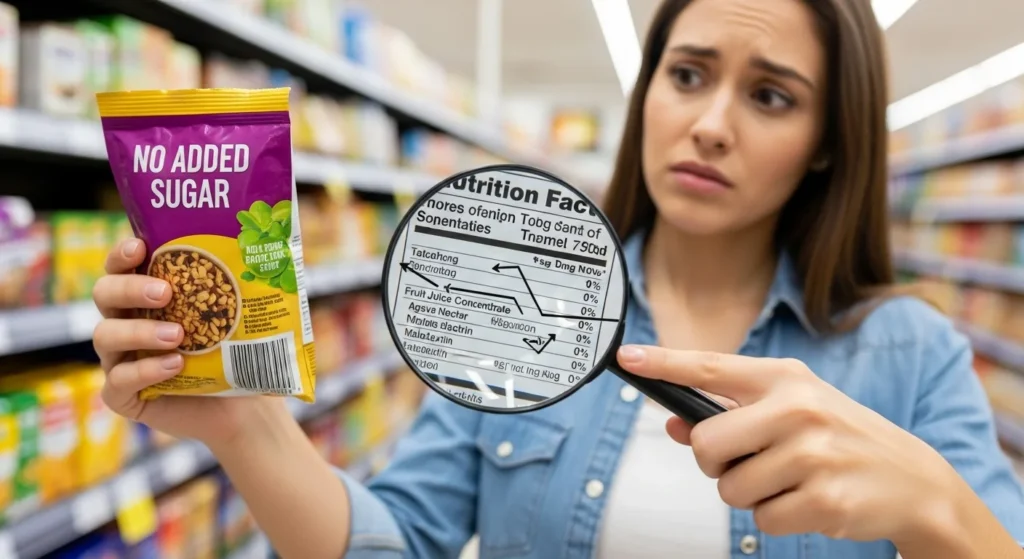
Sugar goes by dozens of different names on ingredient labels — there are more than 60 names for added sugar in total. Cane juice, brown rice syrup, dextrose, maltose, barley malt, agave nectar, molasses, fruit juice concentrate — manufacturers can use several different forms of sugar in a single product, listing each one individually, so that “sugar” itself never has to appear as the very first ingredient.
The trick works because of the weight-order rule. If a product used one type of sugar, it might legitimately land in the number-one or two spot. But split that same total sugar load across three or four differently named sweeteners, and each one individually weighs less — letting all of them slide further down the list, even though the combined sugar content hasn’t changed at all. Nutritionally, your body doesn’t care what sugar is called. It metabolizes brown sugar, molasses, honey, and other caloric sweeteners essentially the same way — but on paper, splitting it up makes a product look leaner than it is.
This is exactly why nutrition experts recommend a two-step check rather than trusting the ingredient order alone:
- Scan the ingredient list for sugar’s aliases — anything ending in “-ose” (dextrose, fructose, sucrose, maltose) is almost always a form of sugar, along with syrups, nectars, and juice concentrates.
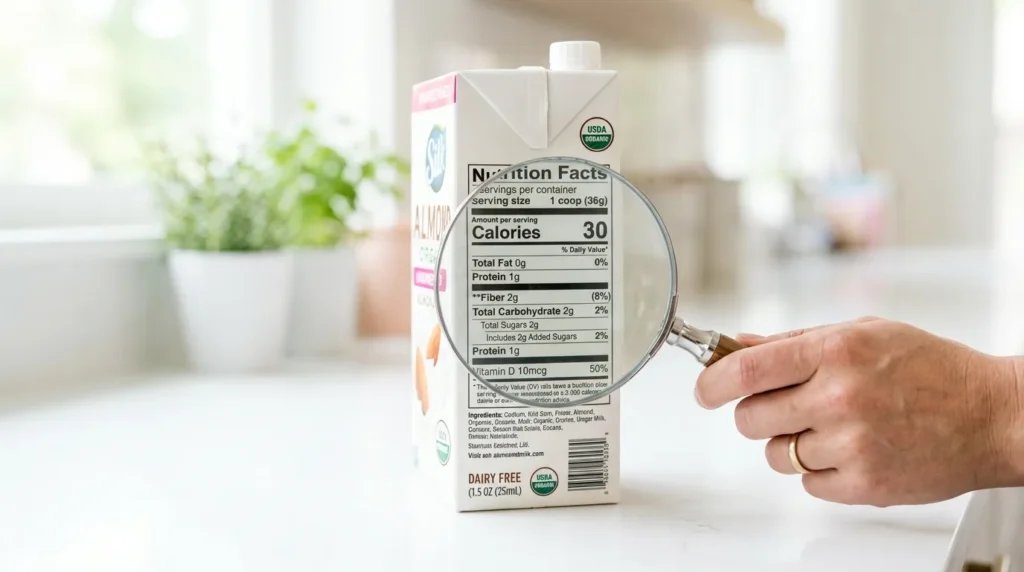
- Then cross-check the “Added Sugars” line on the Nutrition Facts panel, which aggregates every one of those aliases into a single, honest gram count — a line mandated by the FDA specifically to collapse all these different names into one number.
Used together, the ingredient list and the Added Sugars line are almost impossible to game. Used alone, either one can be worked around.
What a Real Ingredient List Comparison Looks Like
Numbers on paper are convincing. Here’s how the theory plays out with two products that might sit side by side on a shelf, both marketed as a “healthy” breakfast choice.
Yogurt A — front label: “Made with real fruit,” “Natural flavors,” “Good source of protein” Ingredient list: Milk, sugar, strawberry puree, corn starch, natural flavor, fruit pectin, citric acid, red 40.
Yogurt B — plain front label, no health claims Ingredient list: Cultured milk.
Both could be marketed to the same health-conscious shopper. Only one is actually just yogurt. The “real fruit” on Yogurt A’s front label is technically true — there is fruit puree in there — but it’s diluted by added sugar and a synthetic dye doing the visual work that real strawberries would otherwise need to do. This is precisely the kind of gap researchers point to when they describe front-of-package claims as being disconnected from a product’s actual nutritional makeup.
A Simple Framework for Reading Any Ingredient List
You don’t need a nutrition degree to read a label well — you need a system. Here’s one that works for almost anything in the grocery store:
1. Check the first three ingredients. Because of the descending-weight rule, these three tell you what the product is mostly made of. If sugar, syrup, or refined oil shows up in the top three, no front-label claim changes that reality.
2. Scan for repeated sugars. If you see two or more sweeteners on the list — even with different names — mentally add them together. That’s a strong signal the true sugar content is higher than the ingredient order suggests.
3. Count the ingredients you don’t recognize. This isn’t about fearing every unfamiliar chemical name (some, like tocopherols, are just vitamin E). It’s about noticing volume. A five-ingredient list and a thirty-ingredient list are telling you two very different stories about how processed something is.
4. Look at what’s missing, not just what’s there. “No high-fructose corn syrup” doesn’t mean no added sugar — it might just mean a different sweetener took its place. Marketing claims are often true and misleading at the same time, because they’re built to highlight one absence while staying quiet about everything else.
5. Cross-reference with the Nutrition Facts panel. The ingredient list tells you what’s in the product; the Nutrition Facts panel tells you how much. You need both — one without the other is only half the picture.
Why This Habit Is Worth Building
Reading ingredient lists isn’t about paranoia or treating every packaged food like a threat. Plenty of processed foods are perfectly reasonable choices. It’s about closing the gap between what a company wants you to feel about a product and what’s actually true about it.
Front labels are written by people whose job is to sell you something. Ingredient lists are written under federal rules designed to keep companies honest. When those two sources of information disagree — and they disagree more often than most people realize — the ingredient list is the one that’s legally accountable for telling the truth.
Once that habit clicks, it takes about ten extra seconds per product. And those ten seconds are often the difference between a product that matches its marketing and one that’s simply borrowing the language of health to sell something else entirely.
Sources
- FDA – 21 CFR 101.4, Food; Designation of Ingredients (eCFR)
- FDA – Use of the Term “Natural” in Food Labeling
- FDA – Interactive Nutrition Facts Label: Ingredient List
- Harvard T.H. Chan School of Public Health – Added Sugar in the Diet
- Harvard Health Publishing – Whole Grains or No Grains? Food Labels Can Be Misleading
- Johns Hopkins Medicine – Finding the Hidden Sugar in the Foods You Eat

Aarti Solanki, B.Sc. (Food Science), is a food science writer passionate about making nutrition simple and evidence-based. She creates well-researched, easy-to-understand articles on healthy eating, food science, and nutrition, using information from trusted scientific and public health sources.

Pingback: Why “Healthy” on a Food Package Rarely Means What You Think It Does
Pingback: Why Bright Health Claims Trigger Trust — And Why Your Brain Falls for Them Instantly
Pingback: How Food Labels Downplay Processing — And Why “Healthy-Looking” Foods Aren’t Always What They Seem
Pingback: Why Nutrition Labels Were Created — And How They Quietly Shape Your Choices
Pingback: How Packaging Creates the Illusion of “Clean Ingredients” Without Full Disclosure
Pingback: “I Chose the Healthy One”… Or Did I? How Labels Manipulate Your Sense of Control